
A Kia Picanto boot that won’t open can leave you pressing the handle again and listening for a click. Sometimes the boot has already locked itself again by the time you reach it. Other times, the doors unlock normally but the hatch still won’t budge.
Start by checking how the doors respond and what happens when you press the boot handle. Those two clues can help you decide whether to try a different way of unlocking it, wait for ice to thaw, or have the latch and wiring checked.
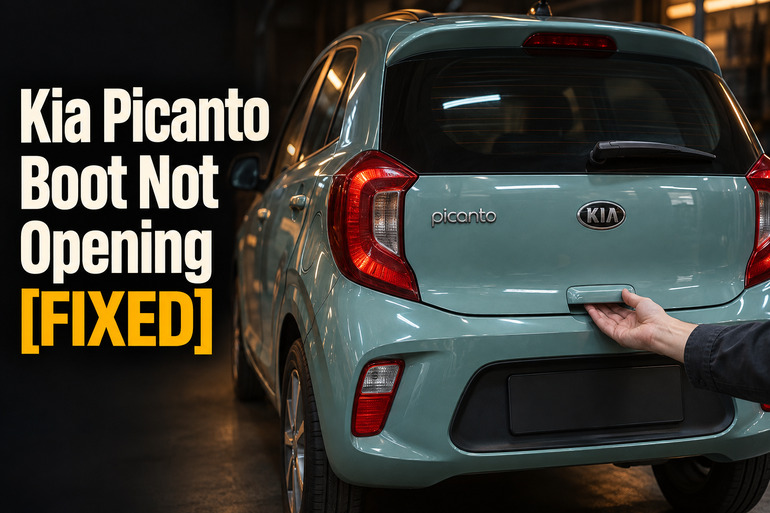
What Happens When the Picanto Boot Won’t Open
Kia calls the boot lid the tailgate in its manuals. When you close it, a latch grips a metal loop on the body called the striker. On Picantos with central locking, the tailgate normally locks and unlocks with the doors. Once it’s unlocked, you press the outside handle to release the latch and lift the tailgate by hand. Some older versions have a separate keyhole on the tailgate.
That gives you three things to check. First, see whether the car unlocks. Next, listen for a click at the back when you press the handle. Finally, notice whether the tailgate moves at all. Silence can point to a problem with the handle switch, wiring, or latch motor. A click tells you something moved or tried to move, but the latch can still be caught on the striker.
If the tailgate lifts a little and then feels unusually heavy or starts to fall, the latch has already released. The gas struts that help lift and support the tailgate may be weak. Keep your head and hands clear of a tailgate that won’t stay up. If the tailgate won’t latch securely or the dashboard still shows it as open, leave the car parked and arrange help. An open hatch can let exhaust fumes enter the cabin.
Kia Picanto Boot Not Opening [FIXED]: Common Causes
Pay attention to when the problem started and which controls still work. A hatch that sticks after a freezing night gives you a different clue from one that stays shut every time you use the outside handle.
1. The Boot Is Still Locked
The boot button on the key fob can be easy to misread. On the 2022 Picanto, for example, holding the dedicated button for more than one second unlocks the boot if the car has that feature. You still need to press the outside handle. If you leave the boot unopened for 30 seconds, it locks again. It also locks again when you close it after using that button.
A weak fob battery can make the problem seem random. You may have to stand closer than usual, or the doors may respond on one attempt and stay locked on the next. If a spare remote works from the same spot, the first fob deserves attention. If the doors respond reliably but the boot never opens, look more closely at the tailgate itself.
2. Ice Is Holding the Tailgate Shut
If the boot worked before a wet, freezing night, ice may be holding the rubber seal against the body or stopping the handle or lock mechanism from moving freely. You might hear the latch click while the edges of the hatch still feel firmly stuck. The handle itself may also feel stiff.
Look for frost around the edges and think about whether the problem disappears once the car warms up. If the boot sticks after rain in mild weather too, tell the technician. That pattern gives them a reason to check the handle switch and its connector for moisture or corrosion.
3. The Outside Handle Switch Has Failed
On Picantos with an electric release switch, pressing the outside handle sends a request to open the tailgate. The handle can feel normal under your fingers even when the switch behind it fails to send that signal. A faulty switch may work only on some presses before it stops responding altogether.
One clue is that the doors unlock as usual, but pressing the boot handle produces no sound at the back. A loose connector, damaged wire, or failed latch motor can give you the same symptom. A mechanic can test whether the car receives the signal from the handle before replacing any parts.
4. The Latch or Striker Is Binding
A boot that clicks but stays shut may have a latch that can’t pull free of the striker. A bag strap caught near the opening can put pressure on the latch. The tailgate can also sit out of line after a rear bump or body repair, making the latch harder to release.
Look at the gaps on both sides of the closed hatch. A gap that suddenly looks wider on one side, fresh scrape marks, or a boot that recently started needing a harder push to close all point toward a fit problem. Tell the shop if the trouble began right after loading something bulky or after work on the rear of the car.
The actuator can also fail inside the release mechanism. It’s the small electric motor that moves the mechanism when the car calls for it. A faint click followed by no movement could come from an actuator that’s struggling or a latch that’s binding. Testing the two together helps avoid replacing the wrong part.
5. The Release Circuit Has Lost Power
When several door locks stop responding at once, the fault may be in their power supply. A blown fuse is one possibility. If the cabin lights also dim when you try to start the engine and the starter turns slowly, a discharged car battery is worth checking first. The key fob has its own battery, so changing it won’t restore power to the car’s locks.
When only the boot is affected, the wiring at the rear deserves a closer look. The tailgate wiring passes between the body and the moving hatch, where it flexes as the hatch opens and closes. A damaged wire or poor connection can interrupt the signal or power to the latch. If the rear wiper also started cutting out around the same time, mention both symptoms when you book the repair.
Kia Picanto Boot Not Opening [FIXED]: DIY Fixes
Start with the check that matches what you’ve noticed so far. Park on level ground, set the parking brake, and make sure there’s room behind and above the car for the tailgate to swing open.
1. Unlock All the Doors and Try the Boot Right Away
Stand close to the car and press the normal unlock button on the remote. Confirm that a passenger door opens from the outside, then go straight to the rear. Press the tailgate handle and lift as you normally would. Opening a door during this check also helps rule out the automatic relocking described in the 2022 manual.
If your Picanto has a central unlock switch inside, try it too. If yours has an exterior keyhole on the boot, use the physical key as shown in your owner’s manual, then try the handle. Kia’s manual for older Picantos shows both a key operated version and a central locking version.
You can also test the dedicated boot button if your remote has one. On versions that call for a press of more than one second, hold it down and try the outside handle promptly. If the boot opens this way and locks after you shut it, that’s normal for the versions Kia describes. Keep the key in your hand or pocket while you test it.
2. Try the Spare Fob Before Buying a Battery
Use the spare remote from the same spot and repeat the same unlock sequence. If the spare works every time and the usual remote only works up close or after several presses, replace the battery in the usual remote. Check the owner’s manual for the correct battery type and which way it fits. Some Picanto remotes take a CR2032, so confirm the type for yours before buying one.
Once the case is closed, test the door buttons and the boot button again. If the usual remote still fails but the spare works, the remote itself may need attention. If both remotes unlock the doors normally and the hatch still stays shut, move on to the checks at the back of the car.
3. Let a Frozen Handle or Seal Thaw
If the hatch is iced over, give it time to thaw. If you can safely move the car into a warmer place with the hatch securely closed, park it there and switch the engine off. You can also wait until the outside temperature rises. Leave the handle and the edge of the hatch alone while the ice is still holding them.
Avoid boiling water and keep tools away from the seam. Pulling hard on a frozen handle or prying against the edge can damage the parts you need to open it. Once the ice has melted, unlock the car again and try the handle with normal pressure.
If it opens and stays up on its own, wipe moisture from the rubber seal and the surface it touches. Then close the hatch normally and check that it catches securely. If it still sticks after it has fully thawed, move on to the next check.
4. Check Whether Cargo Is Pressing Against the Hatch
If the boot jammed right after you loaded it, look through the rear window for a bag, strap, or cargo mat near the closing edge. Where your Picanto has folding rear seats, follow the owner’s manual to fold a seatback and reach the cargo from a passenger door. Remove anything that’s leaning hard against the hatch or pull loose items away from the opening.
Try the outside handle again. If you can see a strap caught in the latch and it won’t come free easily, leave it for the shop. A small obstruction can keep the latch from moving through its full range. Stop here if the hatch sits crooked, shows signs of a hit, or still clicks without opening.
If it opens, check the area around the metal striker for loose debris and clear anything you can remove without touching the mechanism. Close the tailgate with your fingers clear of the edge. Make sure it stays shut and that any open tailgate warning goes out before driving.
5. Check the Correct Fuse if Other Locks Have Stopped Working
If several locks quit together, use the fuse chart in your owner’s manual and the label on your fuse panel to identify the relevant fuse. Follow the manual’s instructions for switching off the car and disconnecting the battery if required. If the chart is unclear or you’re uncomfortable with those steps, have a mechanic check it.
A blown blade fuse often has a visible break in its metal strip. If you replace it, use the same amperage rating and test the locks again. If the replacement blows, stop there and have the circuit checked. A fuse that blows again points to an electrical fault that needs diagnosis.
6. Contact a Mechanic or Auto Electrician
Book a repair if the hatch stays shut after the basic checks, opens only occasionally, or needs extra force to latch. A mechanic can check whether the latch and striker line up and whether the actuator moves freely. An auto electrician can trace the signal from the handle and check whether power reaches the latch when you press it.
Tell the shop which unlock methods you tried, whether you heard a click, and whether the problem followed a freeze, a bump, or a fault with another rear accessory. If the hatch can’t be secured, call for roadside assistance.
Wrapping Up
Once the boot opens again, try it through a few normal lock and unlock cycles while the car is parked. Pay attention to how easily the handle releases and how the hatch feels when you close it. If you had to try several times to get it open, that detail is worth passing on even if it works when you arrive at the shop.
If the fault returns, note what happened on the last successful attempt and the first failed one. That gives the technician a specific set of conditions to check.