
Your Kia Ceed’s washer jets should spray enough fluid across the windshield to help the wipers clear dirt, dust, and road grime. When the jets suddenly stop working, produce a weak spray, or only spray from one side, keeping your windshield clean becomes difficult.
Fortunately, the problem doesn’t always mean an expensive repair. Sometimes, the reservoir is empty or the nozzles are clogged. Other times, a faulty pump or damaged hose is responsible. Identifying the symptoms can help you find the right solution.
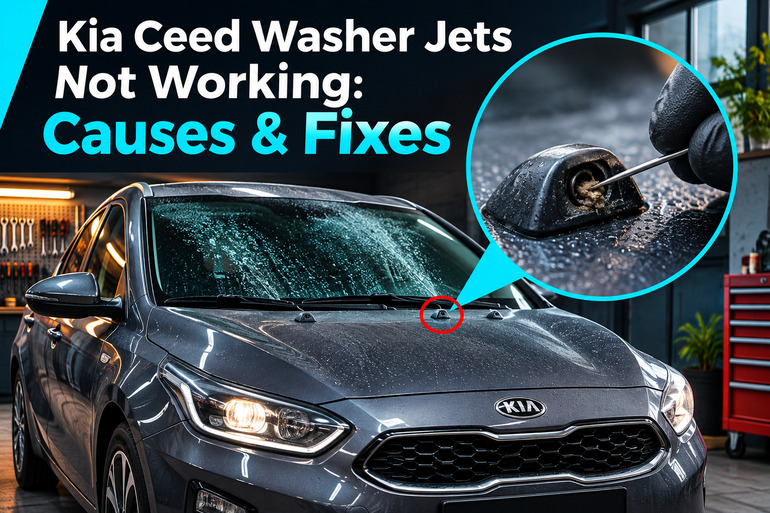 Kia Ceed Washer Jets Not Working
Understanding Why Your Kia Ceed Washer Jets Aren’t Working
The windshield washer system in your Kia Ceed uses several components to deliver cleaning fluid to the glass. These include a fluid reservoir, an electric washer pump, connecting hoses, and small spray nozzles. When you pull the washer control lever toward you, the pump moves fluid from the reservoir through the hoses and out of the jets.
If any part of this system develops a fault, the washer jets may stop spraying or produce an uneven stream. For example, a blocked nozzle might affect only one side of the windshield, while an empty reservoir can prevent fluid from reaching either jet. A damaged hose may also allow fluid to escape before reaching the windshield.
The symptoms can provide useful clues. If you hear a faint buzzing sound when activating the washers but nothing sprays, the pump may be running while fluid delivery is restricted. However, if the system remains completely silent, an electrical fault or a failed pump becomes more likely. These observations help narrow the possibilities, although they cannot confirm the exact cause.
Although faulty washer jets won’t usually affect your Ceed’s engine performance, they can create a serious visibility problem. Dirt, salt, and road spray can quickly cover the windshield, particularly during bad weather. Furthermore, repeatedly operating the washers without fluid can damage the pump. Kia specifically warns against running the washer system when the reservoir is empty.
Kia Ceed Washer Jets Not Working: Common Causes
Several problems can prevent your Kia Ceed’s washer jets from operating correctly. The following five causes explain many cases of weak, uneven, or completely absent washer spray.
1. Low or Empty Washer Fluid Reservoir
An insufficient fluid level is one of the simplest explanations for washer jets that suddenly stop working. The washer pump needs enough liquid in the reservoir to draw fluid into the system. When the level becomes too low, the pump may draw air instead, leaving the nozzles unable to produce a proper spray.
This problem often develops gradually as you use the washers during everyday driving. However, you might not notice the decreasing fluid level until the spray becomes noticeably weaker or stops altogether. Depending on your Ceed’s equipment, a low washer fluid warning may appear, although you shouldn’t rely on that warning being present.
A reservoir that empties unusually quickly deserves closer attention. It could indicate a leak rather than ordinary fluid consumption. Likewise, if you recently filled the reservoir but the jets have stopped working again, checking for escaping fluid would be more useful than repeatedly topping it up.
2. Clogged Washer Jet Nozzles
The washer nozzles contain small openings that control how fluid reaches the windshield. Unfortunately, dirt, dust, dried washer fluid residue, and mineral deposits can collect around these openings. Over time, the buildup may restrict fluid flow or block an opening completely.
You might notice that one nozzle sprays normally while another produces only a weak trickle. Sometimes, the spray shoots in an unusual direction or fails to reach the expected area of the windshield. These symptoms can indicate a partial blockage, particularly when you can still hear the washer pump operating.
However, restrictions aren’t always located at the nozzle openings. Contamination inside the reservoir or a clogged pump inlet filter can also reduce fluid flow. In such cases, cleaning the visible nozzles alone may not restore proper operation.
3. Damaged or Disconnected Washer Hoses
Your Kia Ceed uses flexible hoses to carry washer fluid from the pump to the spray nozzles. These hoses must remain securely connected and free from damage so the system can maintain enough pressure to deliver fluid.
Over time, a hose may become loose, cracked, or pinched. Movement around the hood area, previous repairs, or aging rubber and plastic components can contribute to these problems. If a connection separates, the pump may continue operating while fluid escapes somewhere inside the engine compartment instead of reaching the windshield.
An important clue is finding washer fluid collecting beneath the hood or dripping from an unusual location when the washers are activated. You might also notice that the reservoir loses fluid faster than expected.
A restricted hose can produce slightly different symptoms. Instead of an obvious leak, the spray may become weak or intermittent. Therefore, the absence of visible dripping doesn’t completely rule out a problem with the fluid lines.
4. Frozen Washer Fluid or Nozzles
Cold weather can prevent the washer jets from working, especially if the reservoir contains plain water or washer fluid that isn’t suitable for freezing temperatures.
When temperatures fall below freezing, liquid inside the reservoir, hoses, or nozzles may turn to ice. This blocks the normal path of the washer fluid and can leave the jets completely inactive. In some cases, the restriction develops overnight, meaning the washers worked normally the previous evening but produce nothing the next morning.
Some Kia Ceed versions have heated washer nozzles that help prevent ice buildup around the spray openings. However, this equipment isn’t fitted to every model, and heated nozzles cannot reliably restore fluid flow if the reservoir itself has frozen. Kia’s documentation also identifies frozen reservoir fluid as a condition that can prevent the heated nozzle system from functioning effectively.
5. Faulty Washer Pump or Electrical Components
The washer pump is an electric motor that pushes fluid through the washer system. If its internal motor fails, becomes worn, or suffers damage, it may no longer produce enough pressure to supply the jets.
A faulty pump can cause both washer jets to stop spraying simultaneously. In some cases, the motor makes an unusual buzzing or whining noise. In others, you won’t hear anything when operating the washer control. However, silence alone doesn’t prove that the pump is defective.
A blown fuse, damaged electrical connection, faulty washer switch, or wiring problem can produce similar symptoms. A pump inlet blocked by debris may also reduce washer performance even when the electrical motor still works. Consequently, proper diagnosis involves checking both the electrical supply and the fluid delivery system before replacing the pump.
Kia Ceed Washer Jets Not Working: DIY Fixes
Once you understand the possible causes, you can begin with a few straightforward checks. Start with the simplest tasks and move toward more involved troubleshooting only when the earlier methods haven’t resolved the issue.
1. Check and Refill the Washer Fluid Reservoir
Start by checking how much washer fluid is left in the reservoir. Park your Kia Ceed on level ground, switch off the engine, and open the hood. Locate the washer fluid filler cap, which usually has a windshield and water spray symbol. Its exact position can vary depending on your vehicle’s model year and engine configuration.
If the reservoir is low, refill it using a suitable windshield washer fluid. Follow the manufacturer’s mixing instructions if you’re using a concentrated product. In colder climates, choose fluid with sufficient freeze protection for the expected temperatures.
After refilling, test the washers briefly with the windshield already wet. With the ignition in the appropriate operating position, pull the washer control lever toward you and observe the spray.
If fluid now reaches the windshield normally, the low reservoir level was likely responsible. However, if the spray remains weak or absent, further checks are necessary. Avoid repeatedly operating the pump when no fluid is coming through, particularly if the reservoir may still be empty.
Also, never substitute engine coolant or radiator antifreeze for windshield washer fluid. These products can interfere with visibility and damage vehicle surfaces.
2. Clean the Washer Jet Nozzles Carefully
If the reservoir contains enough fluid but the jets produce an uneven or weak spray, check the nozzles for visible dirt. This is especially useful when only one jet appears to be affected.
Begin by locating the washer outlets near the windshield. Their position and design can differ between Ceed generations. Switch off the ignition and make sure the wipers are in their resting position before cleaning around them.
Use the following cleaning method.
-
Wipe the exterior of each nozzle with a clean, damp microfiber cloth.
-
Use a soft brush to gently loosen visible dirt or dried residue around the openings.
-
Apply a small amount of lukewarm water to soften stubborn deposits.
-
Wipe away the loosened material without pushing it into the nozzle.
-
Test the washer spray briefly once the area is clean.
Avoid forcing a needle, wire, or other sharp object into the openings. Some nozzles have delicate internal spray passages that can become damaged or misaligned. Likewise, high pressure compressed air may damage connected hoses or fittings.
If cleaning restores an even spray, the blockage was likely near the nozzle opening. However, if the jet remains restricted, the obstruction may be deeper inside the nozzle or supply line. In that situation, professional cleaning or nozzle replacement may be necessary.
3. Thaw Frozen Washer Fluid and Use the Correct Fluid
If your washer jets stopped working after a freezing night, check whether the fluid has become frozen before assuming there’s an electrical problem.
Move your Kia Ceed into a sheltered location where the temperature is safely above freezing. Allow the vehicle and washer system to warm naturally. This may take some time if ice has formed inside the reservoir or connecting hoses. Don’t pour boiling water over the nozzles or windshield, and avoid applying direct heat to plastic components.
Once the system has fully thawed, replace the unsuitable fluid with washer fluid that meets the expected winter temperatures. If the reservoir contains a large amount of plain water or weak fluid, have it drained properly rather than relying on a small amount of winter fluid to correct the mixture.
Test the washers only after the fluid has thawed and the windshield has warmed sufficiently. Never spray washer fluid onto a freezing windshield without first using the defroster, since the liquid may freeze on the glass and obstruct your view.
4. Check for Visible Hose Leaks and Loose Connections
When you can hear the washer pump operating but little or no fluid reaches the windshield, inspect the accessible washer hoses for signs of leakage or disconnection.
With the engine and ignition switched off, open the hood and examine any visible washer hoses running toward the nozzles. Pay particular attention to accessible connections and areas where hoses pass through retaining clips. Look for cracked tubing, loose joints, wet patches, or lines that appear sharply bent.
If you have difficulty identifying the washer hose, refer to your Ceed’s model specific service information rather than pulling on unfamiliar tubing. Avoid removing panels or reaching behind mechanical components simply to follow a hidden hose.
If you find a clearly accessible hose that has slipped off its fitting, it may be possible to reconnect it gently. Make sure the fitting is undamaged and the hose sits securely. However, a cracked or badly stretched hose needs replacement with a suitable part.
After making a simple correction, close the hood and test the system briefly. A normal spray without visible leakage suggests the connection has been restored. If fluid still escapes, the reservoir continues losing liquid, or the hose runs through an inaccessible area, have the affected line inspected professionally.
5. Inspect the Relevant Washer System Fuse
If the washer pump makes no sound when you activate the control, checking the relevant fuse may help identify an electrical problem.
The Kia Ceed has fuse panels inside the vehicle and in the engine compartment, although their exact layout depends on the model year. Consult your owner’s manual and the fuse panel labels to identify the circuit associated with the washer system. Don’t assume that a fuse location or rating from another Kia model applies to your car.
Turn off the ignition and follow the fuse replacement precautions in your vehicle’s manual. If the instructions permit owner replacement, use the appropriate fuse puller to remove the identified fuse and inspect it. A visibly broken or melted internal element indicates that the fuse has blown.
Replace a confirmed blown fuse only with one of the same specified amperage rating. Never install a higher rated fuse or bypass the circuit with wire.
If the replacement fuse blows again, stop using the washer system and arrange an electrical inspection. A recurring blown fuse suggests an underlying fault that needs proper diagnosis. Kia’s guidance also recommends professional attention when a replacement fuse fails repeatedly.
6. Contact a Qualified Automotive Technician
If the previous checks haven’t restored the washer jets, the problem may involve the washer pump, an internal blockage, or an electrical component that requires specialized testing.
An experienced automotive technician can check whether the washer pump receives the correct electrical supply when the control is activated. They can also inspect the pump inlet filter, test the pump’s operation, examine hidden hoses, and determine whether the washer switch or wiring is faulty.
This distinction matters because replacing the washer pump won’t solve a problem caused by a disconnected wire or blocked nozzle. Likewise, electrical repairs won’t restore normal spraying if the actual fault is a damaged fluid line.
Explain the symptoms clearly when booking the inspection. Mention whether the pump makes noise, whether the rear washer works on models equipped with one, and whether the problem appeared after freezing weather or recent repairs. These details can help the technician narrow down the likely causes.
If the windshield cannot be kept clear enough for safe driving, avoid using the vehicle until the washer system is repaired. Professional diagnosis is particularly important when the fault keeps returning or the system repeatedly blows a fuse.
Wrap-Up
When your Kia Ceed washer jets stop working, the most useful approach is to pay attention to how the problem develops. A weak spray, an unusual pump sound, or fluid appearing beneath the hood can each point you toward a different fault.
Start with safe, accessible checks, including the fluid level and visible nozzle condition. If those checks don’t identify the problem, avoid replacing parts based on guesswork. Getting the system properly diagnosed can prevent unnecessary repairs and help restore dependable washer performance, so you can maintain a clear windshield whenever driving conditions demand it.