
A brake warning code can be confusing when your Kia still seems to stop normally. With C1513, the concern is usually the brake pedal signal reaching the vehicle’s control system. Your brake lights might stay on, fail to light, or appear normal while a stability control warning remains.
Finding the cause takes a few careful checks. Understanding what this code means helps you separate a switch problem from a damaged pedal stopper, an installation issue, or an electrical fault.
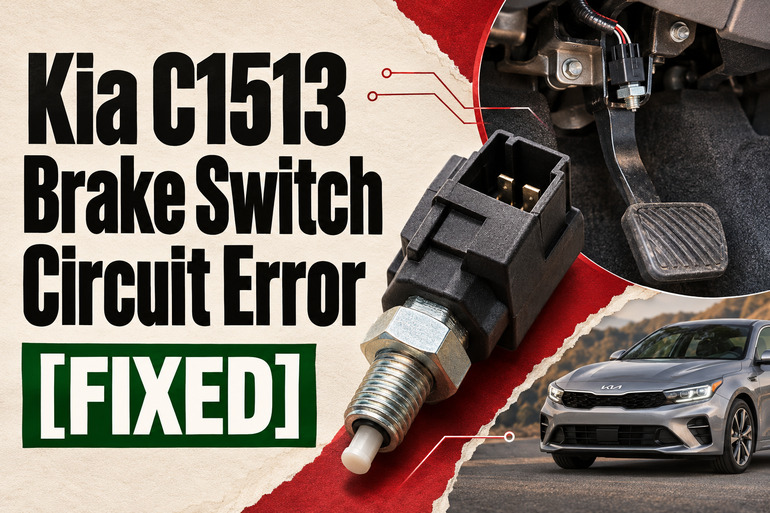
What Does the Kia C1513 Code Mean?
Kia service information describes C1513 as a brake switch error, although the wording on your scan tool may vary. The switch near the brake pedal tells the vehicle’s control system whether you’re pressing the brake. That information helps the electronic stability control system, usually called ESC, interpret your braking input. An unexpected signal can trigger the code.
The exact fault conditions depend on the model. Some systems monitor separate switch contacts, while others also check whether the brake switch signal agrees with brake pressure. Kia’s Forte recall instructions document one example where C1513 can appear because the switch indicates braking while no brake pressure is present.
Possible clues include an ESC warning and brake lamps that don’t follow pedal movement correctly. However, working brake lights don’t prove that every switch signal is correct. Also, C1513 alone doesn’t establish that the hydraulic brakes have failed. Kia’s stop lamp switch recall information specifically distinguishes the recalled electrical fault from the vehicle’s basic braking function.
Your symptoms still determine the next step. Stop driving if braking feels weak, the pedal sinks unusually, fluid leaks are visible, or a red brake warning remains on after releasing the parking brake. Arrange assistance if the brake lamps don’t work properly. Drivers behind you need a clear signal whenever you slow down.
Kia C1513 Brake Switch Circuit Error [FIXED]: Common Causes
Several faults can produce an incorrect brake pedal signal. The following possibilities deserve attention before you approve replacement parts.
1. Faulty Brake Light Switch
The switch can develop an internal electrical fault even when its outer case looks fine. Kia’s SC098 recall bulletin explains that carbon buildup at the switch contacts can interrupt current, causing the brake lights to work intermittently or respond incorrectly. That makes internal switch failure an established concern on affected vehicles.
An intermittent problem can be especially misleading. The lamps might work during one check and fail later, so a single successful pedal press doesn’t settle the diagnosis. Tell the technician whether the fault appears after repeated braking, comes and goes without a clear pattern, or began before any recent repair. These observations help guide testing.
2. Damaged or Missing Brake Pedal Stopper
Brake lamps that remain on after you release the pedal can point to a damaged stopper pad. On applicable Kia designs, this small pad provides the contact surface for the stop lamp switch plunger. If the pad breaks down, the plunger may remain extended even though your foot is off the brake.
Kia documented this condition in recall SC158 for certain 2012 through 2014 Forte and Forte Koup vehicles. The bulletin links pad deterioration with continuously illuminated stop lamps and a traction control warning. Coverage depends on the vehicle’s identification number, so the model year alone doesn’t confirm eligibility.
Similar symptoms aren’t limited to that recall group. Kia bulletin CHA092 addresses stopper deterioration on certain U.S. built 2012 and 2013 Optima QF vehicles. A technical service bulletin provides repair guidance, but it doesn’t automatically establish that your vehicle has an open recall or qualifies for free repair.
3. Incorrect Switch Position or Replacement Part
If the warning appeared soon after switch replacement or pedal work, the installation deserves another look. The switch must sit correctly in relation to the pedal contact surface. Kia’s replacement instructions warn that improper adjustment can cause an engine or ESC warning to illuminate.
A new part can also be unsuitable for the vehicle. Kia’s SC098 bulletin includes several switch part numbers and different replacement procedures. It even notes a switch polarity distinction for certain Soul applications. Before assuming that a replacement switch is defective, have its application and installation checked against the exact vehicle.
4. Damaged Wiring or Poor Connections
The switch needs a sound electrical path to the control unit. A loose connection, damaged wire, or corroded terminal can interrupt that path and create an incorrect signal. Kia’s C1513 diagnostic procedure includes checking connectors for looseness, contamination, corrosion, bent terminals, and other damage.
This possibility deserves attention when a switch replacement hasn’t solved the problem. However, the code doesn’t identify which wire or connection has failed.
Electrical testing must follow the correct wiring diagram. Terminal locations and expected readings vary, so instructions for an older Sportage shouldn’t be applied automatically to an Optima or Sorento. Leave connector probing, continuity measurements, and harness repairs to a qualified technician.
5. Loss of Power to the Switch Circuit
An interrupted power supply can prevent the switch circuit from producing the expected signal. Depending on the model, diagnosis may include checking the relevant stop lamp or sensor circuit fuse. Kia’s published C1513 procedures specify different fuse arrangements for different vehicles, which makes the correct diagram essential.
Brake lamps that all fail together make a shared electrical problem worth investigating, but that observation isn’t a confirmed diagnosis. Avoid choosing a fuse based on an online photo from another Kia. Likewise, a repeatedly blown fuse needs an explanation. Replacing it again without finding the underlying fault can leave the original problem unresolved.
Kia C1513 Brake Switch Circuit Error [FIXED]: DIY Fixes
Start with observations that help identify the fault safely. Repairs involving switch adjustment, pedal components, or electrical testing should follow the exact Kia procedure and be handled by a qualified technician.
1. Check How All Brake Lamps Respond
Park on level ground, select Park, apply the parking brake, and keep the area behind the vehicle clear. With a helper observing from a safe position, press and release the brake pedal several times. Follow your owner’s manual for any required ignition setting.
Check both rear brake lamps and the center lamp. They should respond to pedal application and switch off after release. Kia includes this functional check in its stopper replacement instructions because correct lamp behavior is part of confirming the repair.
Write down whether all lamps fail, only one fails, or they remain illuminated. This gives the repair shop a clearer starting point. A single failed lamp calls for checking that lamp’s own circuit as well, while apparently normal lamps still don’t rule out a separate brake switch signal fault. Don’t continue driving with unreliable brake lamps.
2. Look for Visible Pedal Area Clues
With the vehicle secured and the engine off, use a flashlight to look around the brake pedal without removing panels or reaching into the mechanism. Check whether a floor mat or loose object is interfering with the pedal. Remove loose objects and secure the mat according to the owner’s manual.
You may also notice broken pad material on the floor or an obviously damaged contact pad above the pedal. Photograph anything unusual for the technician. Don’t glue a coin, bolt, or other substitute into place, and don’t turn the switch to change lamp behavior. The repair must preserve the correct pedal and switch relationship.
3. Check Recall Coverage Before Buying Parts
Use your Kia’s vehicle identification number, usually called the VIN, to check for an outstanding recall through NHTSA’s recall lookup. Then ask a Kia dealer to confirm the vehicle’s campaign history. A search by year and model gives general information, while a VIN check helps identify whether a particular vehicle needs recall work.
Two relevant campaign names are SC098 for stop lamp switch replacement and SC158 for brake pedal stopper replacement on affected vehicles. Mention the code and your observed symptoms when contacting the dealer. This helps the service department check the appropriate records without assuming that every Kia with C1513 has the same defect.
If an applicable recall remains open, arrange the specified repair before purchasing parts independently. Ask the dealer to explain the coverage for your VIN and whether any separate diagnosis is needed. Keep the repair paperwork so a future technician can see which component was replaced and which campaign was completed.
4. Record the Code and Relevant Scan Data
If you already have a compatible scan tool, save the complete scan report before clearing anything. Record C1513, any other codes, and whether the tool identifies them as current or stored. Confirm that the tool supports your Kia’s ABS or ESC system, since engine code reading alone may not provide the information needed here.
Where supported, brake switch live data can help a technician compare the reported pedal position with actual pedal movement. Kia’s diagnostic material includes monitoring brake lamp switch and brake switch data. These readings are useful evidence, although their names and expected states must be interpreted for the specific model.
Don’t clear the code simply to see whether the warning disappears. Save the evidence first and address the fault. Also, avoid disconnecting the battery as a troubleshooting shortcut. The useful question is whether the vehicle receives the correct brake signal consistently, and a reset alone doesn’t establish that.
5. Have the Confirmed Fault Repaired and Verified
Once testing identifies the problem, match the repair to that finding. A damaged stopper requires the correct replacement pad. A faulty switch requires the correct switch and installation procedure. A wiring or power supply problem needs repair at the failed point rather than another switch fitted without supporting evidence.
Ask the technician to verify switch operation and adjustment using service information for your model. The goal is consistent agreement between pedal movement, brake lamp behavior, and the signals seen by the control system. This is especially useful when a previous repair improved the symptoms but didn’t stop the code from returning.
After the physical fault is corrected, the technician can clear the code where appropriate and complete the required verification. Kia’s Optima stopper bulletin specifically instructs technicians to cycle the ignition and, if the ESC warning remains, confirm and clear C1513. Other codes require their own diagnosis. A warning light going out is only part of confirming success.
6. Contact a Qualified Kia Technician
Arrange professional diagnosis if the lamps remain unreliable, the warning returns, or the cause isn’t clear after the safe checks. Seek assistance immediately for abnormal braking or a red brake warning. You don’t need to exhaust every possible check before getting help.
Bring the scan report, your lamp observations, and details of recent work. Explain whether the code appeared before or after a switch replacement. These details can reduce repeated checks and help the technician focus on a fault that occurs only occasionally.
Be cautious about approving an expensive ABS or ESC control unit based on C1513 alone. Kia’s published diagnostic procedures check the switch circuits before considering control unit replacement. Ask what test results support the proposed repair and how the shop will verify that it resolves the fault.
Wrapping Up
Kia C1513 calls for a careful check of the brake pedal signal and the parts that produce it. The useful starting point is what your vehicle actually does, including how the brake lamps respond and whether the warning followed recent work. Those details help prevent unnecessary parts replacement.
Check the lamps safely, save any scan information, and confirm recall coverage before approving repairs. If braking changes or the lamps become unreliable, arrange assistance promptly. A successful repair should restore correct operation and pass the checks required for your particular Kia.