
A clicking noise when your Kia Optima won’t start often points to a weak battery or a poor battery connection. However, the sound alone doesn’t confirm which part has failed. A starter problem can produce a similar symptom, so replacing parts without testing can become expensive.
The useful clues are the clicking pattern, whether the engine turns, and what happens to the lights during a starting attempt. These details help you choose the next safe check and avoid unnecessary repairs.
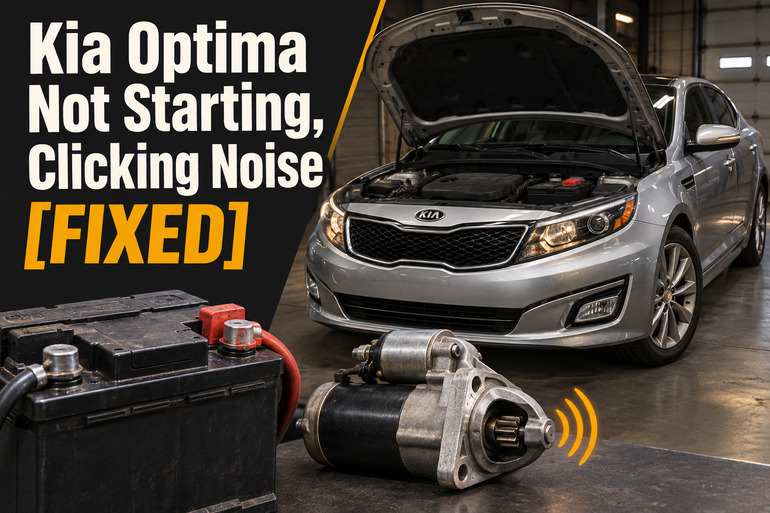
What the Clicking Noise Means
On a conventional gasoline Optima, the battery supplies electricity to the starter motor, which turns the engine during starting. A solenoid acts as an electrical switch and helps engage the starter. If the supply voltage is insufficient, or the starter has an internal fault, you may hear clicking without the engine turning. DENSO recommends checking battery condition and electrical connections before condemning the starter.
Rapid clicking usually directs attention to the battery and its connections. One solid click leaves several possibilities, including inadequate electrical supply or a starter fault. Neither sound proves that a particular component needs replacement. Also, note whether the sound comes from the engine compartment or the dashboard, since a clicking relay can be mistaken for the starter.
There’s an important difference between an engine that doesn’t crank and one that cranks but won’t run. Cranking is the repeated turning sound you normally hear before the engine starts. If that sound is present at its normal speed, the diagnosis needs to move beyond a simple clicking starter complaint. Kia’s owner guidance treats these as separate problems.
Optima Hybrid and Plug In Hybrid models require a different approach. Their starting systems differ from those of conventional gasoline models, and engine silence doesn’t necessarily mean the vehicle is off. Check the READY indicator and follow the manual for your exact model. Never touch orange cables or attempt work on the high voltage battery.
Kia Optima Not Starting, Clicking Noise [FIXED]: Common Causes
Several faults can prevent your Optima from turning over while still allowing a clicking sound. Start with the battery and visible connections, then use test results to decide whether further diagnosis is needed.
1. A Discharged or Failing Battery
Your dashboard may light up even when the battery can’t start the engine. Working lights don’t establish that the battery can supply enough power under the much heavier demand of starting.
A battery can become discharged without being permanently damaged. Therefore, a low charge reading should lead to charging and testing rather than an automatic replacement. Battery manufacturer OPTIMA recommends recharging a discharged battery before assessing whether it needs replacement.
Recent slow starting, a period of storage, or an accessory left running can help explain the circumstances. Share those details with the person testing the battery, especially if the problem appeared suddenly.
2. Corroded Terminals or Damaged Battery Cables
White or bluish buildup around a battery terminal deserves attention. Corrosion can interfere with the flow of electricity, producing slow cranking, clicking, or a failure to start. Consequently, even a charged battery may struggle to deliver power through a poor connection.
Look for obvious cable damage and heavy deposits around the terminals. A recently replaced battery also makes it useful to have the installation checked. However, a clean appearance doesn’t rule out resistance inside a cable or at a connection that isn’t readily visible.
3. A Faulty Starter or Solenoid
A persistent click can come from a starter assembly that receives a start command but fails to turn the engine. Possible internal problems include worn components or damaged solenoid contacts.
Nevertheless, a click alone isn’t enough evidence to buy a starter. DENSO identifies both inadequate voltage and burnt solenoid contacts as possible explanations for clicking without starter rotation. A technician needs to establish which condition is present.
Tell the repair shop whether the fault happens every time, only after driving, or only occasionally. An intermittent problem can be harder to reproduce, so a clear account of the conditions is useful.
4. A Charging Problem or Electrical Drain
If the battery repeatedly goes flat, the reason may extend beyond the battery itself. Charging faults, persistent electrical drains, and poor connections can all contribute to repeated discharge. Replacing the battery without investigating the pattern can leave the original problem unresolved.
The timing provides useful background. Note whether the car struggles after sitting overnight, after several days parked, or shortly after a jump start. Also, mention recently fitted accessories. These observations help a technician choose appropriate tests, although they don’t confirm the cause.
5. Mechanical Resistance Inside the Engine
An engine that can’t turn can place a heavy load on the starting system. DENSO notes that engine problems can cause high starter current draw, so a failure to crank doesn’t always originate in the electrical components.
This possibility deserves particular attention if your Optima stopped running after knocking, loss of power, or an oil pressure warning. Kia’s SC147 engine bulletin describes connecting rod bearing wear that can produce knocking and warning lights before engine failure. Applicability must be checked against the vehicle’s VIN.
Clicking by itself doesn’t establish engine damage. However, if those earlier warning signs occurred, stop attempting to start the car and arrange professional assessment.
Kia Optima Not Starting, Clicking Noise [FIXED]: DIY Fixes
Use the symptoms to guide a few safe checks before authorizing parts replacement. If you find a damaged battery, smoke, or signs of serious engine trouble, stop and arrange assistance immediately.
1. Confirm the Starting Conditions
Park safely, apply the parking brake, and make sure an automatic Optima is fully in Park. Kia’s starting guidance identifies Park or Neutral and clean, secure battery connections among the initial checks when an engine won’t turn over. Never push or pull the vehicle to start it.
Next, follow the normal starting procedure in your model’s manual. Read any dashboard message rather than repeatedly pressing the button or turning the key. A message about the key, brake pedal, or selector position is useful information to record.
During one brief attempt, note whether you hear repeated clicks, one click, or normal cranking. Also, watch for lights dimming sharply. Share those observations with roadside assistance or the repair shop, and avoid repeated attempts that provide no new information.
2. Look for Visible Battery and Connection Problems
Switch the vehicle off and keep the key away from the starting controls before looking under the hood. Check only areas you can see safely. Look for a damaged battery case, substantial terminal corrosion, or visibly damaged cables.
Avoid putting tools across the terminals or handling a leaking battery. If the case is swollen, cracked, or possibly frozen, don’t attempt a jump start. Kia warns against jump starting a frozen battery because it may rupture or explode. Arrange roadside assistance instead.
For corrosion or a suspected loose connection, have a battery service provider clean and secure the connections using the correct procedure. This is especially useful if you’re unfamiliar with battery handling. Afterward, the provider should confirm normal starting rather than assuming the visible buildup was the only fault.
3. Have the Battery Charged and Tested
Ask for a battery test that assesses starting ability, not simply a quick voltage reading. A resting voltage measurement provides useful information about charge, but it’s only one part of evaluating battery condition. Yuasa specifically distinguishes resting voltage from a fuller battery assessment.
For reference, a fully charged conventional 12 volt lead acid battery commonly measures approximately 12.6 to 12.8 volts at rest. Temperature, battery type, and recent charging affect how a reading should be interpreted. A number within that range doesn’t by itself prove that the battery can start the car.
If the battery is discharged, request appropriate charging followed by another test. If replacement is recommended, ask for the result supporting that decision and confirm the correct battery specification for your Optima. This provides a stronger basis for repair than age or clicking alone.
4. Use the Correct Jump Starting Procedure
A jump start may help when insufficient battery charge is preventing starting. However, use the owner’s manual for your exact model and the instructions supplied with the booster equipment. Conventional, Hybrid, and Plug In Hybrid versions shouldn’t be treated as having identical connection points or procedures.
Kia’s Optima instructions specify an appropriate 12 volt supply and a prescribed connection sequence. They also place the final negative connection at a suitable stationary metal point away from the discharged battery. If you can’t identify the correct points confidently, use roadside assistance.
If the engine starts, arrange battery and charging checks. A successful boost is useful evidence, but it doesn’t establish why the battery became discharged. Likewise, if the car still clicks, stop short of declaring the starter faulty based on that result alone.
5. Address Repeated Battery Discharge
After a successful start, check for an obvious explanation such as an interior light left on or an accessory that remained powered. Record how long the vehicle had been parked and whether this has happened before.
Don’t assume that a short drive will fully recover a deeply discharged battery. OPTIMA explains that driving may provide insufficient charging time and can place extra demand on the charging system. An appropriate external charging service may be needed before reliable testing.
If discharge returns, request charging system and electrical drain diagnosis. On a conventional gasoline Optima, this includes checking alternator operation and associated connections. DENSO recommends beginning charging system diagnosis with a charged battery and sound connections, which helps prevent misleading results. Hybrid models require checks suited to their different systems.
6. Contact a Qualified Automotive Technician
Arrange professional diagnosis if the battery passes testing but the engine still won’t turn, a correct jump start doesn’t help, or the fault keeps returning. Ask the shop to test the starting circuit before replacing the starter. Relevant checks include voltage loss through the cables, the start command, and starter current draw.
These tests help distinguish a poor connection from an internal starter fault or mechanical resistance. Avoid bypassing a relay, bridging starter terminals, or working beneath the vehicle to investigate the sound. Such work requires proper equipment and knowledge of the vehicle’s starting controls.
If knocking, an oil pressure warning, or a stall preceded the failure, arrange towing and contact a Kia dealer with your VIN. Certain Optimas were included in engine bearing campaigns, but coverage and outstanding work require individual verification. Have that checked before approving a major repair.
Wrapping Up
A clicking Optima needs a clear diagnosis before it needs a collection of new parts. The sound, light behavior, battery test results, and events leading up to the failure all help narrow the possibilities. Keep those details together so the next check answers a useful question.
Begin with safe observations and a proper battery assessment. If the fault persists, arrange starting system testing. For a car that stopped after serious warning signs, choose towing and professional inspection immediately. That approach gives you a practical path to a reliable repair.