
When the 12V outlet in your Kia Forte stops working, a dead phone charger may be your first clue. But the same symptom can come from a bad cable, a plug that sits too loosely, or a fuse that blew the last time you used the outlet.
Start with a device you know works. Testing it with the engine running can help you narrow down the fault before you buy a charger or pull a fuse.
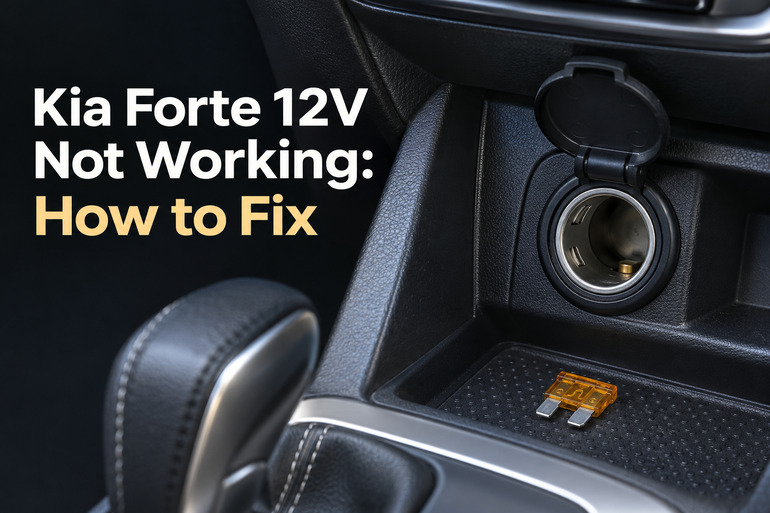
What It Means When Your Forte’s 12V Outlet Stops Working
The 12V outlet is the round socket that powers accessories such as a dashcam, a phone charger, or a compatible tire inflator. The plug needs contact at its tip and along the sides of the socket to complete the electrical circuit. If either connection fails, the accessory can shut off even though the plug still looks seated.
The built-in USB ports give you a separate place to charge or connect a device. A working USB port tells you little about the round socket. And if your Forte has two round outlets, one can work while the other stays dead. The outlet locations and fuse layout vary with the model year and equipment.
Pay attention to how the power cuts out. If a charger light flickers when you let go of the plug, the fit or electrical contact is worth checking. An outlet that stays dead with two working accessories calls for a fuse check. If you smell burnt plastic, see melting around the socket, or find that the plug gets unusually hot, stop using the outlet and have it inspected before testing it again.
Kia Forte 12V Not Working: Common Causes
The fastest clue is often whether the fault follows the accessory or stays with the socket. It also helps to think back to what happened just before the outlet quit, especially if you had plugged in a new device or spilled something near the console.
1. The Outlet Has No Power in That Ignition Mode
If you first noticed the problem while sitting in the car with the engine off, the outlet may be behaving normally. Kia’s guidance varies by year. Its 2024 Forte guide warns that using the outlet for long periods in accessory mode can drain the battery, while the 2021 Forte manual directs you to use the outlet with the engine running.
The radio coming on can make it seem as though every socket should have power. Use the same accessory in the same socket with the engine running before drawing a conclusion. If it works reliably under those conditions, there’s little reason to start pulling fuses.
2. The Charger, Cable, or Accessory Plug Has Failed
A phone that won’t charge tells you there’s a problem somewhere between the socket and the phone. If the charger’s indicator stays lit but the phone shows no charging symbol, a worn USB cable or a bad charger output could explain it. If your setup has a removable cable, swapping that cable is an easy way to narrow things down.
Some accessories have their own fuse inside the plug. For example, certain Garmin vehicle power cables use a small fuse near the metal tip. That fuse can blow while the Forte’s outlet fuse remains intact, which explains why one device might stay dark while another works in the same socket. Check the accessory manual to see whether its fuse is replaceable.
3. The Outlet Fuse Has Blown
A fuse cuts power when too much current flows through the circuit. If your outlet worked until you switched on an inflator or connected a power inverter, check the accessory’s input rating. A device that draws too much current, or has an electrical fault of its own, can blow the fuse and leave the outlet dead after you unplug it.
A blown fuse explains the loss of power, but the timing can help explain why it blew. A fuse that fails as soon as a particular device switches on points to a different problem from one that fails with the outlet empty. In the second case, the socket or vehicle wiring needs attention.
The number printed on the fuse tells you the fuse rating. Use the outlet cover and owner’s manual to find out how much power your accessory can draw. For example, Kia’s 2021 Forte manual calls for devices that draw less than 10 amps, while its 2024 U.S. feature guide lists a maximum of 180 watts for the outlet it shows.
4. The Socket Is Obstructed, Loose, or Damaged
A scrap of paper or a broken piece from an old plug can keep the new plug from seating fully. A coin or another conductive object can cause a short if it bridges the center contact and the metal wall. Spilled liquid or corrosion can also interfere with the connection.
How the plug fits can help you tell a worn plug from a damaged socket. If one adapter sits loosely while another fits snugly and works, start with the adapter. If several suitable plugs lose power in the same outlet, or the round socket itself moves in the console, group those symptoms together when you describe the fault to a technician. Poor contact can also cause the plug to heat up.
5. A Wire, Connector, or Relay Has a Fault
If the fuse is good and a working accessory still gets no power, the fault may be behind the console or farther back in the circuit. A loose connector can cut power altogether. A corroded connection on the ground side, which gives current a path back to the battery, can let a charger light up with nothing attached but fail once it tries to charge a phone.
On some Fortes, a relay switches power to the outlet circuit. The 2023 owner’s manual, for example, lists a power outlet relay alongside separate outlet fuses. If more than one round socket stops working at once, a shared power supply is worth checking. If a single socket quit soon after work around the center console, mention that timing when you book a diagnostic visit.
Kia Forte 12V Not Working: DIY Fixes
Work through the checks in order so you can see what changes each time. If you spot damage or smell burning, skip the power tests and arrange an inspection.
1. Test the Outlet With the Engine Running
Park outdoors, set the parking brake, and start the engine. Use a small 12V charger you’ve already confirmed works in another vehicle or outlet. With the car stationary, push it in gently until it seats. If the charger has an indicator, look for a steady light, then connect a phone with a working cable to confirm that it actually charges.
If it charges normally, try your original accessory under the same conditions, provided the plug looks undamaged and the device is within the outlet’s limit. If the original device still fails, you’ve narrowed the problem to that device, its cable, or its fit in the socket.
2. Swap the Cable or Power Adapter
For a phone charger with a removable USB cable, keep the charger and phone the same and substitute a cable you’ve already used successfully. If charging comes back, replace the old cable. If nothing changes, try another working power adapter while keeping the good cable in place.
For a dashcam, GPS unit, or another device with a dedicated power lead, check the maker’s instructions for a fuse in the plug. If there’s a user-replaceable fuse, unplug the adapter and follow the instructions for your specific device. Match both the fuse type and amperage. A cable with a cracked plug, frayed insulation, or heat damage should be replaced with a compatible one.
3. Look Inside the Socket With a Flashlight
Turn the car off and remove the accessory. Shine a flashlight into the opening and look for a coin, a broken plug tip, sticky residue, corrosion, or dark marks. Look at the outlet rim too. Distorted plastic or a socket that has shifted out of position can explain why a plug no longer sits properly.
If something is lodged inside, leave the outlet unused and have it removed safely. Keep fingers, picks, and screwdrivers out of the socket. If the opening is clear and undamaged but the plug backs out on its own, try one compatible adapter that seats securely without force. If that one also loses contact, have the socket checked.
4. Check the Accessory’s Power Rating
Find the 12V input rating on the device, its power cord, or in its manual. On a USB adapter, the output rating describes what it sends to your phone. The input rating is the figure that matters to the car. Compare it with the limit on the socket cover or in your Forte’s owner’s manual.
If you were using a splitter, unplug it and consider what all the connected devices were drawing together. A splitter gives you more places to plug in, and all those devices still draw from the same socket. Leave an accessory that exceeds the outlet rating disconnected. If an inflator or inverter lists a peak draw, check that figure as well.
Once you’ve confirmed the rating, test the outlet directly with a small charger. If the charger runs steadily but a higher draw device within the outlet’s limit keeps cutting out, tell the technician which device causes the problem. A weak connection can show up only when the outlet has to supply more current.
5. Replace a Blown Outlet Fuse
Open the Fuses section of the owner’s manual for your model year. Match the outlet to the diagram on the actual fuse panel cover. A 2017 Forte manual shows outlet fuses in the driver’s side panel, while the 2023 manual lists front outlet fuses in the engine compartment. Similar labels can refer to different parts of the circuit, so use the circuit description as well as the fuse name.
Switch the ignition and accessories off, unplug everything from the outlet, and use the fuse puller to remove the identified fuse. A gap in the metal strip inside a clear fuse means it has blown. Replace it with the same physical type and amperage, then refit the panel cover. Leave any bolted fuse or fuse block to a technician.
Retest with the small charger first. If it works, keep the accessory that may have triggered the failure unplugged until you’ve checked its condition and rating. If the replacement fuse blows, stop using the outlet and arrange a diagnosis. A larger fuse can allow the wiring to carry more current than it was meant to handle.
6. Have a Technician Check the Outlet Circuit
Contact a Kia dealer or qualified automotive technician if the correct fuse is good but the socket stays dead, the replacement fuse blows, or the outlet shows signs of heat damage. A technician can test the socket with an accessory drawing power, then trace the fault to the socket, wiring, ground connection, or relay as needed.
Tell the shop which outlets work, what was plugged in when the fault began, and whether it happens with the engine running. If a new fuse failed, mention whether the socket was empty at the time. Those details give the technician a better place to start, especially if the fault comes and goes.
Wrapping Up
The most useful thing you can learn about a dead outlet is what makes the fault appear. A charger that fails wherever you plug it in gives you a clear next step. A socket that drops power with several working devices deserves a closer look, especially if the plug has ever felt hot or the outlet has already blown a replacement fuse.
Keep track of what you tested and which socket you used. If you need to take the Forte in, that short record gives the shop something concrete to work with.