
Your Kia Rio’s dash lights come on, but when you turn the key or press Start, all you hear is a click. A rapid series of clicks often points to a weak battery or a poor connection. A single solid click can also come from the starter itself.
Before buying a battery or starter, pay attention to what the lights do during that brief attempt. Then check the battery connections and see whether a safe jump start changes the sound.
What the Clicking Means When Your Kia Rio Won’t Start
When you start your Rio, the battery supplies the current that the starter motor needs to turn the engine. A part called the starter solenoid moves a small gear into place and switches on power to the motor. The click you hear may be the solenoid moving. If the motor can’t turn, the engine stays still.
Rapid clicking can happen when voltage falls as soon as the starter tries to draw power. The solenoid drops out, voltage recovers briefly, and the cycle starts again. Kia’s owner’s manual suggests watching the interior light during a start attempt. If it goes very dim or out, a discharged battery is a strong possibility. A poor cable connection can produce a similar symptom.
Listen for the difference between a click and the steady sound of the engine turning. If the engine turns at its usual speed but never starts, Kia treats that as a separate problem and lists the fuel level as an initial check. If the engine never turns or moves very slowly, focus first on the battery and starting system.
Kia Rio Not Starting, Clicking: Common Causes
The speed of the clicks and the behavior of the lights can help you decide where to start. It also matters whether the problem appeared after the car sat, after recent battery work, or while you were already having electrical trouble on the road.
1. A Discharged or Worn Battery
A battery can have enough power to light the dashboard and still fall short when you try to start the engine. The starter needs much more current than the dash lights. If the clicks come quickly and the interior light fades sharply at the same time, the battery is one of the first things to check.
Think about what happened before the first failed start. A light left on can run down an otherwise healthy battery. If the engine has been turning more slowly for several mornings, or the car has needed a few jumps lately, the battery may be losing its ability to deliver starting power.
A successful jump tells you that extra power helped the engine turn. A battery test after recharging can tell you more. If the battery delivers enough power after a full charge, look for what drained it. If it fails a proper test after charging, replacement makes sense.
2. Loose Battery Clamps or a Poor Ground
Look for white, blue, or green powder around the battery posts. That buildup is corrosion, and it can make it harder for current to pass between a post and its clamp. A clamp that twists on the post can cause similar trouble. If the clicking began soon after a battery replacement, check both clamps before assuming the new battery is bad.
The negative battery cable also connects to metal on the car, forming part of the return path for current. A poor connection along that path can keep the starter from getting enough power even when both battery posts look clean. A technician can check for voltage loss along the cables while the starter is trying to run.
3. A Charging Fault or a Drain While Parked
The alternator supplies electrical power while the engine runs and replenishes the battery after a start. If the charging system has a fault, the Rio can use up enough of the battery’s charge that you hear clicking the next time you try to start it. A battery shaped warning light that stays on after the engine starts or appears while you’re driving points to a charging system problem. The alternator, its drive belt, and the wiring are all possible causes.
If the Rio starts after charging but goes flat again after sitting, something may be using power while it’s parked. A trunk or glove box light that stays on is one possibility. A battery that can’t hold a charge can produce the same pattern, so have the battery and charging system tested before paying someone to trace a drain.
4. A Worn Starter Motor or Solenoid
One firm click with little change in the dash lights can put the starter higher on the list, especially if a tested battery and sound cables can supply enough power. The solenoid may move while worn contacts inside it fail to pass current to the motor. Wear inside the motor can also keep it from turning.
A starter fault can come and go. The Rio might click once and then crank normally on the next attempt. If that happens, note whether the engine was cold or had just been running. A shop can use that detail to try to reproduce the fault and check the power reaching the starter before replacing it.
5. A Fault in the Start Controls
The Rio has to recognize the right conditions before it allows the starter to run. If an automatic Rio starts reliably in Neutral but repeatedly fails in Park, the switch or sensor that reports gear position deserves a check. On a manual Rio, a clutch start switch can cause trouble even when the pedal is fully pressed.
These faults often leave the starter silent, though you may hear a relay click. On a Rio with push button start, check the dash for a message asking you to press the brake or use the key fob to press the Start button. A message like that gives you a more specific place to start than the sound alone.
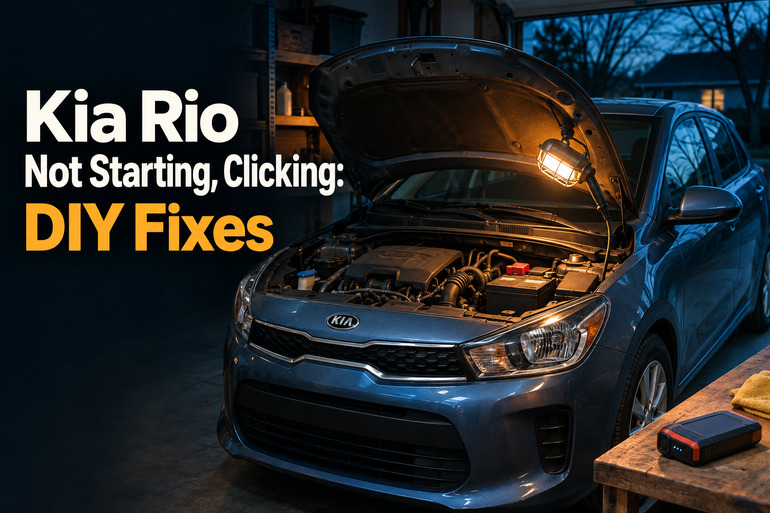
Kia Rio Not Starting, Clicking: DIY Fixes
Start with the checks you can make from the driver’s seat, then look at the battery if the car is parked safely. If you see a cracked or swollen battery case, leaking fluid, or signs that the battery is frozen, leave it alone and call roadside assistance.
1. Check the Gear Position and Pedals
Set the parking brake and hold the brake pedal down. On an automatic Rio, make sure the shifter is fully in Park. If it still won’t crank and your owner’s manual allows starting in Neutral, keep your foot on the brake, select Neutral, and try once. On a manual model, select Neutral and press the clutch all the way down. Check that the floor mat isn’t blocking the pedal.
If you have push button start and the dash asks you to use the key, follow the backup start procedure in your manual. On equipped models, you can press the Start button with the fob itself while holding the brake. If the car consistently starts in Neutral only, arrange to have the gear position switch or sensor checked.
2. Check That the Battery Clamps Are Secure
Turn the ignition off, remove any metal jewelry, and put on gloves and safety glasses. Find the two clamps at the battery posts. Gently check whether either clamp twists by hand. If a clamp is loose and in good condition, seat it squarely on the post and tighten its fastener to your model’s specification. Keep metal tools clear of the opposite terminal and surrounding metal when working at the positive post.
If corrosion is preventing good contact, follow your manual’s battery disconnection instructions before cleaning. The negative cable comes off first and goes back on last. Use a battery terminal brush to clean the mating surfaces. If a clamp is cracked, won’t tighten, or has corrosion extending into the cable, have it serviced. Once both clamps are secure, try starting the car again.
3. Measure the Battery’s Resting Voltage
If you have a digital multimeter, check the battery with the engine and accessories off. Set the meter to DC volts. If it has a manual range, select 20 volts. Touch the red probe to the positive battery post and the black probe to the negative post. Keep the probe tips from touching each other.
About 12.6 volts is a common reference for a charged conventional car battery. A resting reading around 12.2 volts or lower suggests the battery needs charging. Take the reading after the car has sat for a while, since recent driving or charging can temporarily raise the reading.
If the meter shows about 12.6 volts and you still hear clicking, have the battery tested under load. Resting voltage tells you about charge at that moment. A load test shows how the battery performs when asked to supply current.
4. Try a Safe Jump Start
Use a 12 volt booster and check the jump start diagram in the manual for your Rio’s model year. If you’re using another vehicle, check its manual too. Keep the vehicles from touching, set both parking brakes, and turn off accessories. If you’re using a portable pack, follow its instructions and the Kia manual for the connection points.
For a donor vehicle, Kia’s procedure connects the red cable to the Rio’s positive terminal first, then to the donor’s positive terminal. Connect the black cable to the donor’s negative terminal, then to the stationary metal ground shown in the Rio’s manual, away from its battery and moving parts. Follow the manual’s starting procedure, then remove the clamps in reverse order.
If the engine cranks normally with the booster, have the battery recharged and tested if you don’t know why it went flat. If a properly connected booster makes no difference, stop repeated attempts and arrange a starting system check. If the charging warning light stays on with the engine running, shut it off once you’re safely parked and arrange a tow.
5. Check What Might Be Draining the Battery
If the Rio starts after a recharge and then clicks again after sitting, check for lights or accessories that may stay on. Switch off the map lights, close the glove box and trunk or hatch firmly, and unplug any removable accessories that stay powered with the ignition off.
If the battery and charging system pass their tests, see whether the car starts after a similar period parked with those accessories unplugged. A successful start gives you a clue about what changed. If the battery goes flat again, tell the technician how long it was parked. That can help them check for an electrical draw after the car’s systems have had time to shut down.
When to Call a Mechanic
Call roadside assistance if you can’t work safely where the car is parked, the battery looks damaged, or a correctly connected booster still leaves you with a click. If the fault keeps coming back, ask a qualified mechanic to test the battery and check for voltage loss at the starter while trying to crank the engine. Those checks can help distinguish a failing starter from a bad cable or ground connection.
Wrapping Up
A few details are worth saving if your Rio starts again before anyone can look at it. Write down whether you heard one click or several, whether the cabin light faded, and how long the car had been parked. If the trouble comes and goes, a short recording from the driver’s seat can help you describe what happened.
If you found a loose clamp and the car starts normally after you secure it, you have a clear result. If the cause is still unclear, bring those observations to a battery or starting system test before spending money on parts.