
The sound your Kia Picanto 1.1 makes when you turn the key can tell you where to begin. A string of clicks or a slow, uneven crank points you toward the battery and its connections. If the engine turns at its usual speed without starting, you’ll need a different set of checks.
Start with what you can see and hear. A quick check of the battery, fuel level, or key can save you from replacing a part that works.
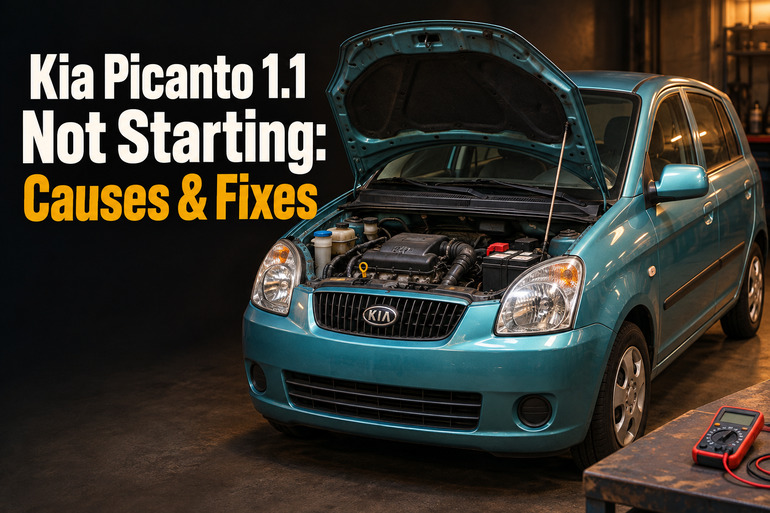
What Happens When Your Picanto Won’t Start
When you turn the key to START, the battery powers a starter motor that spins the engine. That’s what mechanics mean by cranking or turning over. Once the engine begins firing on its own, you release the key and the starter’s job is done. If you hear silence, a click, or a short whir without the usual rhythm of the engine turning, tell the mechanic it won’t crank.
If the engine makes its usual steady cranking sound, it’s already turning. On the 1.1 gasoline engine, starting depends on fuel, spark, and enough pressure in the cylinders to burn the mixture. The 1.1 CRDi diesel uses the heat of compressed air to ignite the fuel, with glow plugs helping when the engine is cold. That difference matters when you’re deciding what to check.
A problem that comes and goes can be easier to trace if you note when it happens. A slow crank first thing in the morning gives you a different clue from an engine that cranks normally but refuses to restart ten minutes after you parked. If the engine starts, then cuts out, make a note of that too. It tells the mechanic the engine was able to fire briefly.
Stop trying to start the car if you see smoke or leaking fuel, or if you smell a strong odor of raw fuel. If the engine cut out while driving and the starter now spins it much faster or more unevenly than usual, arrange a tow. A change like that can point to a loss of pressure in the cylinders or a timing fault.
Kia Picanto 1.1 Not Starting: Common Causes
The first split is between an engine that won’t turn properly and one that turns but won’t fire. From there, the dashboard lights, the fuel level, and what happened just before the fault can help narrow down the cause.
1. A Weak Battery or Poor Cable Connection
Rapid clicking often means the starter tries to engage, but the voltage drops as soon as it draws power. You may also hear the engine struggle through a few slow turns. Watch the interior light during a short attempt. If it goes very dim or out, the battery may be discharged, or there may be a poor connection.
Even a battery with enough power for the radio and dash lights can struggle to run the starter. Look for a loose clamp or a crusty deposit around a battery post. The ground cable, which completes the electrical path between the battery and the engine, can also cause slow cranking if its connection is poor.
If a jump gets the car running but it needs help again the next morning, the battery may no longer hold a charge. A charging fault or something drawing power while the car is parked can leave a good battery flat too. Tell the shop if the battery warning light came on while the engine was running.
2. A Fault in the Starter or Its Controls
One solid click with no cranking can come from the starter’s solenoid, the part that engages the starter gear and switches power to the motor. The solenoid can click even when the motor fails to turn. A weak battery or poor cable connection can make a similar sound, so check those before paying for a starter.
Silence with bright dash lights can point to a fault in the circuit that tells the starter to operate. That circuit includes the ignition switch and, depending on the model, a switch that checks the gear selector or clutch pedal position. If an automatic Picanto cranks in Neutral but repeatedly stays silent in Park, that’s a useful clue to share with a mechanic.
3. The Immobilizer Can’t Read the Key
On versions with an immobilizer, the car checks for a coded chip in the key before allowing the engine to start. A key can turn in the ignition even when the car can’t read its chip. This can happen with a replacement key that was cut to fit the lock but hasn’t been programmed to the car.
Check the immobilizer indicator against the description in your owner’s manual, since equipment can differ by model year and market. If one registered key works and the other fails under the same conditions, the trouble may be with that key. If both fail and the light behaves unusually, the car’s key reader or its wiring may need testing.
4. Fuel Isn’t Reaching the Engine
An almost empty tank is worth ruling out, especially if the low fuel light was already on or the gauge has been unreliable. With fuel in the tank, a failed pump or a loss of electrical power to it can still leave a gasoline engine without enough fuel pressure. A blown fuse may cut power to the pump or the injection system.
On a 1.1 CRDi, running the tank dry can let air into the fuel system. That helps explain why the engine may continue to crank without starting after you refill it. A diesel that has fuel but still won’t start may need a pressure check. The pump, pressure controls, and injectors can all affect the pressure available during starting.
5. A Weak Spark or a Missing Engine Signal
If your gasoline Picanto ran roughly or hesitated before it stopped starting, check whether it’s due for spark plugs or whether anyone recently worked around the ignition coils. A loose connector, worn plugs, or a coil fault can weaken or interrupt the spark. A fault that affects several cylinders is more likely to prevent starting than a single worn plug.
The engine computer also needs to know how fast the engine is turning and where it is in its cycle. It gets key information from the crankshaft position sensor. A missing signal can interrupt fuel injection and, on the gasoline engine, spark. The sensor’s connector or wiring can cause the same problem as the sensor itself.
A sudden stall followed by normal cranking can fit a crankshaft signal fault. So can a car that refuses to restart warm but starts again after cooling. Those patterns give a technician a place to begin. A scan for stored faults and a check of the signal during cranking can help pinpoint the issue.
Kia Picanto 1.1 Not Starting: DIY Fixes
Start with the checks that fit what the car is doing. Make one change at a time and listen to the next brief attempt so you can tell which step made a difference.
1. Use the Correct Starting Procedure
Set the parking brake. If your Picanto is automatic, hold the brake pedal and try starting it in Park. If the starter stays silent, keep your foot on the brake, select Neutral, and try once more. If it starts only in Neutral, arrange to have the selector and its switch checked.
With a manual transmission, put the shifter in Neutral and press the clutch pedal all the way down. Check whether a floor mat has bunched up behind the pedal. On a gasoline model, leave the accelerator alone during a normal start attempt.
For a cold 1.1 CRDi, turn the key to ON, wait for the glow plug indicator to go out, then crank. The 2008 Picanto manual limits a start attempt to 10 seconds. Follow the limit in your own manual. If the diesel consistently struggles on cold mornings even after you wait for the light, ask for a glow plug system check.
2. Look at the Battery Clamps and Try a Jump if Needed
With the ignition off and the key removed, look at both battery posts from above. The clamps should sit squarely on the posts. A clamp that has slipped upward or has heavy buildup around it needs attention. If a connection is visibly loose or badly corroded, have it serviced before judging the battery or the starter.
If the battery looks intact and the engine barely cranks, a jump can help you check whether extra power restores normal cranking. Use a 12 volt booster and follow the connection order and grounding point in your Picanto manual, along with the booster instructions. Leave a cracked, leaking, or possibly frozen battery alone and call roadside assistance.
Listen for whether the engine spins faster with the booster connected. If it does, or the engine starts, have the battery and charging system checked if the problem returns or you can’t account for the discharge. If the booster makes no difference and you still hear a click, a shop can test the cables and starter under load.
3. Try a Registered Spare Key
If your Picanto has an immobilizer, remove other chipped car keys from the immediate area around the ignition. Turn the ignition off, remove the original key, and give your registered spare a try on its own. Watch the immobilizer indicator as you turn the spare to ON.
If the spare starts the engine consistently, use it and have the original key checked by a Kia dealer or an automotive locksmith who can work with your model. If neither key starts the car, tell the technician what the indicator did with each one. That can help them decide whether to examine the key reader or look elsewhere.
4. Confirm the Fuel Level and Check Your Last Receipt
If the tank was nearly empty before the car stopped, add the correct fuel from an approved container before trying again. A CRDi that ran completely dry may also need air removed from the fuel system. Follow the procedure in your exact owner’s manual if it covers this, or call roadside assistance. Leave diesel injector lines alone.
If trouble began shortly after filling up, check what fuel is listed on the receipt. If you suspect the wrong fuel went in, leave the ignition off and arrange for the tank to be drained. If you already drove the car, tell the recovery service how far you went so they can decide what needs checking.
5. Check the Relevant Fuse and Visible Ignition Connectors
Use the fuse box label and your owner’s manual to identify a fuse that matches the symptom. A starter signal fuse is worth checking when the engine stays silent. If a gasoline engine cranks normally, the fuel pump or ignition fuse may be relevant. Fuse names and locations can vary between versions, so use the label on your car.
Switch off the ignition and accessories before pulling a small blade fuse with the plastic puller. If the metal strip inside is broken, replace it with a fuse of the same type and amperage. If the new fuse blows, stop and arrange an electrical diagnosis. Leave the main fuse and damaged wiring to a technician.
On the gasoline version, look for a visibly loose ignition coil connector, especially if the car stopped starting after work under the hood. With the key out and the engine cool, seat an accessible connector if it’s clearly loose and undamaged. Then try a brief start. Leave spark testing and damaged connectors to a mechanic.
6. Contact a Qualified Mechanic
Call for help if the basic checks leave you with the same fault, or if the car starts but keeps cutting out. Tell the mechanic whether it cranks normally, whether a jump changed the sound, and whether it fails cold, warm, or both. A short recording of the next failed start can help if the car tends to behave normally at the shop.
A technician can measure how much voltage is lost across the starter cables, check the crankshaft signal, and test fuel pressure. If the cranking rhythm changed after a stall, they can check cylinder pressure and engine timing. The 1.1 G4HG gasoline engine uses a timing belt, so bring any record of when it was last replaced.
Wrapping Up
An occasional slow start or an unexplained stall is worth noting while the details are fresh. The next time you turn the key, notice whether the engine turns at its usual speed and whether anything on the dash behaves differently. Those clues give you a better starting point than the age of any one part.
If a simple check gets your Picanto going, note what changed and pay attention to the next few starts. If the fault returns, you’ll have a clearer account to give a mechanic before any parts are ordered.