
Your Kia Picanto’s windshield washer jets help keep the glass clear by spraying cleaning fluid whenever you need it. However, they can stop working, produce a weak spray, or deliver fluid from only one nozzle. When that happens, dirt and road grime can become difficult to remove, affecting your visibility while driving.
Fortunately, several washer jet problems have simple solutions. Understanding what causes the failure can help you identify the fault and restore proper operation without replacing parts unnecessarily.
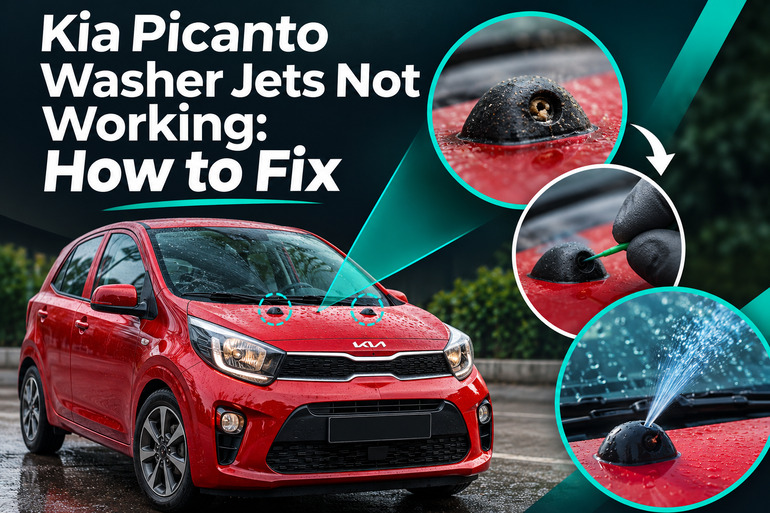
Understanding Why Your Kia Picanto Washer Jets Are Not Working
The Kia Picanto’s windshield washer system uses a small electric pump to move cleaning fluid from a reservoir through narrow hoses to the spray nozzles. These nozzles direct the fluid onto your windshield, allowing the wiper blades to remove dirt, dust, and other deposits.
When you pull the washer control lever toward you with the ignition on, the pump should deliver fluid while the windshield wipers operate. Kia’s owner’s manual explains that the wipers normally complete one to three cycles during this operation. If no fluid appears, something may be preventing the pump from delivering it to the nozzles.
The symptoms often provide useful clues. For example, if one washer jet produces a normal spray while the other barely works, a localized blockage is a likely explanation. However, when both jets stop spraying, the fault may involve the fluid supply, pump, electrical system, or a shared section of the washer hose.
You might also notice a faint humming sound when operating the washer control. This usually indicates that the pump motor is running, although it doesn’t confirm that the pump is producing enough pressure. Complete silence can suggest an electrical fault or failed pump. Either way, avoid repeatedly activating the washers when no fluid is available, since running the pump dry can damage it.
Kia Picanto Washer Jets Not Working: Common Causes
Several faults can prevent your Kia Picanto’s washer jets from spraying properly. Some develop gradually as dirt accumulates, while others appear suddenly because of a damaged component or an interrupted electrical supply.
1. Low Washer Fluid Level or Frozen Fluid
An empty washer fluid reservoir is one of the simplest explanations for washer jets that suddenly stop working. The washer pump needs enough fluid to draw from the reservoir and push through the hoses. When the level becomes too low, the pump may run without delivering anything to the windshield.
This commonly happens when the washer fluid hasn’t been topped up for some time. You might notice that the spray becomes weaker or stops intermittently before disappearing completely, particularly when the remaining fluid moves around inside the reservoir.
Cold weather introduces another possible problem. If ordinary water or an unsuitable washer solution freezes inside the reservoir, hoses, or nozzles, the pump cannot move the fluid normally. Some Picanto versions have heated washer nozzles, but these cannot reliably overcome a completely frozen reservoir. A washer system that stops working after a freezing night may simply need to thaw before further diagnosis.
2. Blocked Windshield Washer Nozzles
The washer nozzles have small openings that can become restricted by dirt, dried washer fluid, road dust, or wax left behind after cleaning the car. As these deposits accumulate, they interfere with the flow of fluid and gradually reduce the spray.
You may notice one jet delivering a thin stream instead of its usual spray pattern. Sometimes, the fluid shoots in the wrong direction or barely reaches the windshield. If one nozzle works normally while the other struggles, inspect the affected opening for visible contamination before suspecting the pump.
Blockages can also develop inside the nozzle, where they aren’t visible from the outside. In these situations, wiping the surface may improve the spray slightly without fully removing the obstruction.
3. Loose, Kinked, or Damaged Washer Hoses
Your Picanto uses narrow hoses to carry washer fluid from the pump toward the spray jets. These hoses need to remain securely connected and free from restrictions for the system to maintain adequate flow.
Over time, a hose can develop cracks, become disconnected, or get pinched between surrounding components. A connection may also loosen following repairs or other work around the hood. When this happens, the pump can continue running while some or all of the washer fluid escapes before reaching the nozzles.
One useful clue is unexpected moisture around the engine compartment when you activate the washers. You might also notice washer fluid collecting beneath the front of the car or a visible hose leaking. However, fluid underneath the vehicle doesn’t automatically confirm a washer leak, so check whether it appears specifically when the washer system operates.
4. Faulty Washer Pump or Blocked Pump Inlet
The washer pump is a small electric component that creates the pressure needed to move fluid through the system. If its motor fails or its internal pumping mechanism becomes damaged, the washer jets may stop working even when the reservoir is full.
Pump failure can develop after wear, electrical problems, or repeated operation without sufficient washer fluid. Sometimes, the motor becomes weak and struggles to produce adequate pressure. In other cases, it stops running altogether.
There is also a filter or inlet passage associated with the washer pump that can collect debris. If the reservoir contains dirt or other contaminants, the inlet can become restricted, leaving the pump unable to draw enough fluid.
Kia’s Picanto service information includes checking the pump inlet filter for foreign material during diagnosis. Therefore, a weak spray from both nozzles doesn’t automatically mean the pump needs replacing. A restricted fluid supply can produce similar symptoms.
5. Blown Fuse or Faulty Washer Electrical Circuit
The washer pump depends on electrical power supplied through the vehicle’s wiring and control system. If the relevant fuse blows or an electrical connection fails, the pump may receive insufficient power or none at all.
A blown fuse can result from an electrical short circuit or a faulty component drawing too much current. Similarly, damaged wiring, corroded connectors, or a malfunctioning washer control switch can prevent the pump from operating when you pull the stalk.
This type of fault becomes more likely when the washer reservoir is full, no fluid appears, and you cannot hear the pump running. However, those symptoms can also indicate a failed pump motor, so electrical testing is needed before replacing expensive components. Working windshield wipers don’t necessarily prove that the washer pump’s electrical circuit is functioning correctly.
Kia Picanto Washer Jets Not Working: DIY Fixes
Once you understand the possible causes, you can begin checking the washer system in a sensible order. Start with the fluid supply and visible components before considering electrical problems or internal pump damage.
1. Check and Refill the Washer Fluid Reservoir
Park your Kia Picanto on level ground, switch off the engine, and open the hood. Locate the windshield washer fluid reservoir using the diagram in your owner’s manual. Look for its filler cap, which normally carries a windshield washer symbol. The exact position can vary between Picanto model years and engine configurations.
On many Picanto models, the reservoir is made from translucent plastic, allowing you to see the fluid level without removing anything. If it’s low, open the cap and carefully add a suitable windshield washer solution. Avoid confusing the washer reservoir with the engine coolant or brake fluid reservoirs. Kia specifically warns against putting radiator antifreeze into the washer fluid reservoir.
Once you’ve topped it up, close the cap securely and test the washers briefly with the ignition on. Wet the windshield beforehand so the wipers don’t scrape against dry glass. If the jets now spray normally, the low fluid level was likely responsible. However, if the reservoir empties unusually quickly, check for leaks rather than continuing to refill it.
2. Thaw Frozen Washer Fluid Safely
If your washer jets stopped working during freezing weather, inspect the reservoir and exposed hoses for signs of ice before assuming that a component has failed. Frozen fluid can block the system even when the reservoir appears full.
The safest approach is to move the car into a suitable heated garage or another location where the washer fluid can thaw gradually. Avoid pouring boiling water over the reservoir, nozzles, or windshield. Sudden temperature changes can damage plastic components and may crack cold glass.
Once the fluid has thawed, use a windshield washer solution rated for the temperatures you expect to encounter. Follow the product’s instructions for dilution, since adding a small amount of winter washer fluid to a mostly water filled reservoir may not provide adequate protection.
If your Picanto has heated washer nozzles, the feature may help clear frozen nozzle openings automatically under suitable conditions. However, it won’t necessarily thaw ice elsewhere in the system. Wait until the fluid has thawed before testing the washers again, and warm the windshield with the defroster to prevent the spray from freezing on the glass.
3. Clean the Blocked Washer Jets
If the reservoir contains enough fluid and the pump appears to run, examine the washer nozzles for visible dirt. Pay particular attention when one nozzle works normally while the other produces a weak or uneven spray.
Start by switching off the ignition and gently wiping the nozzle area with a clean, damp cloth. For deposits that don’t come away easily, use a soft toothbrush dipped in warm water to clean around the openings. Apply light pressure to avoid damaging the nozzle housing.
After cleaning, wet the windshield and briefly activate the washer system to check whether the spray has improved. A normal spray pattern should reach the area of glass the wipers are intended to clean.
If the nozzle remains blocked, it may require a dedicated washer jet cleaning tool or removal for proper cleaning. Kia has issued general technical guidance covering the cleaning of contaminated washer nozzles. Avoid forcing an ordinary needle deeply into the openings, since some nozzle designs can be damaged or pushed out of alignment.
4. Inspect the Washer Hoses for Leaks and Restrictions
When cleaning the jets doesn’t resolve the problem, inspect the accessible sections of the washer hoses. These are the small tubes that carry fluid toward the windshield washer nozzles.
With the engine switched off, open the hood and identify any visible washer hoses. Their routing depends on the Picanto version, so consult the service information if you’re unsure which tubing belongs to the washer system. Look for cracks, loose connections, obvious kinks, or sections that appear trapped against another component.
If everything looks normal, close the hood and briefly test the washers while the vehicle is parked. Check afterward for fresh fluid around the hose connections or beneath the hood. If you need someone else to operate the control, make sure they understand that testing must stop before you inspect the engine compartment. Keep hands away from moving parts whenever the ignition is on.
A loose hose that is readily accessible may be pushed back onto its proper fitting with the ignition off, provided the connection is undamaged and designed to be accessible. However, cracked hoses, damaged fittings, and connections hidden behind body panels usually require replacement or professional attention.
After correcting an accessible connection, test the system again. If the pump runs and fluid leaks from somewhere you cannot reach safely, avoid removing wheel arch liners, bumper components, or other panels without the proper repair instructions.
5. Check the Relevant Fuse
If the washer pump produces no sound and the reservoir contains fluid, checking the relevant fuse is a reasonable next step.
Your Kia Picanto has fuse panels containing the protective fuses for different electrical circuits. Depending on the model, the relevant fuse or associated control circuit may be inside the cabin or engine compartment. Consult the fuse diagram in your owner’s manual and the label on the actual fuse box rather than assuming that every Picanto uses the same fuse position.
Before replacing a fuse, turn off the ignition and follow the battery disconnection precautions in your owner’s manual. Use the proper fuse puller to remove the identified blade fuse, then inspect its internal metal strip. If the strip is broken, replace the fuse with one of exactly the same amperage rating. Don’t use a higher rated fuse or substitute wire.
Kia warns that a replacement fuse blowing again indicates an electrical problem that needs professional attention. If the fuse is intact, the problem could still involve the pump, control switch, wiring, or a poor electrical connection.
6. Test the Washer Operation to Narrow Down Pump Problems
After checking the fluid, nozzles, hoses, and fuse, the next step is to determine whether the pump is responding to the washer control.
Sit in the driver’s seat with the vehicle parked and the reservoir filled. Turn the ignition to the position required for washer operation, then briefly pull the washer lever while listening for a faint buzzing or humming sound. Keep the windshield wet for this test, since the wipers may move automatically.
If you hear the motor but little or no fluid reaches the glass, the pump may be struggling to generate pressure, or the fluid path may still contain a blockage. A damaged hose, clogged inlet filter, or worn pumping mechanism can produce similar results.
On Picanto models equipped with a rear washer, you can also compare its operation with the front system. If the rear washer works but the front doesn’t, that helps narrow the investigation to components or control functions affecting the front supply. However, it doesn’t completely rule out a pump fault, since the front and rear circuits can use different connections within the washer assembly.
If there is no pump sound after the earlier checks, a technician can test the electrical supply at the pump connector and determine whether the motor itself has failed. Avoid connecting the pump directly to the battery or probing its wiring without the appropriate equipment and model specific instructions.
7. Contact a Qualified Automotive Technician
If your Kia Picanto’s washer jets still don’t work after the basic checks, arrange an inspection with a qualified mechanic or automotive electrician. This is particularly important if you suspect an electrical fault, a damaged pump, or a leak behind inaccessible body panels.
A technician can test the pump’s electrical supply, check the washer control switch, inspect the fluid lines, and measure whether the pump delivers fluid properly. They can also clean a blocked pump inlet or replace the pump if testing confirms that it has failed.
For some Picanto versions, removing the washer pump involves accessing components behind the front wheel arch area. This makes the repair more involved than simply opening the hood and disconnecting a hose.
If the washer jets are completely inoperative and the windshield cannot be kept clear, avoid driving in conditions where road spray, dirt, or bad weather may obstruct your vision. Arrange repairs before relying on the vehicle in those conditions.
Wrap-Up
Kia Picanto washer jets can stop working because of simple maintenance problems or faults within the fluid delivery and electrical systems. Paying attention to the spray pattern, pump sound, and fluid level can help you identify the likely cause without replacing parts through guesswork.
Start with safe checks such as topping up the washer fluid, cleaning visible nozzle deposits, and examining accessible hoses. If those steps don’t restore proper operation, a professional inspection can identify the underlying fault and help keep your windshield washer system dependable.