
An EPB warning on your Kia Sorento can leave you unsure whether the parking brake will release or hold the vehicle securely. Sometimes, the warning appears alongside ABS, stability control, or Auto Hold lights, making the problem harder to understand.
The message alone doesn’t identify a failed part. Paying attention to the other warning lights, the brake’s response, and when the trouble started can help you separate a simple operating issue from a fault that needs professional repair.
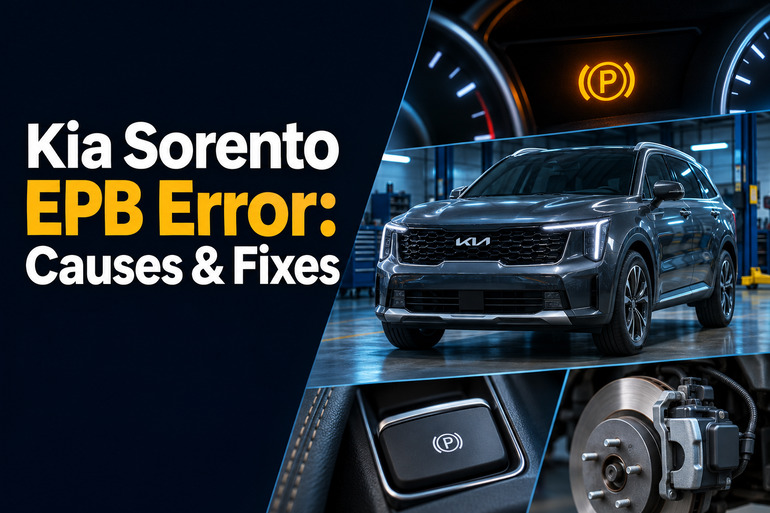
What an EPB Error Means on Your Kia Sorento
EPB stands for electronic parking brake. On equipped Sorento models, an electric motor operates the parking brake when you use the console switch. A brief click or motor sound during application or release can be normal. Kia’s Sorento guide also describes a short EPB warning light check when you turn the ignition on. A light that stays on needs attention.
The amber EPB malfunction indicator and the red parking brake warning serve different purposes. The red light can indicate an applied parking brake, while the EPB indicator signals a possible system fault. A blinking parking brake light may mean the brake hasn’t applied correctly. Don’t assume the vehicle is securely parked because you pulled the switch.
An EPB warning can also accompany an electronic stability control fault. Kia explains that the EPB indicator may appear when ESC isn’t working properly, even without a separate parking brake failure. Therefore, several lights appearing together call for diagnosis of the connected systems rather than immediate replacement of the parking brake motor.
If the brake won’t release, don’t accelerate against it. Stop using the vehicle if you notice smoke, a burning smell, abnormal braking, or a red brake warning that remains after release. Keep your foot on the brake while securing the vehicle, and arrange assistance if it cannot be safely parked or moved.
Kia Sorento EPB Error: Common Causes
Several faults can affect the electronic parking brake, and similar symptoms can have different explanations. The useful clues are when the warning appears, which other lights accompany it, and whether the brake applies and releases.
1. A Discharged Battery or Poor Power Supply
The EPB needs electrical power to operate. Kia states that a drained battery can prevent the brake from applying or releasing, so a vehicle with starting trouble may also have an unavailable parking brake.
On a gasoline Sorento, slow engine cranking or unusually dim lights can support suspicion of a battery problem. However, these symptoms don’t prove that the battery needs replacement. Battery and charging system testing can help distinguish a discharged battery from one that can no longer supply enough power.
A warning that first appeared after a dead battery or jump start makes that history worth reporting. It still doesn’t establish the diagnosis. If the EPB warning remains after the power supply is restored, the brake system needs further checks.
2. Abnormal EPB Switch Operation
Kia identifies abnormal switch operation as one possible reason for an EPB warning. The switch sends the driver’s request to the system, so a problem with that request can resemble a fault farther along in the brake mechanism.
Useful observations include whether the warning appears immediately after touching the switch and whether the response is consistent. Keep loose objects away from the control. If it feels damaged, sticks, or responds unpredictably, have it checked rather than repeatedly pressing and pulling it.
3. An ESC or Related Brake Control Fault
An EPB light appearing with ESC, ABS, or Auto Hold warnings deserves a broader investigation. These systems have related functions, and an ESC fault can cause the EPB warning to appear without proving that the parking brake itself has failed.
This distinction matters when choosing repairs. Replacing a parking brake switch or motor without reading the relevant fault information may leave the actual problem unresolved. Photograph all the warning lights together so the technician can see the full pattern.
4. A Hydraulic Electronic Control Unit Problem
Certain 2022 Sorento vehicles were included in Kia’s voluntary service campaign SC252 for inspection and possible replacement of the hydraulic electronic control unit, or HECU. The affected unit could develop an internal brake fluid leak. Kia listed EPB, ABS, ESC, Auto Hold, and other warnings among the possible symptoms.
The bulletin identifies certain Sorento vehicles built from December 8, 2021, through May 23, 2022. It also requires confirmation against the affected VIN list. Owning a 2022 Sorento, or having several warning lights, doesn’t automatically mean your vehicle has this defect.
Ask a Kia dealer to check your VIN and campaign completion history. SC252 is a specific service campaign, so it shouldn’t be presented as the explanation for every Sorento EPB error.
5. A Mechanical or Actuator Problem
Electronic parking brakes still depend on mechanical parts. A fault in the actuator or brake mechanism can interfere with application or release. General EPB diagnostic guidance includes checking mechanical operation and using suitable diagnostic equipment when the actuator does not respond. The exact arrangement must be confirmed for your Sorento.
Report grinding, a brake that remains applied, or symptoms that started immediately after brake work. These clues help direct the inspection, but they don’t identify a particular failed component. A normal operating click should also be distinguished from a new, persistent noise.
Kia Sorento EPB Error: DIY Fixes
Begin with safe operating checks and observations that help narrow the problem. If the brake remains applied, the vehicle cannot be secured, or normal braking feels different, arrange professional help before continuing.
1. Record the Warnings and Check for Urgent Symptoms
Before restarting the vehicle, photograph the instrument panel and write down the exact message. Note whether the EPB warning appears alone or with ABS, ESC, Auto Hold, or the red brake warning.
Also record when it started. A recent dead battery, brake repair, or first occurrence during parking gives the repair shop useful context. Describe what happened without assuming that the most recent event caused the fault.
If the red brake warning remains after the parking brake is released, or you notice fluid leakage or abnormal braking, stop driving. Kia’s warning guidance calls for towing when a brake leak is present, the warning remains, or the brakes don’t operate properly.
2. Follow the Correct Manual Release Procedure
Automatic release conditions vary with the Sorento’s model year and equipment. A parking brake that stays applied because an operating condition hasn’t been met can be mistaken for a failed system. Read the displayed instruction and use the owner’s manual for your vehicle.
Kia’s 2026 Sorento guide gives this manual release procedure.
- Keep the vehicle stationary with your foot firmly on the brake pedal.
- Place the ignition in the ON position.
- Press the EPB switch to request release.
- Confirm that the parking brake indicator turns off.
Keep the area around the vehicle clear during the check. If the brake doesn’t release or the indicator remains on, stop the attempt. Don’t press the accelerator harder to force movement.
3. Try One Normal Ignition Restart
For an EPB warning associated with abnormal switch operation, Kia describes turning the engine off and restarting after a few minutes. This is a limited troubleshooting step, and a warning that remains still requires inspection.
Only try this when the vehicle is safely secured. Keep the transmission in Park, and don’t leave the vehicle unattended if you’re unsure whether the parking brake is holding. Avoid using a slope as a place to test a suspected parking brake fault.
After restarting, observe whether the warning clears and whether the brake responds correctly. A light disappearing once doesn’t establish that an intermittent problem has been repaired. Keep the photos and arrange diagnosis if the warning returns.
4. Have the Battery and Charging System Tested
If the EPB problem followed a flat battery, request a battery test before buying brake components. Explain any starting trouble, recent jump starts, or repeated discharge so the technician can check the power supply with that history in mind.
A voltage reading alone cannot always establish battery health. A weak battery may show an apparently acceptable voltage after charging while still being unable to deliver sufficient power. A proper battery test helps determine whether charging or replacement is appropriate.
If the vehicle needs a jump start, follow the instructions for its exact model and powertrain or use roadside assistance. After power is restored, confirm whether the EPB operates normally. Continued warnings require brake system diagnosis rather than repeated jump starts.
5. Request a Scan of the Relevant Brake Systems
When the warning persists, ask for a diagnostic scan that covers the Sorento’s ABS, ESC, and EPB functions as equipped. Confirm that the scanner supports those systems before paying for a scan or buying a tool. EPB diagnosis requires suitable equipment, as reflected in brake supplier service guidance.
Request a copy of the codes and findings before they’re cleared. The useful result is an explanation of the fault and the checks supporting the proposed repair. A code description alone shouldn’t become a shopping list of replacement parts.
If the problem began after brake service, contact the shop and give the timing clearly. Ask whether the procedure required by your vehicle was completed and whether further checks are needed. Leave actuator operation, wiring tests, and brake disassembly to a qualified technician.
6. Contact a Qualified Kia Technician
Professional diagnosis is necessary when the EPB won’t apply or release, warnings return, or several brake related systems show faults together. Contact a Kia dealer or a repair shop with suitable Kia diagnostic equipment and electronic parking brake experience.
Provide the model year, powertrain, warning photos, recent repair history, and any battery test results. For a potentially affected 2022 Sorento, ask the dealer to check SC252 eligibility and completion by VIN. Request an estimate based on confirmed findings, including any required checks after repair.
If the parking brake is stuck, tell roadside assistance before recovery begins. The operator needs to know that the wheels may not turn freely. Don’t attempt to free the vehicle by dragging it, powering the actuator directly, or dismantling the brake mechanism yourself.
Wrapping Up
A Kia Sorento EPB error deserves attention, but the warning alone cannot identify the repair. The brake’s behavior, accompanying lights, battery condition, and vehicle history provide the clues needed to choose the next step. Keeping a clear record can make professional diagnosis more focused.
Start with the correct operating procedure and safe checks. If the brake remains applied, braking changes, or the warning returns, arrange qualified assistance. Your next decision should rest on confirmed findings, especially before replacing expensive brake parts or attempting to move a vehicle with a stuck parking brake.