
A stuck fuel flap can leave you standing at the pump with your Kia XCeed unlocked and no way to reach the filler. If the flap opens but the cap refuses to turn, you’ve got a different problem. Knowing which part is stuck helps you avoid forcing a piece that may still be locked.
The right check depends on what moves when you press the flap, whether the weather is below freezing, and how your XCeed releases the fuel door.
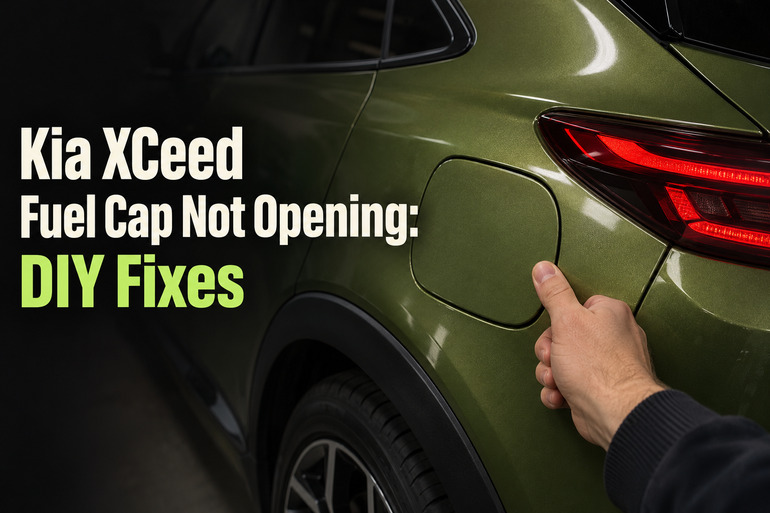
What Happens When the Fuel Flap or Cap Sticks
The fuel filler door is the painted flap on the outside of the car. Behind it is the round cap you unscrew to fill the tank. If the flap won’t move, you’re dealing with the release, the hinge, or something holding the flap shut. If it swings open normally and the cap stays put, you can focus on the cap and the opening it screws into.
On versions that use the central locking system, unlocking the driver’s door also unlocks the fuel flap. A light press on the outer edge releases it so you can swing it open. The plug-in hybrid, often called the PHEV, uses a button inside the car to start the release process. Its tank needs time to lower the pressure before the flap can open.
Pay attention to how the flap feels under your finger. A flap that barely moves may still be locked, or ice may be holding it in place. If it gives slightly but catches as it starts to open, look for a tight gap or a spot where it rubs against the body. These clues help narrow down where to look, especially if the problem comes and goes.
A stuck outer flap mainly prevents you from refueling. A cap that won’t seal, visible fuel leakage, or a strong fuel smell that persists is a separate safety concern. If you see leaking fuel or smell strong fumes that linger, switch the vehicle off, keep it off, and move away. Alert station staff if you’re at a pump, and arrange assistance from a safe spot.
Kia XCeed Fuel Cap Not Opening: Common Causes
The circumstances around the first failed attempt can tell you quite a bit. Note whether you’d just parked, whether the car had been sitting in the cold, and whether the flap or the cap is the part that won’t move.
1. The Fuel Flap Is Still Locked
On XCeed versions that use central locking for the fuel flap, the flap follows the driver’s door unlock command. Getting out of the car, or seeing someone open another door, can make it easy to assume the fuel flap is ready. Use the unlock button to take that uncertainty out of the check.
Where automatic locking is active, the doors and fuel flap can lock again once the car is moving. This can explain why the flap opened at home and stayed shut after the drive to the station. If it opens every time you deliberately unlock the driver’s door before pressing it, the flap is responding as expected.
2. Ice Has Formed Around the Flap
Water can settle in the narrow gap around the flap after a car wash, rain, or melting snow. If the temperature drops below freezing before the gap dries, a thin layer of ice can hold the flap closed. Look for frost along the seam, especially if the flap worked the day before.
Ice can be hard to see on a wet or dark panel. A flap that releases after the car warms up, then sticks again after another freeze, gives you a stronger clue than the feel of the flap alone. If it stays stuck after the area has thawed, move on to the release and fit checks.
3. The Plug-In Hybrid Is Still Preparing to Refuel
If you drive the XCeed plug-in hybrid, pressing the fuel door button starts a short wait while the car lowers the pressure in the fuel tank. Kia’s 2021 XCeed PHEV manual allows up to 20 seconds for the flap to open. The display may ask you to wait during this process.
The message on the display helps you tell a normal delay from a failed attempt. On the 2021 model, the message saying the fuel door is open also tells you the car is ready for refueling. You can then pull the released flap open by hand. Check the wording and operation in the manual for your model year.
If the wait message stays on or a fuel door warning returns when the flap is closed, a workshop needs to check the system. If the car says it’s ready and the flap still won’t move, note that too. It tells the technician the car reached the ready stage even though the flap stayed shut.
4. The Flap Is Binding or the Release Is Faulty
A scrape near the flap, an uneven gap, or an edge that sits higher than the body can point to a fit problem. For example, after a bump or body repair, the flap may touch the surrounding panel as it moves. You may feel it release under your finger and then catch before you can swing it open.
The lock can also fail to release even when the driver’s door unlocks normally. On versions with an electrically operated fuel flap lock, the actuator is the part that moves the lock. A fault in that part or its electrical supply can leave the flap shut. A click from the area only tells you that something moved or tried to move.
If the flap opens after several tries, pay attention to what changed. A flap that consistently rubs in the same place gives a different clue from one that sits square but responds to the unlock command only occasionally. Either problem is easier to assess while you can still get the flap open.
5. The Screw Cap Is Jammed
If the flap swings open freely but the cap won’t turn counterclockwise, the outside release has done its job. The cap may have gone on at an angle during the previous fill, causing its threads to bind. That possibility is stronger if the cap felt rough or became tight almost as soon as you started screwing it in.
A damaged cap can also be difficult to grip or turn. Check whether the cap sits level and whether its grip is cracked. If the grip turns without the cap backing out, or the cap stays crooked, stop before adding leverage. A technician can assess the cap and the filler neck, the tube it screws into.
Kia XCeed Fuel Cap Not Opening: DIY Fixes
Start with the usual opening method for your version, then use what you can see and feel to choose the next check. Keep the vehicle switched off while you work around the filler, and use light hand pressure on the flap.
1. Unlock the Driver’s Door and Press the Right Edge
If your XCeed uses central locking for the fuel flap, park and switch the vehicle off. Press unlock on the key fob or use the central unlock switch inside. Confirm the driver’s door is unlocked before you try the flap.
Face the flap and press the edge at the three o’clock position, as shown in Kia’s 2024 XCeed manual. Let go and see whether the edge comes out far enough to take hold of it. If it does, swing it open gently. If the key fob didn’t unlock the driver’s door but the inside switch works, make a note of that response if the problem returns.
2. Use the Fuel Door Button on the Plug-In Hybrid
Park, switch the vehicle fully off, and make sure it isn’t charging before refueling. Use the fuel filler door button shown in your owner’s manual. Then watch the display and give the system time to complete the release.
If you see a message asking you to wait, leave the flap alone while the car lowers the tank pressure. Once the display indicates the car is ready, open the flap as directed in your manual. A short pause followed by a normal release is expected on this version.
The 2021 PHEV manual also directs you to add fuel within 20 minutes of opening the flap. If that time has passed, press the fuel door button again and wait for the ready indication before starting to refuel. If you never get that indication, arrange a check instead of trying to open the flap manually.
3. Thaw the Flap Gently
If you see ice around the seam, try a light tap with your fingertips or a gentle push on the flap. Kia gives this as a way to break a thin layer of ice. If the flap stays put, give the ice time to melt in a warmer spot if you can move the car safely.
Kia also allows an approved deicer around the flap on the versions covered by its regular XCeed manual. Follow the product directions and keep the application around the outer seam. Skip radiator antifreeze and leave screwdrivers and other prying tools away from the flap.
Once the seam is clear, wipe away surface moisture with a soft cloth, then use the usual release and see whether the flap opens smoothly. If it works normally after thawing, dry the area you can reach before closing it. If it still catches in mild weather, look for signs of rubbing.
4. Look for Dirt or Rubbing Once the Flap Opens
If you can get the flap open, check the visible edge, hinge area, and latch opening for loose grit, a trapped leaf, or a rub mark. With the cap still fitted, wipe away loose dirt on the accessible surfaces with a slightly damp, soft cloth. Leave the latch and hinge in place and keep cleaners out of the filler opening.
Close the flap gently and see whether it sits flush with the surrounding bodywork. Then try the usual release again. If clearing a visible obstruction restores smooth movement, you’ve made a useful check. If the edge still scrapes, sits unevenly, or needs a hard push to latch, have the fit checked before it jams shut again.
5. Try the Cap by Hand and Check How It Seats
With the vehicle off and the flap open, dry the outside of the cap if it’s wet so you can hold it firmly. Turn it counterclockwise slowly by hand. If you hear hissing as it loosens, pause and let the sound stop before removing it fully.
If the cap comes off, look for cracks, damaged threads, or a seal that’s split or out of place. To reinstall a sound cap, set it squarely in the opening and turn it clockwise by hand until it clicks, as Kia directs. It should turn smoothly as it starts. If it binds right away, back it off and try seating it squarely once more.
If the cap won’t turn by hand, leave the pliers and penetrating oil aside. If it comes off but won’t seat securely again, get help before driving. Ask for a cap matched to your XCeed’s vehicle identification number, or VIN, if the workshop confirms the cap needs replacing.
6. Contact a Kia Dealer or Qualified Technician
Book a check if the flap stays shut after the correct unlock procedure, keeps sticking in mild weather, or no longer closes securely. A recurring fuel door warning on the plug-in hybrid also calls for diagnosis. If the fuel level is too low to reach a workshop safely, call roadside assistance from where you’re parked.
Tell the technician which part stuck, what the display said, and whether the problem changes with temperature or the way you unlock the car. That gives them a place to start checking the flap fit, release, or cap. If the fault comes and goes, a photo of an uneven gap or a note of the exact warning can help when the flap happens to work at the shop.
Wrapping Up
A fuel flap that’s slow to release once is easy to dismiss, especially if it works on the next try. If it happens again, take a moment while you’re parked to notice where it catches and whether the car acknowledges the release. Those details are harder to pin down when the tank is nearly empty and someone is waiting for the pump.
Give yourself time to get a recurring problem checked while you can still refuel. If the flap opens cleanly after a simple check and closes flush, you can judge the result at the next fill.