
A Kia Morning that won’t start can leave you facing silence, repeated clicking, or an engine that keeps turning without catching. Those differences matter because each points to a different set of possible faults. Replacing parts before checking the symptoms can waste money and leave the real problem unresolved.
The best starting point is to identify exactly what happens during a starting attempt. From there, a few safe checks can help you decide what needs attention.
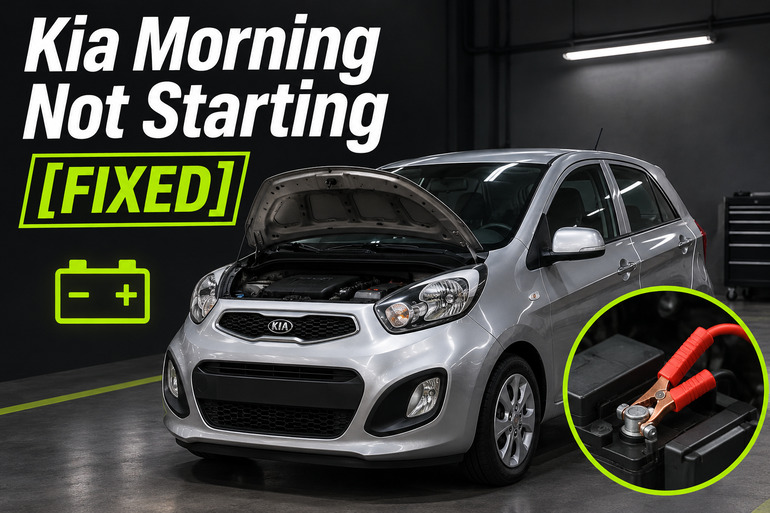
Understanding Why Your Kia Morning Won’t Start
Your engine needs electrical power to turn, permission from the starting system, and the right conditions for combustion. A fault in any of these areas can prevent it from running. However, an engine that doesn’t turn requires a different investigation from one that turns normally but never starts.
Cranking means the starter is turning the engine. Listen for the familiar, rhythmic starting sound. Silence, a click, or unusually slow turning suggests a starting or electrical problem. Normal cranking without the engine catching shifts attention to fuel, ignition, and engine control. Kia makes this same distinction in its troubleshooting guidance.
The Morning is known as the Picanto in overseas markets. However, equipment varies by year and country, so a Picanto instruction may not match every Morning. Check your vehicle’s own manual before following procedures involving its transmission, key, or starting controls.
Before troubleshooting, secure the vehicle and apply the parking brake. If you notice leaking fuel, smoke, a strong burning smell, or a damaged battery, stop trying to start it and arrange qualified assistance. Repeated attempts won’t correct those conditions and may increase the risk.
Kia Morning Not Starting [FIXED]: Common Causes
Several faults can produce similar starting symptoms, so the sound and behavior of your car provide useful clues. Treat the following causes as possibilities until a check or professional test supports the diagnosis.
1. A Weak Battery or Poor Battery Connection
Repeated clicking, slow cranking, and lights that fade sharply during a starting attempt suggest that sufficient electrical power isn’t reaching the starter. The battery may be discharged, but loose or corroded connections can produce similar symptoms.
Working dashboard lights don’t prove the battery is healthy. The starter demands much more power than small electrical accessories, so a battery can operate the radio while struggling to turn the engine.
Consider what happened before the fault appeared. Lights left on suggest an accidental discharge. A battery that repeatedly loses charge needs further testing, including the charging system and possible electrical drain while parked. Replacing the battery without finding why it went flat may leave you facing the same problem again.
2. The Starting Conditions Aren’t Being Met
Your Morning may refuse to crank if the required transmission position or pedal input isn’t recognized. Depending on its equipment, starting may require Park or Neutral, a fully pressed clutch, or firm brake pressure.
A key recognition problem can also prevent starting on vehicles fitted with an immobilizer or smart key system. Look for a key warning or an instruction on the display. If the fault appears with one key but disappears with a correctly programmed spare, that’s useful evidence for diagnosis. It doesn’t automatically prove that the vehicle’s security system needs replacement.
3. A Starter Motor or Starting Circuit Fault
A single solid click without engine movement can indicate a starter problem. However, poor electrical connections can cause the same response, so the sound alone doesn’t justify buying a starter.
The starter contains an electric motor and an engaging mechanism that connects it to the engine. Worn internal parts, damaged contacts, or an electrical supply fault can prevent it from operating. Sometimes the starter makes a spinning sound without actually turning the engine.
Diagnosis should establish whether the starter receives the correct power and control signal during a starting attempt. That requires suitable equipment and safe access. Don’t bridge starter terminals, bypass switches, or crawl beneath an unsupported car to investigate.
4. Fuel Isn’t Reaching the Engine Properly
When the engine cranks normally but doesn’t catch, check whether there’s enough fuel before assuming a component has failed. Kia includes fuel level among its first checks for this symptom.
If fuel is present, the problem could involve its delivery. A pump fault, electrical supply problem, or another restriction may prevent adequate fuel from reaching the engine. Previous hesitation, power loss, or stalling can be useful clues, but none confirms a bad pump. A technician should check the system before replacing it. DENSO specifically stresses correct diagnosis before installing a new fuel pump.
5. An Ignition or Engine Speed Signal Problem
Gasoline needs a properly timed spark to burn inside the engine. Spark plugs provide the firing point, while ignition coils supply the high voltage needed to produce that spark. Worn or fouled plugs can contribute to hard starting, although a complete failure to start requires further investigation.
The engine computer also relies on information about engine movement. The crankshaft position sensor supplies speed and position information. If its signal is missing or unreliable, starting may become difficult or impossible.
Sensor wiring and connectors can also fail. Therefore, even a fault code naming a sensor doesn’t establish that the sensor itself is defective. Proper diagnosis separates a failed component from a damaged connection or circuit.
Kia Morning Not Starting [FIXED]: DIY Fixes
Begin with checks that match the symptoms you’ve observed. If a step changes the behavior, record that change before moving on, because it can help identify the actual fault.
1. Confirm the Starting Procedure
Apply the parking brake and switch off unnecessary accessories. Then follow the starting procedure for your transmission rather than repeatedly turning the key or pressing the start button.
On a conventional automatic, select Park and press the brake. If your manual permits starting in Neutral, try that position while keeping the vehicle secured. On a manual, select Neutral and fully depress the clutch. An automated manual may require Neutral and the brake pedal. These arrangements differ, so use the instructions for your exact vehicle.
Check that a floor mat isn’t preventing full pedal travel. If the car starts only after moving the selector or pressing a pedal differently, report that detail to a technician. Don’t bypass a safety switch or accept an unreliable starting position as a permanent repair.
2. Record the Sound and Dashboard Behavior
Make a brief starting attempt and pay attention to what happens. Note whether you hear rapid clicks, one click, slow cranking, normal cranking, or a free spinning sound. Also note any key warning, unusual message, or sharp loss of dashboard brightness. These observations help separate electrical supply concerns from starter and engine running faults.
A short recording can help when the problem is intermittent. Avoid repeated attempts simply to obtain a better recording. Stop immediately if cranking suddenly sounds very different, you hear grinding, or smoke appears. Give the technician the recording along with the circumstances, including whether the engine was cold or recently driven.
3. Check the Battery Visually and Arrange Testing
With the ignition off and the key removed, look at the battery from a safe position. Check for an obviously damaged case, leakage, heavy deposits around the terminals, or a cable that appears detached. Keep tools and metal jewelry away from the terminals.
Leave cleaning, tightening, charging, or replacement to someone competent if you’re unfamiliar with battery work. A battery test and connection check can establish whether the battery is discharged, unable to supply adequate starting power, or being affected by a poor connection. Visual appearance alone cannot settle that question.
If a jump start is appropriate, follow your vehicle’s manual and the booster equipment instructions exactly, or use roadside assistance. Don’t attempt it with a leaking, swollen, damaged, or frozen battery. If the engine starts, arrange battery and charging system testing. A successful jump start doesn’t explain why the battery lost charge, and a short drive may not restore a deeply discharged battery.
4. Try the Correct Spare Key
If the display reports that the key isn’t detected, bring the correct key inside the vehicle and try your programmed spare. Keep other keys and electronic devices away during the attempt. Compare whether the warning and starting behavior change.
Some Kia smart key systems allow emergency starting by pressing the start button directly with the smart key when its battery is weak. Use that method only if your Morning’s manual specifies it. It won’t correct a discharged vehicle battery or every key recognition fault.
For a conventional ignition key, don’t assume that a flat remote locking battery explains the starting failure. Remote locking and engine authorization aren’t necessarily dependent on the same battery function. If neither programmed key works, arrange diagnosis rather than attempting security bypasses or replacing the ignition switch on suspicion.
5. Confirm the Fuel Supply and Preserve Diagnostic Evidence
Check the fuel gauge and consider when you last refueled. If the tank may be empty, arrange a safe supply of the correct fuel. For a gasoline version, use gasoline meeting its manual’s requirements. Don’t apply gasoline troubleshooting procedures to an LPG equipped vehicle, and never open gas system fittings yourself.
If you suspect incorrect fuel was added, stop starting attempts and contact a repair shop. Otherwise, keep your checks external. Don’t disconnect fuel lines, spray starting fluid into the intake, or handle ignition components while someone cranks the engine.
If you already have a compatible diagnostic reader and know how to use it, save the stored codes and their descriptions. Don’t erase them before diagnosis. A missing pump sound or a component related code is a clue rather than proof that a part needs replacement. HELLA notes that other vehicle systems can prevent pump operation and lead to an incorrect diagnosis.
6. Contact a Qualified Automotive Technician
Arrange professional diagnosis if the safe checks don’t restore normal starting, the fault returns, or the car starts only intermittently. Seek assistance immediately for fuel leakage, smoke, damaged battery components, or severe mechanical noises. A vehicle that recently stalled also deserves attention before you rely on it again.
Provide the model year, engine type, transmission, and exact starting symptoms. Include recent repairs, battery work, refueling, warning messages, and whether a jump start or spare key changed anything. These details help the technician choose useful tests instead of repeating guesses.
Ask for the fault to be confirmed before authorizing parts replacement. Depending on the symptoms, testing may cover battery performance, cable connections, starter operation, key authorization, fuel delivery, ignition, or engine sensor signals. Kia recommends professional assistance when basic checks don’t resolve a normally cranking engine that won’t start.
Wrapping Up
A Kia Morning that won’t start needs a repair based on its symptoms. The most useful first distinction is whether the engine turns normally, turns slowly, or doesn’t turn at all. That observation gives you a clearer starting point and helps prevent unnecessary parts replacement.
Begin with the correct starting procedure, visible battery condition, key recognition, and fuel level. If those checks don’t resolve the fault, share your observations with a qualified technician. Clear information makes diagnosis more focused and helps you get a dependable repair.