
An ABS warning light can leave you unsure about your Kia’s brakes, especially when a scan brings up C1203. The code points to a specific area, but it doesn’t automatically mean you need a new sensor or an expensive ABS unit.
On many Kia models, C1203 identifies an electrical fault in the right front wheel speed sensor circuit. Understanding that distinction helps you avoid replacing working parts and recognize when your vehicle needs professional attention.
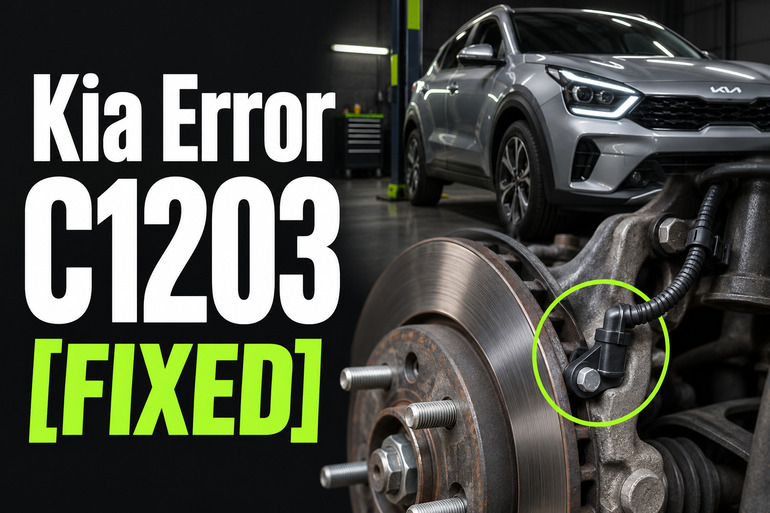
What Kia Error C1203 Means
Kia’s technical information describes C1203 as a right front wheel speed sensor circuit open or short fault. An open circuit means the electrical path is interrupted. A short means electricity has an unintended path. The code identifies the affected circuit, which includes the sensor, its wiring, connections, and the connection to the brake control unit. Confirm the exact description for your Kia’s model and year before choosing a repair.
Your ABS monitors wheel speed so it can adjust brake pressure when a wheel is about to lock. This helps preserve steering control during hard braking. Without reliable wheel speed information, the system can’t perform its job as intended. However, a wheel speed circuit fault doesn’t, by itself, identify a problem with the brake pads or rotors.
The main clue is usually an ABS warning light. Depending on the vehicle and the fault, other systems that use wheel speed information may also display warnings. You might feel no difference during gentle braking, so normal pedal feel doesn’t confirm that ABS assistance is available. Kia explains that an ABS malfunction can leave normal braking operational while removing ABS assistance.
Treat additional brake symptoms seriously. If your pedal feels unusually soft, braking becomes weak, fluid is leaking, or the red brake warning stays on with the parking brake released, stop safely and arrange assistance. An ABS light together with a red brake warning can indicate a broader braking problem. Don’t continue troubleshooting by driving the vehicle to see whether it improves.
Kia Error C1203 [FIXED]: Common Causes
Several faults can interrupt the right front wheel speed sensor circuit. The following possibilities explain why the code needs diagnosis before any parts are ordered.
1. Damaged Sensor Wiring
The wire leading to the right front sensor can suffer physical damage. If insulation wears through, a conductor may contact surrounding metal. If the conductor breaks, the circuit becomes open. Either condition can produce the electrical fault identified by C1203.
A useful example appears in Kia Tech Tip TT066 for the 2015 Optima TF/QF. Kia instructs technicians to look for harness rubbing near a radiator bracket that extends beneath the headlight. The repair involves correcting damaged wiring and protecting the area against further contact. This guidance applies to the listed vehicle, rather than every Kia with C1203.
Recent work around the wheel, suspension, or front bodywork is worth mentioning during diagnosis. Give the technician a clear timeline, including whether the warning appeared immediately afterward. That history provides a sensible starting point, although timing alone doesn’t prove that the earlier work caused the fault.
2. A Loose or Corroded Connection
A connector can look attached while making poor electrical contact. Loose terminals, corrosion, contamination, or damaged connector parts can interrupt the circuit between the sensor and the brake control unit. Kia service information includes these connection problems among the checks for an intermittent wheel speed sensor fault.
For example, note whether the warning appeared after wet weather or began following a repair. These observations can help direct an inspection, but they don’t establish that moisture or a loose plug is responsible. A proper check must establish whether the connector is secure and whether its terminals can carry the required electrical signal.
3. An Internal Wheel Speed Sensor Fault
The sensor itself can fail electrically. An internal break or short may prevent it from operating even when the external cable and connector appear undamaged. Kia lists a faulty wheel speed sensor as one possible cause of this code family.
However, a missing wheel speed reading doesn’t prove that the sensor is defective. The same result can occur when its wiring fails to supply or carry the required signal. This is why fitting a new sensor without testing the circuit can leave the original warning unchanged.
Also, different sensor designs require different tests. Active sensors contain electronics and receive power from the control unit, while passive sensors work differently. HELLA states that internal resistance testing isn’t suitable for active sensors. A resistance value found online should therefore never become a universal pass or fail rule for your Kia.
4. A Fault at the Brake Control Unit
The brake control unit receives and interprets wheel speed information. A fault in that unit can be a possible cause, but it needs to be separated from problems in the sensor circuit. Kia’s diagnostic guidance uses circuit checks and signal testing to distinguish a sensor, harness, or module problem.
If a shop recommends replacing the ABS unit, ask which tests support that decision. A useful explanation should identify what was checked and why the sensor and wiring were ruled out. The presence of C1203 alone isn’t enough evidence to justify replacing an expensive control unit.
Kia Error C1203 [FIXED]: DIY Fixes
The safest starting points involve confirming the code, collecting useful details, and looking for visible damage. Because this circuit supports the braking system, electrical repairs and component testing should go to a qualified automotive technician.
1. Confirm the Code With an ABS Capable Scanner
Use a scan tool that specifically supports the ABS or ESC system on your Kia’s model and year. Before buying or borrowing one, check its stated vehicle coverage. A tool that only reads engine information may not provide the brake system details needed for this fault.
With the vehicle parked, follow the scanner’s instructions and save the results before clearing anything. Record the complete code, its description, any additional suffix, and whether the tool labels it current, active, stored, or history. Take a photo of the screen so you can share the exact wording.
Ask for all related brake system codes to be recorded as well. Kia’s diagnostic approach begins with retrieving fault information and checking relevant system data. A written scan report gives the repair shop a better starting point than a verbal description such as “a sensor code.”
2. Record When the Warning Appears
Make a short record of what you’ve already noticed during normal use. Include whether the light stays on after starting, appears only after the vehicle moves, or returns after several days. Also note any recent battery trouble, wheel bearing work, brake service, suspension repairs, or collision damage.
Keep observations separate from conclusions. For example, “the light first appeared after the right front bearing was replaced” is useful. “The new bearing caused C1203” is a diagnosis that still needs proof. Don’t make extra trips or deliberately repeat unsafe conditions just to collect more information.
3. Look for Visible Damage Without Taking Parts Apart
Park on firm, level ground, switch the vehicle off, and allow hot parts to cool. From a safe position beside the vehicle, use a flashlight to look at any readily visible wiring near the right front wheel. Keep the inspection limited to what you can see without lifting the vehicle or removing components.
Useful observations include a dangling cable, missing retaining clip, crushed wire covering, or a cable visibly rubbing against another part. Photograph anything unusual rather than pulling, bending, or moving the wire. Wiring breaks and physical damage are established causes of wheel speed sensor faults.
Don’t crawl beneath a vehicle supported by a jack, reach near moving parts, or unplug brake system connectors to experiment. If access requires wheel removal, lifting, or dismantling, leave the inspection to a shop. A clear photo and an accurate description can still make your initial check useful.
4. Arrange a Repair Based on the Confirmed Fault
Once testing identifies the problem, authorize a repair that addresses that specific finding. A damaged wire needs a suitable wiring repair. A failed sensor needs the correct replacement. A connector fault needs attention to the affected connection, rather than an unrelated part.
For a 2015 Optima TF/QF, ask whether Kia Tech Tip TT066 applies. Its repair guidance addresses both damaged wiring and the bracket contact that caused it. Correcting the original rubbing point matters because repairing the conductor alone would leave the source of damage in place.
Before purchasing a sensor yourself, have the shop confirm the required part using your vehicle details. Ask whether the diagnosis established an internal sensor fault and whether the surrounding circuit passed its checks. This keeps the purchase tied to evidence and reduces the chance of paying for a part that doesn’t solve the problem.
5. Verify the Result After the Repair
Ask the technician to verify the repair using the procedure for your Kia. That should include checking relevant wheel speed information and confirming that the original fault doesn’t return under the required conditions. Kia’s technical guidance calls for verification after replacing components or correcting circuit faults.
Clearing C1203 is only one part of that process. A scanner can erase a stored record, but erasing the record doesn’t repair a broken conductor, poor connection, or failed sensor. Ask what was found, what was repaired, and what confirmed that the circuit now operates correctly.
Keep the invoice and scan report. If the warning returns, note when it happened and contact the shop with those records. Avoid repeatedly clearing the code before an inspection, since the technician needs to see the fault information associated with the returning warning.
6. Contact a Qualified Automotive Technician
Arrange professional diagnosis if C1203 remains active, the warning returns, visible wiring is damaged, or the inspection requires access beneath the vehicle. Choose a shop that can diagnose Kia ABS and ESC systems and has access to the correct wiring diagrams and service procedures.
A useful diagnostic plan separates the sensor from the rest of its circuit. Depending on the model, the technician may check connector condition, supply and signal circuits, and sensor output before considering the control unit. Kia service information follows this kind of sequence rather than treating the code as an automatic instruction to replace the sensor.
Be clear about any braking symptoms when booking the appointment. If braking performance has changed, the red brake warning remains on, or you suspect a fluid leak, arrange towing instead of driving to the shop. For an ABS warning without those symptoms, follow your owner’s manual and obtain prompt advice about the appropriate next step.
Wrapping Up
Kia C1203 directs attention to the right front wheel speed sensor circuit, but choosing the right repair depends on finding where that circuit has failed. A clear scan report, useful symptom history, and careful visual observations can help move the diagnosis forward without unnecessary parts replacement.
Start by recording the complete fault information and checking for urgent brake symptoms. Then have a qualified technician handle the electrical testing and repair verification. Your goal is a confirmed repair that restores proper operation and gives you a clear explanation of what caused the warning.