
A P0011 code on your Kia points to a problem with intake camshaft timing. You might notice a rough idle, weak acceleration, or a check engine light even though the car still seems to run normally. The code gives you a starting point, but it doesn’t identify a failed part.
Before buying a sensor or valve, it helps to understand what controls that timing. Your engine type, oil condition, and recent repair history all help determine which checks make sense.
What P0011 Means on a Kia
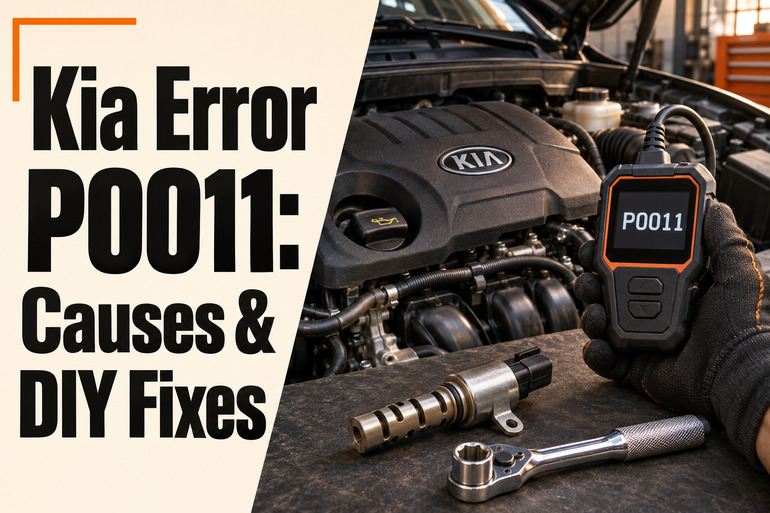
P0011 means the engine computer has detected intake camshaft timing that is too advanced or isn’t performing as expected on Bank 1. In simple terms, the intake camshaft’s position doesn’t match the timing behavior the computer expects. Kia lists P0011 separately from P0014, which concerns exhaust camshaft timing, and P0016, which concerns the relationship between crankshaft and intake camshaft position.
Your Kia’s variable valve timing system changes camshaft position to suit engine conditions. Many versions use an electrically controlled oil valve and engine oil pressure to move a camshaft adjuster, also called a phaser. However, some engines use an electric intake timing system. This difference matters because a repair that applies to one Kia engine may be unsuitable for another.
Depending on the underlying fault, you may feel uneven idling or hesitation when accelerating. Those symptoms can fit an oil control valve problem, but they don’t prove the valve has failed. Kia’s inspection guidance specifically calls for testing a suspected valve before replacing it.
Pay close attention to other warning signs. If the oil pressure warning light stays on while the engine runs, stop safely and switch the engine off. Kia warns that continued operation with that light illuminated can cause engine failure. Persistent rattling, knocking, repeated stalling, or severe shaking also calls for professional assessment before further driving.
Kia Error P0011: Common Causes
Several faults can interfere with intake camshaft timing, so the code alone isn’t enough to choose a repair. The most useful clues are your oil service history, any companion codes, and whether the problem started after engine work.
1. Problems With Engine Oil Supply or Condition
On an oil operated timing system, engine oil helps control camshaft movement as well as lubricate moving parts. An inadequate supply can interfere with that operation. A low dipstick reading therefore deserves attention before you consider replacing timing components. Kia confirms that engine oil operates hydraulic components and requires regular level checks.
The oil specification matters too. Using an unsuitable viscosity changes how the oil flows, particularly during starting and temperature changes. Check your exact engine’s requirements rather than choosing oil based on what another Kia owner uses. Kia warns against using viscosities outside its recommendations.
An overdue service or an unexplained drop in oil level is a useful lead, not a confirmed diagnosis. Likewise, a full dipstick doesn’t establish that oil pressure is healthy. If the pressure warning appears despite a correct level, the vehicle needs diagnosis rather than more oil.
2. A Sticking or Failed Oil Control Valve
The oil control valve regulates oil movement within a hydraulic camshaft timing system. If its internal mechanism sticks, the timing system may fail to respond correctly. Kia’s valve inspection bulletin identifies trapped foreign material as one possible reason a valve won’t move as intended.
The valve can also develop an electrical fault. However, rough running and P0011 aren’t sufficient reasons to replace it without testing. Its electrical condition and mechanical movement both need assessment, using the specifications for the valve fitted to your engine. A valve that tests normally should lead the diagnosis elsewhere.
3. An Electrical Connection or Actuator Problem
A timing system also depends on reliable electrical control. Visible connector damage, damaged wiring, or an actuator fault can prevent the system from working correctly. For example, Kia documented a P0011 case involving damaged electric CVVT connectors on a 2016 Sorento with the 2.4L GDI engine. That case establishes a possible fault on that configuration, not a diagnosis for every Kia.
This is especially relevant when following repair videos. Some Kia engines have an electric intake camshaft actuator rather than the hydraulic arrangement shown in a generic solenoid replacement guide. Confirm the engine and system before identifying components or ordering parts. Related circuit codes should also be shared with the technician instead of being dismissed.
4. A Camshaft Adjuster or Mechanical Timing Fault
The camshaft adjuster is the mechanism that changes the camshaft’s position. A fault in that assembly, or a problem with the engine’s mechanical timing, can require investigation when simpler checks don’t explain the code. Kia stresses that CVVT diagnosis must consider both mechanical and electrical operation.
Recent engine work provides another important clue. Kia bulletin PS731 covers certain Soul engines that can set P0011 and related codes after engine replacement because a camshaft signal wheel is positioned incorrectly. That wheel provides timing information to the engine computer. This is a specific repair related condition rather than evidence that every P0011 requires a timing chain.
If your code appeared immediately after an engine replacement or timing repair, contact the shop that performed the work. Give them the original symptoms and the date the light first appeared. That history can help them focus their checks without repeating unrelated repairs.
Kia Error P0011: DIY Fixes
Start with checks that preserve diagnostic information and confirm the engine has the correct oil. Move to component repairs only when testing identifies a fault and the procedure is suitable for your skills.
1. Record the Codes and Repair History
Before clearing anything, use a compatible diagnostic reader to save the complete list of codes. If available, save freeze frame information too, which records operating conditions associated with the fault. Take photographs of the scanner screens so you can share the exact results.
Write down whether the engine was cold or warm, whether it idled unevenly, and whether the problem followed an oil change or other repair. Include the model year, engine size, mileage, and any recent engine replacement. Avoid describing every engine warning simply as “the same code.”
Treat this as evidence gathering rather than a repair. P0011 alongside P0016 gives a technician different information from P0011 alone because the codes describe different timing concerns. Don’t replace a camshaft sensor solely because its name appears in a scanner’s description.
2. Check and Correct the Oil Level
Park on level ground and follow the oil checking procedure in your owner’s manual. Waiting times and preparation can vary, so avoid applying one universal rule. For example, Kia’s 2024 Telluride instructions call for a 15 minute wait after the specified shutdown procedure before taking the reading. Don’t start an engine just to warm the oil if it has an oil pressure warning or serious mechanical noise.
For a conventional dipstick check, use a clean cloth, fully reinsert the dipstick, and then read it again. If the level is low, add only the specified oil in small amounts and recheck. Stay within the marked range, avoid hot components, and clean up spills before starting the engine.
Record how much oil you added and monitor the level afterward. A falling level needs investigation even if the engine runs better. If the oil pressure light remains on after correcting a low level, stop the engine and arrange assistance. Adding oil doesn’t resolve every cause of low pressure.
3. Correct an Overdue or Incorrect Oil Service
Review your last service receipt against your owner’s manual. Confirm the oil viscosity, required quality specification, and the filter listed for your engine. If the oil is overdue or the wrong product was installed, arrange an oil and filter change using the correct materials.
An oil change is a sensible correction for a documented service problem, but it isn’t a guaranteed P0011 repair. Don’t repeatedly change clean, correctly specified oil while postponing diagnosis of a returning code.
Avoid adding thickening products or other oil treatments as an experiment. Kia warns that engine oil additives can change the oil’s properties and cause engine damage. If contamination or deposits are suspected, ask a qualified shop to assess them and recommend an appropriate service.
4. Look for Visible Wiring Damage
With the engine off and cool, look at accessible wiring around the identified intake timing components. Use a flashlight and stay clear of hot surfaces, belts, and cooling fans. Look for a loose connector housing, broken retaining clip, rubbed insulation, or visible heat damage.
Keep this check visual. Don’t pierce wires, bridge terminals, apply battery power, or pull apart unfamiliar connectors. Photograph anything suspicious and give the images to a technician. Damaged electric CVVT connections can be relevant, but confirming the circuit fault requires the correct wiring information and testing.
5. Have the Correct Timing Valve or Actuator Tested
If the oil checks don’t explain the problem, identify the timing system fitted to your engine before proceeding. Ask for testing of the relevant valve or actuator rather than requesting a replacement based on the code. Kia’s technical guidance warns that reading a trouble code without checking system operation can lead to a wrong diagnosis.
For an applicable hydraulic system, a technician can assess the oil control valve and decide whether cleaning or replacement is justified. Kia’s older inspection bulletin includes checks for electrical faults, restricted movement, and trapped debris. Its test specifications vary by valve supplier, so generic resistance values or power application instructions shouldn’t be treated as universal.
After an identified fault is repaired, ask the shop to verify timing operation and check whether the code returns. A cleared warning light alone doesn’t show that the original problem has been corrected. Keep the repair record so a recurring fault can be assessed against the work already completed.
6. Contact a Qualified Kia Technician
Arrange professional diagnosis if P0011 returns after the oil level and service issues have been addressed, or if no clear service problem exists. Seek help sooner for abnormal engine noise, repeated stalling, severe shaking, or an oil pressure warning. In those conditions, towing avoids running the engine during the trip to the shop.
Bring your saved codes, service receipts, and symptom notes. Ask the technician to explain what testing supports the proposed repair. Depending on the engine and findings, the next checks may involve commanded versus actual camshaft position, electrical control, oil supply, or mechanical timing. Kia’s CVVT training describes comparing actual and desired positions as part of system diagnosis.
Also ask the dealer whether any technical bulletins or service actions apply to your vehicle identification number. Similar model names and engine sizes don’t establish eligibility. For example, Kia’s electric CVVT service action SA305 covered specified vehicles and a different code, P0010. It shouldn’t be presented as a universal P0011 repair or a promise of free coverage.
Wrapping Up
P0011 gives you a useful starting point, but the right repair depends on what your Kia’s timing system is actually doing. A clear record of symptoms, correct oil maintenance, and an accurate engine identification can make diagnosis more focused and help you avoid buying parts without supporting evidence.
Begin with the safe checks your owner’s manual allows. Then use the results to decide whether routine service is enough or a technician needs to investigate further. If warning signs suggest poor lubrication or mechanical trouble, stop running the engine and arrange help promptly.