
A check engine light paired with shaking, uneven idling, or weak acceleration can point to a misfire. When your Kia stores code P0303, its engine computer has detected a misfire affecting cylinder 3. However, that code doesn’t tell you which part has failed.
The right repair depends on your Kia’s engine, its symptoms, and a few targeted checks. Understanding those clues helps you avoid unnecessary parts and recognize when continued driving could turn a repairable fault into expensive damage.
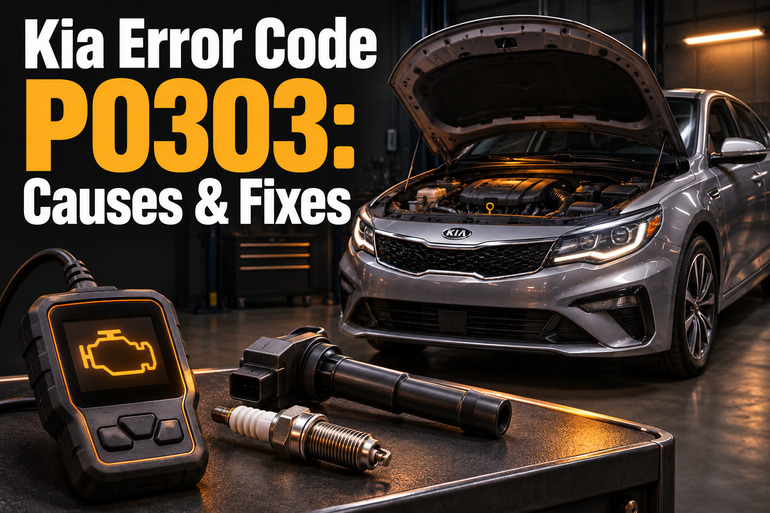
What P0303 Means on Your Kia
P0303 means “Cylinder 3 Misfire Detected.” In simple terms, cylinder 3 isn’t consistently contributing power as expected. Kia lists this definition in its service information, alongside separate codes for other cylinders and P0300 for random or multiple cylinder misfires. Some diagnostic tools display the extended version, P030300.
For a gasoline engine to run smoothly, each cylinder needs a suitable mixture of air and fuel, a correctly timed spark, and enough compression. Compression is the pressure created as the piston squeezes the mixture before ignition. A problem with any of these can interrupt combustion, so a misfire doesn’t automatically mean the spark plug or ignition coil needs replacement.
You may notice vibration through the seat, hesitation when accelerating, or an uneven exhaust sound. Some faults appear only under certain conditions, such as when the engine is cold or working harder. These details help narrow the investigation, but symptoms alone can’t reliably separate an ignition fault from a fuel or mechanical problem.
Treat a flashing check engine light as urgent because it can indicate a misfire severe enough to damage the catalytic converter. Pull over safely, shut the engine off, and arrange assistance if the light flashes, the vehicle shakes heavily, or power drops sharply. A steady light also needs prompt diagnosis, even if the engine feels relatively smooth.
Kia Error Code P0303: Common Causes
Several faults can make cylinder 3 misfire, and their symptoms often overlap. These five areas provide a useful starting point, although testing should guide any repair.
1. A Worn or Fouled Spark Plug
A spark plug needs to produce a spark across a small gap between its electrodes. As the electrodes wear, that gap can become harder for the ignition system to fire across. Cracked insulation or deposits on the plug can also let electrical energy escape without producing a useful spark.
An overdue plug replacement makes this possibility worth checking. However, a relatively new plug can also misfire if it’s damaged, incorrectly specified, or contaminated. Kia’s diagnostic information includes checking for worn electrodes, cracked insulation, and plugs fouled with oil or fuel.
The plug’s condition can reveal a separate problem. For example, installing a fresh plug may briefly improve an engine that keeps contaminating it with oil or excessive fuel. Unless the underlying fault is corrected, the replacement can foul again.
2. A Faulty Ignition Coil or Connection
The ignition coil supplies the high voltage needed to fire the spark plug. A damaged coil, poor connection, or problem with its wiring can interfere with that spark. Hesitation and misfiring during acceleration are possible clues, although they don’t prove the coil itself has failed.
The coil, rubber boot, and spark plug work together as one electrical path. Damage or contamination elsewhere in that path can make a healthy coil appear faulty. That’s why a proper inspection includes the plug, boot, connectors, and wiring instead of treating P0303 as an instruction to replace the coil immediately.
3. A Fuel Injector Problem
Each cylinder needs the correct amount of fuel. An injector that fails to deliver fuel properly can cause a misfire even when the ignition system works. Diagnosis may involve checking injector operation, fuel pressure, and electrical control rather than relying on the misfire code alone.
There’s also a documented Kia example. Bulletin FUE066 addresses certain 2021 and 2022 Sorento vehicles and 2023 Sportage vehicles with the naturally aspirated Theta III 2.5 liter engine. It describes GDI injector damage associated with misfire codes, including the extended cylinder 3 code P030300.
That bulletin has specific engine and production date limits. It doesn’t establish that every Sorento or Sportage with P0303 needs injectors. Still, it gives a technician a reason to check the applicable service information before replacing ignition parts without supporting evidence.
4. An Intake Air Leak
A split vacuum hose, damaged seal, or incorrectly installed intake connection can disturb the engine’s air supply. Kia’s misfire diagnostic procedures include examining vacuum hoses for splits, kinks, and improper installation, along with checking parts of the crankcase ventilation system.
A loose connection deserves particular attention if the trouble began shortly after engine work. However, finding an aged hose doesn’t prove it caused cylinder 3 to misfire. The connection between the leak and the fault should be confirmed before treating a hose repair as the complete solution.
5. Low Compression or Another Engine Fault
A cylinder can have working ignition and fuel delivery yet still misfire if it can’t build or hold enough pressure. A compression test measures that pressure. A cylinder leakage test helps a technician investigate where pressure is escaping when further testing is needed.
Some Kia engines also have faults that require a more specific approach. For example, bulletin ENG212 covers certain 2017 through 2019 Niro vehicles with misfire codes or hesitation connected to exhaust gas recirculation operation. Its cylinder head repair depends on defined inspection criteria. This illustrates why persistent P0303 needs diagnosis for the exact vehicle rather than repeated plug and coil replacement.
Kia Error Code P0303: DIY Fixes
Start with safe observations and checks that preserve useful diagnostic information. Then let the findings determine whether your Kia needs a simple correction, an ignition repair, or more detailed testing.
1. Record the Codes and Conditions
Connect a compatible OBD scanner according to its instructions and save every displayed code. If the tool offers freeze frame data, photograph or export that too. Freeze frame information captures engine conditions when a fault was recorded, which can help explain an intermittent problem.
Also note what you experienced. Useful details include whether the engine was cold, whether the shaking appeared at idle or during acceleration, and whether the problem followed recent maintenance. Give the repair shop those observations along with the scan results.
Avoid clearing codes simply to turn off the light. Erasing them can also remove freeze frame information that could help with diagnosis. If you plan to have the vehicle inspected, leave the information available for the technician.
2. Look for an Obvious Loose Hose or Intake Connection
With the engine off and cool, visually examine accessible intake tubing and small hoses. Look for a disconnected hose, a clear split, or a connection left loose after recent service. Use a flashlight, and keep your hands away from belts, fans, and hot components.
If you find an accessible hose that has slipped off its clearly identifiable fitting, consult the correct service information before reconnecting it. Replace damaged hoses with the specified parts rather than relying on tape as a lasting repair. If the routing is unclear or access requires removing major parts, leave the work to a technician. Kia includes hose condition and installation checks in its misfire diagnosis.
3. Have the Spark Plug and Ignition Circuit Checked
Review your maintenance records to establish when the plugs were last replaced. Then ask for an inspection of cylinder 3’s plug and its ignition circuit. Confirm the cylinder location using information for your exact engine, since guessing which plug belongs to cylinder 3 can send the repair in the wrong direction.
The inspection should establish whether the plug is worn, damaged, or fouled and whether the coil, boot, and wiring show a related fault. Leave testing that exposes ignition voltage or requires running the engine with ignition components disconnected to a qualified technician. A misfire code alone is insufficient evidence to condemn the coil.
If a plug needs replacement, the correct part and installation method matter. Use the specified gap and tightening torque for the application. NGK explains that incorrect tightening can cause installation problems and that the plug holes must be clean before installation. There’s no single plug specification suitable for every Kia engine.
4. Request Fuel Injector Testing When Ignition Checks Pass
If the plug and ignition circuit check out, ask for fuel delivery testing before buying more parts. Useful checks can include injector performance and the electrical supply to the injectors. The goal is to determine whether cylinder 3 receives fuel correctly and whether any fault lies in the injector or its control circuit.
Leave direct injection fuel system work to a qualified shop. Kia’s injector replacement procedure calls for specific service instructions, related replacement parts, and a special tool. Pouring cleaner into the tank cannot establish whether an injector has physical damage or an electrical fault.
5. Check for Applicable Kia Service Information
Give a Kia dealer or suitably equipped repair shop your vehicle identification number, model year, and engine details. Ask whether current service information addresses your symptoms and codes. This check is especially useful when ordinary ignition checks fail to explain the fault.
For example, Kia service action SA419 provides an engine computer logic update for certain 2019 and 2020 Forte GT vehicles with specified engines and production dates. Its listed codes include P0303. Applicability must be checked against the affected vehicle information before carrying out the update.
A bulletin helps guide diagnosis, but it doesn’t establish that your vehicle qualifies or that a repair will be free. Ask the dealer to confirm the current procedure, eligibility, and coverage before authorizing work. Save the diagnostic report and repair invoice so any returning symptoms can be assessed against what was already found.
6. Contact a Qualified Automotive Technician
Arrange professional diagnosis if P0303 returns, the cause remains unclear, or the engine continues running unevenly after a repair. Seek assistance immediately for a flashing check engine light or severe shaking. Don’t keep running the engine merely to see whether the warning disappears.
When ignition and fuel checks don’t explain the misfire, ask whether compression and cylinder leakage testing are appropriate. These tests can help establish whether the engine has a mechanical problem. Request the findings and the applicable specifications before approving major engine work.
Finally, ask how the repair was verified. Depending on the fault, that may include checking for returning codes and confirming normal operation under the conditions that previously caused trouble. Kia’s injector bulletin specifically includes clearing codes after the repair and confirming normal vehicle operation. A smooth idle immediately after parts replacement is useful, but it shouldn’t be the only evidence considered.
Wrapping Up
P0303 gives you a useful starting point by identifying cylinder 3 as the affected cylinder. The next step is to connect that code with your Kia’s symptoms, maintenance history, and test results. That approach gives each repair a clear reason and reduces the chance of paying for parts that don’t address the fault.
Save the scan information, note when the trouble occurs, and arrange the level of help the symptoms require. A clear record makes diagnosis easier, especially when the misfire comes and goes or returns after an earlier repair.