
Your Kia Picanto’s central locking system makes it easy to secure every door with a single button press. However, when the system stops responding, you might find that some doors refuse to lock, the remote key stops working, or the locks behave unpredictably.
Fortunately, several central locking problems have fairly simple explanations. From a weak key battery to a faulty door lock actuator, understanding the symptoms can help you identify the likely cause and choose the right solution without spending money on unnecessary repairs.
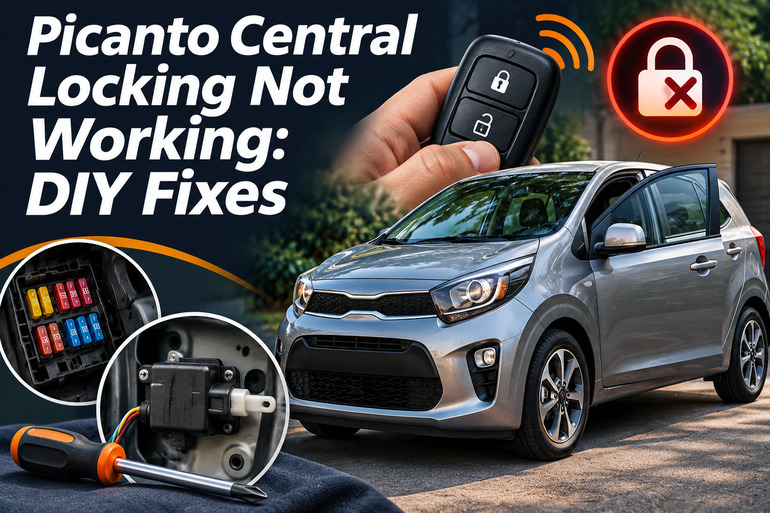
Understanding Kia Picanto Central Locking Problems
The Kia Picanto’s central locking system allows you to lock and unlock multiple doors together using the remote key, the central locking switch, or, on certain models, the driver’s door key cylinder. Depending on the model and equipment, the tailgate may also operate through the same system.
When you press the lock button, an electronic control system sends commands to small electric motors called door lock actuators. These motors move the locking mechanisms inside the doors. The system relies on electrical power, switches, wiring, and control components to carry out these commands.
A central locking fault can appear in several ways. Sometimes the remote key stops operating every door, although the interior locking switch still works. In other cases, one door remains unlocked while the others respond normally. You might also hear repeated clicking, notice a delayed locking response, or find that the doors unlock again unexpectedly.
However, certain behaviors that seem like faults are normal. For example, some Picanto models automatically relock their doors if you unlock the vehicle remotely but don’t open a door within about 30 seconds. The system may also prevent locking when a door is open and the key remains inside the vehicle. These features are described in Kia’s official Picanto owner’s manual.
Before replacing anything, establish whether the problem affects every door, a single door, or only one method of locking. That distinction makes troubleshooting considerably easier.
Kia Picanto Central Locking Not Working: Common Causes
Several mechanical and electrical faults can interfere with your Picanto’s central locking system. The most likely explanation depends on which doors are affected, how the locks respond, and whether the problem occurs consistently.
1. Weak or Faulty Remote Key Battery
A weak remote key battery is one of the first things to investigate when your Kia Picanto stops responding to the lock and unlock buttons. The remote uses a small battery to transmit signals to the vehicle, and insufficient battery power can reduce its operating range or prevent communication altogether.
You might notice that the remote works only when you’re standing close to the car. Sometimes it takes several button presses before the doors respond. Eventually, the remote may stop working entirely, even though the mechanical key can still unlock the driver’s door.
The remote itself can also develop problems. Worn buttons, internal damage after a fall, or moisture entering the casing can interfere with its operation. If replacing the battery doesn’t help, compare its performance with a spare remote before assuming the vehicle’s locking system is defective.
2. Faulty Door Lock Actuator
Each electrically operated door lock uses an actuator to move its locking mechanism. When an actuator fails, the affected door may stop locking or unlocking even though the remaining doors continue working normally.
An actuator can become weak because of internal motor wear, damaged gears, or resistance within the locking mechanism. In some cases, you’ll hear a clicking or buzzing sound inside the door when pressing the remote. The sound indicates that something is responding, but it doesn’t confirm that the actuator is moving correctly.
A particularly useful clue is a door that locks manually but refuses to respond electrically. This suggests that the mechanical locking parts may still move while the electrical actuator or its circuit has developed a fault.
Some actuator problems also appear intermittently. For example, a worn motor may operate occasionally before failing completely. However, a similar symptom can result from damaged wiring, so testing is necessary before replacing the actuator.
3. Blown Fuse or Weak Vehicle Battery
The central locking system depends on the Picanto’s electrical supply. If a fuse protecting the locking circuit blows, the system may lose some or all of its electrical functions.
A fuse contains a thin metal element that breaks when excessive current flows through it. This protects the circuit from damage, but it also interrupts the power supply. Consequently, a blown door locking fuse can prevent the actuators from responding.
A weak or discharged vehicle battery can produce similar symptoms, particularly when other electrical equipment is also behaving unusually. Dim interior lights, slow engine cranking, or several electrical functions failing together suggest that you should investigate the vehicle’s battery and charging system rather than focusing exclusively on the door locks.
4. Damaged Wiring or Faulty Central Locking Switch
Wires carry electrical signals and power between the central locking controls and the door actuators. Over time, repeated door movement can place stress on wiring routed between the vehicle body and the doors.
If a wire becomes damaged or a connector develops a poor connection, the affected lock may respond intermittently or stop working altogether. A problem that appears when a particular door opens or closes can be an important clue. However, confirming the fault usually requires electrical testing.
The interior central locking switch can also fail through wear, contamination, or an internal electrical problem. If the remote operates every lock correctly but the interior switch doesn’t, the switch or its wiring becomes a stronger suspect. A malfunctioning body control module is another possibility, although it should be investigated only after simpler causes have been excluded.
5. Door Latch Problems or Incorrect Door Closure
A door that isn’t fully closed can interfere with normal locking operation. The Picanto uses door position information to support its locking and security functions, and certain models prevent locking under specific conditions when a door is open.
Sometimes the cause is simple. A seat belt may be trapped near the door opening, an object may obstruct the tailgate, or a door may not have closed firmly enough to engage its latch.
In other situations, the latch mechanism or its position switch may be defective. You might notice a door warning light remaining illuminated, repeated locking attempts, or the absence of the usual hazard light confirmation. These signs help identify the affected area, although they don’t establish which component has failed.
Kia Picanto Central Locking Not Working: DIY Fixes
The best way to troubleshoot your Picanto’s central locking problem is to begin with basic checks and work toward the more complicated possibilities. Several of these methods require no special tools, while others help determine whether professional repairs are necessary.
1. Check Every Door and Confirm Normal Locking Behavior
Start by parking your Kia Picanto safely, switching off the engine, and removing the ignition key. If your vehicle has a smart key, keep it with you outside the car. Make sure every door, the hood, and the tailgate are properly closed.
Press the remote locking button once and observe the response. Watch for the hazard lights flashing, listen for movement inside the doors, and check whether each door has locked.
Next, unlock the vehicle and repeat the test using the interior central locking switch, if fitted. Compare the results carefully.
- If the remote fails but the interior switch works, investigate the remote key and its signal.
- If only one door fails, concentrate on that door’s actuator, latch, and wiring.
- If neither control operates any doors, investigate the electrical supply, fuses, and control system.
- If the locks operate but the doors appear to unlock again, check for normal automatic locking behavior and possible latch problems.
Some Picanto versions automatically relock after approximately 30 seconds when no door is opened following remote unlocking. To check this, unlock the car, open a door, close it, and observe whether the unexpected relocking behavior still occurs.
Also, avoid repeatedly pressing the lock button in rapid succession. Kia notes that certain door locking systems may temporarily stop responding to protect their electrical components from excessive operation. Allow the system to rest before testing again.
2. Replace the Remote Key Battery
If the interior locking switch works but the remote doesn’t, replacing the remote battery is a sensible next step. It’s relatively inexpensive and can resolve problems caused by insufficient transmitter power.
First, identify the exact remote fitted to your Picanto. Battery specifications vary between versions. For example, Kia’s 2024 Picanto manual specifies a CR2032 battery for its folding key and a CR2450 for its smart key. Other model years may use different arrangements, so check the owner’s manual or the marking on the existing battery.
For a remote with a user replaceable battery, follow these steps.
- Locate the small opening or separation point in the key casing.
- Use a suitable slim plastic tool to open the casing gently, following your key’s instructions.
- Remove the existing battery without bending the metal contacts.
- Fit a new battery of the correct type, matching the original polarity.
- Reassemble the remote and check that the casing closes securely.
- Stand near the vehicle and test the lock and unlock buttons.
Keep coin batteries away from children and pets. They can cause severe internal injuries if swallowed, so store old and new batteries securely and dispose of used batteries safely.
If the remote still doesn’t respond, try the spare key if one is available. A working spare suggests that the original remote needs further attention. If both fail, investigate the vehicle’s receiver, electrical system, or possible signal interference.
You can also test the remote away from strong radio interference and keep it separate from your phone and large metal objects. Kia identifies these conditions as potential causes of reduced remote performance.
3. Inspect the Central Locking Fuse and Vehicle Battery
If none of the doors respond electrically, checking the vehicle’s electrical supply is worthwhile. Start by observing the dashboard lights, interior lighting, and engine starting behavior.
If the engine struggles to start or several electrical systems behave abnormally, the vehicle battery may need testing or charging. A battery that repeatedly loses charge should also be checked for charging system problems.
If other electrical functions appear normal, move on to the appropriate locking system fuse.
The fuse panel layout depends on the Picanto’s model year and equipment. Many versions have an interior fuse panel near the driver’s side dashboard, although the exact position and circuit labels may differ.
To check the fuse safely:
- Consult the owner’s manual to identify the relevant central locking fuse.
- Switch off the ignition and all electrical accessories.
- Follow Kia’s specified battery disconnection precautions before removing the fuse.
- Use the appropriate fuse puller to remove the identified fuse.
- Examine whether its internal metal element has broken.
- If necessary, replace it with a fuse of exactly the same type and amperage rating.
If you’re unfamiliar with disconnecting a vehicle battery or handling automotive fuses, have a qualified technician complete the check.
Never install a higher rated fuse or substitute wire for a damaged fuse. Doing so can create an electrical fire risk.
Once the correct fuse has been replaced and the electrical system safely restored, test the locks again. If the new fuse blows immediately or shortly afterward, stop using the affected circuit. A short circuit or another electrical fault may be present, and further testing is necessary.
4. Inspect the Door Latches and Locking Mechanisms
When one door refuses to lock, inspect its mechanical operation before assuming that the actuator needs replacement.
Open the affected door and examine the visible latch area. Look for dirt, loose objects, obvious damage, or anything preventing the door from closing properly. Pay attention to seat belts, rubber seals, and objects caught near the door opening.
Remove loose debris using a soft brush or clean cloth. If the latch is dirty, use only a cleaning or lubrication product suitable for automotive door locks and follow the manufacturer’s directions.
Avoid flooding the latch with lubricant or forcing the mechanism. Excessive lubricant can attract dirt, while forcing a damaged latch can make the problem worse.
After cleaning, close the door normally and check that it latches securely. Then operate the remote and interior locking switch again.
If the door locks manually but consistently fails electrically, the actuator or wiring may be faulty. Persistent grinding, buzzing, or repeated clicking from inside the door also warrants further inspection.
For a rear door that won’t open from inside, check its child safety lock before treating the problem as a central locking failure. On equipped Picanto models, this separate safety feature prevents the rear door from opening using its interior handle even when the central locking system has unlocked it.
5. Compare the Locking Controls and Check for Visible Wiring Problems
Once you’ve ruled out straightforward battery, fuse, and door closure issues, compare the different locking controls again. This can help narrow down the fault without dismantling the vehicle.
For example, if the remote operates every door but the driver’s interior switch doesn’t, the switch or its electrical connection deserves attention. Conversely, if the interior switch works normally but neither remote operates, the vehicle’s remote receiving system may need investigation.
If one door behaves differently depending on its position, check the visible rubber wiring boot between that door and the vehicle body. Look for obvious tears, trapped wiring, or signs of previous damage without removing the boot or pulling on the electrical cables.
A damaged rubber boot doesn’t automatically mean the wires inside have failed. However, visible damage or symptoms that change as the door moves provide useful information for a technician.
Avoid removing door panels, probing electrical connectors, or attempting to repair hidden wiring without suitable knowledge and equipment. The electrical parts inside the door can be difficult to access, and incorrect repairs may affect other functions.
At this stage, your observations should help identify the next area to investigate, even if the underlying fault still needs professional confirmation.
6. Contact a Qualified Automotive Technician
If the central locking remains faulty after these checks, a qualified automotive technician can perform more detailed testing.
This is particularly important if an actuator appears defective, the fuse repeatedly blows, or several doors behave unpredictably. A technician can examine electrical connections, test the locking switch, inspect actuator operation, and check the body control module where appropriate.
Professional attention is also necessary when a door won’t latch securely or occupants cannot reliably open it. These faults can affect passenger safety, so avoid driving the vehicle until the problem has been assessed and resolved.
When arranging the inspection, explain which doors are affected, whether the remote and interior switch behave differently, and what checks you’ve already completed.
These details can reduce unnecessary diagnostic work and help the technician identify the faulty component before recommending replacement parts.
Wrap-Up
A Kia Picanto central locking problem doesn’t automatically mean that an expensive electronic component has failed. Sometimes the solution is as simple as replacing a remote battery, correcting a door closure problem, or replacing a blown fuse after identifying its cause.
However, recurring electrical faults and defective locking mechanisms deserve proper attention. By observing which doors respond, comparing the available controls, and performing safe basic checks, you can make a better informed repair decision. Most importantly, make sure every door locks securely and opens reliably before returning to normal vehicle use.