
An engine management warning in your Kia can appear even when the vehicle seems to drive normally. Other times, it arrives with shaking, weak acceleration, or an engine that struggles to stay running. The message deserves attention, but it doesn’t identify the failed part.
The useful next step depends on the warning lights, your symptoms, and the stored fault codes. Understanding those clues helps you separate a simple check from a problem that needs immediate professional care.
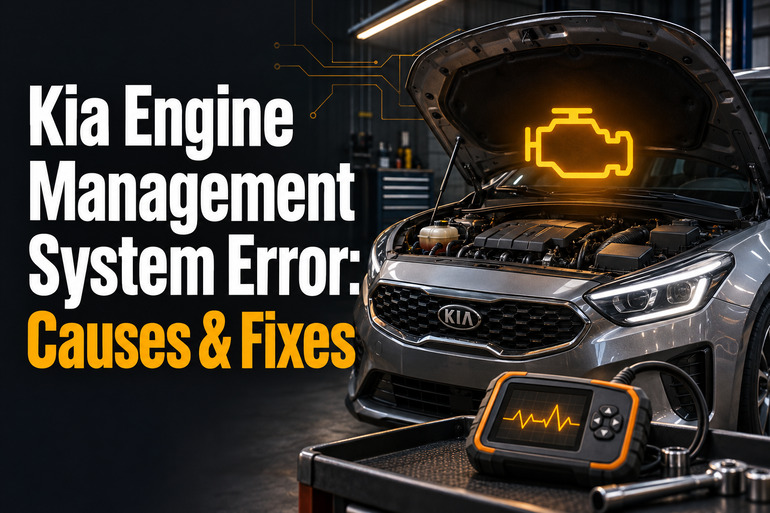
What a Kia Engine Management System Error Means
Your Kia’s engine computer uses information from sensors to control fuel delivery, ignition timing, and other engine functions. Its diagnostic system also checks for faults that affect emissions and operation. When it detects a problem, it can store a diagnostic trouble code and turn on the check engine light. Kia calls this the malfunction indicator lamp, or MIL.
An “engine management system error” is a broad warning. It doesn’t automatically mean the computer itself has failed. Kia’s manuals explain that the MIL can indicate a fault involving the engine, emissions system, or powertrain. The actual cause requires further checks.
You might notice rough idling, hesitation, increased fuel use, or reduced power. However, an emissions fault may produce no obvious change in how the vehicle drives. If the notification appears through a connected service, save its exact wording and any diagnostic information. Available remote diagnostic features vary by vehicle and market.
A flashing check engine light needs prompt attention because it can indicate a damaging misfire. If it flashes, especially with severe shaking, stop safely and arrange assistance. An oil pressure warning, overheating, or loud mechanical knocking also calls for stopping the engine rather than continuing troubleshooting on the road.
Kia Engine Management System Error: Common Causes
Several faults can produce a similar warning, so symptoms alone rarely confirm the cause. These possibilities provide a useful starting point, while the stored codes help narrow the diagnosis.
1. A Loose Fuel Cap or Another Vapor System Leak
If the warning appeared after refueling and your Kia still runs smoothly, check whether the fuel cap was secured properly. On vehicles with a removable cap, an incomplete seal can trigger an engine warning. Kia specifically warns about this in its fuel filler instructions.
The cap is part of the system that keeps gasoline vapors contained. A loose or missing cap can therefore cause an emissions warning without creating the shaking or hesitation associated with an engine misfire. That makes the timing after a fuel stop useful information, although it doesn’t prove the cap is responsible.
Other faults in the vapor system can require diagnosis even when the cap looks fine. For example, its purge valve controls the movement of stored fuel vapors into the engine. A valve stuck open can affect the fuel mixture, so tightening the cap won’t correct every vapor system problem.
2. Worn Spark Plugs or a Failing Ignition Coil
Shaking at idle or hesitation during acceleration can point to a misfire. On a gasoline engine, a spark plug ignites the fuel mixture, while an ignition coil supplies the electrical energy needed for that spark. A fault in either part can interrupt combustion.
Spark plug wear can increase the effort required from the coil. Heat, vibration, and contamination around the ignition components can also contribute to failure. However, a misfire can come from fuel delivery problems too. A misfire code should lead to testing, rather than an automatic purchase of plugs and coils.
3. Faulty Sensors or Their Electrical Connections
The engine computer depends on accurate readings. An oxygen sensor measures oxygen in the exhaust, while other sensors monitor conditions such as engine temperature or incoming air. Incorrect information can interfere with engine control and trigger a warning.
Depending on the fault, you might notice poor fuel economy, sluggish acceleration, or an uneven idle. Those symptoms overlap with several other problems. They help describe what has changed, but they don’t identify a particular sensor.
A code mentioning a sensor also doesn’t always mean that sensor needs replacement. Its power supply, connections, or the conditions it measures may be responsible. Technical guidance from component manufacturers calls for checking the relevant system and comparing readings before replacing parts.
4. Air Leaks or Incorrect Fuel Delivery
Your engine needs the right balance of air and fuel. An intake leak, incorrect fuel pressure, or restricted injector can upset that balance. Bosch identifies these as possible causes of abnormal mixture readings, including situations where an oxygen sensor is reporting a real engine problem.
The distinction matters because replacing the reporting sensor may leave the actual fault untouched. A technician may need to compare live readings, test for leaks, or measure fuel delivery. Note whether the problem happens at idle, during acceleration, or after the engine warms up, since those conditions help guide the checks.
5. Engine Protection or a Model Specific Fault
Some Kia engines can limit power when a protective system activates. Certain manuals describe reduced power associated with low oil pressure. In that situation, the separate oil pressure warning is especially important, and continuing to drive can cause engine failure.
Selected Kia vehicles also have specific diagnostic procedures for code P1326, which concerns the knock detection system. Kia’s published repair guidance includes testing before deciding between software, sensor, or engine work. This does not apply to every Kia, and the code alone doesn’t confirm that an engine replacement is needed. Applicability depends on the vehicle and the test results.
Kia Engine Management System Error: DIY Fixes
Begin with safe observations and simple checks that apply to your vehicle. Once those are complete, use the diagnostic evidence to decide which repair is appropriate.
1. Check the Warning and Decide Whether to Stop
Before opening the hood, look at the dashboard and note how the engine behaves. A steady check engine light with normal operation needs prompt diagnosis, but flashing, severe shaking, or a major loss of power calls for more urgent assistance. Avoid hard acceleration while moving to a safe stopping place.
If the oil pressure light appears while the engine is running, stop safely and switch the engine off. Don’t assume that an engine management notification explains away another warning. Kia gives separate instructions for low oil pressure because continued operation can cause serious damage.
Once parked, photograph the warning and record the mileage, driving conditions, and recent changes. Useful details include a recent fuel stop, maintenance visit, difficult start, or the first appearance of unusual vibration. This gives the repair shop a clearer starting point and helps distinguish an occasional fault from one that happens consistently.
2. Secure the Fuel Cap if Your Kia Has One
With the engine off and the vehicle safely parked, follow your owner’s manual to check the fuel cap. Make sure it seats correctly and look for obvious damage to its seal. On the 2024 Telluride, for example, Kia specifies tightening the cap until it clicks once. Follow the instructions for your own model.
Replace a damaged or missing cap with the correct specified part. However, don’t keep tightening it or replacing caps if the warning persists. A secure cap rules out one simple possibility, while a continuing warning requires a code scan and further diagnosis. If you smell strong gasoline or see a leak, stop using the vehicle and seek assistance.
3. Read and Save the Diagnostic Codes
A compatible OBD2 reader can retrieve stored engine fault codes. Park securely, apply the parking brake, and follow the reader’s connection instructions. Use your vehicle information to locate the diagnostic socket, and follow the tool’s directions about ignition position. Don’t operate the reader while driving.
Save the complete codes and their descriptions. If the tool provides freeze frame data, save that too. This records operating conditions associated with a detected fault and can help the technician understand what was happening when it occurred. A photograph or exported report makes the information easy to share.
Leave the codes stored if the vehicle is going to a repair shop. Clearing them can erase freeze frame information and other useful diagnostic data. A code scan is a starting point, so avoid treating an app’s suggested replacement part as a confirmed diagnosis. The next step is checking why that code was set.
4. Check the Oil Level and Look for Obvious Problems
If your Kia has a dipstick, check the oil according to the owner’s manual. Follow its instructions for parking position, engine temperature, and waiting time. If the level is low, add the specified oil carefully without exceeding the upper mark. Kia advises checking the level after safely stopping for an oil pressure warning.
Oil level and oil pressure are different checks. A normal dipstick reading doesn’t establish that pressure is adequate. If the pressure warning remains on after the level is corrected, leave the engine off and arrange professional assistance. Don’t repeatedly restart it to see whether the warning disappears.
With the engine off and cool, you can also look for an obviously displaced air duct or damage near recently serviced areas. Keep this to a visual check. Leave electrical testing, fuel system work, and repairs around moving or hot components to a technician. On a hybrid, avoid orange cables and high voltage equipment.
5. Match Repairs to the Confirmed Fault
Use the scan results, service history, and inspection findings together. If the evidence points to an ignition problem, have the affected coil and spark plug checked. Replacing every ignition component without testing can miss the underlying problem, including contamination that could damage the replacement part.
The same approach applies to sensor and mixture faults. Ask whether the diagnosis confirmed a failed sensor or found an air leak, fuel delivery issue, or connection problem. The repair should address the cause of the incorrect reading. Parts replacement alone doesn’t establish that the original fault has been resolved.
Before authorizing substantial work, check your VIN through the NHTSA recall lookup and ask a Kia dealer about applicable campaigns and coverage. A recall search shows whether your specific vehicle needs an outstanding recall repair. It doesn’t establish that a recall explains your present warning, so the diagnosis still matters.
6. Contact a Qualified Kia Technician
Arrange professional diagnosis when the warning persists, returns after a repair, or accompanies poor running. A shop can examine live data and perform the tests needed to separate an ignition, fuel, sensor, or mechanical problem. Bring your saved codes and symptom notes, even if the vehicle behaves normally during the appointment.
Request the confirmed findings and proposed repair before approving parts. For a Kia with P1326, specifically ask whether the applicable Kia diagnostic procedure has been followed. Published guidance calls for checks that determine the repair path, which is why replacing a knock sensor or recommending an engine without those checks is insufficient.
Wrapping Up
A Kia engine management warning gives you a reason to investigate, but it doesn’t tell you which part to replace. The most useful clues are the warning’s behavior, changes in engine performance, and the diagnostic information stored when the fault occurred.
Start with the checks that are safe for your situation, and keep a clear record of what you find. If the vehicle shakes, loses power, or shows another serious warning, arrange assistance promptly. Otherwise, book a diagnosis so the repair addresses the fault and gives you a clear basis for returning to normal use.