
A Kia Sportage electric handbrake that refuses to engage or release can turn an ordinary stop into a frustrating problem. You might hear no motor sound, see a warning on the dashboard, or discover that your vehicle won’t move even though the engine starts normally.
Some causes are simple, such as an overlooked release condition or a weak battery. Others involve the braking system itself. Knowing which signs matter helps you identify the likely fault and avoid damaging expensive components.
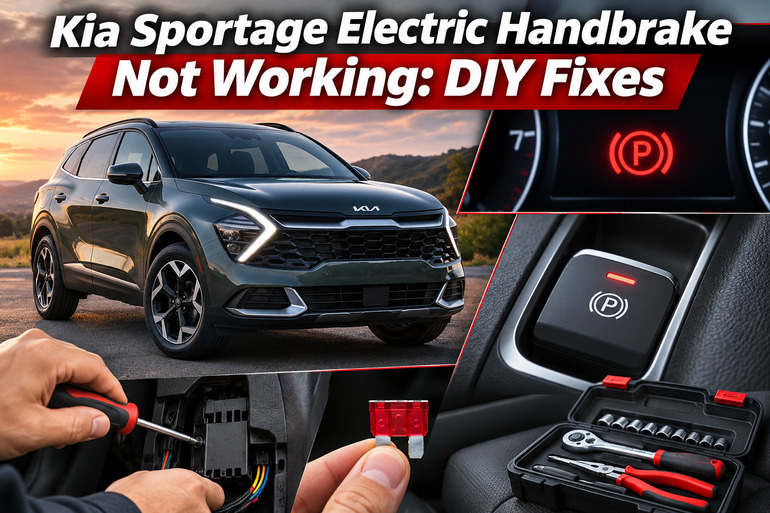
Understanding Kia Sportage Electric Handbrake Problems
The Kia Sportage uses an Electronic Parking Brake (EPB) on equipped models instead of a traditional handbrake lever. You operate it using a switch marked with a parking brake symbol, usually located around the center console. When you pull the switch, the system uses an electric motor to apply the parking brake and hold your vehicle stationary.
To release the brake manually, you normally switch on the ignition, press the brake pedal, and push the EPB switch down. Some Sportage models also release the parking brake automatically when certain driving conditions are met. However, the exact operation depends on the model year and vehicle configuration.
When the system develops a problem, you might notice that the parking brake won’t release, refuses to engage, or works intermittently. A warning message may appear on the instrument cluster, sometimes accompanied by an illuminated EPB warning light. You could also hear an unusual grinding sound or notice that the usual motor sound is missing.
It’s important to distinguish an actual malfunction from normal system behavior. For example, the EPB may refuse to release automatically if the driver’s seat belt is unfastened or a door is open. However, a persistent warning light, unusual brake noise, or a rear wheel that remains locked after a proper release attempt could indicate a fault requiring attention.
Kia Sportage Electric Handbrake Not Working: Common Causes
Several electrical and mechanical problems can interfere with your Sportage’s parking brake. Understanding how these faults develop makes it easier to identify the most likely cause before attempting a repair.
1. Weak or Discharged 12V Battery
Your Kia Sportage’s electric handbrake depends on electrical power to operate its motor and control system. If the 12V power supply becomes too weak, the parking brake may fail to engage or release properly.
This can happen when the battery is aging, the vehicle has been parked for an extended period, or an electrical fault has drained its charge. In some cases, the engine may struggle to start, and several warning lights may appear together.
A weak battery becomes particularly suspicious when the handbrake problem develops alongside other electrical symptoms. You might notice slow engine cranking, flickering dashboard lights, or electrical accessories behaving unusually.
However, the engine starting successfully doesn’t completely rule out a power supply problem. Poor battery connections, charging problems, or voltage drops can sometimes affect electronically controlled components.
Hybrid Sportage models also have different 12V battery arrangements depending on the model year. Therefore, the correct battery checks and recovery methods should always match your vehicle.
2. Unmet Safety Conditions or Auto Hold Interference
Your Sportage has safety features that control when the electric handbrake can release. These prevent accidental movement when the vehicle isn’t ready to drive.
For example, automatic release may be restricted when the driver’s seat belt isn’t fastened or the driver’s door, hood, or liftgate isn’t properly closed. Kia documents these conditions in its Sportage owner’s manual.
The Auto Hold feature can also create confusion. This system keeps your vehicle stationary after you release the brake pedal during a stop. Under certain conditions, it automatically transfers holding responsibility to the electronic parking brake. If you’re unfamiliar with this behavior, the parking brake might appear to engage unexpectedly even though the system is operating normally.
3. Faulty Parking Brake Switch or Brake Pedal Sensor
The EPB switch sends an electrical command requesting the parking brake to engage or release. If the switch becomes damaged or develops an internal contact problem, it may stop sending that command consistently.
You might notice that the handbrake responds only occasionally, the switch feels unusually loose, or the EPB warning light appears after operating it. However, an unresponsive switch doesn’t automatically mean the switch itself is defective.
A faulty brake pedal switch or related electrical input can also prevent the system from recognizing a valid release request. Since the brake pedal must be pressed during manual release, a problem detecting that input may interfere with normal operation. A technician may need to check live sensor readings to distinguish these faults.
4. Faulty Parking Brake Motor or Rear Brake Mechanism
The parking brake motor operates a mechanical braking arrangement that holds the vehicle stationary. If the motor fails or the associated brake components become stuck, the system may struggle to engage or release.
Moisture, corrosion, damaged brake components, and mechanical wear can contribute to these problems. After exposure to water and freezing temperatures, the rear brakes may also become stuck because ice has formed around the braking surfaces.
The symptoms depend on the fault. A defective motor may produce no noticeable sound when the switch is operated. A struggling mechanism might make repeated clicking or unusual grinding noises.
Sometimes, the dashboard indicates that the parking brake has released, but a rear brake remains physically stuck. This situation requires particular caution because attempting to drive can overheat the brake components.
5. Damaged Wiring or Electronic Control Problems
The parking brake relies on electrical connections between its switch, control electronics, sensors, and actuator. Damaged wiring or a poor electrical connection can interrupt communication or prevent the motor from receiving sufficient power.
Wiring problems may develop after water exposure, corrosion, accidental damage, or previous repairs. You might experience intermittent operation, warning lights that appear unpredictably, or a parking brake that works one day and fails the next.
In other cases, the fault involves the electronic control system. Because the EPB works alongside other vehicle safety systems, certain electronic stability control faults can also trigger related warnings.
Kia notes that an EPB warning may sometimes appear alongside an Electronic Stability Control warning without necessarily indicating a defective parking brake motor.
Kia Sportage Electric Handbrake Not Working: DIY Fixes
The correct repair depends on what’s preventing the parking brake from working. Begin with simple checks that don’t involve dismantling brake components, and stop if you notice signs of a serious mechanical or electrical problem.
1. Apply and Release the Handbrake Correctly
Before assuming the electric handbrake has failed, confirm that you’re operating it correctly. The EPB switch responds differently depending on whether you want to engage or release the brake.
For many recent Kia Sportage models, the correct procedure is straightforward.
- Park on a firm, level surface, select P (Park), and keep your foot firmly on the brake pedal.
- Switch the ignition to ON or start the vehicle as directed in your owner’s manual.
- Pull the EPB switch upward to engage the parking brake. To release it, press the brake pedal and push the switch downward.
- Check the dashboard to confirm that the parking brake indicator responds correctly.
A brief click or electric motor sound is normal when the EPB operates. If the warning light stays illuminated after you attempt to release the brake, don’t assume the system has released successfully. Also, avoid repeatedly pressing the accelerator to overcome a parking brake that remains engaged.
2. Check the Seat Belt, Doors, Hood, and Liftgate
If your Sportage refuses to release its parking brake automatically, check whether the vehicle’s safety conditions have been satisfied.
Start by fastening your driver’s seat belt. Then, confirm that the driver’s door, hood, and liftgate are completely closed. A door that appears shut may still have a latch or sensor issue preventing the vehicle from recognizing it as closed.
Check the instrument cluster for warnings about an open door or hood. If a warning remains visible even after everything has been properly closed, a faulty latch sensor may be involved.
Once these conditions are satisfied, press the brake pedal and try releasing the EPB manually. If the warning disappears and the system operates normally, the problem may have resulted from an unmet safety condition rather than a damaged component.
3. Check and Disable Auto Hold Temporarily
Auto Hold and the electric parking brake work together, but they perform different functions. Auto Hold keeps the vehicle stationary during temporary stops, while the EPB secures it when parked.
To check whether Auto Hold is contributing to the confusion, bring the vehicle to a complete stop on level ground and keep your foot on the brake pedal. Then, press the Auto Hold button to turn the feature off. Its indicator should go out.
If the EPB was applied automatically, release it manually while continuing to hold the brake pedal. You can then check whether the parking brake responds normally to its switch.
If Auto Hold displays a yellow malfunction indicator or keeps producing warning messages, the system needs professional diagnosis. Turning Auto Hold off may help clarify the symptoms, but it won’t repair an underlying electrical fault.
4. Check the 12V Battery and Restore Power if Necessary
If the handbrake stopped working around the same time as other electrical accessories, the 12V power supply deserves attention.
On Sportage models with a conventional 12V battery, look for obvious signs of trouble, such as difficulty starting or badly corroded battery terminals. If you have a suitable battery tester and know how to use it safely, check the battery’s condition following the tester’s instructions.
When the battery is discharged, restoring its charge may allow the EPB to operate again. However, follow the exact jump starting or charging instructions in your owner’s manual. Avoid disconnecting the battery simply to clear a parking brake warning.
Some Sportage Hybrid models have a 12V Battery Reset button and an integrated low voltage battery system. These vehicles require a different recovery procedure, and the reset button should only be used as instructed by Kia.
Once proper power has been restored, check whether the handbrake responds normally. If the problem returns, have the battery and charging system inspected rather than repeatedly jump starting the vehicle.
5. Restart the Vehicle and Check the Warning Lights
A temporary control system problem can occasionally cause the EPB warning light to appear. Kia’s guidance allows a simple restart when the warning is associated with abnormal switch operation.
Park safely, select P, and switch off the engine. Wait a few minutes before restarting the vehicle. Once the ignition is on, observe the dashboard and check whether the EPB warning disappears.
On recent Sportage models, the EPB malfunction indicator normally illuminates briefly during startup and then goes out if the system is operating correctly. If the light remains on, the system may have detected a fault.
If the warning disappears, try the parking brake switch again while keeping your foot firmly on the brake pedal. Avoid repeatedly cycling the ignition or operating the switch if the brake makes unusual noises.
Kia also describes a specific switch operation sequence for certain flashing parking brake warnings. However, if the fault persists after the recommended procedure, the vehicle should be inspected rather than subjected to repeated attempts.
6. Check for Brake Light Problems and Stuck Rear Brakes
A few simple observations can help identify whether the problem involves the brake pedal signal or the rear braking mechanism.
First, check whether the rear brake lights illuminate when you press the brake pedal. You can ask someone to observe the lights while the vehicle remains securely parked. If the brake lights fail to illuminate, a faulty pedal switch, electrical circuit, or lighting component may be responsible. This test alone cannot confirm which part has failed.
Next, consider whether the rear brakes may be stuck. If the problem started after freezing weather or exposure to water, ice around the rear brakes could be preventing normal release. Kia specifically warns that parking brakes can freeze under these conditions.
You can visually check for obvious ice or damage from a safe position without crawling underneath the vehicle. If the brake appears frozen, allow it to thaw naturally in a suitable environment or arrange professional assistance.
Avoid striking the brake components, applying direct heat, disconnecting actuator wiring, or forcing the vehicle to move. Similarly, don’t attempt to remove the rear calipers or retract the EPB motor without the correct equipment and service procedure.
7. Contact a Qualified Automotive Technician
If the electric handbrake still refuses to operate after the basic checks, professional diagnosis is necessary. A qualified technician can use a compatible diagnostic scanner to read faults from the parking brake and related control systems.
The technician may inspect the EPB switch, brake pedal sensor, electrical connections, control module, and rear brake actuators. This helps identify the actual failure before replacing components. If the problem began after brake pad replacement, mention this because EPB equipped vehicles may require a model specific service procedure.
If the parking brake cannot release normally, don’t force the vehicle to move. Kia recommends transporting the vehicle on a flatbed tow truck for inspection. Likewise, if the brake won’t engage, avoid leaving the vehicle unsecured. Choose a level location, keep the transmission in Park, and arrange suitable assistance.
Seek immediate professional attention if you notice a burning smell, grinding noises, a locked rear wheel, reduced braking performance, or a persistent brake system warning.
Wrapping Up
A Kia Sportage electric handbrake that stops working doesn’t always mean an expensive component has failed. Sometimes, the issue comes from a weak battery, an unmet safety condition, or temporary electronic behavior. However, persistent warning lights and mechanical symptoms deserve closer attention.
Start with the checks you can safely perform, and pay attention to how the vehicle responds. If the brake still won’t engage or release correctly, professional diagnosis is the safest choice. Getting the fault identified early can help prevent further damage and keep your Sportage secure whenever you park.