
Seeing a “Check ESC” warning on your Kia Telluride while the engine refuses to start can be frustrating, especially when several dashboard lights appear at once. You might hear a clicking sound, notice the engine struggling to turn over, or get no response when pressing the start button.
Fortunately, the warning doesn’t always mean the stability control system has failed. Sometimes, a weak battery or another electrical problem is responsible. Understanding the possible causes can help you identify the fault and choose the right solution.
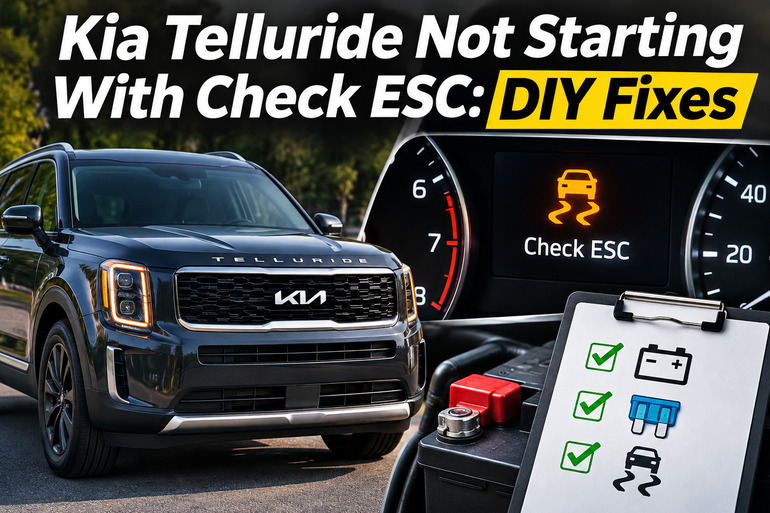
What Does Check ESC Mean When Your Kia Telluride Won’t Start?
The “Check ESC” warning indicates a possible problem involving your Telluride’s Electronic Stability Control system. This safety feature helps maintain vehicle stability during sharp turns, slippery conditions, and sudden steering movements. It works with the braking and engine management systems to help prevent the vehicle from sliding or losing traction.
Under normal conditions, the ESC system monitors information from sensors that measure wheel speed and vehicle movement. When necessary, it can reduce engine power or apply braking force to individual wheels. If the system detects a fault, it may display a warning or illuminate the ESC indicator.
However, a Check ESC warning appearing alongside a starting problem doesn’t automatically mean the ESC system is preventing the engine from starting. Both symptoms may result from another fault, particularly low battery voltage or an electrical communication problem. A genuine ESC malfunction can also occur independently of the starting issue.
Pay attention to what happens when you press the start button. Rapid clicking, dim dashboard lights, and slow cranking suggest a different problem from an engine that turns over normally but refuses to run. Similarly, a completely silent starter may indicate a missing starting signal. If the ESC warning remains after the engine starts, it deserves further investigation, particularly if the ABS or brake warning lights also remain illuminated.
Kia Telluride Not Starting With Check ESC: Common Causes
Several mechanical and electrical problems can prevent your Kia Telluride from starting while an ESC warning appears. The following are important possibilities, although the exact cause depends on the symptoms and diagnostic results.
1. Weak or Dead 12 Volt Battery
A weak battery is one of the first things worth checking when your Telluride refuses to start. The battery supplies power to the starter motor and the electronic systems responsible for starting and monitoring the vehicle. When its voltage drops too far, these systems may behave unpredictably.
You might notice rapid clicking when pressing the start button, headlights that appear unusually dim, or dashboard lights that flicker. Sometimes, several warning messages appear together because different electronic systems aren’t receiving stable power. The ESC warning may disappear after the electrical supply is restored, although that doesn’t prove the battery was the only problem.
Battery problems can develop because of age, repeated short trips, accessories left running while the engine is off, or an electrical drain. A faulty charging system can also leave the battery discharged after driving. If your Telluride starts with a jump but refuses to start again later, the battery, charging system, and possible electrical drains all need attention.
2. Faulty Brake Pedal Switch or Blown Stop Lamp Fuse
Your Telluride uses a brake pedal signal as part of its starting process. When you press the brake pedal, the vehicle needs to recognize that action before allowing normal engine starting.
A defective brake pedal switch or blown fuse in the stop lamp circuit may interrupt this signal. Consequently, pressing the ENGINE START/STOP button might switch on the dashboard without engaging the starter. Kia specifically notes that a blown stop lamp fuse can prevent normal starting.
One useful clue is whether the brake lights illuminate when you press the pedal. If they remain off, the problem may involve the switch, fuse, wiring, or lighting circuit. However, functioning brake lights don’t completely rule out a brake switch problem because the starting system may rely on a separate signal or electrical path. Brake signal faults can also affect other vehicle functions, depending on the fault.
3. Smart Key Detection or Immobilizer Problems
Your Telluride’s push button starting system needs to recognize an authorized smart key before it can start the engine. If that recognition fails, the starter may remain inactive even when the vehicle’s main battery has enough power.
A weak smart key battery is one possible cause. You might notice that the doors no longer respond consistently to the remote, or the instrument cluster displays “Key not detected.” In some cases, the immobilizer indicator flashes to show that the vehicle hasn’t recognized the key correctly.
Interference from nearby electronic devices, damage to the smart key, or a fault in the vehicle’s key recognition system can produce similar symptoms. Kia’s owner documentation explains that the immobilizer indicator can flash when the smart key battery is weak or the immobilizer system develops a fault.
Although smart key problems don’t normally cause an ESC malfunction, they can explain why the engine won’t start while a separate ESC warning is visible. It’s worth checking the key before assuming that the warning identifies the starting fault.
4. Transmission Gear Position Recognition Problems
The Telluride normally requires the transmission to be in Park or Neutral before the engine can start. This prevents the vehicle from unexpectedly moving when the starter operates.
If the transmission selector isn’t fully engaged in Park, the starting system may refuse to operate. A fault in the gear position sensor, selector mechanism, or related wiring can also prevent the vehicle from recognizing the selected position.
You may notice a message asking you to shift into Park or Neutral, an incorrect gear indication, or a starter that works intermittently. These symptoms point toward a gear recognition problem. However, the presence of an ESC warning alone isn’t evidence that the transmission sensor has failed.
5. Electrical Wiring, Starter Circuit, or ESC System Faults
Electrical faults can create several symptoms simultaneously, especially when different control systems depend on shared power supplies, sensors, and electronic communication networks. Corroded connections, damaged wiring, failed relays, or control module problems can interfere with normal vehicle operation.
For example, a starter circuit fault may prevent the engine from turning over even though the dashboard powers up normally. Meanwhile, an actual ESC fault might involve a wheel speed sensor, steering angle information, the ABS control system, or related wiring. These problems require different diagnostic approaches.
A genuine ESC sensor fault usually doesn’t prevent an otherwise healthy engine from starting. Therefore, when both symptoms appear together, it’s important to test the starting system and investigate any stored ESC fault codes rather than assuming one defective component explains everything.
Kia Telluride Not Starting With Check ESC: DIY Fixes
The best way to address this problem is to begin with simple checks that can identify common starting faults. Work through the following methods in order, and avoid replacing components until there’s a clear reason to suspect they’re defective.
1. Check the Battery and Restore Its Charge
Start by checking whether the battery has enough power to start the engine. With the vehicle parked and switched off, turn on the interior lights and observe their brightness. Next, attempt to start the engine while watching the lights.
If they become noticeably dimmer or go out, a discharged battery is a strong possibility. Kia recommends this basic check when diagnosing an engine that doesn’t turn over or cranks slowly. You can also visually inspect the battery terminals for obvious corrosion, damage, or loose connections without touching exposed electrical parts.
If the battery is discharged, a suitable 12 volt jump starter may help get the engine running. Follow the instructions in your Telluride’s owner’s manual and the jump starter manufacturer’s directions. Never jump start a frozen, leaking, swollen, or damaged battery. If you’re unfamiliar with the procedure, roadside assistance is the safer option.
Once the engine starts, have the battery properly charged and tested. A successful jump start doesn’t establish whether the battery is healthy. If it loses charge again, a technician should check the alternator, battery condition, connections, and possible electrical drains. If the ESC warning also disappears, monitor for its return rather than assuming the problem has been permanently resolved.
2. Confirm the Correct Starting Procedure
Before checking more components, make sure your Telluride is receiving the correct starting inputs. An improperly selected gear or insufficient brake pedal pressure may prevent the starter from operating.
Follow these steps while the vehicle is stationary.
- Make sure the smart key is inside the vehicle, preferably near the driver’s seat.
- Apply the parking brake and place the transmission selector firmly in Park.
- Press the brake pedal completely and keep your foot on it.
- Press the ENGINE START/STOP button once without touching the accelerator pedal.
- If the engine doesn’t start, check the dashboard for messages concerning the brake pedal, smart key, or transmission position.
If the vehicle doesn’t recognize Park, and the selector operates normally, you can try starting in Neutral while keeping the brake pedal firmly pressed and the parking brake applied. Kia confirms that the Telluride can start in either position. However, if the gear display is incorrect, the selector feels abnormal, or the vehicle might move unexpectedly, stop attempting to start it and seek professional assistance.
3. Inspect the Brake Lights and Relevant Fuses
A brake pedal signal problem can stop your Telluride from starting normally. Fortunately, checking the brake lights is a simple way to look for a possible fault without taking anything apart.
With the vehicle safely parked, ask another person to observe the rear brake lights while you press the pedal. Alternatively, use their reflection against a nearby wall or garage door. If none of the brake lights illuminate, investigate the stop lamp circuit before making further starting attempts.
The owner’s manual and the fuse panel label can help identify the relevant fuse. Fuse arrangements vary by model year, so avoid relying on a diagram intended for a different Telluride. If the fuse is blown, Kia specifies replacing it with one of the same rating. Its published replacement procedure also requires switching off the vehicle’s electrical systems and disconnecting the negative battery cable. Have a qualified technician handle the replacement if you’re unfamiliar with these precautions.
If the brake lights work but the vehicle still doesn’t recognize pedal pressure, the brake switch or its signal circuit may need testing. Never drive with nonfunctioning brake lights, even if the engine eventually starts. Also, don’t repeatedly replace a fuse that keeps blowing because this can indicate a wiring fault that requires proper diagnosis.
4. Test the Smart Key and Replace Its Battery
If your Telluride’s dashboard powers up but the engine doesn’t crank, check whether the vehicle recognizes your smart key. A message such as “Key not detected” is an especially useful clue.
Kia provides an alternative starting method for situations where the smart key battery is weak. With the transmission in Park and the brake pedal pressed, use the smart key itself to press the ENGINE START/STOP button. Hold the key against the button at a right angle as described in the owner’s manual. This can allow the vehicle to recognize the key even when its battery is weak.
If this method works, replace the smart key battery with the correct type. For example, Kia specifies a CR2450 battery in its 2024 Telluride documentation. Check the instructions for your particular model year before purchasing a replacement. Open the key casing carefully, install the new battery with the correct polarity, and close the casing securely. Keep loose button batteries away from children because swallowing one can cause severe injuries.
After replacing the battery, test the remote buttons and attempt a normal engine start. If the vehicle still doesn’t recognize the key, try another registered smart key if one is available. Failure with both keys may indicate a problem with the vehicle’s receiver, immobilizer, or related electronics rather than the key battery.
5. Restart the Vehicle Safely and Check for Remaining Faults
Sometimes, an electrical warning appears during a temporary interruption or low voltage event. If you’ve restored the battery supply or corrected an obvious starting condition, a normal restart can help determine whether the warning persists.
Switch the ignition completely off, make sure the vehicle is in Park, and wait briefly before trying again. Avoid repeatedly pressing the start button or holding it down for extended periods. If the engine starts, observe whether the ESC indicator goes out after its normal startup check. Kia explains that this indicator normally illuminates briefly and should turn off when the system is working correctly.
If the engine turns over at a normal speed but still doesn’t start, check the fuel gauge before attempting another restart. A normal cranking speed can indicate that the starter is functioning while a separate fuel, ignition, or engine control problem prevents combustion. If the engine still refuses to run, professional testing is necessary. Also, avoid disconnecting the battery simply to erase the ESC warning, since doing so may remove useful diagnostic information without addressing the underlying problem.
6. Contact a Qualified Kia Technician
If the Telluride still won’t start after these checks, or the Check ESC warning keeps returning, arrange a professional diagnosis. This is particularly important if the ABS warning remains illuminated, the brake pedal behaves abnormally, the vehicle has difficulty selecting gears, or the problem started while driving. If you notice reduced braking ability, an unusual burning smell, or damaged electrical components, stop using the vehicle and arrange appropriate roadside assistance.
A qualified Kia technician can use a diagnostic scanner capable of reading the ESC, ABS, engine, and transmission control systems. They can examine stored fault codes, test the battery under load, inspect the starter circuit, and check brake pedal and gear position signals. This approach helps identify whether the warning and starting failure share a cause.
The technician may also need to examine wheel speed sensor signals, wiring connections, control module power supplies, or relevant manufacturer service information. However, these components should only be repaired or replaced after testing confirms a fault.
If your Telluride is still covered by an applicable warranty, contacting an authorized Kia dealership may be especially useful. Provide the technician with the vehicle’s model year, the exact warning displayed, and details about what happens during each starting attempt. Mention whether a jump start worked, whether the battery was recently replaced, and whether the warning appears intermittently.
Wrap-Up
A Kia Telluride that won’t start while displaying Check ESC doesn’t necessarily have a major stability control problem. The most useful clues often come from how the engine responds, whether the dashboard lights dim, and whether the vehicle recognizes the brake pedal, transmission position, and smart key.
Start with the safe, straightforward checks before considering expensive repairs. If the engine remains unresponsive or the warning returns after restoring normal starting conditions, a proper diagnostic inspection will help identify the fault and prevent unnecessary parts replacement.