
A Kia Seltos horn that suddenly stops working can be frustrating, especially when you need to warn another driver or pedestrian. Sometimes, pressing the steering wheel produces complete silence. Other times, the horn sounds weak, makes an unusual noise, or works only occasionally.
Although a blown fuse might be responsible, the problem can also come from a faulty horn assembly, damaged wiring, or a steering wheel component. Understanding these possibilities helps you identify the fault and choose the right repair.
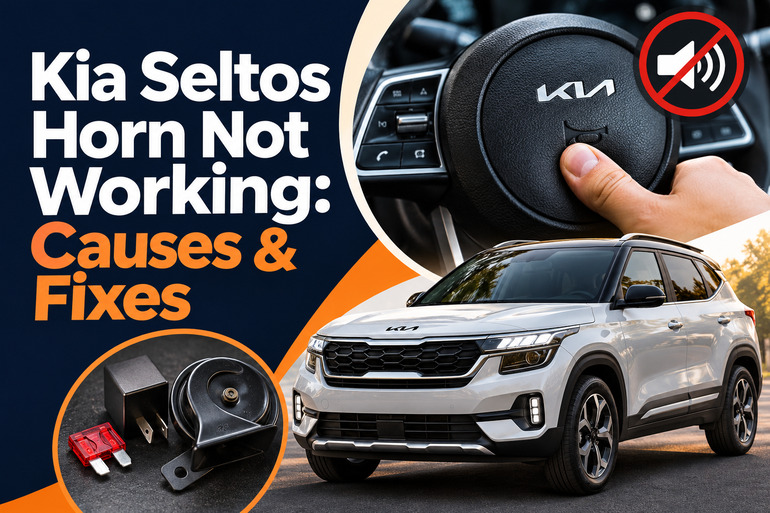
Why Your Kia Seltos Horn Is Not Working
Your Kia Seltos uses an electrical horn system to produce the sound you hear when pressing the horn area on the steering wheel. When the system works properly, pressing the horn pad completes a control circuit that allows electrical power to reach the horn assembly. The horn then produces its familiar warning sound.
Several components must work together for this to happen. These include the horn switch, electrical wiring, fuse, relay, and horn assembly. Depending on the vehicle’s design, a body control module may also participate in controlling the circuit. A fault anywhere along the electrical path can prevent the horn from sounding.
The symptoms often provide useful clues. For example, a horn that makes a faint or distorted sound may have an internal problem. Complete silence could indicate a blown fuse, faulty relay, failed horn, or interrupted electrical connection. If the horn operates occasionally or responds differently when the steering wheel moves, the steering wheel wiring or horn switch may require attention.
One particularly important detail concerns certain Seltos models. Kia America has acknowledged horn assembly problems involving internal corrosion and dust on some 2021 through 2024 vehicles. These problems can produce abnormal horn sounds or complete failure. Kia issued a warranty extension for qualifying repairs, making a dealership inspection especially worthwhile for affected owners.
A working horn is an important safety feature. Therefore, if yours has stopped functioning, arrange a repair promptly and avoid unnecessary driving until the problem is resolved.
Kia Seltos Horn Not Working: Common Causes
Your Seltos horn may stop working because of a damaged component, interrupted electrical supply, or faulty control connection. The following five causes are worth investigating before replacing parts.
1. Faulty Horn Assembly
The horn assembly itself is an important suspect, particularly if the horn previously sounded weak or unusual before stopping altogether.
Inside the assembly, an electrically operated mechanism vibrates to produce sound. Over time, corrosion, dirt, or internal wear can interfere with this movement or the electrical contacts. Consequently, the horn may become quieter, produce an altered tone, or stop working completely.
This problem has been documented by Kia. Technical Service Bulletin BOD326, revised in October 2025, identifies internal corrosion and dust as causes of distorted or inoperative horns in certain 2021 through 2024 Seltos vehicles.
A noticeable change in horn tone before complete failure makes the assembly worth checking. However, a silent horn alone doesn’t confirm that the assembly is defective because several electrical faults can produce the same symptom.
2. Blown Horn Fuse
Your Seltos horn relies on a fuse to protect its electrical circuit against excessive current. If that fuse blows, electricity can no longer reach the affected part of the circuit, leaving the horn unable to operate.
A fuse may blow because of a short circuit, damaged wiring, or an electrical fault inside the horn assembly. Sometimes, an isolated electrical problem causes a single failure, while an ongoing fault can make a replacement fuse blow repeatedly.
Kia Seltos owner manuals show a horn fuse in the engine compartment fuse panel. Some versions specify a 15 amp HORN fuse, although the correct location and rating should always be confirmed using the fuse box label or manual for your particular vehicle.
3. Defective Horn Relay
The horn relay is an electrically controlled switch that helps deliver power to the horn when the system receives a signal from the steering wheel.
If the relay develops damaged contacts or an internal electrical fault, it may stop supplying power even when the horn button is pressed correctly. Depending on the failure, the horn might stop completely or behave intermittently.
A relay problem can closely resemble a blown fuse or defective horn assembly. For instance, pressing the horn button may produce no sound at all. Some relays make an audible click when activated, but hearing a click doesn’t prove that the relay contacts are supplying power properly.
Relay arrangements differ between Seltos versions, and certain designs use relays incorporated into an electrical junction assembly. Therefore, the exact repair depends on the circuit arrangement in your vehicle.
4. Corroded Connectors or Damaged Wiring
Electrical connections around the horn can deteriorate because of moisture, road debris, vibration, or physical damage.
The horn assembly is generally installed toward the front of the vehicle, where its connections may be exposed to water and dirt. If corrosion forms on a connector, electrical resistance can increase, preventing the horn from receiving enough power to operate normally.
Wiring damage can create similar problems. A loose connection might cause intermittent operation, while a broken wire can interrupt the circuit completely.
Pay attention to whether the fault appeared after front bumper work, a minor collision, or repairs involving nearby electrical components. These circumstances make disturbed wiring or connectors worth investigating, although they don’t establish the exact cause.
Also, if the horn works occasionally after rain or washing, moisture affecting an electrical connection is one possibility. A technician can confirm this through proper circuit testing rather than replacing parts based on symptoms alone.
5. Faulty Horn Switch or Clock Spring
The horn switch is located within the steering wheel assembly. Pressing the designated horn area activates the system, but worn contacts or an internal switch fault can prevent the signal from reaching the horn circuit.
Another possible cause is a defective clock spring. This component contains flexible electrical connections that maintain communication between the steering wheel and the vehicle while the steering wheel turns.
If the clock spring develops an internal break, the horn may operate intermittently or stop working. Depending on which connections are affected, you might also notice unresponsive steering wheel controls or an illuminated airbag warning light.
However, these symptoms can have other causes. Because the clock spring and horn switch are associated with the driver’s airbag assembly, their inspection and replacement should be handled by a qualified automotive technician.
Kia Seltos Horn Not Working: DIY Fixes
Finding the right solution starts with determining whether the problem involves the horn assembly, its electrical supply, or the steering wheel controls. Begin with simple checks that don’t require dismantling safety systems or handling exposed electrical wiring.
1. Confirm the Horn Symptoms
Before inspecting electrical components, test the horn carefully to understand how it behaves.
Park your Seltos in a safe location, turn off the engine, and secure the vehicle. Press the horn area marked on the steering wheel using normal hand pressure. Kia recommends pressing only the designated area and warns against striking the horn pad or using sharp objects.
Pay attention to the result.
-
Complete silence: The fault could involve the fuse, relay, horn assembly, wiring, or switch.
-
Weak or distorted sound: An internal horn assembly problem becomes a stronger possibility.
-
Intermittent operation: A loose connection, faulty switch, or another intermittent electrical fault may be involved.
-
Horn operates only under certain conditions: Note whether the behavior changes when the steering wheel is turned or after the vehicle has been parked.
If your vehicle has an audible locking confirmation or security alarm, its behavior may provide another clue. However, some versions use a separate alarm horn circuit, so an alarm sound doesn’t necessarily prove that the steering wheel horn circuit works.
This initial check won’t identify every fault, but it helps prevent unnecessary repairs. It also gives a technician a clearer description of the problem if professional diagnosis becomes necessary.
2. Check and Replace the Horn Fuse
Checking the horn fuse is one of the simplest practical steps you can take. A blown fuse is relatively easy to identify and replace when the correct component is accessible.
Open the hood and locate the engine compartment fuse box, usually positioned near the battery. Consult the diagram inside the fuse box cover or your owner’s manual to identify the fuse labeled HORN.
Once you’ve located it, follow these steps.
-
Turn off the ignition and all electrical accessories.
-
Remove the fuse box cover carefully.
-
Use the supplied fuse puller to remove the designated horn fuse.
-
Examine the metal strip inside the fuse for a visible break.
-
If the fuse is blown, install an approved replacement with exactly the same amperage rating.
Kia’s maintenance instructions emphasize using the same fuse rating and ensuring the replacement fits securely. The fuse box cover should also be properly secured afterward to prevent moisture from entering.
After replacing the fuse, test the horn again. If it works normally, the immediate interruption has been resolved. Still, monitor the system because the original fuse may have blown due to an underlying fault.
Never install a higher amperage fuse to prevent repeated failures. Doing so can allow excessive current to damage wiring or other electrical components.
If the new fuse blows immediately or repeatedly, stop replacing it. A qualified technician should locate the short circuit or electrical overload responsible.
3. Have the Horn Relay Checked
If the horn fuse is intact, the relay is another component worth considering.
Start by consulting your vehicle’s fuse and relay diagram. Identify whether the horn relay is a separately serviceable component or part of a larger electrical assembly. Kia’s published Seltos fuse information lists a horn relay on some configurations, although the arrangement varies.
You can also describe any relay clicking you notice when the horn button is pressed. However, don’t assume that a relay is defective simply because you cannot hear a click.
A technician can test whether the relay receives the correct control signal and delivers power to the horn. If it fails, the appropriate repair may involve replacing a removable relay or servicing the relevant electrical assembly.
Avoid inserting wires or metal objects into relay terminals to bypass the circuit. This can damage the vehicle’s electrical system and create a short circuit.
4. Look for Visible Wiring and Connector Problems
If the fuse and relay appear normal, the next concern is whether electrical power can travel through the wiring to the horn assembly.
With the engine switched off and the vehicle safely parked, look through the front grille or another accessible opening for signs of visible damage. The horn’s exact mounting position varies by model year and vehicle configuration.
If you can see the horn and its nearby wiring without removing parts, look for loose connectors, broken wiring insulation, displaced cables, or obvious corrosion.
Sometimes, a connector may have become loose following bumper repairs or other work at the front of the vehicle. In such situations, identifying the disturbed connection can help a repair technician locate the fault quickly.
However, don’t reach through moving components, remove bumper panels, or disconnect electrical connectors simply to investigate the problem. Avoid cleaning or spraying electrical contacts while connected to the vehicle.
If corrosion or damage is visible, have the connection inspected and repaired properly. A technician can assess the terminals, check electrical continuity, and determine whether the connector or wiring needs replacement.
The horn should then be tested again to confirm that the repair restored normal operation.
5. Check Kia’s Horn Warranty Extension
For owners of certain 2021 through 2024 Kia Seltos models in the United States, checking warranty coverage may be the most useful step before paying for repairs.
Kia America introduced Warranty Extension Program WTY038 to address horn assembly malfunctions. Under this program, qualifying horn repairs receive extended coverage for 10 years or 120,000 miles, whichever occurs first, measured from the vehicle’s original in-service date.
The October 2025 revision of Kia’s technical bulletin identifies affected Seltos vehicles produced from March 21, 2019, through June 21, 2024. The warranty applies to the specified horn assembly condition and doesn’t automatically cover unrelated faults such as damaged wiring or a failed clock spring.
To check your vehicle, contact an authorized Kia dealership and provide your Vehicle Identification Number (VIN). Explain whether the horn is completely silent, weak, or making an unusual sound.
Kia’s warranty information states that qualifying vehicles can receive a dealership diagnosis at no charge during the extended coverage period. If the fault meets the program’s conditions, the dealership can replace the affected horn assembly without charging the owner. Eligible used vehicles are also included.
This is particularly valuable because replacing the horn assembly without proper testing may be unnecessary, and a qualifying dealership repair can avoid an out of pocket expense.
Owners outside the United States should check their local Kia warranty terms because coverage programs can differ by market.
6. Check for Steering Wheel Control Problems
If the electrical supply and horn assembly have been checked but the horn still doesn’t operate, attention may turn to the steering wheel switch and clock spring.
You can gather useful information without taking the steering wheel apart.
With the vehicle stationary, check whether the other steering wheel controls work as expected. Depending on your Seltos trim, these may include audio buttons, phone controls, or cruise control switches.
Also, check whether the airbag warning light stays illuminated after the normal startup check. A persistent warning deserves professional attention, regardless of whether the horn is working.
If several steering wheel controls stop working around the same time as the horn, a clock spring or related connection problem becomes more plausible. Similarly, horn operation that changes with steering wheel movement may point toward an intermittent electrical connection.
However, these observations are only diagnostic clues. They cannot confirm a defective clock spring without further testing.
Do not remove the steering wheel center pad or attempt to repair the clock spring yourself. The driver’s airbag is housed within this assembly, and improper handling can cause serious injury or damage the safety system.
A qualified technician can use the correct service procedures and diagnostic equipment to identify the problem.
7. Contact a Qualified Automotive Technician
If the simple checks don’t restore horn operation, professional diagnosis is the safest way to find the fault without replacing unnecessary components.
A technician can test the horn circuit systematically, checking the fuse supply, relay operation, wiring continuity, control signals, and voltage at the horn assembly. These checks help distinguish a failed horn from a problem elsewhere in the electrical system.
Professional assistance is particularly important when the airbag warning light is illuminated, the horn fails intermittently, or the replacement fuse keeps blowing. The same applies if you notice burned wiring, electrical smells, or damage following a collision.
If you own a Seltos covered by Kia’s horn warranty extension, contact an authorized Kia dealership first. Otherwise, a reputable automotive electrical specialist can diagnose the system and explain which repair is necessary.
Once the repair is complete, test the horn from the driver’s seat while the vehicle is parked. It should respond consistently with a clear, normal sound whenever the designated horn area is pressed.
Wrapping Up
A Kia Seltos horn that stops working deserves prompt attention because it removes an important way to warn other road users. While a blown fuse or loose connection might be responsible, internal horn assembly problems and steering wheel electrical faults can produce similar symptoms.
Start with safe checks, pay attention to changes in the horn’s sound, and avoid replacing components without evidence. If you own a 2021 through 2024 Seltos, checking Kia’s horn warranty extension is particularly worthwhile. With the right diagnosis, you can restore normal operation and avoid unnecessary repair costs.