
A Kia Sorento gas tank door that refuses to open can be frustrating, especially when you’re at a gas station and need to refuel. You might press the fuel door repeatedly or use the release button inside your vehicle, only to find that nothing happens.
Fortunately, the problem doesn’t always mean something expensive has failed. Sometimes, a locked fuel door, dirt buildup, or a frozen latch is responsible. Understanding what prevents the door from opening can help you find a safe solution.
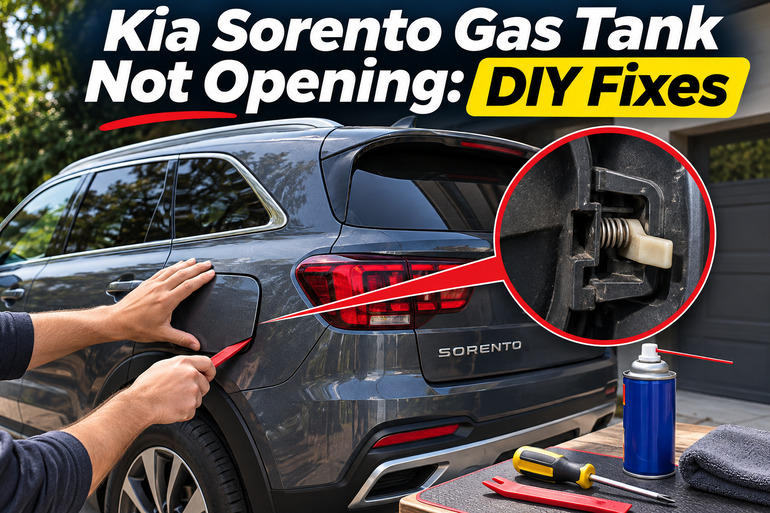
Why Your Kia Sorento Gas Tank Door Won’t Open
Your Kia Sorento has a fuel filler door that protects the gas cap and fuel filler opening. Depending on the model year, the door may open using a button inside the vehicle or a locking mechanism connected to the central door locks.
For example, the 2019 Sorento uses an interior fuel filler lid release button. Newer models, including the 2026 Sorento, use a system that allows you to press the fuel door once the driver’s door is unlocked. The exact procedure can also differ between gasoline, hybrid, and plug in hybrid versions.
When the opening mechanism works correctly, the latch releases, allowing you to pull the fuel door open. However, if the latch sticks, the release mechanism fails, or the door remains locked, pressing it may produce no movement.
You might notice that the door opens occasionally, makes a clicking sound without releasing, or becomes difficult to open during cold weather. These symptoms provide useful clues about the underlying problem. Although a stuck fuel door doesn’t necessarily affect engine performance, it can prevent you from refueling and eventually leave you without enough gas to continue driving.
Kia Sorento Gas Tank Not Opening: Common Causes
Several mechanical and electrical problems can prevent your Sorento’s fuel door from opening. Identifying the likely cause makes troubleshooting easier and helps you avoid damaging components that may still be working correctly.
1. The Fuel Door Is Still Locked
On newer Kia Sorento models, the fuel filler door operates alongside the vehicle’s central locking system. When you lock your vehicle, the system also secures the fuel door to prevent unauthorized access.
If you attempt to open the fuel door while the driver’s door remains locked, the locking pin may prevent it from moving. This can happen even when you’re standing beside the vehicle with your smart key.
Some models also require you to press a particular area of the fuel door rather than pull directly on its edge. Pressing the wrong spot may make a properly functioning door seem stuck.
The 2026 Sorento, for instance, requires you to unlock the driver’s door and press the right center edge of the fuel filler lid. Therefore, checking the correct opening procedure is essential before assuming the latch has failed.
2. A Faulty Fuel Door Lock Actuator
The fuel door lock actuator is a small electrical component that operates the locking mechanism on Sorento models equipped with an electronically controlled fuel door lock.
When you unlock the vehicle, the actuator should release the locking pin. However, internal wear, moisture damage, or a mechanical failure can prevent the pin from moving.
You might hear a faint clicking or buzzing sound near the fuel door when you unlock the vehicle. Alternatively, the door may remain completely silent and refuse to release.
If the vehicle’s other door locks operate normally while the fuel door remains stuck, the actuator becomes a possible suspect. However, a damaged connector, wiring problem, or jammed latch can produce similar symptoms, so further diagnosis may be necessary.
3. Ice or Dirt Around the Fuel Door
Cold weather can make the Kia Sorento fuel door difficult to open, particularly after freezing rain, snow, or a car wash.
Water can collect around the edges of the fuel door and freeze when temperatures drop below 32°F. The resulting ice may hold the door against the surrounding body panel, preventing it from opening even when the latch releases.
Dirt, road salt, and other debris can also accumulate around the hinge or latch. Over time, this buildup may interfere with the movement of the door.
A useful clue is whether the problem appears mainly during freezing conditions or after driving on dirty roads. If the door returns to normal once the vehicle warms up or the debris is removed, an obstruction is more likely than an electrical failure.
4. A Damaged Latch or Fuel Door Hinge
The latch keeps the fuel door securely closed, while the hinge allows it to swing outward when released.
With repeated use, these components can become worn, damaged, or misaligned. A minor impact, excessive pressure on the fuel door, or a previous repair can also affect how the parts fit together.
When the latch becomes damaged, it may fail to release completely. Similarly, a bent hinge may cause the door to rub against the surrounding body panel, making it difficult to open.
You might notice that the fuel door looks uneven, sits deeper than usual, or requires extra pressure before moving.
On models equipped with a spring assisted opening mechanism, a weak or damaged spring can create another problem. The latch may release correctly, but the door doesn’t move outward as expected. This can resemble a faulty actuator even though the locking mechanism is working.
5. A Faulty Interior Release Button or Mechanism
Some older Kia Sorento models use a button inside the cabin to open the fuel filler door. Pressing this button activates the release mechanism, allowing the door to open.
If the button develops an electrical fault or its connection to the release mechanism fails, the latch may remain engaged. Depending on the design, problems with the release linkage or associated components can cause similar symptoms.
A button that feels unusually loose, sticks when pressed, or produces no response may indicate a problem with the release control.
However, a lack of movement doesn’t automatically confirm that the button is defective. The actuator, wiring, or latch may be responsible instead.
On plug in hybrid Sorento models, there is another important distinction. The fuel door may remain locked temporarily while the vehicle releases pressure from the fuel tank. This is normal operation, provided the door unlocks after the process finishes.
Kia Sorento Gas Tank Not Opening: DIY Fixes
Once you understand the possible causes, several simple checks can help you restore normal fuel door operation. Start with the least invasive methods and avoid forcing the door, since unnecessary pressure can damage its latch, hinge, or surrounding paint.
1. Unlock Your Sorento and Try the Correct Opening Procedure
Before attempting any repairs, confirm that you’re using the proper opening method for your Kia Sorento’s model year.
On newer gasoline powered Sorento models with a push operated fuel door, the locking mechanism is connected to the vehicle’s central locking system.
Try the following procedure.
- Park your Sorento safely, switch off the engine, and engage the parking brake.
- Press the unlock button on your smart key.
- Make sure the driver’s door is unlocked.
- Press the designated edge of the fuel filler door gently.
- Release the pressure and check whether the door opens enough to pull it outward.
If the door remains closed, lock and unlock the vehicle again, then make another gentle attempt. You can also try the central unlock switch inside the driver’s door to determine whether the problem is associated with the smart key.
For older Sorento models equipped with an interior fuel filler release button, use that button instead of repeatedly pressing the exterior door.
If your vehicle has a plug in hybrid powertrain, follow the separate procedure explained below. Its fuel door may require additional time before unlocking.
2. Allow the Fuel Door to Unlock on Plug In Hybrid Models
If you drive a Kia Sorento Plug In Hybrid, the fuel filler door operates differently from the door on a conventional gasoline model.
The vehicle uses a controlled refueling process that allows pressure inside the fuel tank to be released before the fuel door unlocks. Attempting to open it before this process finishes can make the door appear stuck.
According to Kia’s 2024 Sorento Plug In Hybrid owner’s manual, the unlocking process can take up to 20 seconds.
Follow these steps.
- Park the vehicle and switch off the engine.
- Locate and press the fuel filler door opener button.
- Watch the instrument cluster for the message indicating that the fuel door is unlocking.
- Allow the pressure release process to finish without forcing the door.
- Once the display confirms that the fuel door is unlocked, open it using the procedure described in your owner’s manual.
If the system completes the process successfully, the fuel door should open normally.
Kia also instructs owners of these models to begin refueling within 20 minutes of opening the fuel door. If that period passes, the system may close the tank’s internal refueling valve, requiring you to press the opening button again.
If the unlocking message never changes, an error appears, or the door remains locked after the process finishes, the refueling control system may need professional diagnosis. Avoid trying to bypass its safety controls.
3. Remove Ice or Dirt Preventing the Door From Opening
When your Sorento’s fuel door refuses to open during cold weather, check whether ice has formed around its edges.
A thin layer of ice can be surprisingly strong, especially when it fills the narrow gap between the fuel door and the body panel.
Kia recommends lightly tapping or pressing a frozen fuel door to break the ice. The manufacturer also advises using an approved deicer or moving the vehicle somewhere warm if the door remains frozen.
Start by examining the edges for visible frost or ice. If you find any, try the following.
- Move your Sorento into a heated garage or another suitable warm location and allow the ice to melt naturally.
- Apply an automotive deicer approved for exterior painted surfaces around the frozen edges, following the product instructions.
- Once the ice has loosened, gently press the appropriate opening point and check whether the door releases.
Avoid pouring boiling water over the fuel door. Sudden temperature changes can damage finishes, while water left behind may freeze again.
Also, never insert a screwdriver, knife, or other metal object into the gap to pry the fuel door open.
If the door opens after warming, inspect the area for dirt, road salt, or other debris. Clean the accessible edges using a soft cloth and mild automotive cleaner, then dry them thoroughly.
This helps reduce the chance of another obstruction. However, if the latch continues sticking in normal temperatures, the problem may involve worn or damaged components.
4. Check for a Sticking Fuel Door Latch or Hinge
A sticking latch or misaligned hinge can prevent the fuel door from opening even when the release mechanism works correctly.
Begin by inspecting the exterior of the closed fuel door. Look for uneven gaps, signs of impact damage, or areas where the door appears pressed against the surrounding body panel.
If the door opens intermittently, wait until it opens normally before inspecting the hinge and latch. With the engine off, use a soft cloth to remove visible dirt from the accessible surfaces. Check for obvious damage or anything that could interfere with the door’s movement.
You can also gently move the open door through its normal range of motion to determine whether the hinge operates smoothly. There should be no excessive resistance, scraping, or noticeable looseness.
If everything appears clean and undamaged, close the door gently and test it again using the correct opening procedure.
Avoid applying excessive lubricant, particularly near electrical actuator components. If the mechanism requires lubrication, use only a product suitable for the specific component and follow the relevant service instructions.
A bent hinge, cracked latch, or damaged spring usually requires replacement rather than repeated attempts to force the door.
5. Use the Emergency Fuel Door Release if Your Sorento Has One
Certain older Kia Sorento models have an emergency release mechanism that allows you to open the fuel filler door when the normal release fails.
For example, the 2019 Kia Sorento owner’s manual identifies an emergency fuel filler lid release behind an access panel in the cargo area. However, this feature isn’t available in the same form on every Sorento model, so check your owner’s manual before attempting to use it.
If your model has the documented emergency release, follow these steps.
- Park safely, turn off the engine, and open the rear liftgate.
- Locate the appropriate access panel in the cargo area using the illustration in your owner’s manual.
- Remove the panel carefully to expose the emergency release handle.
- Pull the handle outward slightly, as directed by Kia.
- Check whether the fuel door has released, then open it normally.
Kia specifically warns against pulling the emergency handle excessively because doing so can damage the handle or surrounding cargo area trim.
If the door opens, you can refuel, but the emergency release doesn’t necessarily correct the original problem. A defective button, actuator, or release mechanism may still need repair.
Don’t assume that newer Sorento models have an accessible emergency release cable. Some require a technician to access the locking assembly when the actuator fails. Removing major cargo area panels or forcing the latch without the correct repair procedure can damage interior trim, wiring, or exterior body components.
If your owner’s manual doesn’t describe an emergency release, avoid searching blindly behind the panels. Get qualified assistance instead.
6. Contact a Qualified Kia Technician
If your Sorento’s fuel door remains stuck after these checks, a qualified automotive technician can identify whether the problem involves the actuator, release button, wiring, hinge, or latch.
A technician can test the electrical release circuit, inspect the locking mechanism, and determine whether the correct signal reaches the actuator. This helps distinguish an electrical failure from a mechanical obstruction.
Professional diagnosis is particularly useful when the fuel door repeatedly gets stuck, the release button stops responding, or the vehicle’s central locking system develops other problems.
If you own a plug in hybrid Sorento and the fuel door doesn’t unlock after the pressure release process, contact an authorized Kia service center. Repairs involving the refueling control system should be handled by technicians familiar with that vehicle.
It’s also worth checking whether your vehicle is still covered by an applicable Kia warranty before authorizing repairs.
For a stuck actuator or damaged latch, replacing the defective component may restore normal operation. The exact repair depends on the model year, trim, and results of the diagnosis.
If the fuel door is stuck closed and your gas level is critically low, arrange roadside assistance rather than risking running out of fuel in traffic.
Wrapping Up
A Kia Sorento gas tank door that won’t open doesn’t always require an expensive repair. In many cases, confirming the correct opening procedure, allowing a hybrid system to finish unlocking, or removing ice and dirt can resolve the issue without replacing any parts.
However, if the door continues sticking or the release mechanism stops working entirely, further inspection is necessary. Start with the simple checks that apply to your model, avoid forcing the door, and seek professional assistance when needed. Addressing the problem early can prevent an inconvenient refueling stop from becoming a bigger concern.