
A Kia Sorento horn that suddenly stops working can leave you frustrated, especially when you need to alert another driver or pedestrian. Sometimes, the horn becomes unusually quiet, produces a weak sound, or works only when you press certain parts of the steering wheel.
Fortunately, several horn problems have straightforward causes that you can identify without expensive equipment. Understanding what has stopped working will help you choose the right fix and avoid replacing parts unnecessarily.
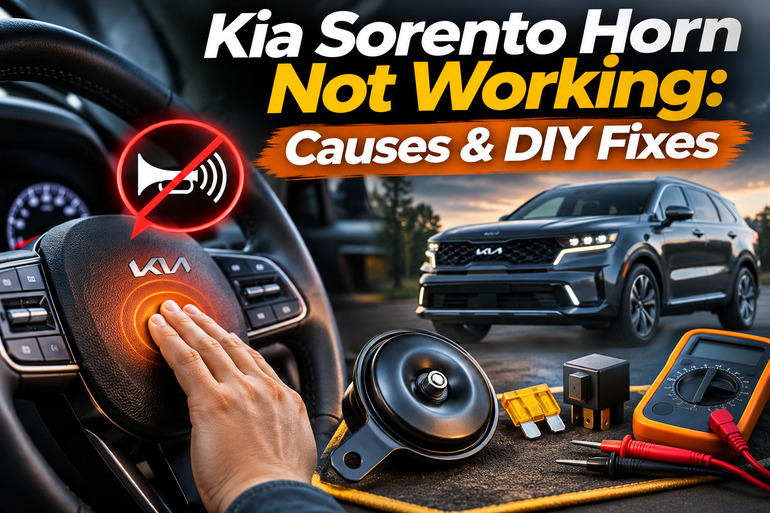
Understanding Why Your Kia Sorento Horn Isn’t Working
Your Kia Sorento uses an electrical horn system to produce the warning sound you hear when pressing the steering wheel’s horn pad. Depending on the model, the system includes horn units, a fuse, a relay or electronic control circuit, wiring, and a steering wheel switch.
When you press the horn pad, the control circuit activates the horn, allowing electrical current to power its internal mechanism. The mechanism vibrates rapidly to produce sound. If an electrical connection fails or the horn mechanism becomes defective, the horn may stop working.
The symptoms can provide useful clues about the problem. For example, a horn that produces no sound may have a blown fuse, a defective horn unit, or an electrical circuit fault. Meanwhile, a weak or unusually high pitched sound may indicate that one of the Sorento’s two horn units has stopped operating.
Intermittent operation deserves attention, too. If the horn works only when you turn the steering wheel or press a particular spot, the problem could involve the horn switch or the electrical connections inside the steering column. Since the horn is an important warning device, arrange repairs promptly rather than continuing to drive with an unreliable one.
Kia Sorento Horn Not Working: Common Causes
Several electrical and mechanical faults can prevent your Sorento’s horn from operating normally. The following five causes are worth investigating because each affects the horn differently and requires a particular approach to diagnosis.
1. Faulty or Worn Horn Units
The horn units themselves are a possible source of trouble, particularly when your Sorento’s horn becomes quieter or changes tone before failing completely. These components contain an electrical mechanism that produces sound through vibration whenever power is supplied.
Over time, moisture, corrosion, and deterioration of the internal electrical contacts can interfere with this mechanism. In fact, Kia issued a March 2026 technical service bulletin addressing horn assemblies on certain 2021 to 2025 Sorento models, including hybrids and plug-in hybrids. The bulletin identifies internal corrosion and damaged contact surfaces as causes of abnormal horn sounds or complete failure.
Many Sorento models use separate high tone and low tone horn units. If one stops working, the remaining unit may still sound, but the horn will seem weaker or noticeably different. If both are defective, the system may become completely silent.
However, silence alone doesn’t confirm that the horns are damaged. An electrical supply problem can produce exactly the same symptom, so checking the fuse and control circuit before purchasing replacement horns is worthwhile.
2. A Blown Horn Fuse
The horn fuse protects the electrical circuit against excessive current. When a short circuit or overload occurs, the fuse’s internal metal strip can melt, interrupting the electrical supply to the horn system.
For example, Kia’s 2026 Sorento owner’s manual identifies a 15 amp HORN fuse in the engine compartment’s electrical distribution assembly. However, fuse ratings and arrangements can differ between model years and configurations, so you should always consult the diagram for your particular vehicle.
A blown fuse generally causes the affected circuit to stop working until the fuse is replaced. If the new fuse blows immediately or shortly afterward, that suggests an underlying electrical problem that needs diagnosis rather than repeated fuse replacement.
3. A Defective Horn Relay
On Sorento models with a conventional horn relay, the relay acts as an electrically operated switch. It allows the horn control circuit to activate the horn’s higher current electrical supply without routing that current directly through the steering wheel switch.
The relay can develop internal contact problems or fail to activate properly. As a result, the horn may stop sounding even though the fuse and horn units are in good condition.
A faint clicking noise from the engine compartment fuse box when you press the horn can be a useful clue. It suggests that a relay may be responding, although clicking doesn’t prove its electrical contacts are functioning correctly. Also, some newer Sorento models use relays integrated into an electrical distribution assembly rather than individually removable components.
4. Damaged Wiring or Corroded Electrical Connections
Your Sorento’s horn depends on secure electrical connections between the power supply, control circuit, and horn units. If a connector becomes loose or a wire develops excessive resistance, the horn may receive insufficient power or lose its electrical connection entirely.
Horn assemblies are installed toward the front of the vehicle, where moisture, dirt, and road salt can contribute to corrosion. Previous collision repairs, damaged wiring insulation, and poorly installed electrical accessories can also affect the circuit.
A corroded connector might cause intermittent operation before the horn stops completely. Likewise, a damaged wire can prevent current from reaching the horn even when the relay operates normally. Visible greenish corrosion, broken insulation, or a loose connector can help identify this type of problem.
5. A Faulty Horn Switch or Clock Spring
The horn switch sits within the steering wheel’s central pad. Pressing the correct area activates the horn circuit, but worn contacts or a damaged switch mechanism can prevent the signal from reaching the rest of the system.
Another possible cause is a defective clock spring. This component contains flexible electrical connections that allow circuits associated with the steering wheel to remain connected as the wheel turns. If an internal connection becomes damaged, it may interfere with the horn, steering wheel controls, or airbag system.
A particularly useful clue is a horn that works in one steering wheel position but fails in another. You might also notice that some steering wheel buttons stop responding or that the airbag warning light remains illuminated. These symptoms increase suspicion of a steering column electrical fault, although they don’t confirm a failed clock spring.
Kia previously issued a clock spring warranty extension for certain 2011 to 2015 Sorento models because deterioration could cause airbag system faults. Therefore, if your horn problem accompanies an airbag warning light, the steering wheel electrical system deserves professional inspection.
Kia Sorento Horn Not Working: DIY Fixes
Now that the possible causes are clearer, you can begin checking the horn system without immediately replacing expensive components. Start with simple tests and accessible parts, then leave repairs involving airbags, concealed wiring, or integrated electronics to a qualified technician.
1. Test the Horn and Identify the Exact Symptoms
Before opening the fuse box, determine how the horn is malfunctioning. Park your Sorento in a safe, open area, switch off the engine, and keep the vehicle secured while performing your checks.
Press the area marked with the horn symbol on the steering wheel. Kia advises pressing this designated area firmly without striking the horn pad or using sharp objects.
Pay attention to what happens.
- No sound at all: The fault could involve the fuse, relay, horn units, or control circuit.
- A faint or unusual sound: One horn unit may have failed, or an electrical connection may be poor.
- Intermittent sound: A loose connection, failing switch, or relay problem is possible.
- Sound only when pressing certain areas: The horn switch or its connections may be defective.
If your Sorento has a panic alarm button on its key fob, you can also check whether that feature produces an audible warning. Follow your owner’s manual and test only where the noise won’t disturb others.
However, some Sorento configurations have separate alarm horn circuits. Consequently, a working panic alarm doesn’t necessarily confirm that the steering wheel horn’s complete electrical circuit is healthy.
2. Inspect and Replace the Horn Fuse
Checking the horn fuse is a practical next step because it requires basic tools and can quickly identify an interrupted electrical supply.
On many Sorento models, the relevant fuse is in the engine compartment fuse box, typically near the battery. The exact position varies by year, so consult the fuse diagram on the cover and the owner’s manual rather than relying on another Sorento’s layout.
To inspect it safely, follow these steps.
- Turn off the engine, ignition, and electrical accessories. Follow your owner’s manual’s battery disconnection instructions where required.
- Open the hood and locate the engine compartment fuse box.
- Release the fuse box cover and find the fuse labeled HORN.
- Use the supplied plastic fuse puller to remove the appropriate removable fuse.
- Inspect its metal strip. A broken or melted strip indicates a blown fuse.
- If necessary, install a replacement with exactly the same amperage rating and make sure it fits securely.
- Refit the fuse box cover before testing the horn.
Kia specifically warns against installing higher rated fuses or replacing them with wire or foil because doing so can cause electrical damage or fire.
If the horn starts working again, the blown fuse was preventing operation. Nevertheless, monitor the circuit. A fuse that blows repeatedly indicates a problem requiring electrical diagnosis, so stop replacing it and arrange professional inspection.
3. Check the Horn Relay Where Applicable
If the horn fuse is intact, the relay is another possible component to investigate. First, consult your Sorento’s fuse box diagram to determine whether it has an individually removable horn relay.
Some older models have a removable relay that can be checked separately. However, newer vehicles may incorporate the horn relay into a circuit board assembly, making ordinary replacement impractical.
If your Sorento has an accessible, removable horn relay, turn off the ignition and follow the service instructions before removing it. Where the manufacturer confirms that another relay has the identical part number, specifications, and terminal arrangement, exchanging them temporarily may help isolate a suspected fault.
Test the horn afterward. If operation returns with a verified compatible relay, replacing the defective relay may resolve the problem. Never force an incompatible relay into the socket, remove sealed or bolted electrical components, or attempt repairs inside an integrated fuse box.
4. Look for Loose Connectors and Visible Wiring Damage
If the fuse and accessible relay appear normal, examine the horn’s external wiring where it can be reached safely.
Start by locating the horn assemblies using the vehicle’s service information. Depending on the Sorento generation, they may be positioned behind the front bumper or close to the headlight assemblies. Some models require significant component removal before the horns can be reached.
With the vehicle switched off, look for obvious problems in any accessible areas, including loose connectors, damaged insulation, moisture, corrosion, or wiring that appears to have been pulled away from its mounting points.
If an exposed connector can be accessed without removing protective vehicle components, check whether it is fully seated. Avoid pulling on the wires themselves or touching damaged electrical terminals. Don’t attempt to clean energized connectors or bridge wires to make the horn operate.
A connector that has simply worked loose may only need to be secured correctly. However, corroded terminals, broken wires, or heat damaged connectors require proper repair. A technician can test voltage and ground at the horn to determine whether the fault lies in the electrical supply or the horn assembly.
5. Replace a Confirmed Defective Horn Unit
If testing confirms that a horn unit has failed, replacement is often the appropriate solution. However, check for warranty coverage before purchasing a new assembly, particularly if you own a newer Sorento.
For models with horn units that are safely accessible without raising the vehicle or removing major front body components, replacement may be manageable for someone comfortable with basic automotive maintenance.
Use the correct replacement specified for your Sorento’s model year and configuration. Where access and the manufacturer’s service instructions permit, the general process involves disconnecting the appropriate electrical supply, releasing the horn connector, removing its mounting fastener, and installing the matching replacement in the original position.
Make sure the replacement is properly secured and that its electrical connector is fully seated. After completing the work, restore the electrical supply according to the vehicle’s instructions and test the horn.
Nevertheless, if the assembly is concealed behind the bumper, near sensitive driver assistance equipment, or difficult to access without special tools, professional replacement is a better choice. Avoid damaging nearby wiring, sensors, or mounting components while trying to reach the horn.
6. Check Kia’s Horn Warranty Extension Before Paying for Repairs
This step is especially important for owners of recent Sorento models.
In March 2026, Kia issued technical service bulletin WTY042 for certain Sorento vehicles affected by abnormal horn sounds or horn assembly failure. The program extended qualifying horn assembly repair coverage to 10 years or 120,000 miles, whichever comes first, measured from the vehicle’s original in service date.
The program covers certain vehicles within these model year ranges.
| Sorento model | Potentially eligible model years |
|---|---|
| Sorento gasoline models | 2021 to 2025 |
| Sorento Hybrid | 2021 to 2025 |
| Sorento Plug-in Hybrid | 2022 to 2025 |
Eligibility depends on the vehicle’s production details and applicable warranty conditions. This is a warranty extension rather than a safety recall, and inclusion in a model year range doesn’t mean every vehicle automatically qualifies.
If your Sorento falls within these ranges, contact an authorized Kia dealer with your vehicle identification number (VIN). Ask the service department to check program WTY042 before authorizing paid horn repairs.
For older Sorento models, Kia also issued a separate 15 year, unlimited mileage clock spring warranty extension covering certain 2011 to 2015 vehicles. Owners experiencing horn trouble alongside an airbag warning light can ask a dealer whether that program still applies to their particular vehicle.
7. Contact a Qualified Automotive Technician
If the horn remains silent after the basic checks, a professional technician can identify faults that aren’t visible during an ordinary inspection.
A qualified mechanic or automotive electrician can use a wiring diagram, appropriate electrical measuring equipment, and vehicle diagnostic tools to test the horn circuit. These checks help determine whether the problem involves a failed horn, relay control, wiring connection, steering wheel switch, or electronic control module.
Professional attention is particularly important if the horn fails when the steering wheel turns, steering wheel controls malfunction, or the airbag warning light remains on. Do not remove the steering wheel’s airbag module or attempt clock spring repairs yourself. These components belong to the vehicle’s supplemental restraint system and require specific handling procedures.
Likewise, a repeatedly blown fuse, melted connector, burning smell, or evidence of a damaged wiring harness should prompt you to stop troubleshooting and seek qualified help.
Provide the technician with details about when the horn stopped working, whether it failed gradually or suddenly, and which checks you’ve already completed. These observations can help narrow the diagnosis and prevent unnecessary parts replacement.
Wrap-Up
A Kia Sorento horn that stops working deserves timely attention, but the repair doesn’t always require extensive electrical work. A blown fuse, loose connector, or failed horn assembly may be responsible, while some symptoms point to faults that need professional diagnosis.
Start with the simple, safe checks and pay attention to changes in the horn’s sound or operation. Also, check whether your Sorento qualifies for Kia’s warranty programs before paying for replacement parts. With the actual cause identified, you can restore the horn’s function and drive with greater confidence.