
A Kia K5 gas tank that won’t open can be frustrating, especially when you’re at a gas station and need to refuel. You might press the fuel door several times, only to find that it remains firmly shut. Sometimes, the problem appears suddenly, even when the door worked perfectly during your previous fill-up.
Fortunately, several issues can cause this problem, including a faulty locking mechanism, electrical trouble, and a stuck fuel door. Understanding what’s preventing it from opening will help you find the right solution.
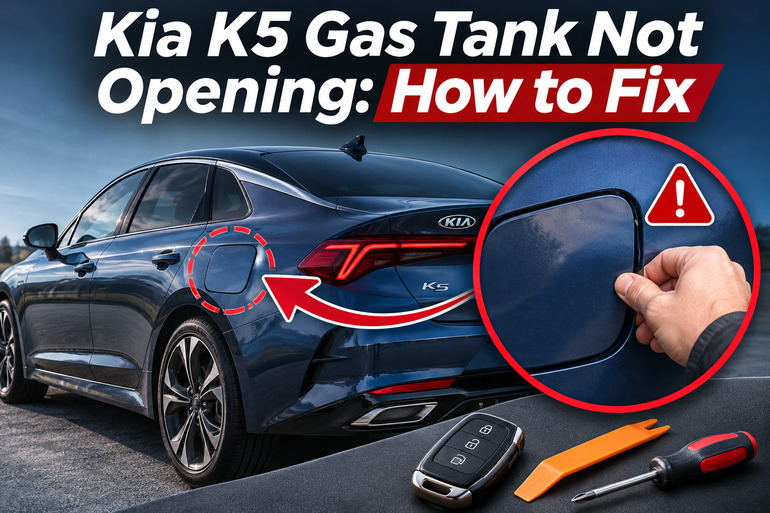
Why Your Kia K5 Gas Tank Won’t Open
The Kia K5 uses a locking fuel filler door that works with the vehicle’s central door locking system. Under normal conditions, you turn off the engine, unlock the driver’s door, and press the right edge of the fuel filler door to release it. You can then pull the door open and remove the gas cap.
Unlike some older vehicles, the K5 doesn’t require you to pull a separate fuel door release lever inside the cabin. Its fuel door unlocks electronically when the driver’s door is unlocked. As a result, a problem with the locking mechanism can prevent you from accessing the gas cap.
One common symptom is a fuel door that remains completely closed even after you’ve unlocked the car. In other cases, you might hear a clicking sound when operating the locks, but the lid still refuses to open. The fuel door may also work occasionally before becoming permanently stuck.
The exact behavior provides useful clues. A door that becomes difficult to open during freezing weather may have ice around its edges. However, a lid that remains locked in warm weather, particularly when other door locks work normally, could have a faulty actuator. This is the small electrical component responsible for locking and unlocking the fuel door.
Kia K5 Gas Tank Not Opening: Common Causes
Several mechanical and electrical faults can prevent your Kia K5 fuel door from opening. Some are simple operating issues, while others involve components that require replacement.
1. The Fuel Door Is Still Locked
The Kia K5 fuel door is connected to the vehicle’s central locking system. When the car is locked, a small locking mechanism holds the fuel door closed to prevent unauthorized access to the gas cap.
Because of this design, pressing the fuel door while the driver’s door remains locked won’t release it. You might experience this after stopping at a gas station without unlocking the vehicle, particularly if the doors locked automatically while driving.
There’s another detail worth checking. Kia instructs drivers to press near the 3 o’clock position, which is the right center edge of the fuel door. Pressing the middle or hinge side may not release the lid properly, even when the locking system is functioning normally.
2. A Faulty Fuel Door Lock Actuator
The fuel door actuator is an electrical component that controls the locking mechanism. When you unlock your Kia K5, the actuator should move the locking mechanism into the released position, allowing the fuel door to open.
Over time, an actuator can develop internal electrical or mechanical problems. Moisture is particularly relevant to certain Kia K5 models because water can become trapped around the fuel filler housing and enter the actuator.
Kia issued Technical Service Bulletin BOD333 in November 2024 for certain 2021 and 2022 K5 vehicles manufactured between March 24, 2020, and August 11, 2021. The bulletin identifies moisture entering the actuator as a cause of fuel doors that fail to open, close, lock, or unlock correctly.
A faulty actuator may cause intermittent problems before failing completely. For example, your fuel door might open after several attempts on one occasion but refuse to release the next time you refuel.
If the driver’s door unlocks normally but the fuel door remains stuck, the actuator becomes a stronger suspect. However, a technician still needs to check the mechanism and electrical supply before confirming that it has failed.
3. Ice Around the Fuel Door
Freezing weather can prevent your Kia K5 fuel door from opening, even when the locking mechanism works correctly. Water from rain, snow, or a car wash can collect around the fuel door’s edges and freeze when temperatures drop.
The resulting ice can hold the door against the surrounding body panel. You might notice that the lid feels unusually firm when pressed or that it moves slightly without opening.
This problem is particularly likely when the fuel door worked normally before a period of freezing weather.
Kia specifically warns against prying open a frozen fuel door. Excessive force can damage the painted surface or fuel door components, turning a temporary problem into a more expensive repair.
4. A Jammed or Misaligned Fuel Door
Sometimes, the fuel door’s locking mechanism releases properly, but the lid remains stuck because of a physical obstruction or damaged component.
Dirt, road debris, and other contaminants can collect around the fuel filler housing. If enough material accumulates near the edges or moving parts, it can interfere with the door’s movement.
The hinge or fuel door assembly can also become misaligned following an impact or an earlier repair. Even a small change in alignment may cause the lid to rub against the surrounding bodywork.
You might suspect this problem if one edge of the fuel door sits higher than the others, the gap around it looks uneven, or the lid feels unusually stiff when pressed.
Another clue is a clicking sound from the locking mechanism without the door opening. This could mean the actuator is attempting to release the lock while something prevents the lid from moving.
However, similar symptoms can also occur when the actuator itself is damaged, so appearance and sound alone aren’t enough to confirm the cause.
5. Electrical Problems Affecting the Locking System
Because the fuel door relies on an electrical actuator, a problem with its power supply or control circuit can prevent it from unlocking.
Possible faults include a damaged electrical connector, broken wiring, poor electrical contact, or an issue affecting the central locking system. A weak vehicle battery may also interfere with electrical accessories, particularly if several systems are behaving abnormally.
For example, if your Kia K5’s door locks occasionally fail to respond and the fuel door also refuses to open, there may be a broader electrical problem.
However, if every other door unlocks correctly while the fuel door remains stuck, the fault is more likely to be isolated to the fuel door mechanism or its particular circuit.
Kia K5 Gas Tank Not Opening: DIY Fixes
The best way to address a stuck Kia K5 fuel door is to begin with simple checks before considering component replacement. Depending on what’s causing the problem, you may be able to restore normal operation without removing any parts.
1. Unlock the Vehicle and Press the Fuel Door Correctly
Start by making sure you’re using the correct opening procedure. The Kia K5 fuel door depends on the driver’s door being unlocked, so checking this first can save you unnecessary troubleshooting.
Follow these steps.
- Park your Kia K5 safely and switch off the engine.
- Press the unlock button on your smart key.
- Confirm that the driver’s door is unlocked.
- Walk to the fuel filler door on the rear side of the vehicle.
- Press gently but firmly near its right center edge, around the 3 o’clock position.
- When the door releases, pull it outward to open it completely.
If the door opens normally, the problem may have been caused by the vehicle remaining locked or by pressing the wrong part of the lid.
Before refueling, unscrew the gas cap counterclockwise. Afterward, tighten the cap until it clicks, close the fuel door completely, and confirm that it sits flush with the surrounding body panel.
2. Cycle the Central Door Locking System
If the fuel door doesn’t open after your first attempt, try locking and unlocking the vehicle again.
Occasionally, a locking mechanism may fail to move into its intended position. Operating the central locks again gives the actuator another opportunity to release the fuel door.
Start by pressing the lock button on your smart key. After the doors have locked, press the unlock button and check that the driver’s door opens normally. Then return to the fuel door and press its right edge.
If that doesn’t work, try the central unlock button on the driver’s door armrest. Kia also identifies pulling the driver’s inside door handle outward as another way of unlocking the driver’s door and fuel filler door.
Using different unlock controls can help you distinguish a problem with the remote from a fault affecting the fuel door itself.
For instance, if the fuel door opens when you use the interior unlock switch but the remote doesn’t unlock the driver’s door, the remote or its communication with the vehicle deserves attention.
However, if the driver’s door unlocks successfully using either method and the fuel lid remains stuck, repeatedly pressing the buttons probably won’t help. The actuator or latch may need further inspection.
3. Remove Ice Around the Fuel Door
If your Kia K5 fuel door refuses to open during freezing weather, check whether ice has formed around its edges before assuming the actuator has failed.
Look closely at the narrow gap between the lid and the surrounding body panel. Visible frost or ice may explain why the fuel door won’t release.
You can try gently pressing or lightly tapping the door with your hand to break a thin layer of ice. Avoid striking it forcefully or pushing hard enough to bend the panel.
If the ice doesn’t loosen, use an automotive deicer approved for exterior vehicle surfaces, following the product’s instructions. Apply it around the frozen edge while avoiding unnecessary contact with the fuel filler area.
Another option is to park the vehicle in a warm garage and allow the ice to melt naturally. This approach takes longer but reduces the risk of damaging the paint or fuel door.
Don’t pour boiling water onto the lid or attempt to release it with a screwdriver. Sudden temperature changes and prying can cause damage, while water left around the opening may freeze again.
Once the ice melts, unlock the driver’s door and try opening the fuel lid normally. If the mechanism still won’t release, the problem may involve the actuator or latch rather than the frozen seal.
4. Clean the Fuel Door and Check Its Alignment
If your fuel door has opened successfully after sticking, take the opportunity to check for dirt or damage that could make it difficult to operate again.
With the engine off and the fuel cap securely installed, examine the fuel door’s hinge area, edges, and surrounding housing.
Look for accumulated dirt, small stones, damaged plastic, or anything that could obstruct the lid. Clean accessible surfaces using a soft cloth, mild automotive soap, and water.
Avoid forcing the hinge or inserting tools into the locking mechanism. Also, keep cleaning products and loose debris out of the fuel filler opening.
After cleaning, dry the area and examine how the fuel door sits when closed. Its outer surface should generally align with the surrounding body panel, without obvious gaps or contact points.
Close the door gently and check that it latches properly. Then lock and unlock the vehicle before testing the opening mechanism again.
If the fuel door continues rubbing against the bodywork or refuses to close evenly, the hinge or housing may be misaligned. A technician should correct that problem rather than having you bend the parts manually.
5. Check for Other Electrical Problems
If unlocking the vehicle and checking for obstructions haven’t helped, look for signs that the electrical locking system isn’t working correctly.
Begin by testing the other door locks using both the smart key and the interior central locking switch.
Pay attention to whether the doors respond consistently. If the remote doesn’t operate the locks but the interior switch works, check the smart key battery according to your owner’s manual.
However, if several electrical accessories or door locks are behaving abnormally, the vehicle’s 12 volt battery or electrical system may require testing.
You can also consult your specific model year’s owner’s manual for fuse information. Don’t assume that the fuel door has its own dedicated fuse, and don’t replace unrelated fuses in an attempt to make the lid open.
A technician can check the actuator’s electrical supply, wiring, and control signals if the problem continues. These checks are especially useful when the fuel door remains locked despite normal operation of the other doors.
6. Contact a Qualified Kia Technician
If your Kia K5 fuel door remains stuck after the basic checks, professional diagnosis is the safest next step. A mechanic can determine whether the problem involves the actuator, locking mechanism, wiring, or fuel door housing.
For some 2021 and 2022 models, Kia’s Technical Service Bulletin BOD333 provides a specific repair procedure. It involves replacing the affected fuel filler door housing and actuator assembly with an updated part that includes a drainage opening to help prevent trapped moisture.
Contact a Kia dealership and provide your vehicle identification number (VIN). Ask whether the bulletin applies to your particular car and whether any warranty coverage is available. A technical service bulletin isn’t automatically a recall or a guarantee of free repairs.
If the door is completely stuck, avoid attempting to pry it open yourself. Kia also published technical guidance, PS684, describing how technicians can access and remove a stuck fuel door actuator through the trunk trim on certain 2021 K5 vehicles. This is a service procedure rather than a routine emergency release intended for owners.
Be particularly careful about instructions intended for older Kia Optima models, since their fuel door release arrangements may differ from your K5.
If your fuel level is already very low, arrange assistance before continuing to drive. Also, if the fuel door opens but cannot be secured afterward, have the latch repaired promptly.
Wrap-Up
A Kia K5 gas tank that won’t open can result from something as simple as a locked driver’s door or as involved as a failed fuel door actuator. Checking how the door responds to unlocking, pressing, and changing temperatures can help you identify the most likely issue without damaging the vehicle.
Start with the correct opening procedure, then check for ice, obstructions, and signs of electrical trouble. If the door remains stuck, particularly on an affected 2021 or 2022 model, a qualified Kia technician can identify the faulty component and recommend the appropriate repair.