
A fan that suddenly stops working in your Kia can make driving uncomfortable, especially when the air conditioner stops blowing air or the cabin becomes unusually hot. Sometimes, the fan works only at certain speeds, makes strange noises, or stops without any warning.
However, the problem isn’t always related to the air conditioning system. Your Kia also has a cooling fan that helps regulate engine temperature. Understanding which fan has failed and what caused the problem will help you find the right solution.
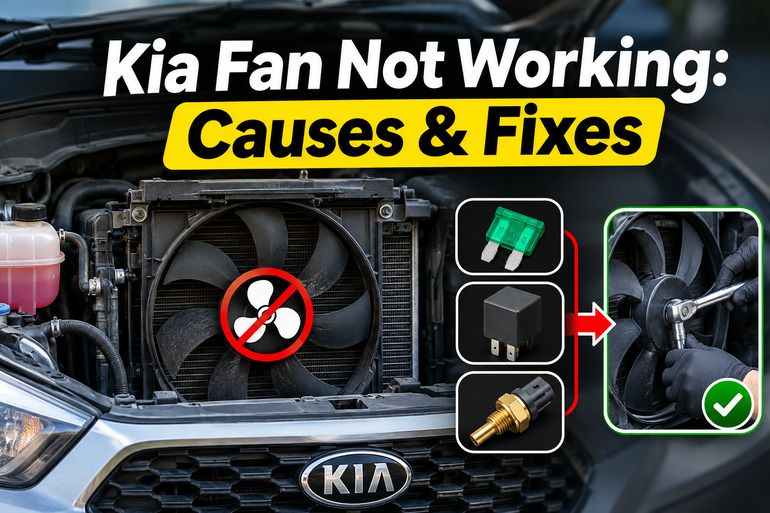
Understanding Why Your Kia Fan Is Not Working
Your Kia has two main types of fans that serve different purposes. The cabin blower fan pushes air through the dashboard vents, allowing the heating and air conditioning systems to maintain a comfortable temperature. The radiator cooling fan helps remove heat from the engine’s cooling system and supports air conditioning performance.
When the cabin blower stops working, you might notice little or no air coming through the vents, even when the fan speed is set to maximum. In other cases, the fan may operate intermittently, produce a rattling sound, or work only on its highest setting. These symptoms often indicate problems with the blower motor, electrical supply, or fan speed controls.
A faulty radiator fan usually produces different symptoms. Your Kia might overheat while idling or moving slowly, and the air conditioner may struggle to cool the cabin when the vehicle is stationary. However, a radiator fan that isn’t spinning isn’t necessarily faulty. Its operation depends on factors such as coolant temperature, air conditioning demand, and vehicle speed.
The problem can affect Kia models such as the Sportage, Sorento, Forte, Soul, Optima, and Rio. However, their electrical systems and fan arrangements aren’t necessarily identical. Therefore, identifying your vehicle’s model year and the affected fan is essential before attempting repairs.
Kia Fan Not Working: Common Causes
Several mechanical and electrical problems can prevent your Kia’s fan from operating correctly. Some are relatively simple to identify, while others require specialized equipment to confirm.
1. Blown Fuse or Faulty Fan Relay
A blown fuse is one possible reason your Kia’s fan has stopped working. Fuses protect electrical circuits against excessive current, and a fuse can break when a circuit develops an electrical fault. Once that happens, the affected fan may lose its power supply and stop running completely.
A faulty relay can produce similar symptoms. On Kia models that use a fan relay, this component helps control the flow of electricity to the fan circuit. If its internal contacts fail, the fan might stop working or behave intermittently. For example, your cabin blower could remain completely silent despite the dashboard controls appearing normal. However, the same symptoms can occur with a failed motor or damaged wiring, so the relay shouldn’t be replaced without checking the circuit.
2. Worn or Damaged Blower Motor
The blower motor is responsible for moving air through your Kia’s heating and air conditioning vents. It contains an electric motor that spins a fan wheel, producing the airflow you feel inside the cabin. Over time, internal components can wear out, preventing the motor from operating correctly.
A deteriorating blower motor may initially produce squealing, grinding, or rattling noises. You might also notice that it starts working after several attempts or stops unexpectedly while driving. These symptoms can develop as the motor’s bearings wear or its internal electrical components deteriorate.
Eventually, the motor may stop running entirely. However, a silent blower motor isn’t sufficient proof that the motor itself has failed. A defective relay, broken electrical connection, or failed speed controller can prevent a perfectly functional motor from receiving power. A technician can distinguish these problems by testing the motor’s power supply and electrical operation.
3. Faulty Blower Motor Resistor or Control Module
Your Kia’s cabin blower needs a system that regulates how fast the motor spins. Depending on the model and climate control design, this function may be handled by a blower motor resistor or an electronic speed control module.
When a conventional resistor fails, the blower may work only at its highest speed because the lower speed circuits no longer function. In other cases, the fan may operate at only one speed or stop completely. Electronic control modules can produce similar symptoms, although their failure patterns vary.
Excessive heat, worn connections, or electrical faults can contribute to these failures. A struggling blower motor may also draw excessive current and damage its speed controller. Consequently, replacing the resistor without investigating the motor can sometimes result in the same problem returning.
4. Damaged Wiring or Malfunctioning Climate Controls
Your Kia’s fan depends on several electrical connections and control components. Depending on the vehicle, these may include dashboard switches, a climate control module, wiring harnesses, connectors, and electrical grounds.
If a connector becomes loose or its contacts corrode, electrical power or control signals may be interrupted. You could experience a fan that works intermittently, stops after driving over bumps, or responds unpredictably to adjustments. A damaged dashboard control can also prevent the blower from responding even when the motor itself is functional.
Some Kia models use electronic climate control panels that coordinate several functions. If the panel or its associated electronics malfunction, the symptoms may extend beyond the fan. For instance, certain buttons might stop responding, the display might behave unusually, or airflow settings may fail to change. These observations can help a technician identify the affected circuit.
5. Faulty Radiator Cooling Fan or Its Control System
If the fan under your Kia’s hood isn’t working, the problem may involve the radiator cooling fan motor or its control system. Unlike the cabin blower, this fan operates according to the engine’s cooling requirements and, on applicable models, the demands of the air conditioning system.
A damaged fan motor, failed power supply, defective relay, or malfunctioning fan control module can prevent the cooling fan from operating when needed. Problems involving temperature information or other control signals may also interfere with normal operation, depending on the vehicle’s design.
One recognizable symptom is an engine temperature that rises during prolonged idling or slow traffic. The temperature may improve once the vehicle starts moving because natural airflow passes through the radiator. However, this pattern can also result from coolant circulation problems or restricted cooling system components.
An important distinction is that the cooling fan doesn’t have to run continuously. It may remain stationary when the engine is cool, and some Kia models allow it to operate after the vehicle has been switched off. Therefore, observing a stationary fan alone doesn’t confirm a fault.
Kia Fan Not Working: DIY Fixes
The appropriate solution depends on whether the problem affects your Kia’s cabin blower or radiator cooling fan. Begin with simple checks that don’t involve dismantling electrical components or working near moving engine parts.
1. Test Your Kia’s Fan and Climate Control Settings
Before assuming a component has failed, check whether the cabin fan responds correctly to its controls. This is particularly useful if your Kia has an automatic climate control system, where fan operation can change according to selected settings.
Park your vehicle in a safe, well ventilated location, start it normally, and follow these steps.
-
Turn on the climate control system and make sure its OFF function isn’t selected.
-
Switch from AUTO to manual fan control if your vehicle has automatic climate control.
-
Increase the blower speed gradually until it reaches the highest setting.
-
Change the airflow direction between the dashboard vents, footwell, and windshield.
-
Activate the windshield defroster and observe whether the airflow changes.
Listen carefully while adjusting the settings. If you hear the blower running but little air reaches the dashboard vents, the problem may involve an airflow restriction or an air distribution fault. If the fan remains completely silent, an electrical or motor problem becomes more likely.
Also, check whether the problem affects every fan setting. A blower that operates only at maximum speed suggests a different fault from one that never runs. Kia’s owner manuals confirm that manual controls can adjust fan speed independently of automatic climate operation.
2. Inspect and Replace a Clogged Cabin Air Filter
If your Kia’s blower makes its usual sound but produces weak airflow, the cabin air filter deserves attention. This filter traps dust, pollen, and other airborne particles before they enter the passenger compartment.
As dirt accumulates, airflow can become restricted. You may notice reduced ventilation, weaker heating or cooling performance, or unpleasant odors from the vents. Kia specifically identifies a clogged climate control filter as a possible cause of reduced airflow.
On many Kia models, the filter sits behind the glove box. Where your owner’s manual permits owner replacement, the general procedure is straightforward.
-
Turn off the vehicle and open the glove box.
-
Follow the model’s instructions for releasing its retaining stops or support strap.
-
Remove the filter compartment cover.
-
Inspect the filter for heavy dirt, leaves, or visible obstruction.
-
Install the correct replacement filter in the specified airflow direction.
-
Secure the cover and reassemble the glove box.
The exact location and removal procedure differ between models. Some Kia vehicles place the filter elsewhere, so consult the appropriate owner’s manual rather than forcing unfamiliar panels.
After replacing the filter, restart the ventilation system and compare the airflow. You can also remove leaves or other loose debris from accessible exterior air intake openings while the vehicle is switched off.
However, a clogged filter generally restricts airflow rather than preventing the motor from running. If you can’t hear the blower at any speed, continue checking its electrical supply.
3. Check the Fan Fuses and Replace Any Blown Fuse
Checking the correct fuse is another practical step, especially if your Kia’s fan stopped operating suddenly.
First, consult your owner’s manual and the fuse panel diagram. Kia vehicles commonly have fuse panels inside the passenger compartment and under the hood. Depending on the model, the relevant circuits may carry labels such as BLOWER, COOLING FAN, or A/CON.
For an ordinary, owner replaceable blade fuse, follow these precautions.
-
Switch off the vehicle and all electrical accessories.
-
Locate the correct fuse using the diagram for your specific model.
-
Use the provided fuse puller to remove the identified fuse.
-
Check whether the metal element inside the fuse is broken.
-
If blown, install a replacement with exactly the same amperage rating.
-
Secure the fuse panel cover before testing the system.
Kia recommends using the same fuse rating and ensuring that replacement fuses fit securely.
Never install a higher rated fuse or bridge the fuse terminals with metal. If the replacement blows again, stop replacing it because an underlying electrical fault may be present.
Also, some fan circuits use large cartridge fuses, bolted multi fuses, or integrated electrical protection components. These aren’t suitable for ordinary owner replacement. Have a qualified technician handle them.
4. Check Whether Your Kia Has a Serviceable Fan Relay
A relay problem may be worth investigating when the fan’s fuse is intact but the motor remains inactive. However, this check applies only to Kia models with a separately replaceable fan relay.
Your owner’s manual or fuse panel diagram may identify a blower relay or cooling fan relay. Some vehicles use integrated control modules instead, meaning there is no individual relay that the owner can replace.
If the manufacturer provides a specific procedure for replacing a plug-in relay, the vehicle must be completely switched off before any work begins. Use only the correct replacement specified for that circuit. Avoid removing unidentified relays or modifying their connections.
On applicable models, Kia provides instructions for replacing serviceable relays with matching parts. Nevertheless, a relay that fails again or a fan that remains inactive after replacement needs proper electrical diagnosis.
A failed relay and a faulty fan motor can create almost identical symptoms. Therefore, replacing a relay based solely on the fan’s silence may waste money without resolving the problem.
5. Check for Engine Cooling Problems Safely
If your concern involves the radiator cooling fan, pay close attention to the engine temperature and any cooling system warnings.
A radiator fan that doesn’t operate when required can contribute to overheating. However, low coolant, thermostat problems, and coolant circulation faults can produce similar symptoms.
Begin by watching the temperature gauge or warning display while driving normally. If your Kia shows an overheating warning, loses power, or releases steam from the engine compartment, pull over safely and follow the overheating instructions in your owner’s manual.
Do not continue driving an overheating Kia or attempt to reach into the engine compartment to test the fan.
Once the engine is switched off and has cooled completely, you can make a limited visual inspection. Check the following without opening pressurized coolant caps or touching fan components.
-
Look at the coolant level through the translucent reservoir, where accessible, and compare it with the marked range.
-
Check the ground beneath the vehicle for signs of coolant leakage.
-
Look for visible damage or debris around accessible exterior cooling openings.
-
Note whether overheating occurs primarily during idling or slow traffic.
Low coolant or visible leakage requires further investigation. Adding coolant without identifying the cause may provide only temporary relief, and some cooling system faults require specific filling and bleeding procedures.
Most importantly, never touch the radiator fan blades, even with the engine switched off. Kia warns that an electrically operated cooling fan may start unexpectedly.
If your engine is overheating and the cooling fan doesn’t operate when needed, don’t attempt to force the fan to run or bypass its electrical controls. Kia’s overheating guidance calls for switching off the engine when the cooling fan fails to operate during an overheating event.
6. Contact a Qualified Kia Mechanic
If the simple checks don’t resolve the problem, a qualified automotive technician can identify the faulty component without unnecessary replacement.
For a cabin blower problem, the technician may test the motor’s power and ground connections, measure its electrical current, inspect the speed control circuit, and check for damaged connectors. These tests can distinguish a failed blower motor from a defective resistor, control module, relay, or dashboard control.
For radiator cooling fan problems, diagnosis may involve checking coolant temperature information, fan command signals, electrical supply, and cooling system operation. Depending on the Kia model, a diagnostic scan tool may also reveal relevant fault codes or allow controlled component testing.
Professional attention is particularly important if the fan repeatedly blows fuses, you notice burning smells, electrical connectors show heat damage, or the engine begins overheating.
Explain the symptoms clearly, including when the fan stops, which settings still work, and whether the problem occurs only when the engine is hot. These details can help the technician select the appropriate tests and avoid replacing functioning components.
Wrap-Up
A Kia fan that stops working can result from a relatively simple electrical problem or a more serious component failure. The key is understanding which fan is affected and paying attention to the symptoms before replacing anything.
Start with the safe checks available to you, including fan settings, accessible fuses, and cabin airflow restrictions. If the problem persists, proper diagnosis will help identify the necessary repair. Above all, treat engine overheating and signs of electrical damage as urgent concerns. Acting early can prevent further damage and help restore reliable fan operation.