
Your Kia Forte’s air conditioning should provide a comfortable escape from the heat, especially during summer. However, when the vents start blowing warm air or the cabin refuses to cool down, even a short drive can become uncomfortable.
Sometimes, the problem comes from something simple, such as incorrect climate settings or a clogged air filter. Other times, a refrigerant leak or faulty compressor may be responsible. Understanding the possible causes can help you identify the problem and find the right solution.
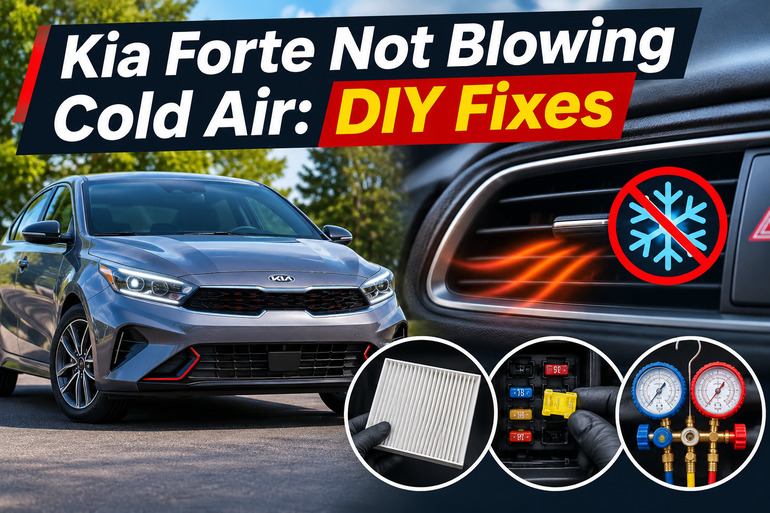
Understanding Why Your Kia Forte Isn’t Blowing Cold Air
Your Kia Forte’s air conditioning system uses several components to remove heat from the cabin. The compressor circulates refrigerant through the system, while the condenser releases heat outside the vehicle. Meanwhile, the evaporator absorbs heat from the cabin air, allowing the blower fan to push cooler air through the vents. If any part of this process fails, your AC may struggle to maintain a comfortable temperature.
One of the first things to notice is whether the air coming from your vents is warm or simply too weak. If the blower works normally but the air remains warm, the problem may involve the refrigerant, compressor, condenser, or temperature controls. However, weak airflow can indicate a clogged cabin air filter, a blower problem, or an obstruction in the ventilation system.
The way the problem develops can also provide useful clues. For example, an AC system that cools properly while driving but becomes warm in traffic may have trouble releasing heat through the condenser. Similarly, cooling that gradually becomes weaker can suggest refrigerant loss, although other faults can produce similar symptoms.
It’s also worth knowing that Kia Forte models have different climate control systems depending on their production year and trim level. Some use manual controls, while others have automatic temperature settings. Consequently, the correct troubleshooting steps and replacement parts may differ between vehicles.
Kia Forte Not Blowing Cold Air: Common Causes
Several mechanical and electrical problems can prevent your Kia Forte’s AC from producing cold air. Knowing how these faults develop and what symptoms they cause can help you narrow down the possibilities before attempting repairs.
1. Low Refrigerant Level or Refrigerant Leaks
Refrigerant is the substance responsible for transferring heat from your Kia Forte’s cabin to the outside air. It circulates through a sealed system, changing between liquid and gas as it absorbs and releases heat. When the refrigerant level becomes too low, the system cannot cool the cabin effectively.
Unlike engine oil, refrigerant shouldn’t need routine topping up in a properly functioning system. A low level usually suggests that refrigerant has escaped through a leaking seal, damaged hose, connection, or another component.
You might notice that the AC gradually produces less cold air over several weeks. In some cases, cooling becomes intermittent or stops completely because the system prevents compressor operation when refrigerant pressure is outside its permitted range. Kia also warns that both insufficient refrigerant and overfilling can reduce AC performance.
Although oily residue around an AC connection may suggest a leak, it doesn’t prove that refrigerant is escaping. Confirming the fault generally requires professional leak detection equipment.
2. Faulty AC Compressor or Compressor Controls
The AC compressor helps circulate refrigerant and maintain the pressure differences needed for cooling. If it stops working correctly, your Kia Forte may continue blowing air through the vents without lowering the temperature.
Compressor problems can develop from internal wear, mechanical damage, lubrication problems, or electrical faults. Depending on the compressor design, a defective control valve or clutch mechanism may also interfere with normal operation. Kia has used electronically controlled compressor designs, so checking for an audible clutch click isn’t a reliable test on every Forte.
One possible symptom is warm air despite the AC button being illuminated. You may also notice unusual noises when the cooling system operates, although these sounds can originate from other engine accessories.
If the problem comes from a faulty sensor, relay, wiring connection, or compressor control circuit, replacing the compressor alone may not solve it. A technician needs to establish whether the compressor is defective or simply isn’t receiving the correct operating command.
3. Poor Condenser Cooling or a Faulty Cooling Fan
The condenser sits near the front of your Kia Forte, where it releases heat carried by the refrigerant. It depends on airflow through its fins to work efficiently. When that airflow becomes restricted, the AC system may struggle to remove enough heat.
Dirt, leaves, road debris, and bent condenser fins can interfere with cooling. A faulty radiator or condenser cooling fan can cause similar trouble, particularly when the car is stationary.
A recognizable clue is AC that feels colder on the highway but becomes warm during traffic or while idling. At higher driving speeds, natural airflow may help the condenser release heat. Once the vehicle stops, the electric cooling fan becomes especially important.
However, this symptom doesn’t automatically confirm a fan failure. Refrigerant problems, compressor faults, and certain control issues can also produce intermittent cooling. Furthermore, the cooling fan may operate at different speeds or switch on only under particular conditions.
4. Clogged Cabin Air Filter or Weak Blower Motor
Your Kia Forte uses a cabin air filter to trap dust, pollen, and other particles before air enters the passenger compartment. Over time, the filter can accumulate enough debris to restrict airflow.
A heavily clogged filter may leave you with weak air from the vents even when the fan is turned up. You might also notice excessive fan noise, slow cabin cooling, or windows that fog more easily. Kia specifically identifies reduced airflow as a possible result of a dirty climate control filter.
However, if almost no air comes from the vents, the blower motor or its electrical controls may be responsible. A failing blower motor can stop working, operate intermittently, or make unusual noises. Depending on the model, faults in the blower resistor or electronic speed controller can also affect fan operation.
The distinction matters because replacing the cabin filter can improve restricted airflow, but it cannot repair a faulty blower motor or restore missing refrigerant.
5. Faulty Temperature Blend Door or Climate Controls
Inside your Kia Forte’s ventilation system, an air temperature door helps control how much heating or cooling reaches the cabin. An actuator moves this door according to the temperature selected on the climate control panel.
If the door becomes stuck or its actuator fails, warm air may continue entering the cabin even when you select the coldest setting. A faulty temperature control circuit can produce similar symptoms.
You might notice that changing the temperature dial makes little difference or that one side of the cabin feels warmer than the other on models with separate temperature controls.
Some drivers also hear repeated clicking behind the dashboard when adjusting the temperature. This can suggest an actuator or gear problem, although other dashboard components may produce similar noises.
Because these components are often hidden inside the dashboard, confirming the fault may require diagnostic equipment and access to the climate control assembly.
Kia Forte Not Blowing Cold Air: DIY Fixes
Not every AC problem requires immediate replacement of expensive components. Several straightforward checks can help you restore cooling or identify a fault that needs professional attention.
1. Adjust Your AC Settings Correctly
Before investigating mechanical problems, make sure your Kia Forte’s climate controls are configured for maximum cooling. Incorrect settings can leave warm outside air entering the cabin or prevent the compressor from being requested to operate.
Park your vehicle outdoors in a well-ventilated area, start the engine, and follow these steps.
- Turn on the air conditioning using the A/C button. Check that its indicator illuminates if your model has one.
- Set the temperature control to its coldest position or select LO on models with digital controls.
- Select the dashboard vents so air flows toward the upper body.
- Turn the blower fan to a medium or high setting.
- Activate the recirculation function to cool air already inside the cabin.
- If your Forte has a MAX A/C setting, use it for faster initial cooling.
Kia’s climate control guidance confirms that maximum cooling modes can automatically activate air recirculation. This reduces the amount of hot outside air the system must cool.
If the cabin has been sitting under direct sunlight, open the windows briefly to release trapped heat before closing them and running the AC. Allow several minutes for cooling, especially on a very hot day.
Once the cabin becomes comfortable, adjust the fan and temperature as needed. Avoid leaving recirculation selected continuously during long journeys, and use fresh air when necessary to prevent stale air and reduced alertness.
2. Inspect and Replace the Cabin Air Filter
A dirty cabin air filter is one of the easiest AC related problems to address without specialized equipment. If the air feels cool near the vents but barely reaches you, checking the filter is a sensible starting point.
On many Kia Forte models, the filter sits behind the glove box. The 2023 Forte owner’s manual describes removing the glove box stops, releasing its support strap, and opening the filter cover to access the filter. The exact arrangement can differ by model year.
With the engine and blower switched off, use the following procedure if it matches your owner’s manual.
- Open the glove box and remove its contents.
- Release the glove box stops and support strap as instructed in your manual.
- Carefully lower the glove box to expose the filter housing.
- Release the filter cover without forcing its plastic clips.
- Slide out the old filter and check for heavy dust, leaves, or other debris.
- Install a compatible replacement, following the airflow direction marked on the filter.
- Secure the cover and return the glove box to its normal position.
Afterward, restart the vehicle and compare airflow at the same fan setting. If a blocked filter was responsible, you should notice stronger ventilation.
Kia’s 2023 Forte maintenance guidance references a cabin filter service interval of 12 months or 7,500 miles. However, follow the schedule for your specific model, and inspect the filter more frequently if you regularly drive on dusty roads.
3. Remove Debris Restricting Airflow
If your Forte’s AC becomes warmer when you’re stopped in traffic, restricted condenser airflow deserves attention. Fortunately, you can perform a basic visual inspection without opening the refrigerant system.
First, park on level ground, turn the engine off, and allow the vehicle to cool. Look through the front grille for leaves, plastic bags, insects, or other material blocking the heat exchangers. Also check the air intake area near the base of the windshield for accumulated debris.
Remove only material you can reach safely without inserting your hands or tools near cooling fans, belts, or electrical components. A soft brush may help with loose debris on an accessible exterior surface.
Avoid pressure washing the condenser directly because its thin metal fins bend easily. Likewise, don’t attempt to straighten severely damaged fins or dismantle the front bumper unless you have the proper service information.
If airflow improves after cleaning but the AC remains warm while idling, the cooling fan or another component may be malfunctioning. The fan can start unexpectedly, so its electrical and mechanical testing should be left to a qualified technician.
4. Check the AC Fuse
Your Kia Forte’s air conditioning system depends on electrical circuits that supply power to its controls and related components. If a fuse blows, the affected circuit may stop operating.
Start by switching off the engine and ignition. Then locate the interior and engine compartment fuse panels using your owner’s manual.
The fuse panel covers usually include labels identifying the protected circuits. Look for an appropriate AC or climate control fuse, but don’t assume every model uses the same designation or fuse rating.
If your manual identifies a user replaceable fuse and provides instructions for checking it, carefully remove it using the supplied fuse puller. A visibly broken metal link may indicate failure, although some damaged fuses aren’t easy to identify by sight.
Replace a blown fuse only with one of the same specified amperage and type. Never install a higher rated fuse or bypass the circuit with wire.
After replacement, restart the car and check whether normal cooling returns. If the fuse blows again, stop troubleshooting that circuit. Repeated fuse failure usually suggests an electrical problem that requires diagnosis rather than further replacement.
5. Compare Cooling Performance Under Different Conditions
Sometimes, the most useful DIY step is observing exactly how your air conditioning behaves. These checks can help you describe the fault accurately and avoid replacing parts unnecessarily.
Start with the vehicle parked outdoors, the engine running, and the AC set to maximum cooling. Check whether the airflow is strong and whether the air temperature begins to decrease.
Next, adjust the temperature control from its coldest setting to a warmer setting and back again. Listen for unusual clicking behind the dashboard and notice whether the air temperature changes.
You can also compare the system’s behavior during normal driving with its behavior while stopped at a traffic light. Don’t perform tests that distract you from driving.
These observations can help distinguish between several problems.
| What you notice | Possible explanation |
|---|---|
| Strong airflow, but warm air | Refrigerant, compressor, or temperature control fault |
| Weak airflow at every fan setting | Clogged cabin filter or blower problem |
| Cold while driving, warm at idle | Condenser cooling, fan, or refrigerant system problem |
| Repeated dashboard clicking | Possible air door actuator fault |
| Cooling works intermittently | Electrical, sensor, compressor, or refrigerant problem |
These are diagnostic clues rather than confirmed faults. Several problems can cause the same symptoms, so avoid purchasing expensive parts based on a single observation.
Also, don’t attempt to release refrigerant, connect improvised charging equipment, or add refrigerant blindly. Some Forte models use R-1234yf, which is mildly flammable and operates under high pressure. Check the refrigerant label under the hood to identify the correct type.
Kia recommends trained technicians for refrigerant servicing, and the EPA requires certified technicians and approved equipment for paid automotive AC service.
6. Contact a Qualified Automotive Technician
If your Kia Forte still blows warm air after completing the basic checks, a professional AC inspection is the next sensible option.
A qualified technician can measure system pressures, check for refrigerant leaks, inspect compressor operation, and test the electrical signals controlling the cooling system. Diagnostic equipment can also help identify faulty temperature sensors, actuators, and control modules.
Professional assistance is especially important if you notice grinding noises, burning smells, visible refrigerant leakage, or repeated electrical failures.
If the engine temperature warning appears or the temperature gauge indicates overheating, switch off the AC and stop driving as soon as it’s safe. An overheating engine needs attention before further AC testing.
When visiting a repair shop, explain when the AC stopped cooling, whether the airflow is weak or strong, and whether performance changes while driving or idling. These details can help the technician identify the appropriate tests.
A proper diagnosis also helps you avoid unnecessary expenses. For example, replacing a compressor won’t solve a blocked condenser, and adding refrigerant won’t provide a lasting repair if an active leak remains.
Wrap-Up
A Kia Forte that stops blowing cold air can make driving uncomfortable, but the cause isn’t always a major mechanical failure. Simple issues involving climate settings, cabin airflow, or accumulated debris may be manageable with basic maintenance. However, refrigerant leaks, compressor failures, and electrical faults require more careful diagnosis.
Pay attention to how your AC behaves before replacing anything. Start with safe checks, follow the instructions for your specific Forte model, and seek professional assistance when necessary. Addressing the underlying fault early can help restore comfortable cooling and prevent avoidable repairs.