
When your Hyundai i10 fan stops working, you may notice rising engine temperature in traffic, weak air conditioning while parked, or no air coming through the dashboard vents. The correct fix depends on which fan has failed.
The radiator cooling fan helps protect the engine from excess heat, while the cabin blower pushes air through the vents. Identifying the symptoms first can prevent unnecessary repairs. Engine overheating requires immediate attention to prevent serious damage.
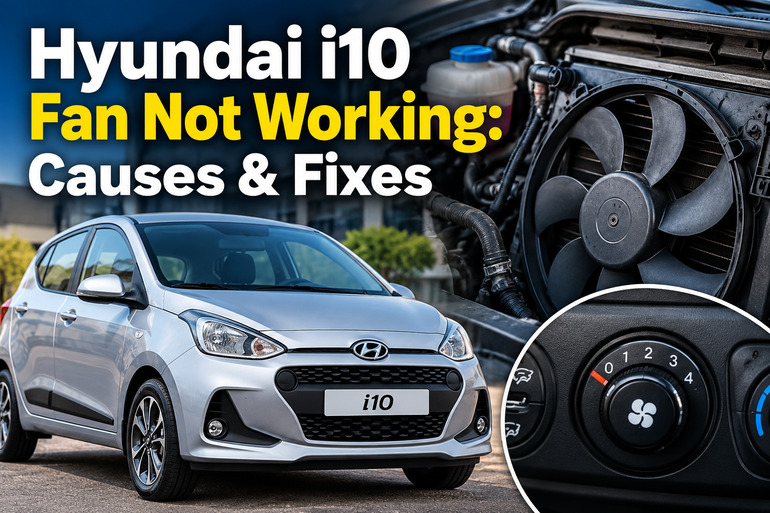
What It Means When Your Hyundai i10 Fan Stops Working
Your Hyundai i10 uses an electric cooling fan to draw air through the radiator when natural airflow is insufficient to maintain a safe engine temperature. The engine control system monitors operating conditions and activates the fan when additional cooling is needed. Depending on the model, air conditioning operation can also affect fan operation.
The radiator fan does not necessarily run continuously. It may remain stationary when the engine is cold or when driving conditions provide sufficient airflow. Therefore, seeing the fan switched off immediately after starting your car does not automatically indicate a fault.
A genuine problem becomes more likely when the engine temperature rises unusually high, particularly when driving slowly or sitting in traffic. You may also notice that the air conditioning cools poorly while the vehicle is stationary. These symptoms can indicate a cooling fan problem, although a faulty thermostat, low coolant, a blocked radiator, or another cooling system fault can produce similar signs.
There is another possibility worth distinguishing. If the engine temperature remains normal but no air comes through your dashboard vents, the fault may involve the cabin blower motor rather than the radiator fan. The two systems have different components and require different troubleshooting methods.
Safety comes first. If your temperature gauge enters the overheating range, a temperature warning appears, or steam escapes from under the hood, pull over somewhere safe and switch off the engine as appropriate. Never remove a hot radiator cap or reach into the radiator fan area while the vehicle is running. Consult the owner’s manual for your particular Hyundai i10 for model-specific operating and maintenance guidance.
Hyundai i10 Fan Not Working: Likely Causes
Several electrical and mechanical faults can prevent the radiator fan from operating correctly. The symptoms may help you narrow down the possibilities, but testing is needed to establish the actual cause.
1. A Blown Cooling Fan Fuse or Faulty Relay
The cooling fan draws electrical power through a protected circuit. A fuse prevents excessive current from damaging the wiring, while a relay acts as an electrically controlled switch that supplies power to the fan motor.
If the fuse blows, the fan may stop operating completely. A defective relay can produce similar symptoms because it may fail to deliver power even when the engine control system requests cooling. Electrical faults elsewhere in the circuit can also cause a replacement fuse to blow repeatedly.
You might notice that the engine temperature rises while stationary but becomes more manageable when driving at speed. However, this pattern does not confirm a blown fuse or failed relay because other faults can produce the same behavior.
The exact fuse location, rating, and relay arrangement depend on your i10’s model year, engine, and market. Some versions have separate circuits for the radiator fan and cabin blower, so identifying the correct circuit before replacing a fuse is essential.
2. A Failed Radiator Fan Motor
The radiator fan motor rotates the blades that move air through the radiator. Over time, heat, electrical wear, moisture, or damaged internal components can prevent the motor from starting.
A completely failed motor may leave the fan stationary even when the engine is hot enough to require additional cooling. In some cases, the fan may start intermittently, operate slowly, or produce unusual grinding or rattling noises before failing completely.
A damaged fan motor can also draw excessive electrical current, which may cause a fuse to blow. Replacing the fuse without checking why it failed could therefore leave the underlying problem unresolved.
A technician can determine whether the motor receives the correct electrical supply and ground connection when the control system requests fan operation. If the circuit supplies power correctly but the motor does not turn, the motor or fan assembly may need replacement.
3. A Faulty Engine Coolant Temperature Sensor
The engine coolant temperature sensor measures coolant temperature and sends information to the engine control unit. The control unit uses this information, along with other operating conditions, to determine when the radiator fan should run.
When the sensor develops a fault, its readings may be inaccurate or inconsistent. If the control system incorrectly interprets the engine temperature as low, it may delay activating the fan when additional cooling is needed.
Other clues can include an unusual temperature gauge reading, a check engine warning, or diagnostic trouble codes related to the coolant temperature sensor. However, these signs do not prove that the sensor itself is defective.
A damaged sensor connector, broken wire, or another problem affecting the sensor circuit can produce similar symptoms. Proper diagnosis involves comparing the reported coolant temperature with actual engine conditions and checking the relevant fault codes.
4. Damaged Wiring, Loose Connectors, or Poor Electrical Ground
The radiator fan depends on sound electrical connections between the power supply, relay or control circuit, motor, and ground. Corrosion, loose connectors, damaged insulation, and broken wires can interrupt this connection.
Heat and vibration in the engine compartment can gradually damage wiring. Previous repairs, moisture entering a connector, or physical damage around the radiator can also contribute to electrical problems.
An intermittent fault may cause the fan to operate sometimes and stop at other times. In other cases, the fan may remain completely inactive despite a healthy motor and intact fuse.
Inspecting visible wiring with the engine switched off and cooled can help identify obvious damage. However, finding the exact break or testing an electrical circuit often requires a multimeter, a wiring diagram, and suitable diagnostic equipment.
5. A Faulty Fan Control Circuit or Engine Control Unit
The engine control unit, sometimes called the ECU, coordinates fan operation using information from relevant sensors and other operating conditions. Depending on the i10’s year and configuration, the circuit may also contain a dedicated fan controller or additional control components.
A failure in this circuit can prevent the fan from receiving the command it needs to operate. The problem may involve a control module, a faulty control signal, or another electrical component rather than the fan motor itself.
This possibility generally becomes more relevant after basic checks show that the fan motor, fuse, wiring, and other accessible components are in working condition.
A mechanic can use a suitable diagnostic scanner to read fault codes, examine live coolant temperature data, and test fan operation where the vehicle supports an active fan command. Replacing the ECU without this testing is an unnecessary expense because the fault may lie elsewhere in the circuit.
Hyundai i10 Fan Not Working: How to Fix
You can perform several safe preliminary checks before paying for a repair. Work through the simpler checks first, and avoid attempting electrical repairs if you lack the necessary tools or experience.
1. Identify Which Fan Has Stopped Working
Start by establishing whether the problem involves the radiator cooling fan or the cabin blower.
If the temperature gauge rises abnormally, particularly in traffic, concentrate on the engine cooling system. Poor air conditioning while stationary can also provide a clue, although an air conditioning fault may have a different cause.
If the engine temperature remains normal but the dashboard vents produce no airflow, investigate the cabin blower system instead. Try different fan speed settings and ventilation modes. If the blower works at some speeds but not others, its speed control circuit or resistor may be faulty.
For the radiator fan, do not leave the engine running until it overheats merely to see whether the fan activates. The fan may operate according to temperature and air conditioning conditions, so the absence of movement during a brief visual check is inconclusive.
This first step helps you avoid replacing a radiator fan when the actual problem involves the cabin ventilation system, or vice versa.
2. Check the Relevant Fuse
A damaged fuse is one of the simpler faults to investigate. Before opening the fuse box, switch off the engine, turn off electrical accessories, and remove the key or switch the ignition fully off.
Consult the owner’s manual for your exact Hyundai i10 model to locate the cooling fan fuse. Identify its specified rating and inspect it for a broken internal metal strip. Some faults may require electrical testing rather than visual inspection alone.
If the fuse has blown, replace it only with another fuse of the same specified amperage. Never install a higher rated fuse, bridge the fuse terminals, or use improvised materials to restore power.
After replacement, check whether the system functions normally. If the replacement fuse blows again, stop replacing fuses and arrange a proper electrical diagnosis. Repeated failure can indicate a short circuit, a damaged motor, or another electrical fault.
3. Inspect the Fan Assembly and Visible Wiring
With the engine off and completely cool, visually inspect the radiator fan assembly. Look for leaves, plastic bags, broken fan blades, obvious obstructions, damaged wiring, or loose connectors.
Debris can restrict airflow through the radiator, while damaged blades may affect airflow or create unusual noises. Wiring damage can also interrupt the supply needed to operate the motor.
Remove loose debris only when you can do so safely without reaching into dangerous spaces or dismantling components. Never place your fingers near the blades or attempt to spin the fan by hand while the system is powered. Electric fans can start unexpectedly on some vehicles.
If you see melted insulation, badly corroded connectors, burnt terminals, or broken mounting parts, have the affected components repaired properly. Avoid cutting wires or connecting the fan directly to a battery without the correct equipment and knowledge.
4. Check the Coolant Level and Look for Leaks
Low coolant can contribute to engine overheating, even when the radiator fan itself is functioning correctly. This makes a coolant check useful when diagnosing a suspected fan problem.
Park your i10 on level ground and allow the engine to cool completely. Check the coolant reservoir and compare the level with the markings on its side. If the level is below the recommended range, look for obvious signs of leakage around the reservoir, radiator, hoses, and beneath the vehicle.
Top up the system only with the coolant specified for your model, following the manufacturer’s instructions. A low level should prompt you to investigate why coolant has been lost rather than treating repeated topping up as a permanent repair.
Never open the radiator cap or pressurized cooling system while it is hot. Hot coolant and steam can cause severe burns. If the reservoir is empty, a leak is visible, or the temperature rises again after topping up, arrange professional assistance before driving further.
5. Check the Cabin Blower if No Air Comes Through the Vents
This fix applies when the fan you are referring to is the one inside the dashboard that supplies air to the cabin.
Start by testing several blower speed settings. If none produces airflow, consult your owner’s manual and inspect the relevant cabin blower fuse using the same safety precautions described above. A blown fuse may interrupt the entire blower circuit.
If the fan operates but airflow is weak, inspect the cabin air filter if your model has one. A heavily restricted filter can reduce the amount of air passing through the vents, although it usually does not explain a blower motor that remains completely silent.
When the blower works at the highest setting but fails at lower settings, the speed resistor or control circuit may need attention. If all speeds are inactive despite an intact fuse, the motor, wiring, relay, or controls may be responsible. Avoid replacing these parts until the fault has been confirmed.
6. Contact a Qualified Automotive Technician
If the preceding checks do not identify the problem, professional diagnosis is the next practical step. This is particularly important if the engine has overheated, a fuse keeps blowing, or the fan works intermittently.
A technician can test the fan motor, check the power and ground circuits, verify the relay operation, and inspect the relevant sensor data. A diagnostic scanner may also reveal whether the engine control unit is receiving an incorrect temperature reading or detecting a fault in the fan control system.
The repair could involve replacing a fuse, relay, motor, sensor, damaged connector, or another defective component. The correct repair depends on the test results and the electrical configuration of your particular i10.
Avoid driving an overheating vehicle to a workshop. Arrange roadside assistance or recovery instead, especially when the temperature warning remains active, steam is present, or coolant is leaking. Continuing to drive with excessive engine temperature can result in expensive engine damage.
Wrap-Up
A Hyundai i10 fan that refuses to work may have a simple electrical fault or a problem requiring more detailed diagnosis. The most useful starting point is to distinguish a radiator cooling fan failure from a cabin blower problem, then check the relevant fuse, visible wiring, and coolant level where safe.
Pay close attention to rising engine temperature, repeated fuse failures, and unusual fan noises. These clues can help a technician identify the cause without unnecessary part replacements. Follow your vehicle’s specific maintenance instructions, and stop driving if the engine overheats. Early attention can prevent a relatively small fault from developing into a much more expensive repair.