
When a Hyundai DHY8000SELR diesel generator refuses to start, the cause may be as simple as a flat starting battery or a stop lever left in the wrong position. Other faults, including air trapped in the diesel supply or an oil warning system preventing the engine from running, need closer attention.
Start with the safe checks before opening anything. A few careful observations can help you identify the likely fault and prevent repeated cranking from draining the battery.
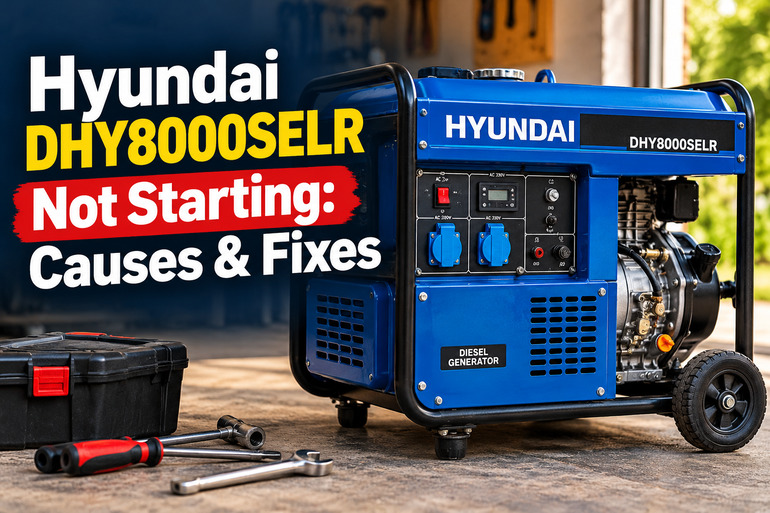
What It Means When the Hyundai DHY8000SELR Won’t Start
The Hyundai DHY8000SELR is an electric-start diesel generator. Its starting system relies on a battery, starter motor, fuel supply, engine lubrication system and operating controls working together. A fault in any of these areas can prevent the engine from starting.
The first step is to establish what happens when you turn the starting key. If the starter motor does not turn, or you hear a clicking sound without the engine cranking, the problem may involve the battery, electrical connections, fuses or starting controls. If the engine turns over but fails to run, insufficient fuel delivery, air trapped in the fuel system, an oil-related shutdown or an engine fault becomes more likely.
Your generator’s starting procedure also matters. The manufacturer’s manual instructs you to switch off the main AC breaker, confirm that sufficient diesel is available, release the emergency stop, move the engine speed lever to RUN and turn the key to START. Release the key as soon as the engine starts. If it fails to start within 10 seconds, wait 15 seconds before another attempt. After three unsuccessful attempts, investigate the fuel system rather than continuing to crank the engine.
Safety comes first. Operate the generator outdoors in a well-ventilated area, away from doors, windows and air intakes. Its exhaust contains carbon monoxide, a poisonous gas that can accumulate in enclosed spaces. Disconnect appliances from the generator before troubleshooting, switch the machine off before inspection and allow hot parts to cool.
Hyundai DHY8000SELR Not Starting: Common Causes
Several faults can produce similar starting symptoms, so the most useful approach is to distinguish electrical problems from fuel delivery and engine protection issues. These are five common areas to investigate before arranging professional repairs.
1. A Weak or Flat Starting Battery
The starting battery supplies the electrical current needed to operate the starter motor. If its charge is too low, the motor may turn slowly, click without turning or fail to respond when you turn the key.
Battery problems are particularly common after extended storage. A generator that remains unused for several months may have a discharged battery, especially if the battery was left connected or was already deteriorating. Dirty or loose terminals can also interrupt the current needed for starting.
Pay attention to the sound of the starter. Rapid clicking, sluggish cranking or dashboard lights that dim significantly during an attempt can point towards insufficient battery power. However, these symptoms do not prove that the battery itself is faulty because poor connections or a defective starter can produce similar results.
2. An Activated Emergency Stop or Incorrect Control Settings
The generator has an emergency stop control and an engine speed lever. If the emergency stop remains pressed or the lever is in the STOP position, the engine may not start even when the battery and fuel supply are satisfactory.
This can happen after maintenance, storage or an earlier shutdown. Someone may have pressed the emergency stop while moving the generator, or the speed lever may not have been returned to the correct position after its previous use.
A fault in the fuse circuit or a loose electrical connection can also prevent the starting controls from operating. If the starter does not respond at all, these possibilities deserve attention alongside the battery.
Check the control positions and visible wiring before assuming that a major engine component has failed. Never bypass the emergency stop or an electrical safety device to force the generator to start.
3. Insufficient Diesel, Contaminated Fuel or Air in the Fuel System
A diesel engine needs a continuous supply of clean fuel to start and run. If the tank is empty, the fuel filter is restricted or air enters the fuel lines, the injection system may not deliver enough diesel for combustion.
Air can enter the system if the generator runs out of fuel, fuel lines are disturbed during maintenance or the machine has been left unused following work on the fuel system. The engine may crank normally but fail to fire. In some cases, it may start briefly, run unevenly or produce excessive exhaust smoke before stopping.
Contaminated diesel creates another problem. Water, dirt and other particles can interfere with the fuel injection equipment, potentially damaging the pump or injectors. A visible amount of fuel in the tank does not guarantee that the fuel reaching the engine is clean or flowing properly.
Fuel shortage and the need to prime the fuel system are possible reasons for starting failure. Checking the fuel quality and supply can help distinguish these problems from electrical faults.
4. Low Engine Oil or an Oil Warning System Fault
The DHY8000SELR has an oil protection system that can stop the engine when the sensed oil pressure falls below the required level. The protection system is intended to reduce the risk of engine damage, but it can also prevent the generator from running when the oil level is inadequate.
Insufficient oil may result from a leak, poor maintenance or oil consumption during previous operation. If the generator shuts down unexpectedly and refuses to restart, the oil level is one of the first things to check.
A warning light that remains illuminated despite a correct oil level may indicate a faulty sensor, damaged wiring or a related electrical problem. Adding more oil will not resolve every oil warning issue, and overfilling can create further problems.
Check the oil level regularly and investigate any persistent warning before attempting to run the generator again. Low oil pressure can cause serious engine damage if the machine continues operating.
5. A Blocked Filter or Fault in the Fuel Injection System
Even when the battery is charged and the tank contains fresh diesel, restrictions or component failures can prevent the engine from starting.
A dirty fuel filter can limit the amount of diesel reaching the injection pump. A clogged air filter can also restrict the air required for combustion. If fuel and air delivery are seriously limited, the engine may crank without starting or run poorly if it manages to start.
More serious faults involve the fuel injection pump, injector nozzles or associated components. The pump must deliver fuel at the correct pressure and timing, while the injectors must introduce it properly into the cylinders. Carbon deposits, mechanical wear or an internal fault can interfere with this process.
These problems usually require closer inspection than an ordinary user can safely perform. Persistent starting failure after the basic checks may indicate an injection system problem that needs professional diagnosis.
Hyundai DHY8000SELR Not Starting: How to Fix
Begin with the simplest checks and work methodically through the starting system. The following steps can resolve common faults without unnecessary disassembly, provided you follow the instructions for your particular generator.
1. Correct the Starting Controls and Starting Procedure
Begin by disconnecting all appliances from the generator and ensuring that the main AC breaker is switched off. Confirm that the emergency stop is released by turning it anti-clockwise, as specified in the manufacturer’s manual. Set the engine speed lever to RUN.
Check that there is sufficient diesel in the tank, then turn the starting key clockwise to START. Release the key immediately when the engine starts. If it does not start within 10 seconds, stop cranking and wait 15 seconds before trying again. Do not exceed three unsuccessful attempts without investigating the cause.
If your generator has a remote-start arrangement, use the starting procedure specified for that configuration. On versions with the documented wireless system, the manual instructs the operator to press the start control twice, with the first press arming the system and the second initiating the start sequence. The procedure can differ between installations.
If correcting the controls allows the engine to start, let it run without an electrical load for approximately two minutes before connecting appliances, following the manufacturer’s operating instructions. If the starter remains silent, proceed to the electrical checks.
2. Check the Battery, Terminals and Accessible Fuses
A charged battery is essential for reliable electric starting. Inspect the battery terminals for dirt, corrosion or loose connections, but switch the generator off before touching them. Do not use metal tools in a way that could bridge the battery terminals, and do not handle a damaged or leaking battery.
If you have a suitable multimeter and know how to use it safely, measure the battery voltage with the generator switched off. The published manual for this model specifies a 12-volt, 36 Ah battery and states that a reading below 12.3 volts requires charging. A voltage reading alone, however, cannot confirm that a battery can supply sufficient current under starter load.
Charge the battery using a compatible charger in a well-ventilated location, away from flames and sparks. Do not continue using a swollen, cracked or leaking battery. If the battery is charged but the starter still turns slowly, have the battery load-tested and the connections inspected.
You can also check accessible fuses and their visible connections against the wiring information in your manual. Replace a blown fuse only with one of the specified type and rating. If the replacement blows again, stop troubleshooting and have the electrical system examined rather than repeatedly fitting new fuses.
3. Verify the Diesel Supply and Look for Visible Fuel Problems
Check the fuel gauge or tank level and add the correct diesel if the supply is low. Refuel outdoors with the engine stopped and cool, away from ignition sources. Avoid spilling fuel and clean up any spill before attempting to start the generator.
If the fuel has been stored for a long time or you suspect contamination, do not continue starting attempts in the hope that the engine will clear the problem. Water or debris in the fuel can affect the injection system. A contaminated tank or fuel supply may require cleaning and proper fuel replacement.
With the generator switched off, look for visible fuel leaks, damaged hoses or loose external connections. Do not dismantle the injection pump or loosen high-pressure injector pipes. Diesel fuel escaping from a high-pressure line can penetrate the skin and cause a medical emergency.
If the generator ran out of diesel, or the fuel lines were opened during servicing, air may need to be removed from the fuel system before the engine will start. Follow the exact priming procedure in the manual for your model, or have a qualified technician carry it out if you are unfamiliar with the process.
4. Check the Engine Oil Level and Warning Indicator
Park the generator on a flat, level surface and switch it off. Allow the engine to cool sufficiently for safe inspection, then check the oil level using the method specified in the manual. Checking on uneven ground can produce a misleading reading.
If the oil level is low, top it up with the recommended engine oil in small amounts, rechecking the level as you go. Avoid overfilling. Check around the engine for visible oil leaks, especially if the generator recently stopped during operation.
Attempt to restart the machine only after correcting the oil level and confirming that the warning condition has cleared. If the oil warning light stays on, the engine shuts down again or the oil level repeatedly falls, stop using the generator until the fault has been diagnosed.
Do not disconnect or bypass the oil sensor simply to get the engine running. A persistent warning may reflect a genuine lubrication problem or a sensor fault that needs testing.
5. Inspect the Air Filter and Arrange Fuel System Servicing
If the starter turns the engine normally but it still will not start, inspect the air filter according to the maintenance instructions. A heavily clogged filter may restrict airflow. If the filter is dirty, clean or replace it only as directed by the manufacturer, and refit it correctly before starting.
The fuel filter also deserves attention if the generator has experienced poor running, fuel contamination or prolonged storage. A restricted filter may prevent sufficient diesel from reaching the injection pump. Replacing it can help, but the correct filter and installation procedure must be used for the particular model.
Some fuel system faults require bleeding or priming after servicing. Because incorrect work around the injection system can cause leaks or damage, leave unfamiliar fuel line work, injector cleaning and pump repairs to a competent technician. If the air filter and normal fuel supply checks reveal no obvious fault, further starting attempts are unlikely to provide a useful diagnosis.
6. Contact a Qualified Generator Technician
Professional diagnosis is appropriate when the starter does not respond despite a charged battery and correct control settings, when a fuse repeatedly blows, or when the generator cranks but still refuses to start after the basic fuel and oil checks.
A technician can test the starter motor, charging circuit, safety sensors, fuel injection pump and injectors using the appropriate equipment. Seek assistance promptly if you notice fuel leaks, damaged electrical wiring, unusual engine noises or persistent excessive exhaust smoke.
Avoid adjusting the fuel injection limiting bolt or engine speed limiting bolt to solve a starting problem. These components affect engine performance and should not be altered without the required technical knowledge and service information.
Wrap-Up
A Hyundai DHY8000SELR that will not start may have a weak battery, an incorrect control setting, a fuel supply problem or an oil protection issue. The symptoms help narrow the possibilities, while the correct starting procedure and a few basic inspections can resolve some faults without extensive repairs.
Begin with the battery, stop control, fuel level and engine oil. Avoid prolonged cranking, bypassing safety systems or dismantling the injection equipment without the necessary skills. If those checks do not restore normal operation, a qualified generator technician can identify the fault and help prevent further damage.