
A Kia Sorento with brake lights that don’t work leaves drivers behind you without a clear warning when you slow down. The trouble might affect one rear lamp, both sides, or every brake light, and that pattern can help narrow the search.
A failed bulb is one possibility, but the fault could also involve a fuse, connection, or brake pedal switch. Identifying which lights fail is the first useful step before choosing a repair.
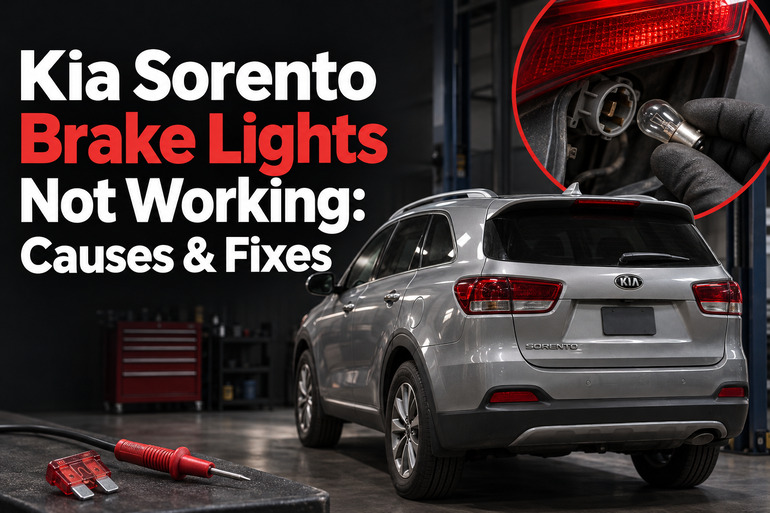
What Brake Light Failure Means on Your Kia Sorento
Your brake lights should respond when you press the brake pedal. They serve a different purpose from the dimmer taillights that illuminate with your exterior lights. Consequently, seeing red lights at the rear after switching on the headlights doesn’t prove that the brake lights work.
The Sorento’s lighting equipment varies by year and trim. Some versions have replaceable stop and tail bulbs, while others use LED lamps. The upper center brake light can also use a different design from the lamps on either side. Check your vehicle’s manual before buying replacement parts.
The failure pattern provides a starting point rather than a diagnosis. One dark lamp suggests checking that lamp and its local connections first. If every brake light stays dark, shared parts of the circuit deserve attention. However, separate bulbs can fail at different times without being noticed.
Treat a confirmed failure as a safety issue. If all brake lights are out, avoid driving and arrange mobile assistance or towing. Even when some still work, have the problem corrected promptly. A soft brake pedal, fluid leak, or reduced stopping power requires immediate professional attention, regardless of whether the lights illuminate.
Kia Sorento Brake Lights Not Working: Common Causes
Several faults can produce similar symptoms, so replacing parts without checking the failure pattern can waste money. These five possibilities provide a sensible starting point, although the exact diagnosis depends on your Sorento’s equipment.
1. A Failed Bulb or LED Lamp
If one brake light stops working while the others respond normally, the light source itself is a reasonable suspect. On versions with a conventional combination bulb, the brake function can fail while the tail function continues working. That can make the lamp look healthy during a quick nighttime check.
However, a dark lamp doesn’t establish that the bulb is faulty. A damaged socket or missing electrical supply can produce the same result. If the specified replacement bulb also stays dark, the next step is circuit diagnosis rather than another bulb purchase.
LED equipment needs a different approach. Check whether your particular lamp has a serviceable bulb before attempting removal. A sealed LED unit shouldn’t be opened as though it were a conventional bulb holder.
2. A Blown Fuse
A fuse protects an electrical circuit by opening when current exceeds its intended limit. If a fuse supplying the brake light system blows, the affected circuit loses power. Depending on the vehicle’s wiring, several related functions may stop working.
The fuse location, label, and rating aren’t universal across Sorento generations. Use the panel label and manual for your exact vehicle. A diagram from another year can send you to an unrelated fuse, even when the vehicle looks similar. Kia also cautions that the actual panel label can differ from the manual’s illustrations.
3. A Faulty Brake Pedal Switch
The brake pedal switch supplies information about pedal operation. When it malfunctions, the vehicle may fail to recognize a braking request correctly, leaving the brake lights dark or causing intermittent operation.
This possibility has a documented history on certain Sorentos. NHTSA recall 13V114, identified by Kia as SC098, covered certain 2007 through 2011 Sorento vehicles because the stop lamp switch could malfunction. The recall described brake lights that might not illuminate when the pedal was pressed.
Related clues can include difficulty shifting out of Park, intermittent push button starting, or an Electronic Stability Control warning. These symptoms strengthen the reason to investigate the switch, but they don’t prove it has failed. Other faults can affect those systems too.
4. Damaged Sockets, Connectors, or Wiring
A working bulb still needs a sound electrical connection. Corrosion, loose terminals, damaged wiring, or a poor ground connection can interrupt the circuit. The ground is the return path that allows current to flow back through the electrical system.
Possible clues include flickering, unusual dimness, or a fault that appears after rain or recent rear body repairs. Visible water, green deposits, or browned plastic near a lamp connection deserves attention. None of those observations identifies the complete repair by itself, and damaged electrical parts should be assessed professionally.
5. Incorrect Parts or Problems After Lighting Changes
A problem that begins immediately after bulb replacement or accessory installation deserves a close look at that work. A bulb that fits physically may still have the wrong electrical specification or contact arrangement. Likewise, an unsuitable replacement lamp can introduce a new fault.
Aftermarket LED conversions and added wiring are also relevant details to share with a technician. Kia cautions against unsuitable bulbs and unapproved lighting additions because they can affect lamp operation or damage wiring. Match replacements to the vehicle’s specified equipment rather than choosing by appearance alone.
Kia Sorento Brake Lights Not Working: DIY Fixes
Begin with safe observations that establish exactly what has stopped working. Then use the correct vehicle information to decide whether a simple bulb replacement is appropriate or professional electrical diagnosis is needed.
1. Confirm Which Brake Lights Fail
Park on level ground, select Park, and apply the parking brake. Have someone stand safely behind the stationary vehicle while you press and release the brake pedal. Keep the area clear, and don’t perform the check with anyone standing in a vehicle’s path.
Ask your helper to observe the left, right, and upper center brake lights separately. Check the response with the exterior lights off, then with them on. The useful observation is whether each brake lamp illuminates or becomes brighter when you press the pedal.
Write down the results, including any flickering or delay. If the upper light works but both lower lights don’t, report that exact pattern. It helps a technician choose the next checks, although it doesn’t rule out every shared circuit fault.
2. Identify Your Sorento’s Exact Lighting Equipment
Find the model year and use the matching owner’s manual to identify the brake lamp design. If the manual shows several versions, compare its diagrams with the lamps fitted to your vehicle. Check whether previous owners installed replacement assemblies.
Before purchasing a bulb, confirm its specified type and wattage. For an LED assembly, verify compatibility using the vehicle identification number, commonly called the VIN. A parts supplier or Kia dealer can help establish the correct fitment when the manual leaves several possibilities.
This check is especially useful when the fault started after a repair. Compare the fitted part with the required specification rather than assuming the previous purchase was correct. Keep receipts and packaging available so the technician can identify what changed.
3. Replace a Serviceable Brake Light Bulb
A bulb replacement is reasonable when your manual provides an owner service procedure and access is straightforward. Switch the vehicle and lights off, allow the lamp to cool, and follow the manual’s preparation instructions. If access requires extensive trim removal or exposes damaged wiring, stop.
The exact removal method varies. For example, Kia’s Sorento MQ4 instructions describe removing the lamp assembly, turning the socket to release it, and pressing and rotating the conventional bulb to remove it. Those directions apply to the illustrated bulb type, so don’t force a different holder to move the same way.
Fit the specified bulb, secure the socket and assembly, then repeat the stationary light check. If the replacement doesn’t work, or you notice melting, corrosion, or a burning smell, arrange repair. Don’t scrape terminals, bridge contacts, or keep installing bulbs into a damaged holder.
4. Have the Correct Fuse Circuit Checked
Use the owner’s manual and fuse cover label to identify the relevant circuit. Photographing those labels can help a technician confirm the correct information before a visit. Avoid pulling unrelated fuses or relying on an online diagram that doesn’t match your year and equipment.
If you aren’t familiar with the manual’s electrical isolation procedure, leave fuse removal and testing to a technician. A fuse that looks intact may still require testing, and a blown fuse raises a second question about what caused it to fail.
Any replacement must have the specified rating. Never use a larger fuse, foil, or wire to restore the circuit. If a replacement blows again, stop further replacement attempts and have the fault diagnosed. Repeated failure indicates an electrical problem that needs attention rather than a stronger fuse.
5. Check Recall Eligibility Before Paying for Switch Replacement
If the symptoms point to the brake pedal switch, check your VIN through the NHTSA recall lookup. You can usually find the VIN near the lower driver’s side corner of the windshield or on the registration. A model year match alone doesn’t establish that your vehicle is included.
For an older Sorento, ask a Kia dealer to check the vehicle’s campaign history as well. NHTSA explains that its VIN search doesn’t show completed recalls and may omit recalls older than 15 years. Therefore, an empty result doesn’t provide a complete history of past recall work.
Leave switch testing, adjustment, and replacement to a qualified technician. Don’t bypass the switch or alter its mounting to make the lights respond. Because the signal can affect several vehicle functions, the repair needs to restore correct operation throughout the system.
6. Contact a Qualified Automotive Technician
Arrange professional diagnosis if all brake lights fail, a new bulb doesn’t help, the fault returns, or you find damaged electrical parts. Contact a Kia dealer when recall work may apply. For a vehicle without working brake lights, discuss mobile service or towing before arranging the appointment.
Give the technician the model year, the exact lamp failure pattern, and any related symptoms. Mention recent bulb changes, trailer wiring work, water entry, collision repairs, or starting and shifting trouble. A short video of an intermittent fault can be useful if the lights happen to work during inspection.
The next checks should follow the vehicle’s wiring diagram and equipment. They may involve confirming power and ground at the affected lamp, checking switch information, and testing the relevant wiring or control circuit. Ask for the confirmed fault and repair estimate before authorizing parts replacement. A sensible diagnosis explains why the proposed repair fits your symptoms.
Wrapping Up
Brake light trouble becomes easier to address once you know which lamps fail and what equipment your Sorento uses. A single dark bulb and a complete loss of brake lighting call for different checks, even though both deserve prompt attention. Clear observations help prevent unnecessary parts replacement.
Start with a stationary light check and the correct owner’s manual. Choose a simple bulb replacement only when the procedure is suitable for your vehicle and comfort level. For shared circuit faults, recurring failures, or suspected switch problems, arrange qualified diagnosis before returning to normal driving.