
A Kia Sportage that won’t lock properly can leave you unsure whether your vehicle is secure. Sometimes the remote stops responding completely. In other cases, three doors lock while one stays unlocked, or the locks work from the dashboard switch but ignore the key fob.
Those differences matter because they point to different faults. A few safe checks can help you separate a key problem from a vehicle electrical fault and decide whether a simple fix is appropriate.
Understanding Your Sportage’s Central Locking Problem
Central locking lets you operate several door locks through one command. Depending on your Sportage’s equipment, that command may come from the key fob, an exterior handle button or sensor, or the interior central locking switch. Electrical actuators move the individual locks.
Start by identifying what actually fails. If every door responds to the interior switch but none responds to one remote, the remote deserves attention first. If the same door fails with every control, a fault at that door becomes more likely. These patterns guide diagnosis, but they don’t confirm which part needs replacing.
Normal operating features can also look like faults. For example, the 2025 Sportage manual describes an unlock setting where one remote press releases the driver’s door and a second press within four seconds releases all doors. A rear door that opens from outside but won’t open from inside may have its child safety lock engaged. Check your model’s instructions before assuming either behavior means central locking has failed.
Treat a door that won’t stay securely closed as an immediate repair issue. Don’t drive with an unreliable latch. Likewise, if a door won’t open from either side, arrange prompt professional attention because access and emergency exit may be affected.
Kia Sportage Central Locking Not Working: Common Causes
The most useful clues are which doors fail and which controls still work. Consider the following possibilities before buying a remote, actuator, or other replacement part.
1. A Weak Key Fob Battery or Remote Fault
A shrinking operating range often points to a weak fob battery. You may need to stand beside the vehicle, press a button several times, or hold the remote differently before the locks respond. A low key battery message, where provided, adds another clue.
However, similar symptoms can come from damaged buttons, moisture, or interference. If a spare remote operates the locks normally from the same position, that strongly suggests a problem with the original remote rather than every door lock.
Location matters too. Kia warns that nearby radio transmitters and mobile phones can interfere with smart key operation. A remote that fails in one parking area but works elsewhere may be experiencing interference rather than a permanent fault.
2. A Problem With the Vehicle’s 12 Volt Supply
The fob battery sends the command, but the vehicle’s electrical supply powers the locks. If that supply is unavailable, replacing the remote battery won’t restore central locking.
Consider this possibility when lock failure appears alongside other electrical symptoms. Dim interior lighting, an unresponsive instrument panel, or starting difficulty warrants a battery and electrical supply check. Those symptoms don’t prove the battery itself is defective. A discharged battery, connection problem, or charging fault needs proper testing before parts are replaced.
3. An Operating Condition or Setting
Some locking commands are deliberately restricted under certain conditions. For example, Kia’s 2026 Sportage Hybrid manual states that exterior handle locking won’t operate when the smart key is inside the vehicle or the start button is in ACC or ON. The exact restrictions depend on the model and control being used.
Automatic locking is another separate feature. If the doors respond normally to the switch and remote but no longer lock when you shift out of Park, check the automatic locking settings. Kia’s feature guides show that these controls can be located in different menus depending on the Sportage version.
A door warning that remains on after every door is closed also deserves attention. The vehicle may be receiving an incorrect closure signal. That requires further diagnosis rather than repeated attempts to slam the door shut.
4. An Interrupted Lock Circuit
A blown fuse can interrupt power to a protected circuit. It becomes a reasonable item to check when several locks stop responding together, especially if neither the remote nor the interior switch operates them.
However, a fuse is a protective device, so replacing it may address only the immediate interruption. If a correct replacement blows again, an underlying electrical fault needs investigation. Fuse names, locations, and ratings vary, so an online diagram for another Sportage year isn’t a reliable substitute for your vehicle’s label and manual.
5. A Local Actuator, Latch, Switch, or Wiring Fault
One door that repeatedly stays unlocked while the others work points more strongly to a local problem. Its actuator may be failing, the mechanism may be binding, or its electrical connection may be interrupted. Clicking or weak movement provides a useful clue, but sound alone doesn’t establish the diagnosis.
The failing control matters as well. If the remote operates every lock but the interior switch doesn’t, the switch or its circuit needs attention. If remote buttons work but a handle button doesn’t, the exterior entry system deserves investigation before replacing door actuators.
Cold weather can complicate the picture. Kia notes that freezing conditions can interfere with door lock mechanisms. Also, repeated locking and unlocking in rapid succession can temporarily stop operation to protect the circuit. Neither condition should automatically be treated as a failed actuator.
Kia Sportage Central Locking Not Working: DIY Fixes
Begin with checks that narrow down the fault without removing trim or disturbing wiring. Keep your mechanical key accessible, and avoid leaving your only working key inside during testing.
1. Compare the Controls and Record the Pattern
Park safely, select Park, and apply the parking brake. With the vehicle stationary, test the interior central locking switch once in each direction. Observe which doors respond and listen for a door that sounds different.
Next, switch the vehicle off, take your keys with you, and close the doors. Test the remote and, if equipped, the exterior handle control separately. Try your spare remote under the same conditions.
Record the result in simple terms, such as “rear passenger door fails with both remotes and the interior switch.” This gives you a clear starting point and gives a technician useful evidence if the fault needs further work. Stop repeatedly cycling the locks if they become unresponsive.
2. Check the Fob and Replace Its Battery if Needed
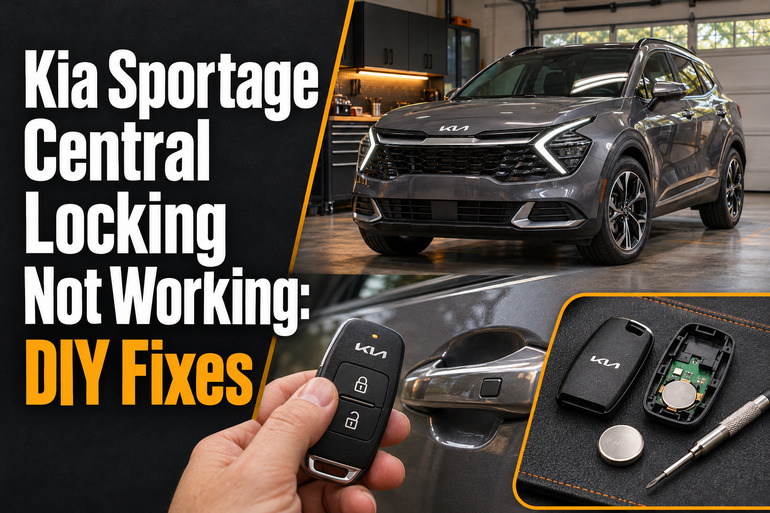
If the spare remote works normally, check the original fob’s battery before considering replacement or programming. Use the battery type specified for your exact remote. Sportage keys differ, so don’t assume every year uses the same coin cell.
Follow the opening method in your owner’s manual and note the battery’s orientation before removing it. Fit the correct replacement with the specified polarity, then close the case carefully. Avoid forcing the housing or bending its contacts. Kia recommends dealer assistance if you’re unsure about the procedure.
Test the remote beside the vehicle with your phone kept separately. If it still fails while the spare works, arrange a remote inspection. Keep new and used coin batteries away from children, and don’t attempt to repair a wet or damaged circuit board yourself.
3. Confirm Closure, Key Location, and Lock Settings
Switch the vehicle fully off and remove any spare smart key from the cabin. Check that each door and the liftgate closes normally, with no seat belt, bag strap, or other object caught in the opening.
Then check the instrument panel for an open door warning. If a warning remains, identify the indicated opening. Remove any obvious obstruction and close it again normally. A persistent warning after proper closure needs diagnosis rather than extra force.
If only automatic locking has changed, review the relevant vehicle settings while parked. Use your manual to find the correct menu and available options. A setting change may restore automatic operation, but it won’t repair a door that also ignores direct commands from the central switch.
4. Address Power Symptoms and Weather Conditions
If the locks fail alongside starting trouble or widespread electrical problems, arrange a 12 volt battery and charging system test. Describe all the symptoms together. That helps avoid replacing a fob battery while overlooking a vehicle supply problem.
For a hybrid or plug in hybrid, follow the exact power recovery instructions for that version. Don’t assume another Sportage’s battery access or reset procedure applies. Leave exposed electrical work, damaged batteries, and high voltage components to qualified personnel.
If the problem appeared during freezing weather, avoid forcing the handle or key. Kia advises gentle warming for a frozen keyhole cover and warns against excessive force. Allow the mechanism to thaw safely, then retest. Continued stiffness after thawing needs inspection.
5. Check the Correct Accessible Fuse
Use your owner’s manual and the label on the actual fuse panel to identify the relevant circuit. Don’t pull unrelated fuses as a reset attempt. If the identification is unclear, have a technician check it.
For an accessible owner serviceable blade fuse, follow Kia’s procedure and any additional precautions in your manual.
- Turn the ignition and other switches off.
- Open the specified fuse panel.
- Use the proper fuse puller to remove the identified fuse.
- Examine the fuse for a broken internal element.
- Replace a blown fuse with the same type and amperage rating.
The replacement should fit securely. Refit the cover and test the locks. Never install a higher rated fuse or bridge its terminals. If the fuse blows again, stop replacing it and arrange electrical diagnosis. A fuse that looks intact also doesn’t rule out another circuit fault.
6. Contact a Qualified Automotive Technician
Arrange professional diagnosis if one door consistently fails, a closure warning stays on, a replacement fuse blows, or the basic checks don’t reveal the cause. An automotive technician or Kia dealer can check the relevant wiring, command signals, actuator operation, and control system before recommending parts.
Bring both remotes and your notes. Mention whether the fault followed heavy rain, freezing weather, body repairs, or electrical accessory installation. A short video can also help demonstrate an intermittent fault that disappears at the workshop.
Until the repair is complete, use the manual’s emergency locking procedure and verify each door individually. Don’t assume turning the mechanical key locks every door. Kia’s 2026 Sportage Hybrid instructions specifically note that mechanical key operation affects only the driver’s door. If a door won’t latch securely, seek assistance before driving.
Wrapping Up
A central locking fault becomes easier to assess once you know exactly what still works. Compare the remote, spare key, interior switch, and individual doors before replacing parts. That simple distinction can keep a small remote problem from turning into an unnecessary door repair.
Start with the safe checks that match your symptoms and follow the instructions for your Sportage’s year and version. If a door remains unreliable or an electrical fault returns, bring your observations to a qualified technician so the next step rests on evidence.