
The washer jets on your Kia Venga should spray fluid across the windshield whenever you activate the washer control. When nothing comes out, you may be dealing with blocked nozzles, a low fluid level, damaged hoses, or a faulty washer pump.
This becomes particularly frustrating when dirt, dust, or road salt collects on the glass and affects your visibility. Fortunately, understanding the symptoms can help you identify the likely cause and find a practical solution without replacing parts unnecessarily.
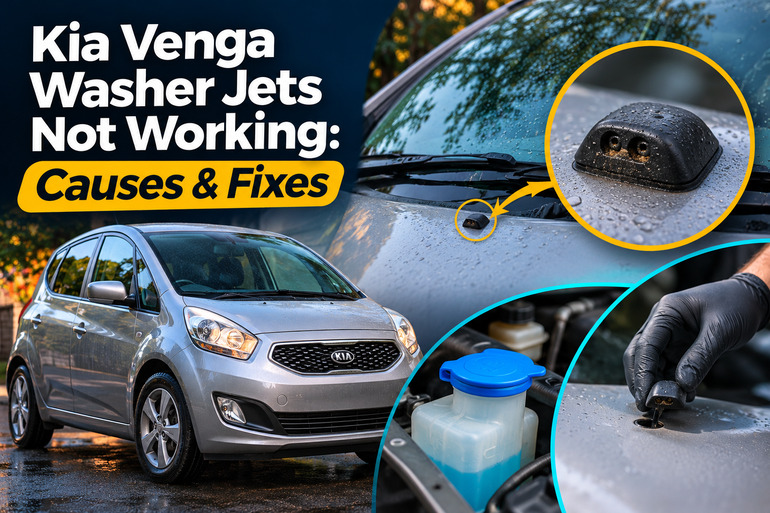
Why Your Kia Venga Washer Jets Aren’t Working
Your Kia Venga uses an electric washer pump to move cleaning fluid from a reservoir through narrow hoses to the washer jets. These jets spray the fluid onto the windshield, allowing the wiper blades to remove dirt and other deposits. Under normal conditions, pulling the washer control toward you activates the front washers and triggers the wipers.
When something interrupts this process, the washers may stop spraying altogether or produce a much weaker spray than usual. For example, you might hear the pump humming beneath the hood without seeing any fluid reach the glass. Alternatively, the wipers might move normally while the washer system remains completely silent.
These symptoms can help you narrow down the problem. A humming pump with little or no spray often points toward a blockage, fluid shortage, or damaged hose. If the pump makes no sound, an electrical fault or failed pump becomes another possibility. However, sound alone cannot confirm whether the pump is working correctly.
It’s also useful to compare the front and rear washers. The Venga has separate controls for spraying the front windshield and rear window. If one works while the other doesn’t, the fault may be limited to a particular nozzle or fluid line. However, some washer pump designs serve both windows, so a working rear washer doesn’t completely rule out a pump problem.
A faulty washer system deserves attention because dirty glass can quickly reduce visibility. If you cannot see clearly through the windshield, avoid driving until you can restore adequate visibility. Also, don’t keep operating the washers when no fluid is coming out, particularly if the reservoir is empty, since this can damage the pump.
Kia Venga Washer Jets Not Working: Common Causes
Several mechanical and electrical problems can prevent your Kia Venga’s washer jets from spraying properly. Some develop gradually through everyday use, while others appear suddenly because a component has failed.
1. Low or Frozen Washer Fluid
An empty or nearly empty washer fluid reservoir is one of the simplest explanations for washer jets that have stopped working. The washer pump draws liquid from the reservoir, so when the level drops too low, it may pull in air instead of fluid.
This can happen gradually if you use the washers frequently without checking the reservoir. You might notice that the spray becomes weak or intermittent before stopping completely. Sometimes, the pump continues making its usual humming sound, even though no liquid reaches the windshield.
Cold weather creates another possibility. If the reservoir contains plain water or washer fluid without sufficient freeze protection, the liquid can freeze inside the reservoir, pump, or narrow hoses. Even with a full reservoir, frozen fluid cannot flow normally. The Venga’s owner’s manual specifically recommends washer fluid with antifreeze properties in cold conditions.
2. Blocked or Dirty Washer Nozzles
The washer nozzles have small openings that direct fluid onto your windshield. Over time, dirt, dried washer fluid, road debris, or mineral deposits can collect around these openings and restrict the spray.
A partially blocked nozzle may produce an uneven spray, a thin stream, or fluid that barely reaches the bottom of the windshield. If only one of your Venga’s front washer jets works properly, an obstruction in the affected nozzle is worth investigating.
However, both nozzles can become restricted, especially when the washer system has been filled with contaminated water or unsuitable cleaning products. If the pump is running and no obvious fluid leak is present, blocked jets become a reasonable possibility.
3. Damaged, Disconnected, or Blocked Washer Hoses
Flexible hoses carry washer fluid from the pump to the spray nozzles. Although these hoses are relatively simple components, they can develop cracks, become pinched, or disconnect from their fittings.
A loose connection allows fluid to escape before reaching the windshield. For example, you might notice washer fluid dripping beneath the hood or collecting around an accessible hose connection when someone briefly activates the washers.
Sometimes, the problem develops without an obvious external leak. A kinked hose can restrict fluid flow, while dirt inside a hose can create a blockage. This may cause both washer jets to produce weak streams, depending on where the restriction occurs.
The rear washer has its own fluid route, so a fault affecting only the rear window may involve a different section of hose. These distinctions help explain why checking the affected fluid line is often more useful than immediately replacing the spray nozzles.
4. Faulty Windshield Washer Pump
Your Kia Venga relies on an electrically operated pump to move fluid through the washer system. Inside the pump, a small motor drives a mechanism that creates the pressure needed to deliver fluid to the jets.
Over time, the pump can fail through internal wear, electrical damage, contamination, or freezing. Washer pump manufacturer HELLA identifies damaged pump components, faulty motors, and contaminated washer systems among the possible causes of washer failure.
A completely silent washer system may indicate a failed pump, although a blown fuse or wiring problem can produce the same symptom. In some cases, a damaged pump still makes a humming noise but fails to create enough pressure for a useful spray.
5. Blown Fuse or Electrical Control Problem
The washer pump needs electrical power to operate. If its electrical supply is interrupted, the washer jets may stop working even though the reservoir, hoses, and nozzles are in good condition.
Possible electrical causes include a blown fuse, damaged wiring, corroded connectors, or a problem with the washer control switch. A blown fuse can result from an electrical overload or short circuit, while moisture entering a connector may interfere with the pump’s operation.
If the wipers move when you pull the washer lever but the pump remains silent, the problem could be within the washer circuit. However, functioning wipers don’t prove that every part of the washer electrical system is healthy. The actual fuse arrangement can also vary between Venga model years and equipment versions.
Kia Venga Washer Jets Not Working: DIY Fixes
The best way to repair your Kia Venga’s washer jets is to begin with simple checks that can eliminate common faults. Start with the fluid supply and visible components before considering electrical problems or pump replacement.
1. Check and Refill the Washer Fluid Reservoir
Start by checking whether your Venga has enough washer fluid. Park on level ground, turn off the engine, and open the hood after allowing hot components to cool.
Look for the washer fluid filler cap, which normally carries a windshield and water spray symbol. Its exact position can vary with the vehicle’s market and configuration, so consult your owner’s manual if you cannot identify it.
Once you’ve located the reservoir, follow these steps.
- Open the washer fluid filler cap and check the fluid level where visible.
- Add a suitable automotive windshield washer fluid, following the product’s mixing instructions.
- Close the cap securely and check for any obvious leaks beneath the vehicle.
- With the hood closed and the windshield wet, briefly activate the washers to see whether the spray returns.
If the reservoir was empty, refilling it may resolve the problem. You might notice a slight delay before fluid reaches the nozzles because air needs to clear from the lines.
If freezing is suspected, move the vehicle to a suitably warm location and allow the washer system to thaw naturally. Avoid pouring boiling water over the reservoir or attempting to operate a frozen pump repeatedly.
Never add engine coolant or radiator antifreeze to the washer reservoir. These products are unsuitable for windshield cleaning and may create visibility problems or damage vehicle finishes.
2. Clean the Washer Jets Carefully
If the washer reservoir contains sufficient fluid and the pump appears to run, inspect the front washer nozzles for dirt or deposits.
Turn off the ignition and look closely at the small spray openings. Check whether mud, dried residue, or other debris is visible. A blocked nozzle may also have a noticeably different spray pattern from the other one.
To clean the jets, gently wipe the surrounding surfaces with a soft, damp cloth. You can use a soft toothbrush to loosen dirt around the openings, then rinse the area with clean, lukewarm water.
Avoid pushing needles, stiff wires, or other sharp objects into the nozzle openings. These can damage the internal parts or alter the spray pattern, especially on nozzles that produce a fine fan of fluid.
After cleaning, close the hood and test the washer system briefly. If both jets now spray evenly across the windshield, the cleaning has likely worked.
However, if one jet remains completely blocked, the restriction may be deeper inside the nozzle or supply hose. A technician can check whether fluid reaches the nozzle and determine whether cleaning or replacement is appropriate.
3. Inspect the Washer Hoses for Leaks and Restrictions
A washer hose problem is worth investigating when you can hear the pump running but little fluid reaches the glass.
With the engine and ignition turned off, open the hood and locate any accessible washer hoses. Depending on your Venga’s design, some sections may be visible near the hood or the area beneath the windshield.
Look for cracks, disconnected fittings, and sections of hose that have been sharply bent or trapped against another component. Also, check for wet areas or dried washer fluid residue around the connections.
If you find an easily accessible hose that has slipped off its fitting, you may be able to push it back into place by hand, provided the hose and connector are undamaged. Make sure it sits securely without excessive force.
A damaged or brittle hose should be replaced with tubing of the correct size and material. Avoid relying on tape to seal a leaking washer hose, since pressure and moisture can cause the temporary repair to fail.
Once everything is secured, close the hood and have someone briefly activate the washers while you check from a safe position for visible leaks. Keep clear of moving parts and never reach into the engine compartment while the system is operating.
If you cannot identify the leak without removing trim panels or accessing concealed components, professional inspection is the safer option.
4. Check the Washer System Fuse
If your Kia Venga’s washer pump is completely silent, checking the relevant fuse can help identify an electrical fault.
The Venga has fuse panels inside the vehicle and in the engine compartment. The driver’s side panel and the fuse box near the battery are locations described in the owner’s manual. However, fuse assignments and ratings can differ, so always use the diagram for your exact vehicle.
Begin by switching off the ignition and electrical accessories. Locate the fuse associated with the washer circuit using your owner’s manual or the fuse panel label.
If the manual permits owner replacement, follow its safety instructions, including any required battery disconnection procedure. Use the proper fuse puller to remove the identified blade fuse and examine its internal metal strip.
A visibly broken or melted strip indicates that the fuse has blown. Replace it only with a fuse of the same specified amperage rating. Never fit a higher rated fuse or bridge the contacts with wire.
After completing the procedure and securing the fuse box cover, test the washers again.
If the replacement fuse blows immediately, stop using the system and arrange an electrical inspection. Repeated fuse failure can indicate a short circuit or another electrical problem that requires proper diagnosis.
5. Have the Washer Pump and Electrical Supply Tested
If the reservoir is full, the nozzles and hoses appear clear, and the relevant fuse is intact, the washer pump becomes a stronger suspect.
First, perform a basic listening check. With the vehicle safely parked, switch the ignition to the required operating position and briefly activate the washer control.
Listen for a humming or buzzing noise from the washer system. If you hear nothing, there may be a pump fault or a problem preventing electrical power from reaching the motor.
If you hear the pump operating but no fluid appears, the pump could be unable to produce adequate pressure. However, a blocked pump inlet, frozen fluid, or damaged hose can produce similar symptoms.
At this stage, a qualified technician can test whether the correct electrical supply reaches the pump when the washer control is activated. They can also examine the pump’s fluid intake, connections, and output to establish whether it has failed.
If replacement is necessary, use a pump compatible with your Venga’s model year and washer system configuration. The correct replacement should be confirmed using the vehicle identification number or an appropriate parts catalog.
Pump replacement may require access to the lower part of the reservoir, sometimes involving the removal of surrounding vehicle trim. If these components aren’t readily accessible, leave the work to someone with the proper tools.
6. Contact a Qualified Automotive Technician
If the washer jets still refuse to work after the basic checks, a qualified automotive technician can carry out a more detailed diagnosis.
Professional attention is particularly useful when the pump remains silent despite having a sound fuse, when the washer system repeatedly loses fluid, or when a replacement fuse continues to blow.
A technician can safely inspect the electrical supply, control switch, wiring connections, washer pump, and concealed fluid lines. This helps identify the actual fault before replacing potentially expensive parts.
You should also seek assistance if both the front and rear washers have stopped working, especially when the problem appeared suddenly. A shared electrical or pump fault may be responsible, depending on the system fitted to your vehicle.
If the washer system stops working during a journey and the windshield becomes too dirty to see through, pull over somewhere safe. Clean the glass before continuing, and arrange repairs if you cannot maintain clear visibility.
Wrap-Up
Washer jets that stop working on your Kia Venga can result from something as simple as an empty reservoir or a blocked nozzle. However, damaged hoses, pump failure, and electrical faults can produce similar symptoms, so identifying the source is essential before attempting repairs.
Start with the checks you can perform safely, paying attention to the pump sound, spray pattern, and any signs of leaking fluid. If the problem persists, a professional diagnosis can help restore dependable washer operation and keep your windshield clear whenever you need it.