
A Kia Soul horn that suddenly stops working can be frustrating, especially when you need to alert another driver or pedestrian. You might press the steering wheel and hear nothing, notice a faint clicking sound, or find that the horn only works occasionally.
Although the problem may seem serious, its cause can be as simple as a blown fuse. However, a faulty horn, damaged wiring, or steering wheel component can produce similar symptoms. Understanding these possibilities will help you identify the problem and choose the right repair.
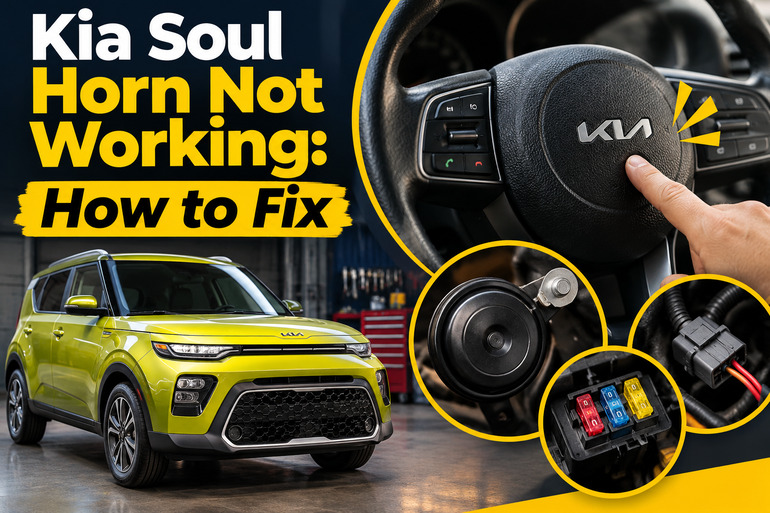
Understanding Why Your Kia Soul Horn Isn’t Working
Your Kia Soul uses an electrical horn system to produce the warning sound you hear when pressing the designated area on the steering wheel. Depending on the model, the system includes a horn switch, fuse, relay, wiring, and horn assembly. These components must work together for the horn to sound.
When you press the horn button, the electrical system activates the horn circuit, allowing the horn assembly to produce sound. If a component fails or an electrical connection becomes interrupted, the horn may stop working. The 2014 to 2019 Kia Soul service information identifies the horn switch, relay, horn assembly, and clock spring as components associated with this system.
The symptoms can help narrow down the fault. A completely silent horn may indicate a blown fuse, failed horn assembly, or interrupted electrical circuit. A weak or distorted sound can point to a deteriorating horn or an electrical supply problem. Meanwhile, a horn that works only occasionally may have a loose connection or a problem involving the steering wheel.
You should also pay attention to other warning signs. For example, if the horn stops working alongside the steering wheel controls or the airbag warning light appears, the problem may involve the clock spring. This deserves prompt professional attention because the clock spring also carries electrical connections for the driver’s airbag. Even without additional symptoms, a malfunctioning horn should be repaired promptly because it is an important safety feature.
Kia Soul Horn Not Working: Common Causes
Several electrical and mechanical faults can prevent your Kia Soul horn from working properly. While some are easy to identify, others require testing to determine which component has failed.
1. Blown Horn Fuse
A blown fuse is one of the first possibilities to investigate when your Kia Soul horn suddenly stops working. The fuse protects the horn circuit against excessive electrical current. If a short circuit or another electrical problem causes too much current to flow, the fuse can break the connection and interrupt power to the horn.
The Kia Soul has fuse panels inside the vehicle and under the hood. On many models, the horn fuse is located in the engine compartment fuse box. For example, the 2016 and 2023 Kia Soul manuals list a 15 amp fuse labeled HORN. However, you should always verify the correct location and rating using your vehicle’s fuse box diagram because configurations can differ.
A blown fuse usually causes the horn to stop working completely. If the horn was functioning normally and suddenly became silent, checking the fuse is a sensible starting point. However, a damaged fuse doesn’t necessarily explain why the failure occurred.
Sometimes, a fuse fails because of an underlying wiring problem or excessive current from a faulty component. If you replace the fuse and it blows again, the circuit needs further diagnosis rather than repeated replacements.
2. Faulty Horn Assembly
The horn assembly itself can fail after years of exposure to moisture, dirt, vibration, and changing temperatures. Because the horn sits near the front of the vehicle, it can be exposed to road spray and debris that may eventually damage its electrical connections or internal parts.
Inside the horn, an electrically operated mechanism produces the vibration responsible for its sound. If the mechanism deteriorates or becomes stuck, the horn may sound unusually quiet, produce a rough buzzing noise, or stop working entirely.
A failing horn can sometimes become weaker before it stops producing sound. However, this symptom can also occur when inadequate electrical power reaches an otherwise functional horn. A technician can distinguish between these problems by checking whether the horn receives the correct power and ground connections when activated.
3. Damaged Wiring or Corroded Electrical Connections
The horn depends on wiring and connectors that carry electricity between different parts of the circuit. If a wire becomes damaged, a connector loosens, or corrosion develops around an electrical contact, the horn may receive insufficient power or lose its electrical connection completely.
Moisture is one possible contributor because the horn assembly is installed toward the front of the Kia Soul. Over time, water exposure can encourage corrosion where connectors are poorly sealed or already damaged. Previous collision damage, improper repairs, and worn wiring insulation can also create problems.
Unlike a completely failed horn assembly, a wiring fault may cause intermittent symptoms. You might notice that the horn works normally one day and remains silent the next. In some cases, it may produce a weak sound because increased resistance in an electrical connection reduces the power reaching the horn.
The timing of the failure can provide useful clues. If the problem started after front bumper repairs, an accident, or work around the engine compartment, a disturbed connector or damaged wire deserves attention. However, visual signs alone may not establish which part of the circuit has failed.
4. Malfunctioning Horn Relay
The horn relay helps control the electrical circuit supplying the horn. When the horn switch sends the appropriate signal, the relay allows the horn circuit to operate. If the relay or its control circuit develops a fault, the horn may stop responding even when the horn assembly is functional.
A relay can fail because of worn contacts, internal electrical damage, or problems with the circuit that activates it. Depending on the fault, you may hear a clicking sound when pressing the horn button without hearing the horn itself.
However, the clicking sound doesn’t automatically confirm a bad relay. A relay may click correctly while another part of the circuit remains faulty. Also, relay designs differ between Kia Soul generations. For example, service information for the 2014 to 2019 Soul identifies the horn relay as built into the EMS box, meaning it isn’t necessarily a separate component that can simply be pulled out and replaced.
5. Faulty Horn Switch or Clock Spring
The horn switch is located within the steering wheel assembly. When you press the designated horn area, the switch completes the necessary control signal. If its internal contacts become damaged or stop making reliable contact, the horn may fail to respond.
Another possible cause is the clock spring. This component contains a flexible electrical connection that allows the steering wheel to turn while maintaining connections to components such as the horn, driver’s airbag, and certain steering wheel controls.
A damaged clock spring can cause several symptoms. Your horn might work only at certain steering wheel positions, or the audio and cruise control buttons may begin malfunctioning. An airbag warning light can also appear if the damage affects the airbag circuit, although that warning light can have other causes.
Because the horn switch and clock spring are associated with the steering wheel airbag assembly, diagnosing or replacing them requires proper safety procedures and professional knowledge. Avoid removing the steering wheel center pad or handling its electrical connectors yourself.
Kia Soul Horn Not Working: DIY Fixes
The best way to address a malfunctioning Kia Soul horn is to begin with simple checks that help identify the source of the failure. Some problems can be resolved without major repairs, while others require professional electrical testing.
1. Check the Horn Button and Confirm the Symptoms
Start by parking your Kia Soul somewhere safe, away from traffic. Turn off the engine, apply the parking brake, and make sure nobody is standing directly in front of the vehicle. Then press the horn symbol on your steering wheel using normal hand pressure.
Kia specifies that the horn operates when the designated area is pressed. Avoid striking the steering wheel with your fist or pressing it with a sharp object, as this can damage the components.
Pay attention to what happens when you press the button.
- No sound at all: The horn may have lost power, developed an internal fault, or stopped receiving an activation signal.
- A faint click: A relay or another component may be operating, but the horn circuit still needs testing.
- Weak or distorted sound: The horn assembly or its electrical supply may be deteriorating.
- Intermittent operation: A loose electrical connection, faulty switch, or clock spring problem may be involved.
Repeat the test a few times using gentle pressure, allowing a short break between attempts. You can also compare the response from the horn areas indicated on your particular steering wheel.
If the horn remains silent, move on to checking its fuse. Avoid pulling off the steering wheel cover or attempting to repair the horn switch at this stage.
2. Inspect and Replace the Horn Fuse
Checking the horn fuse is one of the simplest repairs you can safely attempt. A blown fuse interrupts the electrical supply, and replacing it with the correct type may restore normal operation.
First, locate your Kia Soul’s engine compartment fuse box using the owner’s manual. The box generally has a removable plastic cover with a diagram showing the fuse positions and their corresponding circuits.
Follow these steps if your owner’s manual permits standard blade fuse replacement.
- Park the vehicle, switch off the ignition, and turn off all electrical accessories.
- Follow your model’s manual for any additional precautions, including battery disconnection where required.
- Open the fuse box and locate the fuse marked HORN using the diagram.
- Remove the fuse carefully with the supplied fuse puller.
- Examine the metal strip inside the fuse. A broken or visibly burned strip indicates that the fuse has blown.
- Replace a blown fuse with one of exactly the same type and amperage rating.
- Reinstall the fuse securely, close the fuse box cover, and test the horn after restoring the vehicle to its normal operating condition.
The Kia Soul owner’s manual explains that replacement fuses must match the specified rating and fit securely in their terminals. It also emphasizes closing the engine compartment fuse box properly to prevent moisture from entering.
Never install a higher amperage fuse to prevent it from blowing. Doing so can allow excessive current to damage the wiring and potentially cause an electrical fire. Likewise, never use wire or metal foil as a substitute for a proper fuse.
If the new fuse restores the horn, you have resolved the immediate symptom. However, if it blows again, stop replacing it. A recurring failure suggests excessive current or an electrical short that needs professional investigation.
3. Compare the Steering Wheel Horn With the Key Fob Alarm
Your Kia Soul’s key fob may provide another useful clue. On models equipped with a panic alarm, activating the feature can produce an audible warning sound that helps you assess part of the vehicle’s warning system.
For vehicles with this feature, park somewhere appropriate, keep the doors closed, and activate the panic alarm according to your owner’s manual. Be prepared to cancel it immediately, as the alarm may sound loudly and disturb people nearby.
If the alarm produces a normal horn sound while the steering wheel horn remains silent, the results may point toward an issue with the horn switch, clock spring, or their control circuit. However, some vehicle configurations use separate alarm sounders or different electrical paths, so the test cannot establish a diagnosis by itself.
While checking these symptoms, observe whether your steering wheel audio buttons, cruise control switches, and other controls function correctly. If several controls have stopped working, a common steering wheel electrical connection becomes more suspicious.
You should also check the dashboard for an airbag warning light. If it remains illuminated after the normal startup check, arrange professional inspection promptly. Do not attempt to repair the clock spring or disconnect any airbag wiring.
4. Look for Visible Damage Around the Horn and Front Bumper
Since the horn assembly is installed toward the front of the Kia Soul, visible damage around the bumper or grille can sometimes help explain why it stopped working.
With the engine turned off and the vehicle safely parked, inspect the front bumper and grille from outside the vehicle. Look for obvious collision damage, displaced trim, unusual debris buildup, or signs that the bumper was recently disturbed during repairs.
If the horn or its connector is visible without removing body panels, you can look for the following problems.
- A connector that appears loose or displaced
- Exposed or damaged wiring insulation
- Greenish or white corrosion around visible metal contacts
- Signs of water intrusion or damaged protective covers
- Broken mounting brackets or obvious physical damage
Do not reach through tight spaces near moving components, pull on electrical wiring, or remove the front bumper simply to inspect the horn.
On the 2014 to 2019 Kia Soul, the published service procedure requires removing the front bumper cover to access and remove the horn assembly. This makes the job more involved than checking the fuse box.
If you find damaged wiring or corrosion, have the affected parts inspected and repaired properly. Simply spraying a product into an electrical connector or covering damaged wiring with tape may leave the underlying fault unresolved.
5. Check for Signs of Low Battery Power
Although a weak battery is less likely to explain an isolated horn failure when everything else works normally, inadequate electrical power can contribute to a weak or unusual horn sound.
Start by checking whether your Kia Soul has other electrical symptoms. For example, the headlights might appear unusually dim, the starter might crank slowly, or several electrical accessories might operate poorly.
These symptoms suggest that the vehicle’s electrical supply deserves attention. If the battery is discharged or its connections are faulty, the horn might not receive sufficient power to produce its normal sound.
However, don’t replace the battery simply because the horn has become quiet. If the car starts normally, the lights operate properly, and the horn is the only affected component, a faulty horn assembly or circuit connection may be more likely.
You can arrange a battery and charging system test at an automotive service shop if several electrical problems are present. A technician can also check the voltage reaching the horn while it is activated.
If the battery and charging system are functioning correctly, the next step is to test the horn assembly and its control circuit directly.
6. Replace a Faulty Horn Assembly After Testing
If the fuse is intact and the horn remains silent, the horn assembly itself may need replacement. However, confirming that the horn is faulty before purchasing a replacement can save unnecessary expense.
A qualified technician can test whether the horn receives the required electrical supply and ground connection. For the 2014 to 2019 Kia Soul, the service manual describes testing the horn with an appropriate battery supply and replacing it if it fails to produce sound under the specified test conditions.
If the horn receives the correct electrical input but doesn’t operate, replacing the defective assembly is generally the appropriate repair. The replacement must match the vehicle’s model year and relevant specifications, including the correct electrical connector and mounting arrangement.
The repair may require removing the front bumper cover or other components to reach the horn. Because access varies between models, this work is best handled by someone familiar with the Kia Soul’s body components and electrical system.
After installation, the technician should confirm that the horn produces its normal sound when the steering wheel switch is pressed. The connections and mounting points should also be checked to make sure the problem won’t return because of loose wiring or poor installation.
7. Contact a Qualified Automotive Technician
If the horn still doesn’t work after the basic checks, have a qualified automotive technician diagnose the complete circuit. This is particularly important when the fuse repeatedly blows, the horn relay is suspected, or there are signs of damage around the steering wheel.
A technician can use the correct wiring diagram and electrical testing equipment to distinguish between a failed horn relay, damaged wiring, faulty horn switch, and broken clock spring. The diagnosis may involve testing power and ground connections, checking relay operation, and examining the control signals associated with the horn.
If the airbag warning light is illuminated or other steering wheel controls have failed, arrange professional attention without delay. Kia’s service information shows that clock spring work involves the driver’s airbag assembly and requires specific installation and safety procedures.
It is also worth mentioning any recent repairs, collision damage, or changes in horn behavior when speaking with the technician. These details can help direct the inspection toward the most relevant parts and reduce unnecessary component replacements.
Wrap-Up
A Kia Soul horn that stops working deserves attention because it affects your ability to warn other road users. Fortunately, the symptoms often provide useful clues about whether the fault involves the electrical supply, horn assembly, or steering wheel controls.
Start with safe checks, especially the horn button and fuse. Then consider any unusual sounds, intermittent operation, or related warning lights. If the problem remains unresolved, proper electrical testing can identify the faulty component and help ensure the horn works reliably again.