
A Kia that suddenly refuses to go into reverse can make something as simple as backing out of your driveway frustrating. Sometimes, the gear shifter won’t move into reverse at all. Other times, it moves normally, but your car stays still or hesitates before moving backward.
Several problems can cause this, including faulty sensors, transmission fluid issues, and worn transmission components. Understanding the symptoms can help you identify the likely cause and determine which fixes are worth trying.
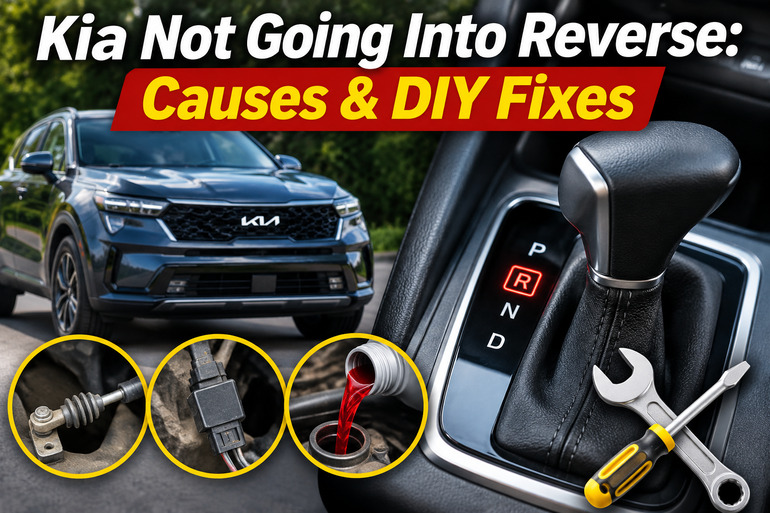
Understanding Why Your Kia Won’t Go Into Reverse
Your Kia’s reverse gear allows the transmission to transfer power from the engine to the wheels in a way that moves the vehicle backward. Depending on the model, your Kia may have a conventional automatic transmission, an intelligent variable transmission (IVT), a dual clutch transmission (DCT), or a manual gearbox. Each system engages reverse differently, so the possible faults and repair methods can vary.
One important distinction is whether your gear selector physically refuses to move into reverse or whether it moves into the reverse position without engaging the gear. A stuck shifter often points to a problem with the shift lock system, gear selector, or related electrical components. However, if the dashboard displays R but your car doesn’t move, the problem may involve the transmission itself.
You might also notice delayed reverse engagement, where your Kia takes several seconds to respond after selecting reverse. Other symptoms include grinding sounds, unusual vibrations, jerking, warning lights, or an engine that revs without moving the vehicle. These clues can help narrow down the possible causes, although they aren’t enough to confirm a specific fault.
Pay particular attention if your Kia suddenly loses reverse while driving normally in other gears. This may indicate a problem affecting the reverse mechanism rather than the entire transmission. Avoid repeatedly pressing the accelerator to force the car backward, since doing so can worsen an existing transmission fault.
Kia Not Going Into Reverse: Common Causes
Your Kia may refuse to engage reverse because of an electrical fault, a mechanical problem, or an issue inside the transmission. The following five causes are worth considering, especially when you compare them with the symptoms your vehicle is showing.
1. Faulty Brake Light Switch or Shift Lock System
Most automatic Kia vehicles have a shift lock system that prevents you from moving the gear selector out of Park unless you press the brake pedal. This safety feature helps prevent accidental vehicle movement when starting or shifting gears.
The system relies on an electrical signal indicating that you’ve pressed the brake pedal. If the brake pedal switch fails, its wiring becomes damaged, or the shift lock mechanism malfunctions, your Kia may refuse to release the gear selector even when you’re pressing the brake firmly.
A typical sign is a shifter that remains stuck in Park while the engine starts normally. You might also discover that your brake lights aren’t working. However, functioning brake lights don’t completely rule out a brake switch fault, since the electrical circuits can differ between models.
2. Damaged Gear Selector or Shift Cable
The gear selector connects your movements at the shifter to the transmission through a mechanical linkage, cable, or electronic control system. In Kia models with a mechanical shift cable, this connection ensures the transmission selects the gear you’ve chosen.
Over time, a shift cable can stretch, become misaligned, or develop damage at its connecting points. A loose cable bushing or worn linkage may also prevent the transmission from reaching the correct gear position. If the cable isn’t moving the transmission’s selector far enough, reverse may become difficult or impossible to engage.
You might notice that your gear shifter feels unusually loose, requires extra effort, or doesn’t line up properly with the displayed gear positions. In some cases, other gears may also behave strangely. Certain Kia transmission range fault procedures include checking shift cable alignment, so the linkage deserves attention during diagnosis.
3. Low Transmission Fluid or Fluid Problems
Transmission fluid helps a conventional automatic transmission operate by providing hydraulic pressure, lubrication, and cooling. If the fluid level becomes too low, the transmission may struggle to build the pressure needed to engage its internal clutches.
Low fluid can result from leaks around transmission seals, gaskets, or other components. Depending on the fault, you may experience delayed engagement, slipping, unusual noises, or difficulty selecting reverse. However, fluid problems often affect other gears as well, so a failure limited to reverse shouldn’t automatically be blamed on low fluid.
Another concern is using the wrong transmission fluid or operating with badly deteriorated fluid. Different Kia transmissions require specific lubricants and service procedures. Incorrect fluid can cause transmission malfunction or failure, and many models don’t require routine owner checks of automatic transmission fluid.
4. Faulty Transmission Range Sensor or Electrical System
Your Kia uses sensors and electronic controls to determine which gear you’ve selected and manage transmission operation. On certain automatic models, a transmission range sensor, sometimes called an inhibitor switch, reports the selected gear position to the vehicle’s control system.
If this sensor becomes faulty or misaligned, the transmission controller may receive incorrect information about your selected gear. Problems with the associated wiring, connectors, or control circuits can produce similar symptoms.
For example, you may notice an incorrect gear indicator, an illuminated check engine light, intermittent shifting problems, or difficulty starting the engine in Park or Neutral. Some Kia models may also store diagnostic codes such as P0705 when a transmission range sensor circuit develops a fault.
Electrical problems can affect electronically controlled shifters, too. On Kia models with a shift dial, a discharged 12 volt battery may prevent gear selection altogether. However, the exact response depends on the vehicle’s design.
5. Internal Transmission Damage or Clutch Problems
Sometimes, the reverse gear problem originates inside the transmission. Conventional automatic transmissions contain clutches, hydraulic passages, valves, and other components that control gear engagement. If the parts responsible for reverse operation become worn or damaged, your Kia may lose reverse even while its forward gears continue working.
Dual clutch transmissions have a different arrangement. They use electronically controlled clutch and gear engagement systems, so problems with an actuator, clutch assembly, or transmission control system may prevent proper engagement. Excessive transmission temperatures can also trigger protective functions that temporarily restrict vehicle movement.
If you drive a manual Kia, the problem could involve a clutch that isn’t disengaging completely, worn gear selection components, or damage within the gearbox. Grinding when selecting reverse, difficulty engaging first gear, or changes in clutch pedal feel can provide useful clues.
Internal transmission problems deserve particular attention when your Kia displays reverse correctly but won’t move, makes loud mechanical noises, or repeatedly slips out of gear. These symptoms usually require professional testing before anyone can determine whether the transmission needs adjustment, component replacement, or a more extensive repair.
Kia Not Going Into Reverse: DIY Fixes
The right fix depends on what prevents your Kia from engaging reverse. Start with simple checks that don’t require removing transmission parts, then consider professional diagnosis if the problem continues.
1. Identify Exactly What Happens When You Select Reverse
Before attempting repairs, determine whether your Kia’s gear selector is stuck or whether the transmission fails to engage after you select reverse. This distinction can save you from checking components that have little to do with the actual problem.
Park your vehicle on level ground, keep your foot firmly on the brake, and apply the parking brake. Then observe the following.
- Shifter stuck in Park: The problem may involve the brake switch, shift lock, or gear selector.
- Shifter moves but R doesn’t appear: The gear position sensor, linkage, or electronic selector may be malfunctioning.
- R appears but the vehicle doesn’t move: The transmission, clutch engagement system, or another drivetrain component may be faulty.
- Reverse engages after a delay: Hydraulic pressure, transmission fluid, or internal clutch operation may require attention.
- Grinding or harsh engagement: A clutch or mechanical transmission problem may be present.
If the transmission engages normally, you should feel the vehicle respond when the brake is released under safe conditions. However, don’t repeatedly accelerate to test a transmission that appears to be slipping.
2. Check the Brake Pedal and Shift Lock System
If your automatic Kia is stuck in Park, start by checking whether you’re operating the shift lock correctly. With the vehicle stopped, press the brake pedal firmly, make sure the ignition is in the required position, and try moving the shifter using the release button if your model has one.
Next, check your brake lights. You can ask someone to observe them while you press the pedal or look for their reflection against a nearby wall. If none of the brake lights illuminate, inspect the relevant fuse using your owner’s manual. Replace a blown fuse only with one of the specified rating. If it blows again, have the electrical circuit inspected.
Some Kia models also have a shift lock override that allows the selector to be released when the normal system fails. Its location and operating procedure vary. Follow your exact owner’s manual if releasing the shifter is necessary for recovery, and don’t treat the override as a permanent repair. Keep the vehicle secured against movement and arrange professional assistance if the shifter remains stuck.
3. Inspect the Gear Indicator and Check for Battery Problems
If the shifter moves but the transmission doesn’t respond correctly, look at the gear position shown on your dashboard. On many automatic Kia models, the instrument cluster displays P, R, N, or D to indicate the selected transmission position.
Pay attention to whether R appears consistently when you select reverse. An incorrect or flashing gear indicator may suggest a selector, transmission range sensor, or electronic control problem. Also, note any warning messages or illuminated dashboard lights.
Next, consider the condition of your 12 volt battery. If your Kia has been difficult to start, its electrical accessories behave unusually, or the battery is discharged, the electrical supply may be contributing to the problem. Some Kia vehicles with electronic shift dials cannot change gears when the 12 volt battery is discharged.
If a weak battery is suspected, have it tested and follow your owner’s manual for any permitted jump starting procedure. If the battery is healthy and the gear indicator remains incorrect, the next step is a diagnostic scan rather than replacing sensors based on guesswork.
4. Retry Reverse Engagement Correctly on a Manual Kia
If your Kia has a manual transmission, make sure you’re following the correct reverse selection procedure. Some manual gearboxes have a reverse lockout button or collar that must be operated before the gear lever can enter reverse.
Bring the car to a complete stop and press the clutch pedal fully to the floor. Then move the gear lever to Neutral. If reverse doesn’t engage, try the following procedure.
- Keep the car stationary with the brake applied.
- Move the gear lever into Neutral.
- Release the clutch pedal completely.
- Press the clutch pedal fully again.
- Select reverse gently, following the shift pattern shown on the gear knob.
Kia describes this neutral and clutch procedure in manuals for certain manual transmission models when first gear or reverse is difficult to select.
If reverse now engages smoothly, the difficulty may have been temporary. However, if the problem returns frequently, other gears grind, or the clutch pedal feels unusual, have the clutch and gear selection system inspected. Never force the lever into position, since excessive pressure can damage transmission components.
5. Look for Transmission Fluid Leaks
Transmission fluid problems can affect reverse engagement, particularly in conventional automatic transmissions. Although many modern Kia transmissions don’t have an owner accessible transmission fluid dipstick, you can safely look for visible signs of leakage.
With your vehicle parked on level ground and the engine switched off, examine the ground beneath it. Look for fresh oily patches and note their location, color, and approximate size. Transmission fluid may appear reddish, brown, or another color depending on the fluid type and condition. However, color alone cannot reliably identify a leak or establish fluid condition.
If you find suspicious fluid, don’t crawl underneath an unsupported vehicle or attempt to remove transmission plugs. Instead, arrange an inspection so a technician can identify the leaking component and measure the fluid level using the correct procedure.
Avoid adding generic transmission fluid or attempting a flush without confirming the transmission type and required specifications. Kia uses different transmission designs, and the wrong fluid can cause serious damage. If your Kia has already lost reverse or is slipping badly, towing is safer than attempting to drive it to a repair shop.
6. Allow an Overheated Dual Clutch Transmission to Cool
Some Kia models with dual clutch transmissions display warning messages when transmission temperatures become excessive. This may happen during repeated low speed movement, steep hill driving, or other conditions that generate considerable clutch heat.
If you receive a transmission temperature warning, stop in a safe location. Follow the instructions on your dashboard and in your owner’s manual. For certain Kia DCT systems, the recommended response is to apply the brakes, select Park, and leave the engine running while the transmission cools. Wait until the display confirms that normal operation can resume.
Once the warning clears, check whether reverse operates normally without forcing engagement. If your Kia still won’t move, the warning returns, or the transmission makes unusual noises, stop testing it and arrange professional diagnosis. Cooling may resolve temporary overheating protection, but it won’t repair a damaged clutch or faulty actuator.
7. Contact a Qualified Kia Technician
If none of these checks resolves the problem, a qualified automotive technician should examine your Kia. Professional diagnosis is particularly important when reverse fails to engage despite the dashboard showing R, when the transmission slips, or when the vehicle produces grinding or knocking sounds.
A technician can use a compatible diagnostic scanner to check transmission fault codes and review sensor readings. Depending on the findings, further testing may include inspecting the gear selector linkage, checking transmission fluid pressure or level, evaluating clutch operation, and testing electronic shift controls.
For certain dual clutch transmissions, repairs may require specialist equipment to perform actuator adjustments or transmission learning procedures. These operations aren’t suitable for ordinary home troubleshooting.
Explain exactly what happens when you select reverse, whether other gears work normally, and whether any warning messages have appeared. These details will help the technician focus on the most likely fault and avoid replacing parts unnecessarily.
Also, if your Kia is still under a manufacturer’s warranty or an applicable extended warranty, contact an authorized Kia dealership before approving major transmission repairs. Coverage depends on your vehicle’s age, mileage, service history, and warranty terms.
Wrap-Up
A Kia that won’t go into reverse doesn’t automatically need a replacement transmission. The problem could be something relatively simple, such as a faulty brake switch, a gear selector issue, or an electrical malfunction. However, persistent slipping, grinding, or failure to move after selecting reverse may indicate a more serious fault.
Start by observing exactly how your Kia behaves and checking the simple issues you can safely handle. If reverse still won’t engage, proper diagnosis is the best way to prevent further damage and get your vehicle working reliably again.