
When the 12V outlet in your Hyundai Elantra stops working, your phone charger, dash camera, tire inflator, or another accessory may suddenly lose power. The fault could be a blown fuse, a faulty adapter, or a problem inside the outlet itself. Although some repairs are straightforward, the same symptom can also result from damaged wiring or a poor electrical connection.
Start with a few simple checks to identify the likely cause before buying replacement parts or paying for a repair.
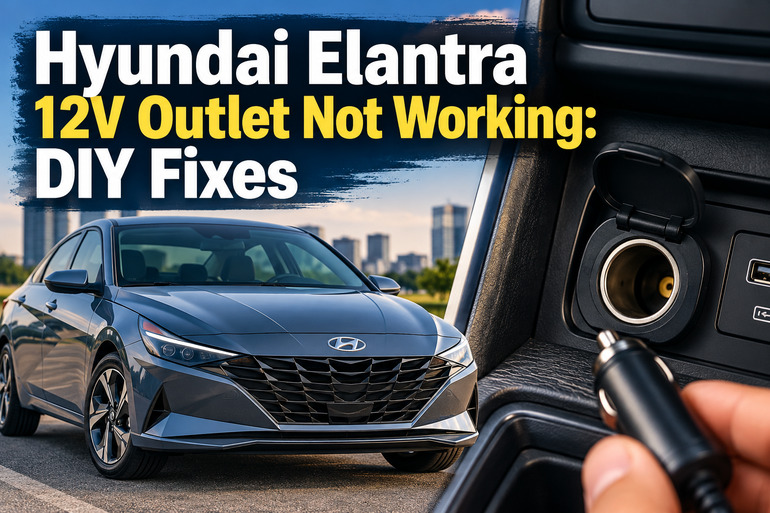
What It Means When Your Hyundai Elantra’s 12V Outlet Stops Working
The 12V outlet in your Elantra supplies electrical power to accessories built to operate from your vehicle’s electrical system. It is often located in the center console or near the front storage area, although its location and availability depend on the model year and trim level. Unlike a USB port, the outlet accepts a round accessory plug, commonly used for car chargers, dash cameras, and portable inflators.
When the outlet works properly, electricity flows through a protected circuit to the socket. A fuse protects that circuit from excessive current. If an accessory draws too much power or develops an electrical short, the fuse may blow to prevent damage to the wiring. Once this happens, the outlet stops supplying power until the underlying problem is corrected and the fuse is replaced.
The symptoms can vary. You might find that every accessory connected to the outlet fails, that a charger works intermittently when its plug moves, or that an inflator shuts off as soon as it starts drawing power. These clues can help distinguish a faulty accessory from a problem with the vehicle.
A completely dead outlet often points to a fuse or power supply issue, although a damaged socket or disconnected wire can produce the same result. If the plug feels unusually loose, the socket may have worn contacts. A burning smell, melted plastic, visible scorching, or unusual heat suggests a more serious electrical fault. Stop using the outlet if you notice any of these warning signs.
Hyundai Elantra 12V Outlet Not Working: Likely Causes
Several faults can prevent your Elantra’s 12V outlet from delivering power. The most useful approach is to begin with the accessory and work through the vehicle’s electrical circuit without assuming that every failed outlet needs a new fuse.
1. A Blown Power Outlet Fuse
A blown fuse is one of the first things to investigate when an outlet stops working completely. The fuse contains a metal element that breaks when excessive current passes through it, interrupting the circuit before the wiring sustains further damage.
An overloaded accessory, a damaged charger, or a short circuit can cause this failure. Some Elantra model years have separate fuses for different outlets or for a cigarette lighter and a power outlet. Consequently, a fuse that protects another accessory may be unrelated to the socket you are trying to repair.
Check the fuse diagram on your vehicle and identify the circuit associated with the affected outlet. Depending on the model, the label may use terms such as POWER OUTLET or CIGAR LIGHTER. The correct location and fuse rating must come from your specific vehicle’s owner’s manual or fuse box label, since the arrangement changes between model years. Hyundai manuals also caution that fuse descriptions may differ between vehicles, making the actual panel label essential.
2. A Faulty Phone Charger or Other Accessory
Sometimes the vehicle is working correctly, but the accessory connected to the outlet has failed. A car charger may have a damaged internal circuit, while a dash camera cable can break internally after repeated bending. Portable inflators may also stop working because of a fault in their plug, switch, or motor.
This problem can be confusing because an accessory may have worked normally during your previous drive. A damaged plug can lose electrical contact without showing obvious external signs.
Try the accessory in another compatible, working vehicle outlet. Alternatively, use a known working 12V accessory in your Elantra. If the replacement works in your vehicle but the original accessory fails elsewhere, the original accessory is the stronger suspect. Avoid using equipment with a damaged plug or exposed wiring.
3. Dirt, Corrosion, or Damaged Socket Contacts
The inside of a 12V socket can accumulate dust, small pieces of debris, and residue over time. Moisture entering the outlet may also cause corrosion, which interferes with electrical contact between the socket and an accessory plug.
The socket’s center contact and outer metal contacts must connect properly with the corresponding parts of the plug. If these contact points become corroded, worn, or damaged, the accessory may fail to receive power even when the fuse is intact.
Look for visible debris, discoloration, rust, or signs of melting around the opening. An accessory that works only when its plug is held at a particular angle may indicate worn contacts or a loose connection. Do not insert metal tools, fingers, or other objects into the socket, particularly while the vehicle’s electrical system is powered.
4. A Loose Connection or Damaged Wiring
The outlet depends on electrical connections behind the dashboard or center console. These connections may become loose after interior trim has been removed for another repair, while wiring can be damaged through wear, pinching, or previous installation work.
A loose connector can interrupt the electrical supply even when the fuse remains intact. A damaged ground connection can also prevent current from flowing through the circuit properly. Depending on the fault, the outlet may stop working completely or operate intermittently.
If the outlet failed after a stereo installation, dashboard repair, or center console work, a disturbed connector is worth investigating. Electrical faults may also affect other components if the damaged wiring belongs to a shared circuit. Because the connections are often hidden behind interior panels, diagnosing this cause may require professional electrical testing.
5. An Overloaded or Internally Damaged Outlet
A 12V outlet has a limit on the amount of electrical power it can safely supply. Accessories that exceed the vehicle’s specified rating may draw excessive current, generate heat, or cause the protective fuse to open.
Hyundai specifies a maximum accessory power rating in its owner’s manuals, but the exact instructions should be checked for your Elantra. Do not assume that every model year has identical outlet specifications. A loose accessory plug may also overheat if it fails to make proper contact with the socket.
Repeated overloads can damage the outlet’s internal contacts. Physical wear, overheating, or an electrical short within the socket may leave it unable to supply power even after the original accessory has been removed.
Hyundai Elantra 12V Outlet Not Working: How to Fix
Start with the simplest checks and progress to the electrical components only when necessary. These steps can help you identify whether the problem lies with the accessory, the fuse, or the outlet itself.
1. Test the Outlet With Another Accessory
Begin by checking whether the problem follows the accessory or stays with the vehicle. This simple test can save you from replacing a fuse or socket unnecessarily.
Switch the vehicle to the ignition setting specified in the owner’s manual. Some accessories may require the ignition to be on, and Hyundai generally recommends using the power outlet while the engine is running to reduce the risk of discharging the battery. Remove the original charger or device and connect a known working 12V accessory that is compatible with the outlet.
Observe what happens. If the replacement accessory works, inspect the original device, its cable, and its plug for damage. If neither accessory works, the vehicle’s outlet circuit becomes the more likely source of the fault.
Test the original accessory in another known working outlet, provided it is safe to do so. If it fails there as well, replace or repair the accessory rather than modifying the vehicle’s wiring.
2. Check the Ignition Setting and Accessory Power Requirements
Before opening the fuse box, confirm that your Elantra is supplying power under the conditions in which you are testing the outlet. Depending on the vehicle’s design, an outlet may operate only when the ignition is on or the engine is running.
Read the power outlet section of your owner’s manual and follow its instructions. If the outlet is supposed to receive power with the engine running, start the engine outdoors in a safe location and test it again. Never leave the engine running in an enclosed garage because exhaust gases can cause fatal carbon monoxide poisoning.
You should also check the rating of the accessory being used. A phone charger generally places a different demand on the outlet than a portable tire inflator. Confirm that the device is compatible with your vehicle and stays within the specified power limit.
If a low-power accessory works but a larger device fails, the larger device may be faulty or drawing excessive current. Do not keep reconnecting equipment that causes the outlet to shut down or a fuse to blow.
3. Inspect the Outlet for Visible Damage
If the outlet remains dead, inspect its opening before attempting electrical repairs. Switch off the ignition, remove the accessory plug, and allow the socket to cool if it has been in use.
Use a flashlight to examine the opening for visible debris, corrosion, discoloration, or melted plastic. Do not touch the electrical contacts or insert a screwdriver, metal pick, paper clip, or other object into the socket. A metal object can bridge electrical contacts and cause a short circuit.
If you see loose debris around the exterior of the opening, remove only what can be safely reached without entering the socket or touching its contacts. Keep liquids and cleaning sprays out of the outlet.
A socket that looks clean and undamaged may still have worn internal contacts. If an accessory plug feels unusually loose or loses power with minor movement, avoid repeatedly adjusting it while powered. The socket may need replacement or repair by a qualified technician.
4. Locate and Test the Power Outlet Fuse
A fuse inspection is one of the most useful checks when the outlet has stopped working entirely. Your Elantra may have an interior fuse panel, an engine compartment fuse panel, or several relevant circuits, depending on its model year and configuration.
Consult the owner’s manual and the diagram printed on the appropriate fuse box cover. Find the fuse specifically assigned to your outlet. Turn off the ignition, remove the key or switch off the vehicle as appropriate, and follow the manual’s instructions before removing a fuse.
A fuse with a visibly broken internal metal element is likely blown. However, a fuse can fail without an obvious break, so a suitable automotive fuse tester or multimeter can provide a more reliable check. Use the tool according to its instructions and the vehicle’s manual. If you are unfamiliar with electrical testing, have a technician perform this step rather than probing unfamiliar terminals.
If the fuse has failed, inspect the surrounding area for signs of heat damage before replacing it. Any replacement must have the same amperage rating and the correct physical type as the original. Never install a higher-rated fuse, bridge the fuse contacts, or substitute wire for a fuse.
After replacing a blown fuse, test the outlet with a known working accessory. If the replacement fuse blows again, stop testing and disconnect the accessory. A recurring failure usually indicates an unresolved overload or short circuit that needs diagnosis.
5. Check for Accessory Overload and Replace Defective Equipment
If the outlet works with a phone charger but fails when a tire inflator or another high-demand device is connected, investigate the device and its power requirements. The issue may be an accessory that draws too much current, has a damaged cable, or develops an internal fault under load.
Compare the device’s power rating with the limit specified in your Elantra’s owner’s manual. Check the manufacturer’s instructions for the accessory, including any requirements concerning the vehicle’s engine or electrical supply. Do not rely on the fact that the plug physically fits the socket as proof that the device is suitable.
Disconnect any accessory that triggers repeated fuse failures, sparks, unusual heat, or a burning smell. Replace damaged chargers and cables instead of attempting improvised repairs. If a correctly rated accessory repeatedly causes the outlet to fail, the socket or its wiring may already be damaged and should be tested by a technician.
6. Contact a Qualified Automotive Technician
Professional diagnosis is necessary if the outlet remains inoperative after the accessory and fuse have been checked, or if a replacement fuse fails again. A technician can use circuit diagrams, a multimeter, and appropriate diagnostic procedures to establish whether the fault involves the power supply, ground connection, wiring, or socket assembly.
The repair may involve securing a connector, repairing damaged wiring, or replacing the outlet. The correct solution depends on the test results and the design of your particular Elantra. Replacing the socket before confirming the fault can lead to unnecessary expense.
Seek professional help promptly if you notice melted plastic, a burning odor, scorching, persistent overheating, or other electrical problems in the dashboard or center console. Do not continue using an outlet that shows signs of electrical damage. Leave wiring repairs and any work requiring the removal of unfamiliar dashboard components to someone with the appropriate tools and experience.
Wrap-Up
A Hyundai Elantra 12V outlet that stops working often has a problem with the accessory, its fuse, or the connection inside the socket. Testing a second accessory and checking the correct fuse are sensible starting points, provided you follow the vehicle’s instructions and use the correct replacement parts.
Pay attention to recurring failures, loose plugs, unusual heat, and burning smells. These symptoms can point to damage that a simple fuse replacement will not resolve. Once you identify the cause, use a safe repair method suited to your model year, and seek professional electrical diagnosis if the fault persists.