
A nonworking 12V socket in your Hyundai i20 can leave your phone charger, dashcam, or other car accessory without power. Sometimes the cause is a simple blown fuse or a faulty charger, while other cases involve damaged socket contacts or an electrical connection problem.
Before replacing parts, narrow down the fault with a few straightforward checks. Understanding how the socket receives power will help you identify what you can fix yourself and when an automotive technician needs to investigate further.
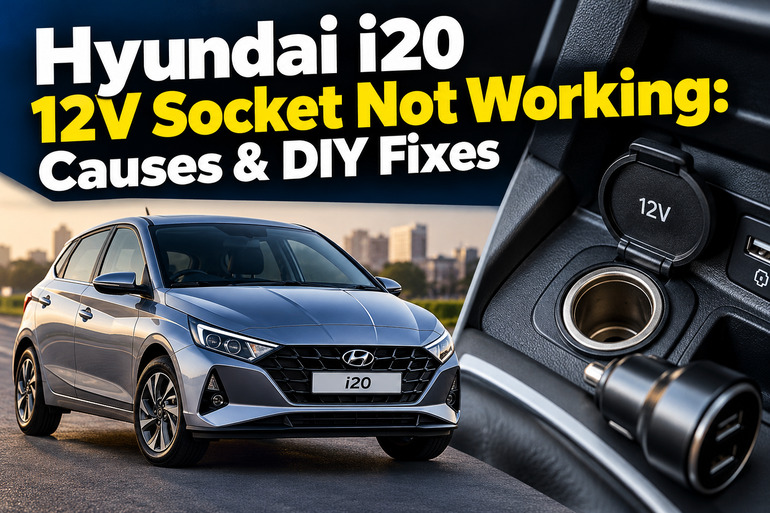
What It Means When Your Hyundai i20 12V Socket Stops Working
The 12V power socket in your Hyundai i20 supplies electricity to compatible accessories through the vehicle’s electrical system. Depending on the model year and equipment, you’ll find it in the front center console or another designated area. Although it resembles a traditional cigarette lighter socket, its main purpose is to power electronic accessories.
When the socket works correctly, inserting a compatible charger or accessory establishes an electrical connection between the accessory’s plug and the socket’s internal contacts. Electricity then flows through a protected circuit that includes a fuse and the necessary wiring. Depending on the model, power may also depend on the ignition switch or the vehicle’s operating state.
When this circuit fails, the symptoms are usually straightforward. Your phone charger may show no indicator light, a dashcam may refuse to start, or an air compressor may remain completely inactive. In some cases, the socket works intermittently, with the accessory switching off when the plug moves.
The distinction matters because a socket that supplies no power can have several different faults. A failed accessory can produce the same symptoms as a blown fuse, while loose contacts may allow one charger to work and another to fail. If you notice a burning smell, melted plastic, unusual heat, or visible scorching around the socket, stop using it immediately. Continued use may worsen the electrical damage.
Hyundai i20 12V Socket Not Working: Likely Causes
Several faults can interrupt power to the 12V socket in your Hyundai i20. The most useful starting points are the fuse, the connected accessory, the condition of the socket, and the electrical connections supplying it.
1. A Blown 12V Socket Fuse
A blown fuse is one of the first things to investigate when the socket stops working completely. A fuse protects the electrical circuit by interrupting current when an overload or short circuit causes excessive current to flow.
In the Hyundai i20, the relevant fuse may be identified as C/LIGHTER, CIGAR LIGHTER, or POWER OUTLET, depending on the model year and market. The exact label, location, and amperage rating vary between versions, so the fuse chart for your particular vehicle is essential.
A fuse can blow when an accessory draws excessive current, when a charger develops an internal short circuit, or when a metal object bridges the socket’s electrical contacts. If the socket stopped working immediately after you plugged in a new device, the fuse deserves particular attention.
However, a blown fuse is evidence of an interrupted circuit, not necessarily the root cause. Replacing it may restore power, but if the same fuse blows again, another electrical fault may be present.
2. A Faulty Charger or Accessory Plug
The socket itself may be working correctly while the connected accessory has failed. Phone chargers, USB adapters, dashcams, and other devices can develop internal electrical faults after prolonged use, physical damage, or exposure to excessive heat.
Some 12V adapters also contain a small replaceable fuse inside their cigarette lighter style plug. If that fuse fails, the adapter may stop working even though the vehicle’s socket continues to supply power.
Poor-quality adapters can also have loose internal connections or incorrectly sized contacts. A plug that fits loosely may fail to maintain a reliable electrical connection, causing the accessory to switch on and off unexpectedly.
This is why testing the socket with a known working, compatible accessory is valuable. If another device works normally, the original accessory becomes the more likely source of the problem.
3. Dirt, Corrosion, or Damaged Socket Contacts
The 12V socket is exposed to dust and debris, particularly when its protective cover remains open. Small particles can interfere with the connection between the accessory plug and the socket’s internal contacts.
Spilled drinks or other liquids can create a more serious problem. Moisture may cause corrosion, leave conductive residue, or damage the internal metal surfaces. Over time, repeated insertion and removal of plugs can also wear the contacts or reduce their grip.
You may notice that an accessory works only when the plug sits at a particular angle. That symptom can indicate poor contact, although a defective accessory plug can produce the same result. A socket that feels unusually loose or has visible discoloration also deserves closer inspection.
Avoid forcing a plug into the opening or moving it repeatedly to establish a connection. These actions may worsen the damage and can generate heat at an already unreliable contact point.
4. Excessive Electrical Load or Overheating
Every 12V socket has a limit on the electrical power it can safely supply. Hyundai owner manuals for various i20 versions specify a maximum of less than 180 watts for the power outlet, but you should confirm the rating in the manual for your specific vehicle.
An accessory that exceeds the permitted load can cause the fuse to blow. The same problem may occur when several devices connected through a splitter collectively draw more power than the circuit can support.
Overheating can also develop when a plug fails to make good contact with the socket. Electrical resistance at a poor connection produces heat, potentially damaging the plug, socket, or protective components. Hyundai’s owner documentation specifically warns that inadequate plug contact may cause overheating and can open the relevant temperature protection.
If an adapter becomes unusually hot, smells burnt, or shows signs of melting, disconnect it only if doing so is safe. Do not continue testing the accessory or repeatedly replace the fuse without identifying the cause.
5. Damaged Wiring or a Loose Electrical Connection
If the fuse is intact and a known working accessory still receives no power, the problem may lie in the socket’s electrical supply. A loose connector behind the socket, damaged wiring, a poor ground connection, or a faulty socket assembly can interrupt the circuit.
These faults may develop after the center console has been removed for repairs, accessories have been installed, or wiring has been disturbed. Wear, corrosion, and previous electrical work can also contribute.
An electrical supply problem may affect the socket continuously or cause intermittent operation when the vehicle experiences vibration. Other accessories may continue to work normally because they use separate circuits.
Diagnosing these faults generally requires access to the socket wiring and appropriate electrical test equipment. Removing interior trim without knowing how its clips and electrical connectors are arranged can cause further damage, so this stage is usually best left to a qualified technician.
Hyundai i20 12V Socket Not Working: How to Fix
Start with checks that don’t require dismantling the vehicle or handling exposed electrical connections. Working through the following methods in order can help you identify a failed accessory, a power supply issue, or a fuse problem before considering more involved repairs.
1. Confirm That the Socket Is Receiving Power Under the Correct Conditions
Some vehicle power outlets are controlled by the ignition or accessory circuit. If your Hyundai i20 has this arrangement, the socket may remain inactive while the vehicle is switched off.
Park safely, apply the parking brake, and follow the instructions in your owner’s manual for operating the power outlet. If the manual specifies using the outlet with the engine running, start the engine outdoors in a well-ventilated area before testing it. Never run the engine in an enclosed garage.
Insert a compatible accessory and check whether it powers on. For a phone charger, look for its indicator light or check whether the connected phone begins charging. If the socket works under the correct operating conditions, no repair may be necessary.
If there is still no power, continue to the next check rather than assuming that the outlet itself has failed.
2. Test a Different Accessory and Inspect the Original Charger
Use a second, known working 12V accessory that fits the socket correctly and stays within its permitted electrical rating. A simple phone charger is generally more suitable for this check than a high-current device such as an air compressor.
If the second accessory works, inspect the original charger’s plug, cable, and housing for damage. Check its operating instructions for any user-serviceable fuse. Some adapters allow their internal fuse to be replaced, while others require replacement of the complete adapter.
Replace a plug fuse only according to the accessory manufacturer’s instructions and with the specified type and rating. Never bypass the fuse or fit a higher-rated replacement.
If neither accessory works in the Hyundai i20, the fault may involve the vehicle’s fuse, socket contacts, or wiring. A second accessory failing does not prove that the socket is defective, but it helps narrow the possibilities.
3. Inspect the Socket for Dirt or Visible Damage
Switch off the vehicle and remove the accessory before inspecting the socket. Allow it to cool completely if it has recently been in use. Use a flashlight to look for loose debris, corrosion, discoloration, or signs of melting.
Do not put your fingers, metal tools, screwdrivers, or other objects inside the socket. Even when the ignition is off, some vehicle outlets may remain connected to battery power. A metal object bridging the contacts can cause a short circuit.
If the opening appears clean and undamaged, close its protective cover when it is not in use. If loose debris is visible near the opening, remove only material that can be safely reached without inserting tools or contacting the electrical terminals. Leave debris lodged inside the socket to a technician.
Visible corrosion, burned contacts, melted plastic, or a loose socket warrants professional inspection rather than further cleaning or testing. These signs may indicate a connection that needs repair or replacement.
4. Check and Replace the Correct Fuse
If the outlet remains inactive, inspect the fuse identified in the owner’s manual for your specific Hyundai i20. Depending on the generation, the fuse box may be inside the passenger compartment, in the engine compartment, or arranged differently for particular equipment configurations.
Use the fuse diagram on the relevant cover and the vehicle’s manual to identify the correct circuit. Look for a label such as C/LIGHTER or POWER OUTLET rather than selecting a fuse based only on its position.
Before removing a fuse, switch off the ignition and electrical accessories. Follow the manufacturer’s instructions for fuse replacement, including any requirement to disconnect the negative battery terminal. Use the proper fuse puller when provided, and inspect the removed fuse for a broken internal element. A suitable fuse tester can also help distinguish a failed fuse from one that appears intact.
If the fuse has blown, replace it only with a fuse of the same type and amperage rating. Never use a larger fuse, foil, wire, or another improvised substitute. An incorrectly rated fuse can allow wiring to overheat and create a fire risk.
After replacement, test the socket with a compatible accessory. If the new fuse blows immediately or soon after use, stop using the outlet. Repeated fuse failure signals a fault that needs proper diagnosis.
5. Check the Accessory’s Electrical Load
A damaged or overloaded accessory can cause the outlet fuse to fail even when the socket is in good condition. Check the power rating printed on the accessory or specified in its instructions, and compare it with the permitted rating for your particular Hyundai i20.
For reference, Hyundai manuals for several i20 versions specify power outlet use below 180 watts. The exact requirements for your model should take precedence, particularly if your vehicle has been modified or fitted with aftermarket equipment.
Avoid using an overloaded multi-socket adapter to supply several high-power devices at once. Also inspect the accessory plug for bent contacts, cracked insulation, melted plastic, or a burnt smell. Stop using a damaged accessory rather than testing it repeatedly in the vehicle.
If the outlet works with a low-power accessory but fails when you connect a particular device, stop using that device until its condition and power requirements have been checked. The problem may be the load, the accessory itself, or an existing weakness in the vehicle’s circuit.
Final Solution: Contact the Appropriate Professional
If the socket remains inactive after these checks, arrange an inspection with a qualified automotive electrician or Hyundai service technician. Professional diagnosis becomes particularly important when a replacement fuse blows repeatedly, the outlet is visibly damaged, or other electrical symptoms appear at the same time.
A technician can test the power supply and ground connection, examine the connector behind the socket, and check whether the socket assembly or another part of the circuit has failed. These checks can distinguish a damaged outlet from a wider wiring problem.
If you notice smoke, melting, a burning smell, or excessive heat, stop using the outlet immediately. Do not continue replacing fuses or testing accessories. Leave the circuit unused until the fault has been identified and repaired.
Wrap-Up
A Hyundai i20 12V socket that stops working may have a simple fault, such as a defective charger or blown fuse, but damaged contacts and wiring problems can produce similar symptoms. Starting with safe, basic checks can help you avoid replacing a working socket or overlooking a faulty accessory.
Use the fuse diagram and operating instructions for your exact model year, and never bypass the circuit’s electrical protection. If the problem persists or the fuse fails again, professional diagnosis is the safer next step. Addressing the fault early can help prevent further damage and restore reliable power for your everyday car accessories.