
A Kia heater that stops working can make driving uncomfortable, especially during cold weather. You might notice cold air coming through the vents, weak airflow, or a heater that takes unusually long to warm the cabin. Sometimes, the heat works briefly before disappearing.
These symptoms can have several causes, ranging from incorrect climate settings to problems with the cooling system. Understanding how your Kia’s heater works can help you identify the likely fault and choose the right solution.
Why Your Kia Heater Is Not Working
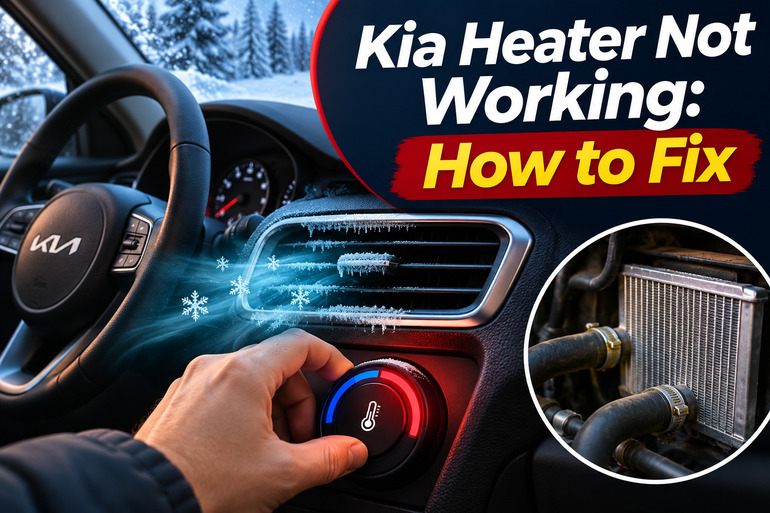
In most gasoline powered Kia vehicles, the cabin heater uses heat produced by the engine. As the engine runs, coolant absorbs heat and circulates through a small radiator called the heater core. The blower fan pushes air across this component, warming the air before it enters the cabin through the vents.
When something interferes with this process, the heater may stop producing warm air. For example, low coolant can prevent enough hot liquid from reaching the heater core. A faulty thermostat can keep the engine from warming properly, while a damaged temperature control actuator can prevent the system from directing air through the heated section.
The symptoms often provide useful clues. If the fan blows strongly but the air stays cold, the problem may involve coolant circulation or temperature control. However, if little or no air comes through the vents, the cabin air filter, blower motor, or electrical controls deserve attention.
It’s also worth knowing that Kia electric vehicles, including certain EV6 and Niro EV models, use electric heating components rather than relying on a gasoline engine. Some versions also have heat pumps. Consequently, the correct diagnosis depends on your Kia’s model, year, and powertrain.
A heater problem deserves prompt attention when it comes with engine overheating, coolant leaks, or poor windshield defogging. These symptoms can affect your safety and may indicate problems beyond the cabin heating system.
Kia Heater Not Working: Common Causes
Several mechanical and electrical faults can prevent your Kia’s heater from working properly. The following causes are worth considering, although the symptoms and appropriate checks will determine which one applies to your vehicle.
1. Low Engine Coolant Level
Low engine coolant is one of the first things to investigate when a gasoline powered Kia blows cold air despite having its temperature control set to hot. The heater core depends on a steady supply of heated coolant, so an insufficient amount can reduce or interrupt cabin heating.
Coolant levels can drop because of leaks around radiator hoses, heater hoses, the water pump, or other cooling system components. A small leak may develop gradually, causing the heater to work inconsistently before other symptoms become noticeable. Air trapped inside the cooling system after a repair can also interfere with coolant circulation.
You may notice that the heater becomes warmer when the engine speed increases or that the temperature changes unexpectedly while driving. However, these symptoms aren’t exclusive to low coolant. A visible drop below the reservoir’s minimum mark provides a stronger reason to investigate, especially if the engine temperature gauge also behaves abnormally.
2. Faulty Engine Thermostat
The thermostat regulates coolant circulation to help the engine reach and maintain its proper operating temperature. When the engine is cold, the thermostat generally restricts coolant flow through the radiator, allowing the engine to warm up more quickly.
If the thermostat becomes stuck open, coolant circulates through the radiator too early. Consequently, the engine may struggle to reach its normal operating temperature, particularly in cold weather. Since the heater depends on engine heat, the air entering the cabin may remain lukewarm even after an extended drive.
A useful clue is an engine temperature gauge that rises unusually slowly or remains below its normal position. The heater may also perform worse during highway driving. A thermostat stuck closed can cause overheating instead, making it a different and potentially more serious problem.
3. Blocked or Leaking Heater Core
The heater core is a compact heat exchanger located within the dashboard’s heating and ventilation assembly. Hot coolant passes through its narrow internal passages while air flows across its surface. Over time, contamination or deposits within the cooling system can restrict those passages and reduce the amount of heat reaching the cabin.
A partially blocked heater core may produce weak heat even when the engine has reached its normal temperature. Depending on the restriction, the heating performance may also change with engine speed. However, poor heating alone doesn’t confirm a blockage because thermostat and temperature door problems can produce similar symptoms.
A leaking heater core presents different warning signs. You might notice a sweet coolant smell inside the vehicle, unusual moisture on the windshield, or damp carpeting near the front footwells. These clues deserve attention because coolant leakage can affect the vehicle’s cooling system and cabin conditions.
Heater core repairs often involve cooling system work and sometimes substantial dashboard disassembly. Therefore, confirming the fault before replacing the component can prevent unnecessary expense.
4. Faulty Blend Door Actuator
Your Kia’s heating system uses internal doors to control how air moves through the ventilation assembly. One of these, commonly called the blend door or temperature door, regulates the amount of air passing through the heated section. On many models, a small electric actuator moves the door in response to the temperature setting.
If the actuator fails or its internal gears become damaged, the door may remain in the cold position. As a result, the vents can continue blowing cold air even when the engine and heater core are sufficiently warm.
A faulty actuator may produce repeated clicking or tapping noises behind the dashboard when you change the temperature. On Kia models with dual zone climate control, a problem affecting one temperature door may cause one side of the cabin to remain cold while the other side heats normally.
5. Restricted Airflow or Blower Motor Problems
Sometimes, the heating system generates enough heat, but the warm air can’t reach the cabin effectively. A heavily clogged cabin air filter can restrict airflow through the vents, especially when dust, leaves, or other debris accumulate over time.
A blower motor problem produces similar discomfort for a different reason. The blower pushes air through the ventilation system, so a failed motor can leave the vents without airflow. A damaged blower control module, faulty fan speed control, or electrical fault can also prevent the fan from working correctly.
If you hear the fan running but feel very little air, consider a restricted filter or ventilation passage. If the fan remains completely silent, electrical supply and blower operation become stronger suspects. Certain blower faults may also cause the fan to work at some speeds but not others.
Kia Heater Not Working: DIY Fixes
The best solution depends on whether your Kia produces cold air, weak airflow, or no airflow at all. Begin with basic settings and visual checks, then use the results to decide whether a repair requires professional diagnosis.
1. Check and Adjust the Climate Control Settings
Before investigating mechanical faults, make sure the climate control system is requesting heat. An incorrect temperature setting, disabled fan, or unsuitable airflow mode can make a functioning heater appear defective.
For a gasoline powered Kia, start the engine outdoors and allow it to reach its normal operating temperature. Then perform these checks.
-
Set the cabin temperature to a warm setting or select “HI” for testing.
-
Increase the fan speed to a medium setting.
-
Select the floor vents or another appropriate heating mode.
-
Set the air intake to fresh air.
-
If your Kia has dual zone climate control, set both sides to warm or activate the SYNC function where available.
After the engine warms up, check whether the air temperature improves. Kia’s climate control instructions recommend appropriate temperature, fan, and airflow settings for effective heating.
For an electric Kia equipped with a separate “HEAT” button, confirm that the heating function is enabled. On applicable models, the indicator must be illuminated for the electric heater to operate. If the system still blows cold air after these checks, investigate other possible causes rather than repeatedly changing the settings.
2. Inspect the Engine Coolant Level
If your gasoline powered Kia continues blowing cold air, inspect the coolant reservoir. This simple check can reveal a cooling system problem before you spend money replacing heater components.
Park on level ground, turn off the engine, and allow it to cool completely. Locate the coolant reservoir using your owner’s manual and look at the level through the container. On many Kia models, the coolant should sit between the “MIN” and “MAX” markings when the engine is cold.
Never open a coolant reservoir or radiator cap while the cooling system is hot or pressurized. Hot coolant and steam can cause severe burns.
If the level is low, follow your model’s instructions. Some Kia manuals permit topping up with the specified coolant, while others recommend dealer service. Avoid mixing unidentified coolant types or overfilling the reservoir. Also, look for visible stains or wet areas beneath the parked vehicle without touching hot components.
If the coolant level falls again, the system needs a leak inspection. Repeated topping up won’t correct the underlying problem, and air trapped in the system may require a professional bleeding procedure.
3. Inspect and Replace a Clogged Cabin Air Filter
A dirty cabin air filter is worth checking when the heater produces some warmth but struggles to move enough air through the vents.
Many Kia models have a cabin air filter accessible behind the glove box, although the location and removal procedure vary. Check your owner’s manual before removing any panels. Once you’ve located the filter, inspect it for heavy dust, leaves, or debris. If it’s visibly clogged or due for replacement, install a compatible filter following the specified airflow direction.
After replacing the filter, turn on the fan and compare the airflow at the same speed setting. You should notice an improvement if the restriction was responsible. Kia’s maintenance guidance confirms that accumulated dirt can reduce ventilation airflow and contribute to windshield moisture.
However, replacing the filter won’t restore heat if the blower already moves plenty of air and the air remains cold. In that situation, focus on coolant temperature, heater core performance, and temperature control components.
4. Check the Blower Motor and Relevant Fuses
If little or no air comes through your Kia’s vents, the blower motor and its electrical supply deserve attention.
Start the vehicle according to the manufacturer’s instructions and switch the fan through its available speed settings. Listen for changes in motor noise and check whether the airflow becomes stronger. A completely silent fan may indicate a failed blower motor, interrupted power supply, or control problem.
If the blower doesn’t respond, consult the fuse diagram in your owner’s manual. Some Kia vehicles have fuse panels inside the cabin and in the engine compartment, with different fuse assignments depending on the model.
Where your owner’s manual allows a simple fuse inspection, turn off the ignition and electrical accessories, follow the stated safety procedure, and use the specified fuse puller. Replace a confirmed blown fuse only with one of the same type and amperage.
If the replacement fuse blows again, stop using that circuit and have the electrical system inspected. Never install a higher rated fuse or bypass the fuse protection. Also, avoid dismantling wiring or testing exposed electrical connections without the appropriate training.
5. Check Whether the Engine Warms Up Normally
If your Kia has enough coolant and the blower works correctly, pay attention to the engine’s operating temperature. This can help identify a thermostat problem.
During a normal drive, observe the temperature gauge or temperature display if your vehicle provides one. Compare its behavior with what you normally see after the engine has warmed up. If the reading stays unusually low and the heater produces only lukewarm air, a stuck open thermostat becomes a reasonable possibility.
You can also note whether the heating improves while driving slowly but weakens during longer periods of steady highway driving. This pattern can occur when the engine is unable to maintain its usual operating temperature.
However, a faulty temperature sensor or other cooling system problem may produce similar behavior. A technician can check engine temperature data and thermostat operation before recommending replacement. Avoid attempting to remove the thermostat yourself unless you have the proper repair knowledge, since the job involves opening the cooling system.
If the temperature gauge rises toward the overheating range, stop driving as soon as it’s safe. Switch off the engine and arrange assistance. Continuing to operate an overheated engine can cause serious damage.
6. Check the Temperature Door Response and Heating Symptoms
When the engine warms normally, the coolant level is correct, and strong airflow still feels cold, the temperature control system or heater core deserves closer attention.
With the vehicle safely parked, turn the temperature setting from its coldest position to its warmest. Listen for movement or unusual repeated clicking behind the dashboard. Then check whether the vent temperature changes after the system has had time to respond.
If you hear clicking and the air temperature never changes, the blend door actuator may be sticking or failing. On a dual zone Kia, compare the driver’s and passenger’s vents. A noticeable difference between the two sides may help a technician identify which temperature control circuit needs attention.
If both sides remain cold while the engine reaches normal temperature, restricted heater core flow becomes another possibility. A technician can compare heater hose temperatures using proper equipment and evaluate coolant circulation. Avoid touching the hoses yourself because they can become hot enough to cause burns.
Don’t attempt to force a stuck blend door or flush the heater core without the necessary experience. Both repairs can damage components when performed incorrectly, and a heater core flush won’t help if the actual problem is a faulty temperature actuator.
7. Contact a Qualified Automotive Technician
If these checks don’t restore your Kia’s heat, arrange an inspection with a qualified mechanic or Kia service technician. Professional diagnosis is particularly helpful when the problem is intermittent, the coolant level keeps falling, or the climate control system produces different temperatures from different vents.
A technician may use diagnostic equipment to check temperature sensors, actuator operation, engine temperature, and cooling system performance. Depending on the findings, the repair could involve replacing a thermostat, repairing a coolant leak, servicing the heater core, or replacing a faulty blower or temperature actuator.
For Kia electric and hybrid vehicles, the heating system may include additional electrical components that require specialized training. Avoid working on high voltage heating equipment or opening related electrical assemblies yourself.
Seek assistance immediately if the engine overheats, coolant is leaking heavily, or the windshield cannot be cleared properly. These conditions should be resolved before the vehicle is driven again.
Wrap-Up
A Kia heater that isn’t working properly doesn’t automatically mean an expensive repair is necessary. Sometimes, adjusting the climate controls or replacing a clogged cabin air filter is enough to restore comfortable airflow. Other problems require attention to the cooling system or temperature control components.
The most useful approach is to identify whether your heater has an airflow problem or a heat production problem. Start with safe, simple checks and pay attention to unusual symptoms. If the problem persists, getting the correct diagnosis will help you restore reliable heating without replacing parts unnecessarily.