
When your Hyundai Ioniq’s air conditioner starts blowing warm air, cooling the cabin can become difficult, especially during hot weather. You might notice that the system takes longer than usual to cool the interior, produces weak airflow, or stops cooling altogether. These symptoms can result from simple problems with the climate controls, a restricted cabin air filter, or a fault in the air conditioning system.
Identifying the symptoms early can help you find the right solution and avoid unnecessary repairs. Several checks are safe to perform at home, while others require a qualified automotive technician.
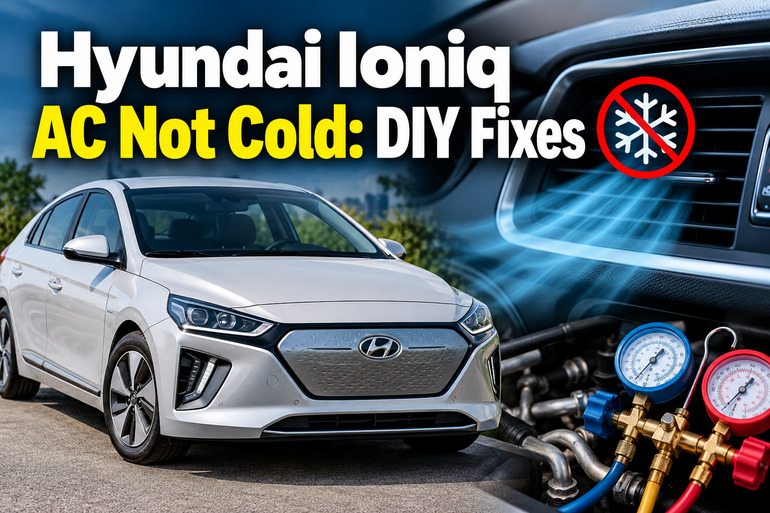
Why Your Hyundai Ioniq AC Is Not Cold
Your Hyundai Ioniq uses a refrigerant based air conditioning system to remove heat from the cabin. The system circulates refrigerant through components that absorb heat from the interior and release it outside. When everything operates correctly, the vents should deliver noticeably cooler air after the system has had time to operate.
The original Hyundai Ioniq is available as a hybrid, plug in hybrid, and fully electric vehicle. Although their powertrains differ, all use electrically controlled climate systems. The compressor and other components may vary by model, production year, and market, so the correct diagnostic procedure depends on your specific vehicle.
The symptoms can help narrow down the cause. Weak airflow may point to a clogged cabin air filter or a blower problem. Strong airflow that remains warm may indicate low refrigerant, a compressor fault, or a problem with refrigerant circulation. Air that changes temperature unpredictably can also indicate a faulty temperature control component.
Pay attention to when the problem occurs. An AC system that cools while driving but becomes warm when the vehicle stops may have a cooling fan or heat rejection problem. If the air remains warm under every condition, refrigerant levels, compressor operation, and electronic controls deserve closer attention.
Hyundai Ioniq AC Not Cold: Likely Causes
Several faults can produce similar symptoms, so warm air alone doesn’t identify the defective component. The following are five common possibilities to consider before arranging a repair.
1. Low Refrigerant or a Refrigerant Leak
Refrigerant carries heat out of the cabin as it circulates through the air conditioning system. When the refrigerant charge becomes too low, the system may struggle to absorb enough heat to cool the interior effectively.
Refrigerant doesn’t normally get consumed during routine operation. A reduced charge generally points to a leak or previous servicing that left the system undercharged. Leaks can occur at seals, hose connections, service ports, or other parts of the refrigerant circuit.
You may notice that the AC initially produces slightly cool air before becoming warm, or that cooling gradually deteriorates over several weeks. However, these symptoms don’t prove that refrigerant is low. An electronic control fault or compressor problem can produce similar results, so proper pressure and leak testing are necessary.
2. A Dirty Cabin Air Filter
The cabin air filter traps dust, pollen, leaves, and other airborne particles before they enter the passenger compartment. In the original Hyundai Ioniq, this filter is located behind the glove box, although access procedures can differ by model year. A clogged filter restricts airflow through the ventilation system.
When airflow is restricted, the vents may produce a weak stream of air even at a high fan setting. You might also notice that the AC takes longer to make the cabin comfortable or that the windows take longer to clear when using the appropriate defogging settings.
A dirty filter usually affects the volume of air coming from the vents rather than directly causing refrigerant to become ineffective. Replacing it may restore normal airflow, but it won’t correct a separate refrigerant or compressor fault.
3. A Faulty AC Compressor or Its Electrical Controls
The compressor circulates refrigerant through the air conditioning system. If it fails to operate correctly, the system cannot remove heat from the cabin as intended.
Hyundai Ioniq hybrid and electric models use electrically driven compressor technology. These systems require suitable electrical controls and compressor lubrication, so their servicing differs from that of some conventional gasoline vehicles. Using the wrong compressor oil in a hybrid system can damage the compressor and create safety concerns.
A compressor related problem may cause consistently warm air, intermittent cooling, or an air conditioning warning. A problem with its power supply, wiring, control module, or associated sensors can produce similar symptoms. The compressor itself shouldn’t be condemned without diagnostic testing.
4. A Blocked Condenser or Faulty Cooling Fan
The condenser releases heat from the refrigerant to the outside air. It sits near the front of the vehicle, where airflow can pass through it. If dirt, leaves, insects, or other debris obstruct the condenser, its ability to release heat may decrease.
A damaged cooling fan can produce similar symptoms because the condenser needs sufficient airflow, especially when the vehicle is stationary or moving slowly. This is one possible explanation when the AC cools reasonably well on the road but becomes noticeably warmer in traffic.
The symptoms aren’t conclusive on their own. Low refrigerant, a weak compressor, or a control issue can also cause poor cooling in these conditions. An automotive technician can distinguish between these faults by examining system pressures, fan operation, and electronic diagnostic information.
5. A Faulty Temperature Control or Air Mixing Component
Your Ioniq’s climate control system directs air through different passages to deliver the requested temperature. Depending on the model, electronically controlled doors and actuators help regulate airflow and temperature.
A faulty actuator, damaged door mechanism, temperature sensor, or control circuit can prevent the system from delivering the correct air temperature. The AC may appear to be operating normally while warm air continues to enter the airflow reaching the vents.
One useful clue is inconsistent temperature control. For example, the air might remain warm even with the temperature set to its lowest setting, or the temperature may change unexpectedly when you adjust the controls. These observations can help a technician identify a control issue, although electronic scanning and functional tests may still be necessary.
Hyundai Ioniq AC Not Cold: DIY Fixes
Start with the simplest checks before considering expensive component repairs. The following steps can help resolve settings or airflow problems and provide useful diagnostic information if the AC still fails to cool.
1. Check the AC Settings and Vehicle Operating State
Incorrect climate settings can make a functioning air conditioner appear ineffective. Begin by parking safely and checking the climate control panel.
Follow these steps.
-
Start the vehicle or place it in its normal ready to drive state according to the owner’s manual. On a hybrid or electric Ioniq, accessory mode may not provide the same climate control operation as the ready state.
-
Turn the AC function on and set the temperature to its lowest setting.
-
Select a medium or high fan speed so you can assess the airflow.
-
Select recirculation to reduce the amount of hot outside air entering the cabin, where appropriate.
-
Close the windows and allow the system a few minutes to cool the interior.
Check whether the air becomes colder as the system operates. If it does, the controls or previous settings may have contributed to the problem. If the vents continue delivering warm air despite the correct settings, a mechanical, refrigerant, or electrical fault is more likely.
Avoid testing the system while driving if you need to concentrate on adjusting multiple controls. Make adjustments while parked, and follow the instructions in your particular owner’s manual.
2. Inspect and Replace the Cabin Air Filter
A clogged cabin filter is one of the easier AC related problems to address. If the airflow is weak, inspect the filter before assuming that the compressor has failed.
Consult your owner’s manual to identify the correct filter and removal procedure. On many original Ioniq models, access is through the glove box. Depending on the version, you may need to lower the glove box or remove a filter cover.
Remove the filter only as directed and examine it for heavy dust, leaves, or other accumulated debris. Replace it if it is dirty or if the manufacturer specifies that replacement is due. Use the correct filter size and make sure its airflow direction matches the markings on the filter housing.
After fitting the new filter, reinstall the cover securely and test the fan at several speeds. You should notice improved airflow if the old filter was restricting it. If the airflow remains weak, the blower motor, its electrical supply, or an obstruction elsewhere in the ventilation system may need professional attention.
3. Check for Visible Debris Near the Condenser
Restricted airflow across the condenser can reduce cooling performance, particularly when the vehicle is moving slowly. You can perform a basic external inspection without opening the refrigerant system.
Park the vehicle on a safe, level surface, switch it off, and allow hot components to cool. Look through the front grille for visible leaves, plastic bags, or accumulated dirt that could obstruct airflow. Do not reach into the grille or touch the cooling fans because electrically controlled fans can present a hazard.
If loose debris is accessible from the outside, remove it gently without damaging the grille or the delicate condenser fins. Avoid forceful water jets, which can bend the fins and make the obstruction worse.
Retest the AC after clearing any obvious blockage. If cooling remains poor, or if the condenser appears damaged or heavily clogged, arrange a professional inspection. Internal blockage, refrigerant problems, and fan faults cannot be reliably diagnosed through a visual check alone.
4. Compare the Airflow and Temperature at Different Settings
Observing how the system behaves can help narrow down the fault before you pay for diagnostic work. Pay attention to both the strength of the airflow and its temperature.
With the vehicle in the appropriate operating state, set the AC to its lowest temperature and try different fan speeds. Check whether the air remains warm, becomes cooler gradually, or changes temperature unexpectedly. Also note whether the airflow is strong at the higher settings or remains weak even when the fan is turned up.
Strong airflow that remains warm suggests that the refrigeration system or its controls may not be cooling effectively. Weak airflow points more strongly toward a filter, blower, or air passage problem. If different vent settings produce unexpected temperature changes, an air mixing actuator or control fault may be involved.
These observations are clues rather than confirmed diagnoses. Avoid removing dashboard panels or probing electrical connectors in an attempt to locate a faulty actuator. A technician can test the relevant actuators and sensors without risking damage to the climate control system.
5. Check for Obvious Warning Signs and Arrange the Correct Test
Before seeking a repair, note any warning lights, unusual noises, unusual smells, or changes in cooling performance. This information helps a technician decide which tests to perform first.
Look for signs such as cooling that comes and goes, a sudden loss of cooling, or an unusual noise that begins when the AC is switched on. You can also note whether the problem appears mainly in traffic or remains constant while driving. Don’t touch refrigerant pipes or attempt to identify a leak by opening fittings.
Avoid purchasing a refrigerant recharge can as a first response. Refrigerant types and specified charge quantities vary between vehicles, and an incorrect charge can reduce performance or damage components. Hybrid and electric vehicles may require specialized equipment and procedures for refrigerant service. Some refrigerants are also mildly flammable.
If you notice smoke, a burning electrical smell, or other signs of an electrical fault, stop using the affected system and arrange qualified assistance. Do not continue operating the AC in an attempt to see whether the problem disappears.
6. Contact a Qualified Automotive AC Technician
Professional diagnosis is necessary when the simple checks above don’t restore cooling. It is also the appropriate next step when the compressor appears not to operate, cooling is intermittent, a suspected leak is present, or the vehicle displays a relevant warning.
Ask the technician to identify the refrigerant type from the vehicle’s under hood label, test the system for leaks, and measure operating pressures using the correct service equipment. Depending on the findings, the technician may also need to check cooling fan operation, electrical supplies, compressor controls, pressure sensors, and climate control fault codes.
Because the Ioniq’s electrically driven compressor operates within a system that may involve high voltage components, avoid disconnecting high voltage cables or attempting compressor replacement yourself. The refrigerant circuit must also be recovered and serviced correctly. A qualified technician can determine whether the repair requires a leak fix, refrigerant service, an electrical repair, a compressor replacement, or a climate control component.
Wrap-Up
A Hyundai Ioniq AC that isn’t cold can have a simple cause, such as incorrect climate settings or a restricted cabin filter, or it may have a refrigerant, compressor, condenser, or electrical control fault. Checking the settings, inspecting the filter, and looking for visible airflow obstructions are sensible first steps.
If the AC still blows warm air, avoid replacing parts or adding refrigerant without a confirmed diagnosis. Record the symptoms and have the system tested by a qualified automotive AC technician. Early diagnosis can help prevent unnecessary repairs and restore comfortable cabin temperatures while protecting the vehicle’s air conditioning components.