
When the central locking system in your Hyundai i20 stops working, locking or unlocking the car can become inconvenient, especially when you need to secure every door before leaving. Sometimes the remote key stops responding, while in other cases, one door refuses to lock even though the others work normally.
The cause could be a weak key fob battery, a blown fuse, a faulty door lock actuator, or an electrical problem. Identifying the symptoms first will help you choose the right repair and avoid replacing parts that are still working.
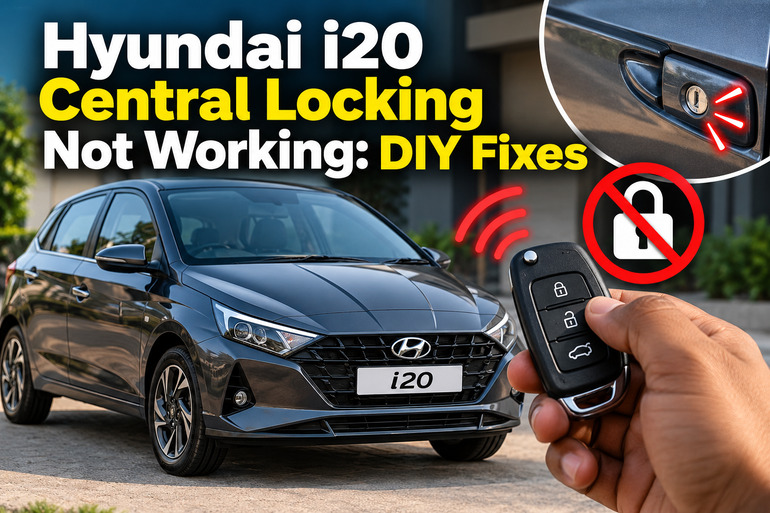
What Does It Mean When Your Hyundai i20 Central Locking Stops Working?
The central locking system allows you to lock or unlock multiple doors using the remote key, a keyless entry button, or an interior door lock switch, depending on your i20’s equipment. The system uses electrical signals and door lock actuators to operate the locking mechanisms.
When everything works correctly, the doors respond together to a locking command. If a fault develops, the system may respond inconsistently or stop working completely. You might hear a clicking sound inside a door without seeing the lock move, or the remote may produce no response from the vehicle.
The exact symptoms provide useful clues. If none of the doors responds to the remote but the interior lock switch works, the remote key or its battery could be responsible. If three doors lock but one remains open, the problem is more likely to involve that door’s actuator, latch, or wiring.
Your Hyundai i20’s model year and equipment also matter. Older versions may have different locking controls and electrical components from newer models. Features such as automatic locking, smart key access, and deadlocking may vary by market and trim. Consult the owner’s manual for your particular vehicle to confirm how its locking system operates.
Avoid assuming the problem is electrical before checking that the doors and tailgate are fully closed. Certain versions will prevent locking when an opening is detected or when other operating conditions are not satisfied. Establishing whether the problem affects every door or only one will make diagnosis much easier.
Hyundai i20 Central Locking Not Working: Likely Causes
Several faults can produce similar locking symptoms, so the pattern of failure matters. The following are five likely causes, starting with problems you can often identify without dismantling the vehicle.
1. A Weak or Damaged Remote Key Battery
A depleted remote key battery is one of the first things to investigate when your Hyundai i20 stops responding to the lock and unlock buttons. The battery supplies the power needed for the remote to transmit its command to the vehicle.
As the battery weakens, the remote may work intermittently, respond only when you stand close to the car, or stop working altogether. A damaged button or internal circuit can produce similar symptoms, even when the battery is new.
Some Hyundai i20 remote keys use a CR2032 battery, but the correct type depends on the key design and model year. Check the battery markings and your owner’s manual before purchasing a replacement.
Radio interference can also prevent the remote from communicating properly. Nearby radio transmitters, other objects blocking the signal, and a mobile phone held close to the key may affect operation. These possibilities are worth checking before assuming that the vehicle’s central locking hardware has failed.
2. A Blown Central Locking Fuse
Fuses protect electrical circuits against excessive current. If a fault causes too much current to flow through the central locking circuit, the relevant fuse may blow and interrupt the power supply.
A blown fuse becomes a possibility when several doors stop responding at the same time, particularly if the interior lock switch and remote both fail. However, a complete system failure can also originate from a faulty relay, wiring fault, or body control module.
Some Hyundai i20 versions have a fuse labelled DOOR LOCK that supplies parts of the locking system. The fuse location, rating, and circuit assignment vary according to the vehicle’s generation and equipment. Consult the fuse diagram for your exact model instead of relying on a chart from a different version.
If a fuse has blown, identifying the underlying cause matters just as much as replacing it. A fuse that blows repeatedly indicates a continuing electrical problem that needs proper diagnosis.
3. A Faulty Door Lock Actuator
The door lock actuator is the electrically operated part that moves a door’s locking mechanism. Depending on the design, it may be incorporated into the door latch assembly.
Actuators contain moving parts and, in many designs, a small electric motor. With age and use, the motor or internal mechanism can wear out, preventing the lock from moving fully in response to a command.
A common symptom is one door failing while the other doors continue to lock and unlock normally. You may hear a faint click or buzzing from the affected door, or the lock may remain completely silent. Neither symptom confirms actuator failure on its own, because a disconnected wire, damaged connector, or jammed latch can create similar behavior.
The distinction matters when choosing a repair. Replacing an actuator without testing the electrical supply and mechanical latch can leave the original fault unresolved. Proper diagnosis should establish whether the actuator receives the correct electrical signal and can move the locking mechanism.
4. Damaged Wiring, Switches, or Central Control Electronics
Central locking depends on electrical connections between the remote receiver, switches, control electronics, and individual door locks. On many i20 versions, the body control module manages several of these functions.
Wiring can become damaged where a door harness bends repeatedly during opening and closing. Corrosion, loose connectors, or previous repairs can also interrupt the signals or power reaching the lock actuator.
You may notice that the same door fails intermittently, that the locks behave differently depending on door position, or that other electrical features associated with the door also stop working. These clues can point to a wiring or connector problem, although they are not conclusive.
A faulty switch or control module is another possibility. When several components behave unpredictably, a technician may need to examine stored fault codes and live electrical data to identify the defective part. Replacing control electronics based on symptoms alone can be costly and ineffective.
5. A Sticking Door Latch or Locking Mechanism
Sometimes the central locking system receives the command correctly, but the door mechanism cannot complete the movement. Dirt, corrosion, worn internal parts, or damage following a door impact can cause the latch or lock linkage to stick.
Cold or wet conditions may also affect door locks, particularly when moisture freezes around the mechanism. This can prevent a door from locking or unlocking even when the electrical system is functioning.
Look for signs such as a stiff manual lock, a door that requires unusual force to close, or a lock that moves only part of the way. If the same door is difficult to operate manually and electrically, a mechanical problem becomes more plausible.
Do not force a key, lock button, or door handle that feels jammed. Excessive force can damage the key, linkage, or latch and turn a minor problem into a more expensive repair.
Hyundai i20 Central Locking Not Working: How to Fix
The best repair depends on which part of the system has failed. Start with straightforward checks and work through the following methods before considering repairs that require door disassembly or specialist electrical testing.
1. Replace the Remote Key Battery
If your Hyundai i20 does not respond to the remote, try a fresh battery of the correct type. This is particularly worthwhile when the remote has become unreliable or works only when held very close to the vehicle.
Check your owner’s manual for the battery specification and replacement procedure. For compatible remote keys, the process generally involves gently opening the key cover, removing the old battery, fitting the new one in the correct orientation, and reinstalling the cover. Other key designs may require different steps.
Handle the battery and key casing carefully. Avoid bending the contacts or damaging the small circuit board inside the remote. Keep button batteries away from children because swallowing one can cause severe internal injuries.
Once the new battery is fitted, close the cover and test both the lock and unlock buttons while standing near the car. Check the doors themselves rather than relying entirely on a sound or flashing light.
If the remote still fails, try a spare key if one is available. A working spare points towards a problem with the original remote, although further testing may still be necessary.
2. Check the Doors and Test the Interior Lock Switch
Before investigating electrical components, ensure that all doors and the tailgate are fully closed. Check for an obstruction around the door edges, luggage area, or latch that could prevent proper closure.
Next, test the central locking switch inside the vehicle if your model has one. With the vehicle safely parked, close the doors and try the lock and unlock commands.
Pay attention to the pattern of response. If the interior switch operates every door but the remote does not, concentrate first on the remote, its battery, and possible signal interference. If the interior switch and remote both fail to operate any doors, a common power supply, fuse, relay, switch, or control system fault becomes more likely.
If only one door refuses to move, compare its manual locking operation with that of the other doors. Stop if it feels unusually stiff or jammed. A mechanical problem should be addressed before repeated electrical commands place more strain on the mechanism.
You can use the mechanical key to secure or unlock the appropriate door where your i20 provides that facility. However, a mechanical key opening the driver’s door does not necessarily mean that all other doors will operate, since this depends on the vehicle’s equipment and locking system.
3. Inspect the Central Locking Fuse
A fuse inspection can help determine whether the central locking circuit has lost power. Consult the fuse chart in your specific Hyundai i20 owner’s manual before touching anything.
On versions equipped with a driver-side interior fuse panel, that panel may contain the relevant door lock fuse. Other circuits may be located elsewhere, so use the documented fuse location and label rather than guessing from the layout of a different model year.
To inspect the fuse safely:
-
Park the vehicle, switch off the ignition, and turn off the electrical accessories.
-
Locate the appropriate fuse panel and identify the door lock circuit using the correct fuse chart.
-
Follow the manual’s instructions to remove the fuse, using a suitable fuse puller where appropriate.
-
Inspect the fuse element for a break, or use a suitable automotive fuse tester if you know how to use one safely.
-
If the fuse is blown, replace it only with a fuse of the same specified rating.
Never install a fuse with a higher rating or substitute wire or metal foil for a proper fuse. Such workarounds can cause wiring damage or fire.
After replacement, test the central locking system. If the new fuse blows immediately or fails again soon afterwards, stop replacing it and arrange an electrical inspection. The underlying circuit may have a short circuit or a faulty component.
4. Check for Interference, Cold Weather, and Mechanical Resistance
If the remote works inconsistently, test it in a different location and move your mobile phone away from the key. Try operating the remote close to the vehicle without pressing its buttons repeatedly.
A weak battery, excessive operating distance, radio interference, or extreme cold can prevent normal remote key operation. The effective operating distance varies with the remote and surrounding conditions.
If the problem appears in cold or wet weather, check for visible ice or moisture around the door edges and lock area. Allow frozen parts to thaw naturally in a safe location. Avoid boiling water, open flames, and aggressive heating methods that could damage paint, seals, or electrical components.
For a sticking mechanism, limit yourself to visible checks and normal manual operation without forcing the lock. Do not spray an arbitrary lubricant into the actuator or electrical connectors. If the mechanism remains stiff after the visible obstruction or freezing has cleared, a repairer should inspect the latch.
5. Check the Vehicle Battery and Compare the Symptoms
The vehicle’s 12-volt battery supplies power to the electrical systems on a conventional i20 and supports the control electronics responsible for functions such as door locking. A weak vehicle battery or a poor battery connection can cause electrical features to malfunction.
Look for other symptoms, including unusually slow engine cranking, dim interior lights, or electrical equipment behaving unpredictably. These signs do not automatically establish that the battery is faulty, but they provide useful context when the central locking system has stopped working.
A basic visual check for an obviously loose or corroded battery connection may be useful if it can be performed safely. Do not touch exposed terminals with metal tools, and do not disconnect the battery merely to reset the locking system. Battery disconnection can affect other electronics and may require procedures specific to your vehicle.
Compare the results of your remote, interior switch, manual key, and spare key tests. If the symptoms change depending on the control used, record those differences. They can help identify whether the fault lies in the remote, a particular door, or a shared electrical system.
6. Contact a Qualified Automotive Technician
If the basic checks do not restore operation, arrange an inspection by a qualified automotive technician familiar with Hyundai electrical systems. This is particularly important if several doors have stopped responding, the fuse blows repeatedly, or the locks behave unpredictably.
A technician can test the actuator supply and ground connections, inspect door harnesses, assess the latch assemblies, and scan the relevant control module for fault codes. These checks help distinguish a defective actuator from a wiring problem or faulty control electronics.
Avoid removing door trim or probing wiring without the appropriate tools and knowledge. Door assemblies may contain safety-related components, and careless electrical testing can damage the vehicle’s electronics.
Provide the technician with your model year, the doors affected, whether the interior switch works, and whether a spare remote produces the same result. This information can help narrow the diagnosis and reduce unnecessary parts replacement.
Wrap-Up
A Hyundai i20 central locking fault can originate in the remote key, fuse, actuator, wiring, control electronics, or door mechanism. The most useful first step is to establish whether the problem affects every door or only one, then compare the remote with the interior controls and mechanical key.
Begin with the checks that are safe and straightforward, particularly the remote battery and the correct fuse. Avoid forcing a jammed lock or repeatedly replacing a blown fuse. If basic troubleshooting does not resolve the fault, professional testing can identify the defective component and help restore reliable locking without unnecessary repairs.