
A Hyundai Ioniq horn that fails to sound can make driving less safe, particularly when you need to warn another driver or pedestrian of an immediate hazard. The fault may come from a blown fuse, a defective horn unit, a faulty relay, or a problem with the steering wheel controls. Identifying the symptoms before replacing parts can save you time and money. Several simple checks can help narrow down the cause, although some electrical faults require professional diagnosis.
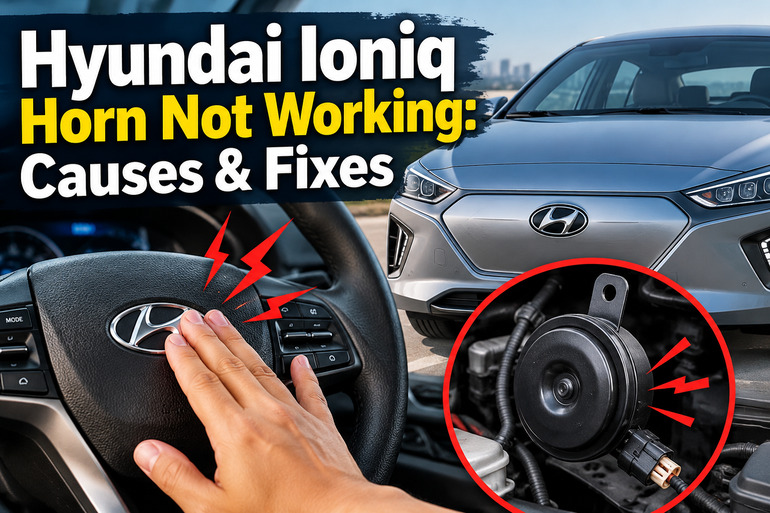
What It Means When Your Hyundai Ioniq Horn Stops Working
The horn on your Hyundai Ioniq is an electrical device powered by the vehicle’s 12-volt electrical system. When you press the horn pad on the steering wheel, an electrical control circuit activates the horn, producing the sound needed to alert other road users.
Depending on the Ioniq model year and equipment, the circuit may use a fuse, a relay, a horn switch, wiring, and electronic control components. The exact arrangement can vary, so the correct wiring diagram and fuse information for your vehicle are important when diagnosing the fault.
The symptoms provide useful clues. A completely silent horn may indicate a blown fuse, a failed horn unit, or an interruption in the control circuit. A weak, muffled, or intermittent sound can point to a failing horn, a poor electrical connection, or a problem that occurs only under certain conditions.
If the horn stops working entirely, you lose an important safety feature. Avoid relying on it until the fault has been repaired. If the horn sounds continuously without being pressed, stop somewhere safe and arrange prompt assistance because the problem may involve a stuck switch, relay, or electrical control fault.
Hyundai Ioniq Horn Not Working: Likely Causes
Several faults can prevent your Ioniq’s horn from sounding, and the symptoms often help distinguish between them. Start with the simplest possibilities before considering steering wheel components or more complicated electrical repairs.
1. A Blown Horn Fuse
The horn fuse protects its electrical circuit against excessive current. If the circuit draws too much current, the fuse element melts and interrupts the power supply, leaving the horn silent.
A fuse may blow because of a short circuit, damaged wiring, a faulty horn, or another electrical problem. If your horn stopped working suddenly, especially after an electrical repair or a period of intermittent operation, checking the fuse is a sensible first step.
Your Ioniq’s fuse box contains several fuses serving different systems. Consult the owner’s manual for your exact model year and powertrain to identify the correct fuse and its rating. Don’t assume that the fuse position or amperage is identical across every Ioniq model.
2. A Faulty Horn Unit
The horn itself may have failed even when its electrical supply is working correctly. The conventional Ioniq produced between 2017 and 2022 uses low and high pitch horn units, according to its service information. Depending on the vehicle’s configuration, a fault affecting one unit may leave the other producing a weaker or different sound.
Moisture, corrosion, age, and internal electrical failure can prevent a horn from vibrating properly. Because the horn is mounted at the front of the vehicle, its connectors and surrounding components may be exposed to water, dirt, and road debris.
Listen carefully when pressing the horn pad. A faint buzz, an unusual rasp, or a noticeably weaker sound can suggest a problem with a horn unit or its connection. Complete silence can also result from a failed horn, although a fuse or control circuit fault may produce the same symptom.
3. A Defective Horn Relay or Electronic Control Circuit
The horn relay acts as an electrically controlled switch that allows the horn circuit to operate when you press the steering wheel control. If the relay fails, the horn may stop working even though the horn unit itself is in good condition.
On the conventional 2017 to 2022 Hyundai Ioniq, the service information identifies the horn relay as part of the engine compartment printed circuit board, or PCB, block. The relay is not separately replaceable on that configuration. If testing confirms an internal relay failure, the specified repair may involve replacing the PCB block rather than installing a standalone relay.
Other Ioniq generations and models may use different arrangements. A clicking sound does not conclusively prove that a relay is working, and the absence of a click doesn’t automatically confirm relay failure. Proper electrical testing is needed to identify the defective component.
4. A Faulty Steering Wheel Horn Switch or Clock Spring
The horn pad on the steering wheel contains the control used to activate the horn. If the switch contacts fail or the associated wiring develops a fault, pressing the horn symbol may produce no sound.
Another possible cause is a damaged clock spring. This component maintains electrical connections between the stationary steering column and controls on the rotating steering wheel. Over time, internal connections can wear or break.
A clock spring fault becomes more likely if the horn stops working alongside steering wheel buttons, such as audio or phone controls. An airbag warning light may also appear, although these symptoms can have other causes.
Do not remove the steering wheel or attempt to repair the clock spring yourself. The assembly is associated with the driver’s airbag system, which can cause serious injury if handled incorrectly. A qualified technician should diagnose and repair faults in this area.
5. Damaged Wiring or Corroded Electrical Connectors
The horn depends on an uninterrupted electrical path between the power supply, control circuit, and horn unit. A loose connector, broken wire, corroded terminal, or poor electrical connection can interrupt that path.
Front-end damage, previous repairs, moisture intrusion, and deteriorating connectors can all contribute to electrical problems. The symptoms may be intermittent, with the horn working occasionally before becoming completely silent.
If the horn stopped working after a minor collision or front bumper repair, wiring or connector damage deserves particular attention. A technician can inspect the relevant connections and test the circuit to determine whether power is reaching the horn when the control is activated.
Hyundai Ioniq Horn Not Working: DIY Fixes
The right repair depends on the cause of the fault. Begin with safe checks that don’t require removing steering wheel components or disturbing high-voltage equipment.
1. Press the Horn Pad Correctly
Before inspecting electrical components, make sure you’re pressing the correct area of the steering wheel. Hyundai specifies that the horn operates when you press the area marked with the horn symbol.
Park the vehicle somewhere safe and switch it to the appropriate operating state specified in your owner’s manual. Press the marked area firmly but gently. If necessary, try the other marked portions of the horn pad, where applicable.
Avoid striking the steering wheel with your fist or pressing the horn with a sharp object. Hyundai specifically warns against these actions because they can damage the steering wheel assembly.
If the horn works only when you press one particular spot, the horn switch or its associated components may be faulty. That observation is useful for diagnosis, but it doesn’t establish which part needs replacement.
2. Inspect and Replace the Horn Fuse
A blown fuse is one of the simplest possible causes to investigate. You can check it yourself if the fuse box is accessible and the owner’s manual provides clear instructions.
Follow these steps.
-
Park the vehicle safely, select Park, and switch the vehicle off.
-
Locate the fuse box identified in the owner’s manual.
-
Find the fuse associated with the horn using the correct fuse diagram.
-
Follow the manufacturer’s instructions for safely removing and inspecting the fuse.
-
If the fuse is blown, replace it with a fuse of exactly the same specified rating.
-
Restore the vehicle to the required operating state and test the horn.
A visibly broken or melted fuse element indicates that the fuse has blown. If the replacement restores normal operation and the fuse remains intact, the horn may work again.
However, a blown fuse can be a symptom of an underlying electrical fault. If the replacement fuse blows again, stop replacing fuses and have the circuit inspected. Never install a higher-rated fuse, bridge the fuse terminals, or substitute wire or foil for a proper fuse.
3. Check the Vehicle’s 12-Volt Battery
A weak 12-volt battery can cause electrical problems in a Hyundai Ioniq, particularly if other accessories are also behaving unusually. This battery supplies power to many conventional electrical systems, including control electronics that operate when the vehicle is off or being started.
Look for other symptoms, such as slow or unsuccessful vehicle startup, unusual dashboard warnings, or several electrical features failing around the same time. These signs can support the possibility of a battery or power supply problem, but they don’t prove that the battery is responsible for the horn fault.
If you have a suitable multimeter and know how to use it safely, a battery voltage check can help assess its condition. A proper battery test may still be needed because voltage alone doesn’t establish the battery’s ability to supply current under load.
For hybrid and electric Ioniq models, follow the model-specific battery procedures. Do not disconnect orange high-voltage cables or attempt repairs involving high-voltage components. If the battery is discharged or the electrical system displays multiple warnings, seek qualified assistance.
4. Inspect Accessible Horn Connections for Visible Damage
If the horn is accessible without removing major components, a visual inspection may reveal a loose connector or obvious damage. On the conventional Ioniq, the horn units are located at the front of the vehicle, behind the front bumper area.
With the vehicle switched off, look for visible signs of damaged wiring, a connector that appears displaced, or corrosion around accessible terminals. Don’t pull on wires, bridge electrical terminals, or probe connectors with metal tools.
Avoid spraying cleaning products into electrical connectors without knowing the correct procedure. Some connectors require specific cleaning products and handling methods, and moisture or residue can create additional problems.
If reaching the horn requires removing the bumper cover, leave the work to a technician unless you have the correct repair instructions and tools. If a connector appears damaged or heavily corroded, have it repaired properly rather than securing it with tape or making an improvised electrical connection.
5. Check for Related Steering Wheel or Electrical Symptoms
The other symptoms occurring alongside the horn failure can help narrow down the cause without dismantling anything.
Check whether the steering wheel audio controls and phone buttons operate normally. Look at the dashboard for an airbag warning light or other electrical warnings, and note whether the horn failed at the same time as another system.
If several steering wheel functions have stopped working together, a clock spring or related steering wheel connection may need inspection. If the horn is the only affected feature, the horn unit, fuse, relay, wiring, or horn switch may be more relevant.
This check is particularly useful because it gives a technician a clearer starting point. Record when the fault started, whether the horn worked intermittently, and whether any repairs or battery problems occurred beforehand.
Do not remove the steering wheel, unplug airbag connectors, or attempt to reset an airbag warning light by disconnecting components. Those tasks require the correct safety procedures and diagnostic equipment.
6. Have the Horn Circuit Tested
If the basic checks don’t identify the fault, electrical testing can determine where the circuit is failing. A qualified technician can check the fuse, power supply, ground connection, horn output, control switch, and relevant wiring.
A technician may use a multimeter, suitable circuit-testing equipment, or a Hyundai-compatible diagnostic tool, depending on the model and suspected fault. The results help distinguish a failed horn unit from a wiring problem or an internal electronic control fault.
On the conventional 2017 to 2022 Ioniq, the integrated relay arrangement means that diagnosis should follow the specified service procedure rather than assuming a separate relay can simply be swapped out. Other model years may require a different approach.
Final Solution: Contact a Qualified Automotive Technician
Professional diagnosis is necessary if the horn remains silent after the basic checks, a replacement fuse blows repeatedly, the horn sounds continuously, or other steering wheel and airbag-related symptoms appear.
A technician can identify the defective component and carry out the correct repair without damaging the vehicle’s electrical systems. If the horn sounds continuously, stop in a safe location and arrange assistance rather than continuing to drive with the fault.
Because the horn is a safety feature, avoid relying on the vehicle until it has been restored to proper working order. If you must take the car to a repair facility, arrange appropriate transport when necessary.
Wrap-Up
A Hyundai Ioniq horn that stops working may have a simple electrical fault, such as a blown fuse, or a more involved problem with the horn unit, wiring, relay circuit, or steering wheel controls. Checking the horn pad, inspecting the correct fuse, and looking for related electrical symptoms can help you narrow down the possibilities.
The most effective repair begins with an accurate diagnosis. Use the owner’s manual for your exact Ioniq model, avoid unsafe electrical work, and seek professional assistance if the fault persists. Restoring the horn promptly helps ensure that you can alert other road users when necessary.