
A radiator fan that refuses to turn on can leave your Hyundai Accent struggling with rising engine temperatures, especially in traffic or while the car is parked with the engine running. The fault may come from a blown fuse, a damaged fan motor, a faulty relay, or an electrical control problem. Identifying the actual cause before replacing parts can save you money and prevent serious engine damage. Several basic checks can help you narrow down the fault safely.
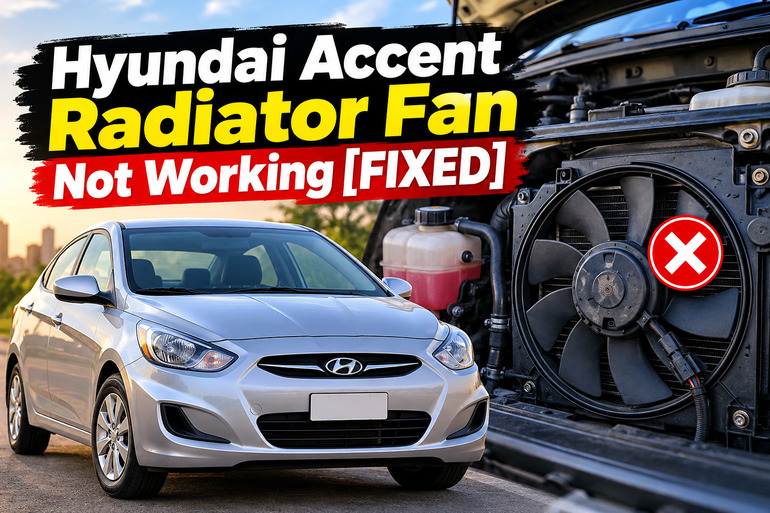
Understanding Why Your Hyundai Accent Radiator Fan Is Not Working
The radiator fan helps keep your engine at a safe operating temperature by drawing air through the radiator. As hot coolant flows through the radiator, the passing air removes heat before the coolant returns to the engine. When your car is moving at a reasonable speed, natural airflow can provide substantial cooling. During slow traffic, idling, or stationary operation, the electric fan becomes particularly important.
Your Hyundai Accent’s cooling fan is controlled by an electrical system that may include a coolant temperature sensor, relays, fuses, wiring, and an engine control module. Depending on the model year and configuration, the car may use different fan arrangements and control strategies. The fan generally starts when cooling is required, so it won’t necessarily run continuously whenever the engine is on. Hyundai’s service information also warns that the fan may remain inactive in cold ambient conditions.
When the fan fails to operate under conditions that require cooling, the engine temperature can rise above its normal range. You may notice the temperature gauge climbing while stationary, a warning message on the dashboard, steam from under the hood, or air conditioning that becomes less effective when the car is idling. These symptoms can also result from low coolant, a thermostat problem, a blocked radiator, or another cooling system fault, so the fan should not be blamed without further checks.
Safety comes first. If the temperature gauge enters the hot zone, a warning indicates overheating, or steam appears under the hood, pull over as soon as it is safe and switch off the engine when required. Do not continue driving to test the fan. Never open a hot radiator cap because pressurized coolant can cause severe burns. Keep your hands, clothing, and tools away from the fan, since it can start unexpectedly.
Hyundai Accent Radiator Fan Not Working [FIXED]: Likely Causes
Several faults can stop your Hyundai Accent’s radiator fan from operating correctly. The following causes are worth investigating, starting with common electrical problems and progressing to components that may require professional diagnosis.
1. A Blown Radiator Fan Fuse
The radiator fan draws electrical power through a protected circuit. A fuse is designed to interrupt that circuit if excessive current flows, helping protect the wiring and other electrical components from damage.
If the fuse supplying the radiator fan blows, the motor may stop working completely. You might notice that the engine temperature rises during traffic, even though the car behaves normally while moving. Depending on the wiring arrangement, a separate fuse may protect the condenser fan or other parts of the cooling system.
A fuse can fail because it has aged or sustained an electrical fault, but repeated fuse failure often points to a deeper problem. A damaged fan motor, a short circuit, or damaged wiring can cause excessive current to flow. Replacing the fuse without addressing the underlying fault may simply cause the replacement to blow again.
2. A Faulty Radiator Fan Relay
The radiator fan relay acts as an electrically controlled switch. It allows the vehicle’s control system to switch power to the fan when operating conditions call for additional cooling.
A relay with burnt contacts, a failed internal coil, or an intermittent connection may prevent electricity from reaching the fan motor. In some cases, the fan works occasionally before stopping again, making the problem difficult to identify from the symptoms alone.
A faulty relay can produce symptoms similar to those of a blown fuse or damaged motor. However, the presence of a working fuse does not prove that the relay is functioning. Proper testing should establish whether the relay receives the required control signal and supplies power to the fan when commanded.
3. A Failed Radiator Fan Motor
The fan motor physically turns the blades that pull air through the radiator. Over time, internal electrical wear, damaged motor windings, corrosion, or bearing problems can prevent it from operating.
A completely failed motor may leave the fan stationary whenever cooling is needed. A motor that is beginning to fail might operate intermittently, produce unusual noise, or struggle to turn. Visible damage to the fan assembly can also interfere with normal operation.
Before replacing the motor, the electrical supply and ground connection should be tested. A fan that receives the correct power and ground but fails to turn is more likely to have a motor or mechanical problem. If the motor works during a controlled test but not in normal operation, the cause may lie elsewhere in the control circuit.
4. Damaged Wiring, Connectors, or Ground Connections
Even a working fan motor cannot operate properly if its electrical connections are damaged. The wiring between the fuse box, relay, motor, and control system can develop loose connections, corrosion, broken conductors, or damaged insulation.
Heat, moisture, previous repairs, and vibration can gradually affect electrical connections. A loose ground connection may restrict current flow, while a broken power wire can prevent electricity from reaching the motor altogether. Corrosion around the fan connector may also cause intermittent operation.
The symptoms may come and go, particularly if a damaged connection makes contact intermittently. You might also find cracked insulation, visible corrosion, or a connector that has worked loose. A visual inspection can reveal some problems, but wiring faults inside a harness often require electrical testing to locate accurately.
5. A Faulty Coolant Temperature Sensor or Fan Control System
Your Accent uses temperature information and other operating conditions to determine when the cooling fan should operate. On many models, the engine coolant temperature sensor sends information to the engine control module, which manages the fan through the appropriate control circuit.
If the sensor provides an inaccurate reading, the control module may not recognize that the engine requires additional cooling. Damaged sensor wiring or a poor connector can produce similar results. A fault in the control module, an integrated fan controller, or another part of the control circuit can also prevent the fan from receiving the correct command.
This type of problem is harder to distinguish from a failed motor or relay through visual inspection alone. A diagnostic scan can help determine whether the reported coolant temperature is plausible, whether relevant fault codes are stored, and whether the control system is commanding the fan to operate.
Hyundai Accent Radiator Fan Not Working [FIXED]: DIY Fixes
The right repair depends on which part of the cooling system has failed. Begin with safe observations and simple checks before considering component replacement or electrical testing.
1. Confirm Whether the Radiator Fan Should Be Running
First, determine whether the fan is genuinely failing or simply operating according to its normal control strategy. The fan may remain off while the engine is cool, and its operation can vary with ambient temperature, vehicle speed, air conditioning demand, and the particular Accent model.
Park the car on level ground, engage the parking brake, and observe the temperature gauge or available temperature warning information. If the engine is operating normally, check whether the fan starts under ordinary conditions when cooling is required. You may also try switching the air conditioning on and observing the fan from a safe distance, provided the engine is not overheating. This check is not conclusive because fan operation varies by model and operating conditions.
Keep your hands and tools away from the fan at all times. Do not leave the engine idling for an extended period just to force the fan to turn on. If the temperature begins rising abnormally or an overheating warning appears, switch off the engine and arrange further assistance.
2. Check the Coolant Level and Look for Leaks
A low coolant level can cause overheating even when the radiator fan is working correctly. A coolant leak may also accompany a fan fault, while an insufficient coolant supply can complicate temperature readings and make the cooling system less effective.
Allow the engine to become completely cool before checking the coolant reservoir. The level should fall within the markings specified in your owner’s manual. If it is low, inspect the area around the reservoir and visible hoses for wet patches, dried coolant residue, or other signs of leakage. Check the ground beneath the vehicle for signs of a leak as well.
Use the coolant specified for your Accent and follow the manufacturer’s filling instructions. Never remove a radiator cap while the engine is hot. If the coolant level falls repeatedly, a leak is visible, or the engine overheats after topping up, arrange a proper inspection rather than continuing to add coolant without finding the cause.
3. Inspect the Radiator Fan Fuse
A fuse inspection is one of the simplest checks you can perform at home. You will need the fuse layout in your owner’s manual and, if necessary, a fuse puller suitable for your vehicle.
Switch off the ignition and follow the manual’s instructions for accessing the relevant fuse box. Locate the fuse assigned to the radiator fan or cooling fan circuit. Fuse locations and ratings differ between Hyundai Accent model years, so use the diagram for your specific vehicle rather than relying on a generic online layout.
Remove and inspect the identified fuse according to the manual. A visibly broken internal element indicates that the fuse has blown, although not every faulty fuse shows obvious damage. If replacement is appropriate, use only the specified type and rating. Never install a higher-rated fuse or bridge the fuse terminals with wire or metal.
After replacing a blown fuse, observe whether the problem returns under normal operating conditions. If the replacement blows again, stop replacing fuses and have the circuit tested. Repeated failure can indicate a short circuit or a fan motor drawing excessive current.
4. Check the Radiator Fan Relay
The relay is another component worth checking when the fan receives no power. Its location and designation depend on the particular Accent, so consult the underhood fuse box diagram and owner’s manual before attempting any inspection.
With the ignition off, identify the relay associated with the cooling fan. Look for signs of visible damage around the relay and its socket. If the owner’s manual and relay markings confirm that another relay is identical and interchangeable, swapping the two may help identify a faulty relay. Do not assume that relays are interchangeable simply because they fit the same socket.
If the fan starts working after an approved relay swap, the removed relay becomes a suspect, but further testing may still be appropriate. If nothing changes, the problem could involve the fan motor, wiring, ground connection, temperature sensor, or control system. Avoid probing live terminals or bypassing relay contacts without the correct wiring diagram and electrical testing equipment.
5. Inspect the Fan Assembly and Its Visible Connections
With the engine switched off and cool, look through the engine compartment for obvious damage around the fan assembly and accessible wiring. Check for disconnected plugs, visibly corroded connectors, damaged insulation, or debris that may be obstructing the fan blades.
Do not reach into the fan housing to turn the blades by hand. The fan can start unexpectedly, and forcing the blades can also damage some assemblies. If you notice a disconnected connector, do not reconnect it until the ignition is off and the surrounding area is safe, and only handle connections that are readily accessible without removing protective components.
A visual inspection cannot establish whether the motor receives the correct voltage or whether the control system is sending the required signal. If all visible connections appear sound and the fan still fails to operate, the next step is electrical diagnosis rather than replacing parts at random.
Final Solution: Contact a Qualified Automotive Technician
If these checks do not resolve the fault, have a qualified automotive technician diagnose the cooling fan circuit. A proper inspection may involve testing the motor’s power supply and ground, checking relay operation, measuring circuit resistance, inspecting connector pins, and scanning the engine control module for relevant fault codes.
A technician can also use a compatible diagnostic tool to compare coolant temperature readings with actual engine conditions and, where supported, command the fan to operate. These tests help distinguish a failed motor from a sensor fault, damaged wiring, a control module problem, or another cooling system issue.
Seek professional assistance promptly if the engine overheats, the fuse blows repeatedly, electrical wiring appears burnt, or coolant leaks are present. If the engine is overheating, avoid driving the vehicle to a workshop. Arrange roadside assistance or towing instead. Continuing to drive with inadequate cooling can damage the engine and lead to costly repairs.
Wrap-Up
A Hyundai Accent radiator fan that does not operate when cooling is required can point to a blown fuse, a faulty relay, a failed motor, damaged wiring, or a problem with the temperature sensing and control system. The symptoms may look similar, which is why testing the relevant components matters before replacing anything.
Start with safe observations, confirm the coolant level when the engine is cold, and inspect the correct fuse using your vehicle’s manual. Stop if the engine overheats or an electrical fault persists. Once the actual cause has been identified, the appropriate repair can restore cooling performance and help protect your engine from unnecessary damage.