
When your Hyundai Xcent refuses to start, the first clue is often what happens when you turn the key. You may hear rapid clicks, a single heavy click, or the engine may turn over normally without firing. Each symptom points to a different part of the starting system, so replacing the battery or starter without checking can waste money.
Start with simple, safe checks and work through the symptoms. The correct next step depends on whether the engine cranks and whether your Xcent has a petrol or diesel engine.
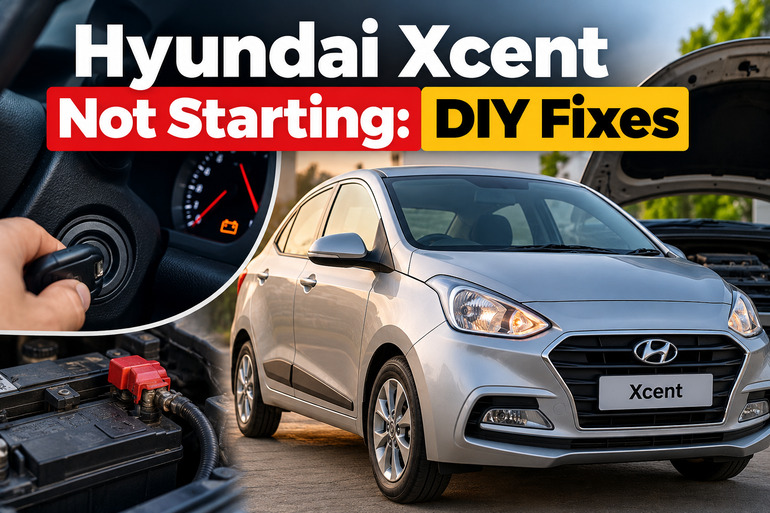
Why Your Hyundai Xcent Won’t Start
Your Hyundai Xcent relies on several systems working together before the engine can run. The battery supplies electrical power, the starter motor turns the engine, and the fuel and engine management systems help initiate combustion. A fault in any one of these areas can prevent the car from starting.
The first distinction is whether the engine cranks. Cranking is the repeated turning sound you hear when the starter operates. If the engine does not turn at all, the battery, electrical connections, starter motor or starting controls may be responsible. If it turns normally but fails to fire, fuel delivery, ignition or engine management problems become more likely.
Pay attention to the sounds and dashboard lights during an attempted start. Rapid clicking often points to insufficient battery power, while a single click may indicate a starter or connection fault. If the engine spins at its usual speed but does not run, check the fuel level and consider faults affecting combustion. These clues help narrow the possibilities without confirming a diagnosis on their own.
Hyundai’s Xcent Prime owner’s manual recommends checking the battery connections, transmission position and fuel level as initial troubleshooting steps. It also advises checking accessible ignition coil and spark plug connectors on applicable petrol models. If these checks do not resolve the problem, further diagnosis is necessary.
Hyundai Xcent Not Starting: Likely Causes
Several faults can produce the same no-start condition in a Hyundai Xcent. The symptoms below can help you identify which area deserves attention first, but proper testing is necessary before replacing components.
1. A Weak or Discharged Battery
A weak battery is one of the first things to investigate when your Xcent will not start. The battery must supply enough current to turn the starter motor and power the vehicle’s electrical systems. If its charge is too low, you may hear repeated clicking, see the dashboard lights flicker or notice that the engine turns unusually slowly.
Battery problems can develop when the headlights or interior lights remain on, the car sits unused for an extended period, or the charging system fails to replenish the battery. An ageing battery may also lose its ability to deliver sufficient current, even when some electrical accessories still work.
Loose or corroded battery terminals can produce similar symptoms because they interfere with the flow of electricity. Consequently, a battery that appears to be the problem may actually have a poor connection. Testing the battery and inspecting its terminals can help distinguish these possibilities.
2. A Faulty Starter Motor or Starting Circuit
The starter motor turns the engine until combustion begins. If the starter motor, its solenoid, relay or associated wiring develops a fault, your Hyundai Xcent may fail to crank even when the battery has sufficient charge.
A single click when you turn the key can indicate that the starter solenoid is engaging without the motor turning the engine. You may also hear grinding or a spinning sound without the engine actually cranking. These sounds can point to a mechanical engagement problem, although electrical faults can produce overlapping symptoms.
The ignition switch and transmission or clutch safety switches are other possibilities. Depending on the vehicle’s configuration, the starting system may prevent cranking unless the required conditions are met. A starter that works intermittently can also stop responding without much warning.
3. A Fuel Delivery Problem
An engine may crank normally but fail to start if it does not receive enough fuel. The problem could involve an empty fuel tank, a faulty fuel pump, a blocked filter, a failed fuel pump relay or another fault in the fuel delivery system.
A vehicle that runs roughly, loses power or stalls before becoming difficult to restart may have an underlying fuel delivery problem. However, these symptoms can also arise from ignition or engine management faults, so they should not be treated as proof of a defective fuel pump.
If the fuel gauge indicates that fuel remains, verify the level rather than relying entirely on the display. A faulty gauge can give a misleading reading. For persistent no-start problems, a technician can measure fuel pressure and test the relevant electrical circuits without unnecessarily replacing parts.
Fuel lines and pressurised fuel system components should be left to a qualified technician. Opening a fuel line to see whether fuel comes out can create a fire and injury risk.
4. Ignition or Engine Management Faults
On a petrol-powered Xcent, the ignition coils and spark plugs help ignite the air and fuel mixture inside the cylinders. If one of the components or its electrical connections develops a fault, starting may become difficult. A severe fault affecting ignition can prevent the engine from starting altogether.
Other possibilities include faulty engine sensors, damaged wiring or a problem with the engine control unit. Sensors provide information the engine management system uses to control combustion. If an essential signal is missing or incorrect, the system may not operate as intended.
Diesel Xcent models have a different ignition arrangement because they rely on compression to ignite fuel. Cold-start difficulties may involve the glow plug system, while other diesel-specific fuel system faults can also prevent starting. The engine type therefore matters when deciding which components to test.
Replacing spark plugs, sensors or ignition coils based only on symptoms can lead to unnecessary expenses. A diagnostic scan and appropriate electrical or mechanical tests are the better way to identify the actual fault.
5. An Immobilizer or Key Recognition Problem
Your Xcent may refuse to start if its electronic immobilizer does not recognise the key. The immobilizer is an anti-theft system that prevents the engine from starting with an unauthorised key. Depending on the vehicle’s equipment, the system uses a transponder within the key or smart key to establish that the key is recognised.
If the immobilizer warning indicator behaves abnormally, the key may not be communicating correctly with the vehicle. A damaged key, an immobilizer system fault or interference from another transponder key or nearby metal object may contribute to the problem.
This fault can be confused with an ordinary electrical problem because the dashboard may still illuminate. Hyundai’s Xcent Prime manual explains that the vehicle may fail to start when the immobilizer does not recognise a valid key and recommends specialist attention for persistent faults.
Hyundai Xcent Not Starting: DIY Fixes
The safest approach is to begin with basic checks and progress only when the symptoms point to a particular system. You can resolve some starting problems yourself, although electrical, fuel injection and immobilizer faults may require professional equipment.
1. Identify Whether the Engine Cranks
Before buying replacement parts, establish what happens when you attempt to start your Xcent. Put the vehicle in a safe location, apply the parking brake and switch off unnecessary electrical accessories.
Turn the key to the starting position and observe the response.
-
No dashboard lights or electrical response: A discharged battery, disconnected terminal or major electrical supply fault is possible.
-
Rapid clicking or flickering lights: Suspect a weak battery or poor electrical connections.
-
One click without cranking: The starter motor, its connections or starting circuit may be faulty.
-
Normal cranking without starting: Investigate fuel supply, ignition, engine management and immobilizer operation.
-
Grinding or unusual mechanical noises: Stop attempting to start the engine and arrange an inspection.
For an automatic Xcent, confirm that the selector is in Park or Neutral and the parking brake is applied. For a manual model, follow the owner’s manual instructions for operating the clutch and starting controls. Hyundai specifically recommends checking the selector position on automatic models that will not crank.
This initial check helps you choose the next troubleshooting step without immediately dismantling anything.
2. Inspect the Battery and Its Connections
Open the hood with the engine switched off and inspect the battery from a safe distance. Look for visibly loose connections, heavy corrosion, damaged cables or a cracked battery case. Do not touch a damaged battery or attempt to jump-start one that is cracked, leaking or frozen.
If the terminals appear loose or heavily corroded, have them cleaned and secured properly. Battery connections can carry substantial electrical current, so avoid working with metal tools near the terminals unless you know the correct procedure.
A battery tester can determine whether the battery is sufficiently charged and capable of supplying the required current. A reading taken with a basic voltmeter may provide useful information, but resting voltage alone does not conclusively establish battery health.
If the battery repeatedly loses charge, find out why before replacing it. The battery may be old or defective, but the alternator, charging circuit or an electrical device drawing power while the car is parked could also be responsible.
3. Jump-Start the Vehicle When Appropriate
If the battery is discharged, a correctly performed jump-start may allow the engine to start. Before attempting this, read the instructions in the owner’s manual for your exact Xcent variant and use a compatible 12-volt power source.
Hyundai warns that incorrect jump-starting can cause battery explosions, acid burns or electrical damage. Never attempt it when the battery is cracked, leaking or frozen. Keep flames and sparks away from the battery, avoid moving engine components and do not allow the jumper cables to touch each other.
The Xcent Prime manual provides a specific cable connection order and requires the appropriate chassis ground connection. Follow that procedure exactly rather than relying on a generic guide for another vehicle. Have a roadside assistance technician perform the jump-start if you are uncertain about the connections.
If the car starts successfully, have the battery and charging system tested. A discharged battery may need charging or replacement, and the underlying reason for the discharge still needs attention. If the engine fails to crank despite an appropriate jump-start, further testing of the starter and electrical circuit is necessary.
Do not push-start or pull-start the vehicle. Hyundai warns that this can overload the catalytic converter and damage the emissions control system.
4. Check the Key, Immobilizer and Starting Conditions
If the dashboard lights come on but the engine does not start, check whether the immobilizer indicator behaves as described in your owner’s manual. If you have a spare programmed key, try it to see whether the problem is specific to your usual key.
Keep other transponder keys away from the key being used to start the vehicle. If you use a smart key, make sure it is inside the vehicle and follow the relevant starting instructions for your variant.
Also verify that the automatic transmission is in Park or Neutral, or that the manual transmission starting procedure is being followed correctly. A vehicle that fails to recognise the required starting conditions may not operate the starter.
If the immobilizer indicator continues to behave abnormally or neither key works, contact a qualified automotive technician. Avoid altering the immobilizer wiring or attempting to bypass its security functions, as this may create further electrical problems.
5. Check the Fuel Level and Accessible Engine Connections
If the engine cranks normally but does not start, confirm that there is enough fuel in the tank. Where the fuel gauge is unreliable, add an appropriate amount of fuel rather than continuing to crank the engine repeatedly.
With the ignition switched off, you can also look for visibly disconnected electrical connectors in accessible areas of the engine compartment. For applicable petrol models, Hyundai’s owner’s manual specifically identifies the ignition coil and spark plug connectors as items to check. Reconnect an obviously loose connector only if it is accessible and safe to handle.
Do not disconnect electrical components while the ignition is on, touch ignition system components during operation, open fuel lines or dismantle injectors. If your Xcent has a diesel engine, allow its prescribed preheating sequence to complete where applicable before trying to start it.
When these basic checks do not solve the problem, stop repeated starting attempts. A persistent no-start condition can require fuel pressure testing, ignition testing, fault-code scanning or checks of the engine’s mechanical condition.
6. Contact a Qualified Automotive Technician
Professional diagnosis is the right next step when the battery is charged, the connections appear sound and the vehicle still fails to start. It is also necessary if the starter makes grinding noises, the engine produces unusual mechanical sounds, the immobilizer warning persists or you notice a fuel leak or burning smell.
A technician can test the battery under load, check starter current, inspect relevant fuses and relays, scan the engine control system and test fuel delivery. The required checks depend on the vehicle’s symptoms and engine type.
Avoid replacing the starter motor, fuel pump, sensors or electronic control unit without supporting test results. These parts can be expensive, and replacing the wrong component may leave the fault unresolved.
If the engine stops suddenly while driving, or you see smoke, smell burning wiring or notice a fuel leak, prioritise safety and arrange recovery instead of continuing to attempt a restart.
Wrap-Up
A Hyundai Xcent that refuses to start may have a simple battery problem or a fault involving the starter, fuel delivery, ignition or immobilizer. Listening to the engine and checking the dashboard response helps narrow the possibilities before you spend money on repairs.
Begin with the battery, connections, starting conditions and fuel level. Use the correct owner’s manual procedure for your particular model, and leave tests involving fuel pressure, electrical circuits and engine management to a qualified technician. A symptom-led diagnosis is the best way to identify the fault accurately and avoid replacing parts unnecessarily.