
Your Kia Seltos refusing to start while displaying a “Check ESC” warning can be frustrating, especially when the dashboard lights up but the engine won’t respond. You might hear clicking sounds, notice the engine turning over slowly, or find that pressing the start button does nothing.
Although the warning points to the Electronic Stability Control system, the starting problem may have another cause. Understanding how these faults are connected can help you identify the problem and choose the right fix.
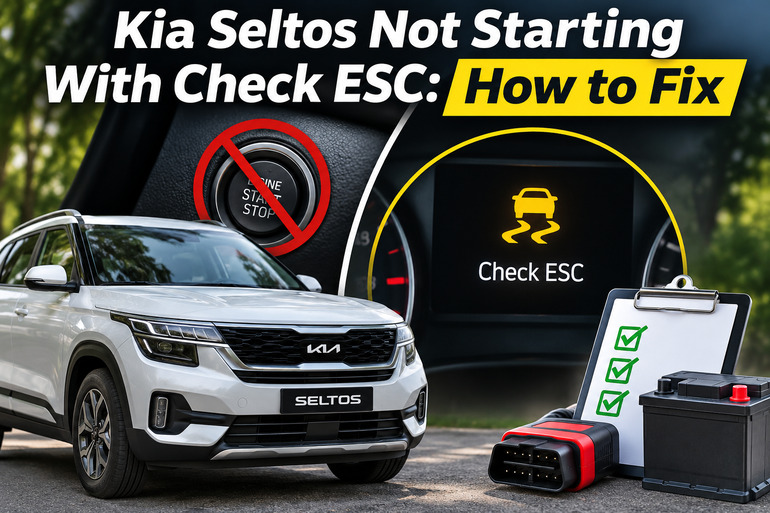
What Does Check ESC Mean on a Kia Seltos That Won’t Start?
The “Check ESC” warning indicates that your Kia Seltos has detected a possible problem involving its Electronic Stability Control system. This safety feature helps prevent skidding by monitoring vehicle movement and adjusting braking or engine power when necessary. It works with other systems, including the Anti Lock Braking System (ABS), to help maintain vehicle stability.
Under normal conditions, the ESC indicator comes on briefly when you switch on the ignition and then disappears. Kia’s documentation states that this initial check typically lasts about three seconds. However, an ESC warning that remains illuminated may indicate a system malfunction.
When the Seltos won’t start, the warning may appear alongside other symptoms. The dashboard might flicker, the starter might click without turning the engine, or the vehicle might display additional messages about the battery, brake pedal, or smart key. These clues are particularly useful because an ESC warning doesn’t necessarily mean the ESC system is preventing the engine from starting.
For example, a weak battery can affect several electronic systems simultaneously. Meanwhile, a faulty brake switch may prevent a vehicle with push button starting from recognizing that you’re pressing the brake pedal. If the engine turns over normally but doesn’t start, the problem may instead involve fuel delivery or engine management. Identifying the type of starting failure is therefore essential before replacing any components.
Kia Seltos Not Starting With Check ESC: Common Causes
Several electrical and mechanical faults can explain why your Kia Seltos displays an ESC warning while refusing to start. Some involve the starting system directly, while others can produce warning messages without being responsible for the starting failure.
1. Weak or Discharged Battery
A weak 12V battery is one of the first things to investigate when your Kia Seltos won’t start and displays several warning lights. The battery supplies electricity to the starter motor and vehicle electronics. When its voltage drops too low, the starter may struggle to turn the engine, and electronic control modules may fail to operate normally.
This often happens after the vehicle has been parked for an extended period, electrical accessories have been left operating, or the battery has deteriorated. A charging system problem can also leave the battery discharged even after the vehicle has been driven.
You might notice dim headlights, a rapidly clicking starter, a flickering dashboard, or several warnings appearing together. Kia also acknowledges that low battery voltage can temporarily illuminate certain ABS and ESC indicators under particular operating conditions. Therefore, battery condition deserves attention before assuming that an expensive stability control component has failed.
2. Faulty Brake Pedal Switch or Brake Switch Fuse
Your Kia Seltos may require a brake pedal signal before allowing the engine to start, depending on its transmission and starting system. A switch associated with the brake pedal tells the vehicle when the pedal is being pressed.
If that switch develops a fault, the starting system may fail to recognize the brake pedal input. The ignition might turn on normally, but the starter won’t engage. A blown fuse associated with the brake switch circuit can produce similar symptoms.
One useful clue is that the brake lights may fail to illuminate when you press the pedal, although functioning brake lights don’t completely rule out a switch problem. Some Kia Seltos versions also display a specific “Check BRAKE SWITCH fuse” warning when the relevant fuse circuit is interrupted.
3. Smart Key Recognition or Immobilizer Problems
If your Kia Seltos has push button starting, the vehicle must recognize an authorized smart key before allowing the engine to start. A weak key battery, damaged key, or problem with the vehicle’s key detection system can interfere with this process.
You may see messages such as “Key not detected” or “Key not in vehicle.” In other cases, the engine won’t start even though the dashboard and other electrical accessories operate normally.
The immobilizer also plays a role by preventing unauthorized starting. When key recognition fails, an immobilizer indicator may flash. However, a smart key problem doesn’t directly explain an ESC fault, so the two symptoms may be separate or related to a wider electrical problem.
4. Gear Position or Starter Circuit Problems
Automatic Kia Seltos models generally require the transmission to be in Park or Neutral before the engine can start. The vehicle uses information about the selected gear to prevent the starter from operating under unsafe conditions.
If the transmission range sensor, gear selection mechanism, or related wiring develops a fault, the vehicle may fail to recognize a valid starting position. You might see a message instructing you to shift into Park or Neutral, even though the gear selector appears correctly positioned.
Starter circuit faults can produce similar behavior. A defective starter motor, relay, wiring connection, or relevant fuse may prevent the engine from turning. A single click when you attempt to start can suggest a starter circuit problem, although it can also occur with insufficient battery power. Proper testing is needed to distinguish these faults.
5. ESC Sensor, Wiring, or Control Module Faults
The ESC system relies on electronic sensors and control modules to monitor vehicle behavior. Depending on the Seltos model, these include wheel speed information, steering input, and sensors that monitor vehicle movement.
A defective sensor, damaged wiring connection, or communication problem between control modules can trigger an ESC warning. Such faults may develop following electrical damage, moisture intrusion, or component failure.
However, a failed wheel speed sensor alone would not normally prevent the engine from starting. If your Kia Seltos has both an ESC warning and a starting failure, a technician must determine whether the faults share an electrical cause or are unrelated. This distinction helps avoid replacing ABS or ESC components unnecessarily.
Kia Seltos Not Starting With Check ESC: DIY Fixes
The most effective approach is to begin with safe checks that can quickly eliminate common starting problems. Work through the following solutions based on your vehicle’s symptoms, and avoid replacing parts until there is evidence that they’re faulty.
1. Check the Starting Procedure and Gear Position
Start by confirming that your Kia Seltos is in the correct condition for starting. This may seem simple, but an incorrectly selected gear or an unrecognized brake pedal input can prevent the starter from operating.
For an automatic model, apply the parking brake, place the transmission firmly in Park, and press the brake pedal fully before attempting to start. If the vehicle doesn’t respond, switch the ignition off and try again. Some versions also permit starting in Neutral, provided the conditions specified in the owner’s manual are met.
If your Seltos has a manual transmission, follow the clutch and brake pedal requirements for that particular version. Kia’s instructions differ between conventional manual, intelligent manual, and automatic transmissions.
Pay attention to any message displayed during the attempt. A warning asking you to press the brake or select Park provides a more direct clue than the ESC warning alone. If the vehicle consistently fails to recognize the correct gear, it needs further diagnosis rather than repeated starting attempts.
2. Inspect the Battery and Check Its Voltage
Switch off the ignition and inspect the battery area for obvious problems. Look for heavily corroded terminals, damaged cables, or loose connections that may prevent electricity from reaching the starter.
A white or greenish deposit around a terminal can indicate corrosion. However, don’t handle a leaking, swollen, cracked, or unusually hot battery. Such conditions require professional assistance.
If you have a digital multimeter and know how to use it safely, you can check the battery voltage with the engine off. A healthy, fully charged conventional 12V vehicle battery generally measures around 12.6 volts at rest. A reading below approximately 12.4 volts suggests that the battery may need charging, although voltage alone cannot establish its overall condition.
The reading should be taken after the battery has rested, rather than immediately after charging or driving. A battery may also show acceptable voltage but fail when the starter demands a large amount of current.
If the battery appears weak, arrange for a proper battery and charging system test. This will help determine whether it needs recharging, replacing, or further investigation for an underlying electrical problem.
3. Jump Start the Vehicle if the Battery Is Discharged
If your Kia Seltos has dim lights, a slow starter, or repeated clicking accompanied by low battery voltage, jump starting may help confirm that insufficient battery power is contributing to the problem.
Use a compatible 12V jump starter or another suitable vehicle. Before attempting the procedure, check the jump starting instructions in your particular Seltos owner’s manual. Kia warns that incorrect connections can cause serious injury or vehicle damage.
For a conventional 12V battery arrangement, Kia’s procedure generally follows this connection sequence.
- Connect the positive jumper cable to the discharged battery’s designated positive terminal.
- Connect its other end to the booster battery’s positive terminal.
- Connect the negative jumper cable to the booster battery’s negative terminal.
- Connect the remaining negative clamp to the specified solid metal grounding point on the disabled vehicle, away from its battery.
Keep the vehicles from touching, avoid moving engine parts, and follow the manual’s instructions for starting and disconnecting the cables. If you’re unfamiliar with the procedure, a roadside assistance technician is the safer choice.
Never attempt to jump start a frozen, leaking, damaged, or swollen battery.
If the engine starts successfully, the original problem may involve a discharged battery or poor electrical supply. However, the battery still needs proper charging and testing. If it becomes discharged again, have the charging system and possible electrical drains investigated rather than repeatedly jump starting the vehicle.
4. Check the Brake Lights and Relevant Fuses
A faulty brake switch circuit can prevent some Kia Seltos versions from starting normally, making this an important check when the dashboard operates but the engine doesn’t crank.
With the vehicle safely parked, switch on the ignition as required and have someone observe the rear brake lights while you press the brake pedal. You can also use a suitable reflection to check the lights without leaving the driver’s seat.
If the brake lights don’t illuminate, investigate the brake switch and its associated fuse. Consult the fuse diagram for your exact model year and equipment level. Look for the appropriate stop lamp or brake switch circuit rather than assuming that every Seltos uses the same fuse arrangement.
If the owner’s manual permits you to replace the suspected fuse, switch off the vehicle and follow its safety instructions. Use the supplied fuse removal tool and fit only a replacement of the specified amperage. Never substitute wire, foil, or a higher rated fuse.
A fuse that blows again indicates an electrical fault requiring professional repair. Likewise, if the lights remain inoperative after checking the relevant fuse, the switch or wiring may need testing.
Do not drive if the brake lights aren’t working. Other drivers need those lights to know when you’re slowing down, regardless of whether you manage to restart the engine.
5. Try the Smart Key Starting Procedure
If your Seltos uses a smart key and displays a key detection warning, check whether the vehicle is recognizing the key correctly.
First, make sure the smart key is inside the vehicle and away from other electronic devices that might interfere with detection. If you have a spare authorized key, try it to see whether the problem is limited to the original key.
Kia also provides an emergency starting method for certain push button models when the smart key battery is weak. With the transmission in the correct position and the brake pedal pressed, hold the smart key directly against the ENGINE START/STOP button and attempt to start the vehicle as instructed in the manual.
If this works, replace the smart key battery with the correct type specified for your key. However, if neither key works, or the immobilizer warning continues to flash, the problem may involve the vehicle’s receiver or immobilizer electronics.
Don’t attempt to bypass the immobilizer. A qualified technician can inspect the relevant system and establish whether the key, receiver, or another component needs attention.
6. Check Whether the ESC Warning Returns
Once the Kia Seltos starts normally, observe the dashboard to determine whether the ESC warning disappears after the normal startup check.
A brief ESC indicator during startup isn’t necessarily a problem. However, a warning that remains illuminated or repeatedly returns should be investigated, even when the engine is running normally.
If the message persists, a diagnostic scan can help identify the system reporting the fault. A basic OBD2 reader may retrieve engine related trouble codes, but accessing ESC and ABS fault information often requires a scanner with enhanced Kia system coverage.
Record the exact fault codes and any accompanying messages before they are cleared. For example, a code related to a wheel speed sensor suggests a different diagnostic path from a code indicating low voltage or lost communication between control modules.
Avoid clearing codes simply to remove the warning. Doing so may erase useful information without fixing the underlying problem.
Likewise, don’t assume that pressing the ESC OFF button will resolve the issue. This button changes stability control operation but doesn’t repair electrical faults or restore a failed starting system. Kia recommends keeping ESC enabled during normal driving.
If the warning remains active, arrange an inspection before returning to regular driving. Where braking, steering, or ABS warnings also appear, or the vehicle behaves abnormally, stop using it and arrange professional assistance.
7. Contact a Qualified Kia Technician
If these checks don’t resolve the starting problem, contact a qualified automotive technician or an authorized Kia service center.
Explain exactly what happens when you attempt to start the vehicle. Mention whether the engine cranks, whether the dashboard lights flicker, and whether the ESC warning appeared before or after the starting failure. Also report any recent battery replacement, jump start, collision, electrical work, or water exposure.
A technician can perform a battery load test, check the charging system, verify brake switch and transmission range signals, and investigate starter circuit faults. Where necessary, they can use manufacturer compatible diagnostic equipment to inspect the ESC and ABS modules for stored trouble codes.
This is particularly important if the warning keeps returning, the vehicle repeatedly loses battery power, or several electronic systems malfunction together.
If you notice smoke, a burning electrical smell, damaged battery wiring, abnormal braking, or serious steering problems, don’t attempt additional starting or driving. Arrange for the vehicle to be inspected or transported safely instead.
Wrap-Up
A Kia Seltos that won’t start while displaying “Check ESC” needs careful diagnosis because the warning and the starting problem may have different causes. The most useful clues come from how the engine responds, which other warnings appear, and whether the battery and starting controls are operating correctly.
Begin with the simple checks your vehicle’s manual permits, and take persistent warnings seriously. Finding the underlying fault early can prevent unnecessary repairs and help you get your Seltos running reliably again without compromising its safety systems.