
A horn that stops working on your Hyundai Kona can make everyday driving less safe, particularly when you need to alert another driver or warn a pedestrian. The problem may come from something as simple as a blown fuse or a fault within the horn itself. In other cases, the steering wheel switch, electrical wiring, or control circuit may be responsible.
Understanding the symptoms can help you narrow down the fault and decide which checks are safe to perform at home.
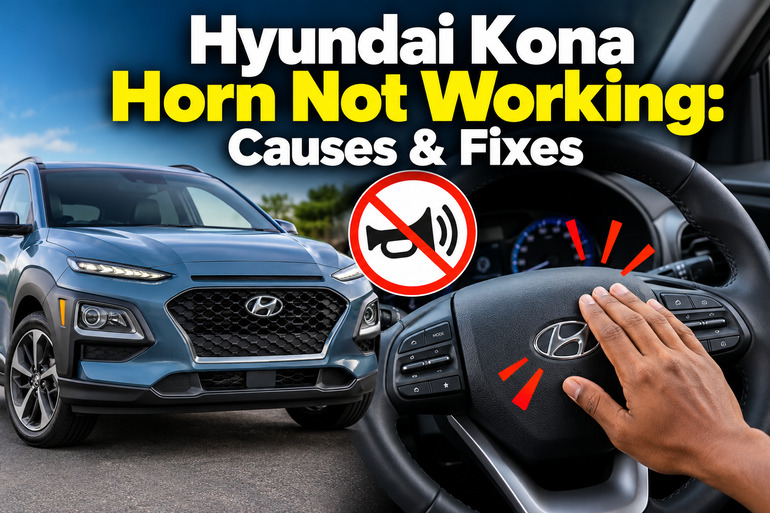
What It Means When Your Hyundai Kona Horn Stops Working
The horn on your Hyundai Kona is an electrical safety device activated by pressing the horn symbol on the steering wheel. When you press the correct area, an electrical signal passes through the control circuit to operate the horn. Depending on the model, this system uses a fuse, a relay or electronic control module, wiring, and a clock spring that maintains electrical connections as the steering wheel turns.
A completely silent horn suggests that electrical power may not be reaching the horn or that one of its components has failed. A horn that produces a faint, cracked, or unusually weak sound points to a possible problem with the horn unit, its electrical connections, or its power supply. If the horn works sometimes but fails at other times, an intermittent electrical connection or a fault around the steering wheel may be responsible.
You may also notice other symptoms alongside the horn failure. Steering wheel buttons that stop working, an illuminated airbag warning light, or a horn that works only at certain steering wheel positions can help narrow down the possible fault. These symptoms do not confirm a particular diagnosis, but they provide useful information for further testing.
Because the horn is an important safety feature, avoid putting off repairs. You can perform a few basic checks yourself, but faults involving the steering wheel airbag system, internal wiring, or electronic control modules should be handled by a qualified technician.
Hyundai Kona Horn Not Working: Likely Causes
Several faults can prevent the horn from operating correctly. The following are five of the main possibilities, along with symptoms that can help you distinguish between them.
1. A Blown Horn Fuse
The horn fuse protects the electrical circuit against excessive current. If a short circuit or an electrical fault causes the current to exceed safe limits, the fuse may blow and interrupt the power supply. The horn then stops working even if the horn unit itself remains in good condition.
A completely silent horn with no obvious physical damage may indicate a blown fuse. However, the absence of sound alone cannot confirm that the fuse has failed. Other components can produce the same symptom.
Fuse positions and ratings vary by Kona model year, market, and equipment. Some model years use a 15-amp HORN fuse in the engine compartment fuse panel, but your vehicle may have a different arrangement. Consult your owner’s manual and the diagram on the fuse box cover before replacing anything.
2. A Faulty Horn Unit
The horn itself can fail internally. Its electrical and mechanical components may deteriorate with age, moisture exposure, corrosion, or repeated use. Once the unit can no longer convert electrical energy into sound, pressing the steering wheel button will produce little or no response.
The symptoms depend on the nature of the failure. A completely failed unit may remain silent, while a partly damaged horn can produce a weak, distorted, or intermittent sound. Dirt, moisture, or corrosion around its mounting point and electrical connector can also affect operation.
The horn’s location at the front of the vehicle can expose it to road spray and debris. If the fuse is intact but the horn remains silent, testing the unit and its electrical supply can establish whether the horn itself needs replacement or whether another part of the circuit is responsible.
3. A Damaged Clock Spring or Horn Switch
The horn switch is located in the steering wheel’s horn pad. When you press the correct area, it activates the horn circuit. If the switch contacts become damaged, worn, or electrically unreliable, the signal may not reach the system.
Another possible cause is a failed clock spring, a coiled electrical connection inside the steering column that maintains contact between the steering wheel and the vehicle’s wiring as the wheel turns. Over time, the internal ribbon cable can wear or break, interrupting connections to the horn and potentially other steering wheel functions.
A faulty clock spring becomes a stronger possibility if the horn stops working alongside steering wheel button problems or an airbag warning light. On some vehicles, the horn may also work intermittently as the steering wheel moves. However, these symptoms require proper diagnosis because other electrical faults can produce similar effects.
The clock spring is connected to the driver’s airbag system. Removing the steering wheel or airbag without the correct procedures can cause injury or accidental airbag deployment. Leave this repair to a qualified technician.
4. A Faulty Horn Relay or Control Module
The horn circuit needs a switching component to control the electrical current that operates the horn. Depending on the vehicle’s design, this may be a conventional relay or an electronic switching component incorporated into a control board.
If the relay or control circuitry fails, the horn may receive no power even when the steering wheel switch and horn unit are functioning properly. A failed circuit may also cause intermittent operation.
Some earlier Hyundai Kona models use a semiconductor relay incorporated into the engine compartment’s printed circuit board block. In such designs, the relay may not be independently replaceable. A suspected relay fault may therefore require testing of the complete circuit and, where necessary, repair or replacement of the appropriate assembly.
Do not assume that your Kona has a separate, removable horn relay simply because another vehicle does. Component arrangements vary, and replacing the wrong part can waste money without resolving the problem.
5. Damaged Wiring, Loose Connectors, or a Poor Ground
The horn depends on a complete electrical circuit. Damaged wires, loose connectors, corroded terminals, or a poor ground connection can interrupt the current needed to operate it.
These problems may develop after front-end damage, repairs around the bumper, exposure to moisture, or deterioration of electrical connections. A connector that makes contact intermittently may cause the horn to work on some occasions and fail on others.
A wiring fault can resemble a failed horn or blown fuse. For example, a horn may remain silent even though the fuse is intact and the horn unit is functional. A technician can isolate the fault by checking the circuit’s voltage, ground connection, continuity, and control signal with appropriate equipment.
If the problem began after a collision or work around the front bumper, tell the repair technician. This information can help focus the inspection on areas that may have been disturbed or damaged.
Hyundai Kona Horn Not Working: DIY Fixes
You can begin with a few straightforward checks before paying for extensive electrical diagnosis. Start with the controls and fuse, then use the symptoms and any visible damage to determine whether professional testing is necessary.
1. Check the Horn Button and Test Its Operation
Start by confirming that you’re pressing the correct part of the steering wheel. The horn operates when you press the area marked with the horn symbol. Avoid hitting the steering wheel with your fist or pressing the horn pad with a sharp object, as this could damage the assembly.
Park the vehicle in a safe location and give the horn a brief test. Pay attention to whether it remains completely silent, produces a weak sound, or works intermittently. Note whether you need to press unusually hard or whether operation changes as the steering wheel turns during normal use.
These observations can help narrow down the possible cause. If the horn works intermittently or other steering wheel controls have also stopped working, avoid repeatedly pressing the button in an attempt to restore it. Arrange a proper inspection instead.
2. Inspect and Replace the Horn Fuse if Necessary
A blown fuse is one of the simplest faults to check. You can inspect it using the procedure below, provided you can safely access the fuse panel.
-
Park the Kona, switch off the engine, and turn off the electrical accessories.
-
Locate the relevant fuse panel using the owner’s manual.
-
Read the diagram on the panel cover and identify the fuse marked HORN.
-
Use the fuse puller supplied with the vehicle, where provided, to remove the fuse.
-
Inspect its internal metal element. If the element is broken or melted, the fuse has blown.
-
Replace it with a fuse of exactly the same specified amperage and type.
Never install a higher-rated fuse, bridge the fuse terminals with wire, or use aluminum foil as a substitute. An incorrectly rated fuse can damage wiring or cause a fire. A replacement fuse that blows again indicates an electrical problem requiring professional attention.
After fitting a correctly rated replacement, test the horn briefly. If it works, the blown fuse may have been the immediate cause. If the new fuse blows again, stop testing and have the circuit diagnosed instead of continuing to replace fuses.
3. Look for Visible Damage Around the Front of the Vehicle
The horn is mounted at the front of the vehicle, where its wiring and connectors may be exposed to moisture, road debris, or damage from an impact. A basic visual inspection may reveal signs that help explain the failure.
With the vehicle switched off, look for obvious damage around the front grille and accessible areas near the bumper. Check for signs of a recent impact, loose exterior trim, or visibly damaged wiring. Do not pull on wires or reach into tight areas where you cannot see the components clearly.
The horn may be difficult to access without removing the front bumper cover. If inspection requires bumper removal, electrical connector disassembly, or access to exposed wiring, leave the work to a technician. A visual inspection can reveal possible damage, but it cannot establish whether the horn or its ground connection is electrically defective.
4. Check for Other Symptoms That Point to a Steering Wheel Fault
If the horn stopped working around the same time as other steering wheel functions, pay attention to that connection. Depending on your Kona’s equipment, affected functions may include steering wheel audio controls or other buttons fitted to the wheel.
Look at the instrument cluster for an airbag or supplemental restraint system warning light. If the light remains illuminated, arrange prompt professional diagnosis. A warning light combined with horn failure can indicate a clock spring or related circuit fault, although the combination does not prove that the clock spring is responsible.
Do not remove the steering wheel cover, pull out the airbag module, or attempt to repair the clock spring yourself. The restraint system contains components that require specific safety procedures. A qualified technician can read diagnostic trouble codes and perform the appropriate electrical tests.
5. Review Recent Repairs and Electrical Problems
Consider whether the horn failure began after a repair, collision, battery service, or work around the front of the Kona. Wiring or connectors can sometimes be left loose or damaged during nearby repairs, while a separate electrical fault may become apparent around the same time.
Also consider whether other electrical symptoms appeared together. If several unrelated features stopped working, the cause may involve a shared power supply, ground connection, fuse panel, or electronic control system rather than the horn itself.
Record what happened before the fault began and which functions are affected. This information gives the technician a useful starting point. Avoid disconnecting random connectors, swapping unidentified relays, or using improvised jumper wires to test the horn, since these methods can cause further electrical damage.
6. Contact a Qualified Automotive Technician
Professional diagnosis is necessary if the horn remains silent after the basic checks, the replacement fuse blows again, or the symptoms suggest a clock spring, relay, control module, or wiring fault.
A technician can check whether the correct voltage reaches the horn, test the ground and connector condition, verify operation of the horn switch and control circuit, and use diagnostic equipment where required. These tests help distinguish a failed horn unit from a fault elsewhere in the system.
The appropriate repair depends on the findings. It may involve replacing the horn, repairing a damaged wire or connector, correcting a ground fault, or repairing the relevant electrical assembly. If a clock spring or airbag-related component is suspected, use a qualified repair professional familiar with the Kona’s restraint system.
Avoid driving normally for an extended period with a nonfunctional horn. Arrange repairs promptly, particularly if you regularly drive in heavy traffic or areas where you need to warn other road users.
Wrap-Up
A Hyundai Kona horn that stops working can have several causes, ranging from a blown fuse to a damaged horn, faulty steering wheel switch, worn clock spring, or electrical circuit problem. Paying attention to whether the horn is silent, weak, or intermittent can help narrow down the possibilities before repairs begin.
Start with the correct horn button and the fuse specified for your model. If these checks don’t resolve the problem, professional electrical testing can help identify the actual fault and prevent unnecessary parts replacement. A properly functioning horn gives you an essential means of warning other road users, so arrange a repair as soon as possible.