
A Hyundai trunk that will not open can leave groceries, tools, luggage, or emergency equipment trapped inside. The fault may be as simple as a weak key fob battery or as involved as a failed latch, wiring problem, or power liftgate fault.
Before buying replacement parts, compare the remote, exterior switch, and cabin release where fitted. Their responses can help narrow the cause and prevent unnecessary repairs.
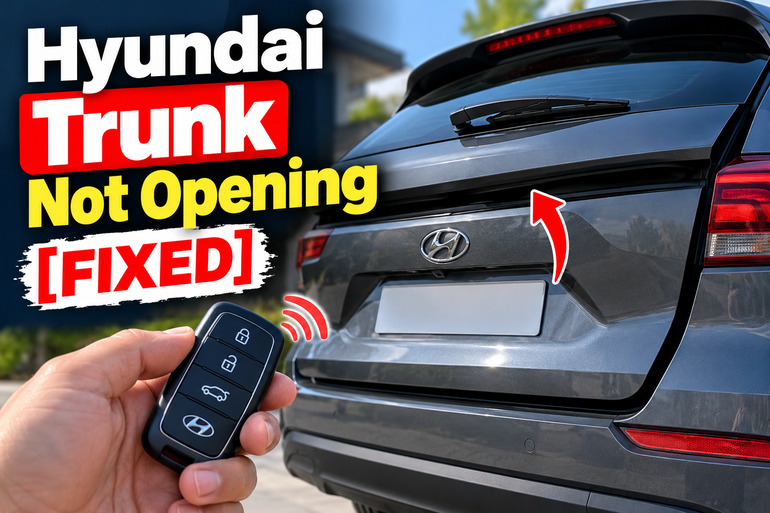
Understanding Why Your Hyundai Trunk Will Not Open
Your Hyundai’s trunk opening system usually relies on a latch, a release mechanism, and one or more controls. Depending on the model and year, you may have a mechanical key cylinder, an interior release lever, a switch near the trunk handle, a remote key fob button, or an electrically operated power trunk. Some vehicles also have a hands-free Smart Trunk feature.
When you activate a release, the mechanism should disengage the latch so the lid can lift. If the latch remains engaged, the trunk stays shut even when the doors unlock normally. A power trunk may also refuse to move if its electrical supply is weak or its control system detects a fault.
The symptoms provide useful clues. If the doors unlock but the trunk does not, the problem may be limited to the trunk release circuit or latch. A clicking noise without movement can indicate that the actuator is operating against a jammed latch. Silence from every release method may point to a power supply problem, a faulty switch, or damaged wiring.
Avoid pulling forcefully on the lid or inserting tools between the body panels. These actions can bend the lid, damage the paint, or break the latch without resolving the underlying problem. Moisture can also freeze around the latch or seal in cold weather, preventing the trunk from opening.
Hyundai Trunk Not Opening [FIXED]: Likely Causes
Several faults can produce the same symptoms, so the way your trunk behaves is important. Start with the following common possibilities before deciding which component needs replacement.
1. Weak Key Fob Battery or Key Detection Problem
A weak battery inside your Hyundai’s smart key can interfere with remote commands. You may notice that the door locks respond inconsistently, the vehicle requires the key to be held closer to the button, or the trunk release works only occasionally.
If the vehicle’s doors unlock normally using another method but the trunk button on the remote does nothing, the remote itself could have a faulty button or an internal electrical problem. A weak battery is one possibility, but it is not proof that the key fob is responsible.
Smart Trunk operation can also depend on settings and specific operating conditions. Certain Hyundai models require the feature to be enabled, the doors to be closed and locked, and the smart key to remain within a designated area behind the vehicle for a specified period. A disabled feature or unmet conditions can prevent hands-free opening even when the trunk mechanism is working properly.
2. Blown Fuse or Weak Vehicle Battery
The trunk release may stop working when the vehicle’s 12-volt electrical supply is weak or a fuse protecting the relevant circuit has blown. This is especially worth considering when other electrical features have also started behaving abnormally.
For example, you might notice slow central locking, dim interior lights, difficulty starting the engine, or warnings on the instrument cluster. On a power liftgate, insufficient electrical power can prevent the motor from operating normally.
A blown fuse is often a symptom rather than the original problem. An overloaded circuit, a short circuit, or a damaged component may cause the fuse to fail. Replacing a fuse repeatedly without identifying the reason can lead to further electrical damage.
3. Faulty Trunk Release Switch or Damaged Wiring
The switch near the trunk handle is exposed to rain, dust, dirt, and repeated use. Moisture can enter a damaged switch, while wear can cause its internal electrical contacts to stop responding reliably.
You may press the exterior release and notice that nothing happens. If the remote or interior release still works, this makes a problem with the exterior switch or its circuit more plausible. It does not confirm the diagnosis, since the release methods may share components on some models.
Wiring can also become damaged near the trunk hinges, where the harness repeatedly bends as the lid opens and closes. Corrosion in connectors or a loose electrical connection can interrupt the release signal. Proper diagnosis may require a wiring diagram and a multimeter to identify the failed section.
4. Stuck Trunk Latch or Failed Actuator
The latch holds the trunk lid securely closed while the vehicle is moving. An actuator, where fitted, operates the release mechanism when it receives the appropriate command.
Dirt, corrosion, worn internal parts, or damage from an impact can prevent the latch from disengaging. You may hear a click when pressing the release button, yet the lid remains closed. Alternatively, a failed actuator may produce no sound at all.
A trunk can also become difficult to release when pressure from luggage or other cargo pushes the lid against the latch. Misalignment after a collision or an earlier repair can create a similar problem. If the lid has shifted, forcing it open may damage the latch or mounting points.
5. Obstruction, Frozen Mechanism, or Power Trunk Malfunction
Sometimes, the release system is working, but the trunk cannot open because something physically prevents the latch from releasing or the lid from lifting. Cargo pressing against the lid, a displaced item near the latch, or a damaged seal can create resistance.
In cold or wet weather, moisture around the latch or seal may freeze and hold the lid shut. Repeatedly pressing the release button or pulling harder usually does little to help and may place unnecessary strain on the mechanism.
If your Hyundai has an electrically operated trunk, a separate issue may involve the power liftgate motor, control system, or initialization procedure. Some Hyundai power trunks require a reset after the 12-volt battery has been disconnected, discharged, or replaced, or after the relevant fuse has been removed. The correct procedure varies by vehicle.
Hyundai Trunk Not Opening [FIXED]: How to Fix
The following checks move from simple operating adjustments to basic electrical checks. Start with the method that best matches your symptoms, and stop when a check indicates that the latch, wiring, or power mechanism needs professional attention.
1. Try the Other Trunk Release Methods
Start by checking whether the problem affects every release method or only one control. Park your Hyundai safely, apply the parking brake, and follow the opening procedure in your owner’s manual.
Depending on your model, you can try these methods:
-
Press and hold the trunk button on the key fob for the period specified in your owner’s manual.
-
Unlock the vehicle, then press the exterior trunk release switch.
-
Use the interior trunk release lever or button, if fitted.
-
Try the mechanical key if your vehicle has a compatible key cylinder.
Do not assume every Hyundai has all four options. Some models use different release arrangements, and certain power trunks have specific emergency procedures.
If one method opens the trunk while another fails, you have narrowed the likely fault to a particular control or circuit. For example, an exterior switch that fails while the remote release works points toward the switch or its wiring. If none of the methods works, the latch, power supply, or a shared part of the release system may be responsible.
2. Replace the Key Fob Battery or Try a Spare Key
If the remote is unreliable, replacing its battery may restore normal operation. Check your owner’s manual or key fob instructions to find the correct battery type and opening procedure.
Use a small tool only where the case design permits it, and avoid forcing the plastic housing or damaging the internal circuit board. Install the replacement battery in the correct orientation, then close the housing securely.
Afterward, test the trunk button again. If you have a spare programmed key, try that as well. A spare key that works consistently while the original fails suggests that the original remote may be faulty.
If the remote operates the doors but cannot release the trunk, do not keep replacing its battery without further testing. The fault could involve the trunk button, vehicle settings, wiring, or latch instead.
3. Remove Obstructions and Deal With a Frozen Trunk Safely
Check the area around the trunk lid for visible damage, displaced trim, or signs that cargo is pressing against the lid. If the trunk opens slightly but seems to catch, remove any accessible obstruction without putting your fingers inside the latch.
If freezing conditions are responsible, move the vehicle to a warmer, sheltered location when practical and allow the mechanism to thaw naturally. A vehicle-safe de-icer suitable for the affected area may also help when used according to its instructions.
Avoid boiling water, open flames, sharp tools, or excessive pulling on the lid. Hot water can damage finishes and may refreeze around the seal when temperatures remain low. If the latch continues to resist after thawing or you notice bent metal, stop applying force.
Once the trunk opens, inspect the visible seal and latch area for dirt or damage. Use only a suitable automotive lubricant if the owner’s manual or a qualified technician recommends it for that component.
4. Check the Vehicle Battery and Relevant Fuse
If other electrical features are malfunctioning, or the power trunk is completely unresponsive, check the condition of the vehicle’s 12-volt battery. Warning lights, slow electrical operation, or difficulty starting the vehicle can support the suspicion of a weak battery, although they do not identify the exact cause.
You can also consult the owner’s manual to locate the fuse associated with the trunk release or power liftgate. Fuse names and locations differ between Hyundai models and model years, so use the diagram for your exact vehicle rather than guessing.
If the fuse is accessible, switch off the vehicle as instructed in the manual and inspect it using the recommended method. Replace a blown fuse only with one of the same specified rating. If the replacement blows again, stop and arrange an electrical diagnosis. Do not bridge the fuse or install a higher-rated replacement.
Battery testing, jump-starting, and fuse access can involve model-specific precautions, particularly on hybrid and electric vehicles. Follow the manufacturer’s procedure and seek assistance if you are uncertain about safe access.
5. Reset the Power Trunk if Your Model Supports It
A power trunk that stopped working after a flat battery, battery replacement, or fuse-related service may require initialization. This procedure allows the control system to relearn the operating sequence on models that use a reset process.
First, confirm that your vehicle has a power trunk and consult the correct owner’s manual. Some Hyundai vehicles require the gear selector to be in Park, followed by a particular combination of trunk buttons and a manual closing procedure. The required sequence depends on the model and year, so a procedure found for another Hyundai may not apply.
Follow the instructions precisely, keeping people and objects clear of the lid’s movement. Some procedures require the trunk to complete a full opening cycle before the reset is considered successful. Do not attempt to reset a lid that is physically jammed or visibly damaged.
If the power trunk still refuses to operate, stops partway through movement, or produces warning beeps without opening, the problem may involve the actuator, sensors, wiring, or control system. Have the fault diagnosed instead of repeatedly attempting resets.
6. Contact a Qualified Automotive Technician
Professional diagnosis is necessary when the trunk remains locked after the basic checks, the latch clicks without releasing, or the release system has no response despite a healthy vehicle battery and working remote.
A technician can test the release switch, inspect the wiring, scan relevant control systems, and determine whether the latch actuator or another component has failed. If the trunk is physically jammed, specialist access methods may be required to open it without damaging the lid or bodywork.
There is also an important model-specific safety issue. Certain 2015 and 2016 Hyundai Elantra vehicles sold in the United States were included in recall 256 because a trunk latch fault could prevent opening through the emergency release. Owners should check their vehicle identification number and applicable recall status rather than assuming the ordinary DIY checks will resolve this fault.
Contact a Hyundai dealer or another qualified repair facility if you suspect an affected recall, particularly if the emergency release may not work. Do not pry open the trunk or dismantle the latch without the required tools and repair information.
Wrap-Up
A Hyundai trunk that refuses to open may have a weak key fob battery, a faulty release switch, an electrical supply problem, a jammed latch, or a power liftgate fault. Testing the available release methods first can help you identify the likely source without spending money on unnecessary replacement parts.
Use the owner’s manual for model-specific instructions, especially for power trunks and emergency access. Stop if the lid is jammed or the electrical system shows signs of damage. If the simple checks fail, professional diagnosis is the safest way to restore reliable trunk operation without causing further damage.