
A check engine light can seem puzzling when your Kia still starts easily and drives normally. If a scan reveals P0455, the computer has detected a large leak condition in the system that contains fuel vapors. A loose gas cap is one possibility, but it isn’t the only explanation.
The best approach is to check simple, visible problems first, then let the results guide the next step. That helps you avoid replacing good parts while giving a persistent fault the attention it needs.
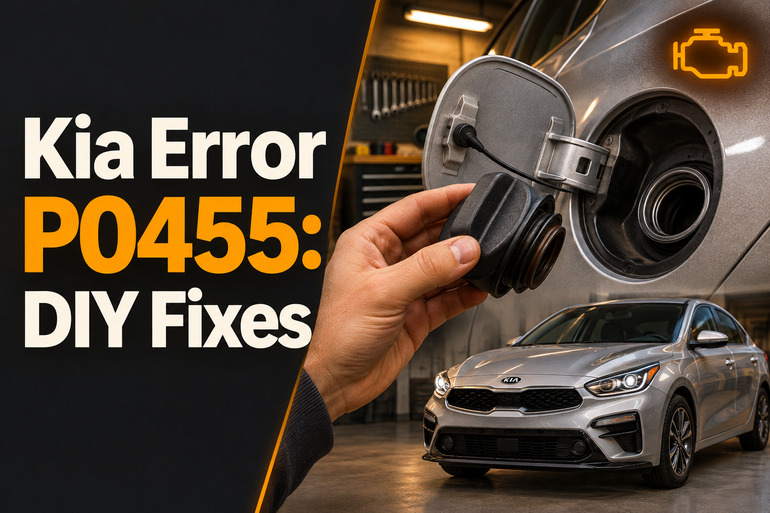
What P0455 Means on Your Kia
P0455 means “Evaporative Emission System Leak Detected, Large Leak.” The evaporative emission system, usually called EVAP, keeps gasoline vapors from escaping into the air. It stores them in a charcoal canister, then sends them into the engine through a controlled valve so they can burn during normal operation. Kia calls that valve the purge control solenoid valve, or PCSV.
The computer also checks whether the system can seal properly. On Kia designs that use engine vacuum for this test, it closes the outside air path and operates the purge valve to lower pressure inside the system. If the expected pressure change doesn’t occur, P0455 can result. A leak is one explanation, but a valve or flow problem can also interfere with the test.
You may notice nothing beyond the warning light. However, gasoline odor, trouble refueling, or changes in engine operation deserve attention. Record these symptoms rather than assuming they all come from the same failed part. “Large leak” describes the diagnostic result, so the code alone doesn’t establish that liquid gasoline is leaking.
If you see dripping fuel or notice a strong, persistent gasoline smell, stop using the vehicle and arrange qualified assistance. Likewise, a flashing check engine light or severe shaking requires prompt attention rather than continued EVAP troubleshooting. A flashing light can indicate a fault capable of damaging other emission components.
Kia Error P0455: Common Causes
Several faults can prevent your Kia from completing its EVAP leak test successfully. The model, engine, and production date help determine which possibilities deserve closer attention.
1. A Loose, Damaged, or Incorrect Gas Cap
The gas cap forms part of the sealed vapor system. If it’s missing or sitting crooked, outside air can enter through the filler opening and interfere with the leak test. A warning that appears after refueling makes the cap a sensible starting point, although the timing doesn’t prove it caused the fault.
A damaged sealing ring or an unsuitable replacement cap can create a similar problem. The cap may appear secure while failing to seal against the filler neck. Kia warns that an incorrect cap can cause fuel system or emission control problems.
Look for a split seal, missing material, or obvious damage where the cap seats. Also check whether its tether is caught underneath it. These observations can reveal a problem without tools, but a cap that looks normal may still need testing if the code returns.
2. A Disconnected or Damaged Vapor Hose
Vapor hoses connect the tank, canister, and engine. A split hose or separated connection creates an opening in a system that needs to seal during testing. Kia’s P0455 diagnostic information includes checking the hose between the canister close valve and canister for tears.
Recent repairs can provide a useful clue. If the light appeared after work near an EVAP component, tell the technician what was disturbed. However, don’t reconnect an unfamiliar loose hose based on appearance alone. Engine compartments contain several kinds of hoses, and correct identification matters.
3. A Canister Close Valve That Stays Open
The canister close valve controls the system’s connection to outside air. During a leak check, it must close when commanded. If it stays open, the computer may detect a large leak condition even though the vapor hoses remain intact.
Kia documented this fault in bulletin FUE040 for certain 2012 through 2017 Rio vehicles built from June 21, 2011, through March 28, 2016. The bulletin links P0455 and P0456 to a canister close valve stuck open and specifies an improved replacement part.
That makes the bulletin useful evidence for an affected Rio, rather than a diagnosis for every Kia. A technician still needs to confirm vehicle applicability and valve operation. Repeatedly tightening the cap won’t correct a valve that cannot seal.
4. A Purge Valve or Purge Flow Problem
The purge valve controls the movement of stored vapors into the engine. On systems that use this path to generate test vacuum, inadequate purge flow can prevent the expected pressure drop. The resulting test failure may resemble a large opening elsewhere in the system.
This is why P0455 shouldn’t automatically trigger a purge valve purchase. Testing needs to establish whether the valve responds to commands and whether its flow path works correctly. The purge valve and canister close valve perform different jobs, even though both affect the same leak test.
5. A Fault Covered by Model Specific Service Information
Some Kia vehicles have documented faults that require a different repair. For example, bulletin FUE033 addresses P0455 on certain 2014 and 2015 Sorento vehicles built from December 17, 2012, through December 11, 2014. It specifies replacement of the fill level limit valve and states that fuel tank replacement isn’t necessary for that particular concern.
Other fuel system concerns have separate guidance. Kia’s SC288/SC288A campaign addresses certain 2021 through 2024 K5 vehicles with the 1.6L turbocharged engine that may develop excessive tank pressure from a PCSV check valve problem. Reported symptoms include rough running and inability to refuel. Campaign applicability requires a VIN check, and P0455 alone doesn’t establish eligibility.
Kia Error P0455: DIY Fixes
Start with checks that preserve diagnostic information and don’t require opening fuel lines or removing components. Once those checks are complete, use the results to decide whether monitoring or professional testing makes sense.
1. Record the Codes Before Changing Anything
Use an OBD II scanner according to its instructions, with the vehicle parked securely. Save every displayed code, including whether the scanner labels it stored, pending, or permanent. If freeze frame information is available, save that screen too. It records operating information associated with a detected fault.
Write down your Kia’s year, model, engine, and mileage. Then add useful observations, such as whether the light appeared after refueling, whether starting changed, and whether the gas pump repeatedly shuts off. A screenshot and a short symptom note are easier to share than details recalled later.
Avoid erasing codes immediately. Clearing them can remove useful diagnostic information and reset emission readiness checks. An extinguished light immediately after clearing tells you nothing about whether the underlying problem has been repaired.
2. Reseat the Gas Cap Carefully
Park outdoors, switch off the engine, and keep smoking materials and flames away. Remove the cap slowly. Kia advises waiting before fully removing it if you hear hissing or notice venting. Check the seal and accessible seating surface, then reinstall the cap straight. Many Kia manuals specify turning it clockwise until one click, but follow your vehicle’s instructions.
If loose dirt is visible, gently wipe the accessible sealing surface with a clean cloth without pushing debris into the opening. Don’t add grease, glue, or sealant. After reseating the cap, the light may remain on until the computer repeats its checks, so an immediate lack of change doesn’t prove this step failed.
3. Replace the Cap If There’s a Clear Reason
Replacement makes sense when the cap is missing, visibly broken, has a damaged seal, or is the wrong application. Use your VIN or an accurate parts listing to identify the correct cap. Kia specifies a genuine cap or the equivalent intended for the vehicle. A cap that fits the threads isn’t necessarily suitable.
Before buying, note whether the existing cap is original or an earlier replacement. If P0455 began after a cap change, verify that part’s application first. This gives you a specific reason for the purchase rather than treating replacement as a guaranteed cure.
Install the replacement according to the owner’s manual and retain the receipt and part number. If the code returns after the system has tested again, share that information with the repair shop. Avoid trying several different caps while a persistent valve or hose fault remains untested.
4. Look for Accessible Hose Damage
With the engine off and cool, use a flashlight to examine visible EVAP hoses you can identify from information for your exact model. Look for a separated connection, a clear split, or damage near an area recently repaired. Kia service diagnostic material specifically includes visual hose checks during P0455 diagnosis.
Keep this inspection visual. Photograph suspicious damage rather than pulling connectors apart, forcing brittle fittings, or patching a vapor line with tape. Leave hidden components and anything requiring vehicle lifting to a qualified technician. Don’t use compressed air, homemade smoke devices, or mouth suction to test a system containing fuel vapors.
5. Allow the System to Retest After a Simple Correction
If the vehicle runs normally, has no fuel leakage or strong odor, and you corrected an obvious cap problem, resume ordinary driving and monitor the light. Stop refueling when the pump nozzle shuts off automatically. Kia specifically warns against topping off after that point.
There’s no single mileage figure that guarantees every Kia will complete its EVAP check. Monitor operation depends on the vehicle’s required conditions. For example, Kia’s service information for certain Niro models lists specific conditions before a commanded EVAP test can run, showing why a universal test recipe is unsuitable.
Use the scanner to review readiness status and check for returning codes. Avoid disconnecting the battery to switch off the light because that can reset the monitors. Before an emissions inspection, confirm that the required checks have completed rather than relying only on the absence of a warning light.
6. Contact a Qualified Kia Technician
Arrange professional diagnosis if the cap checks don’t resolve the fault, visible damage needs repair, or the code returns after testing. Bring your scan results, symptom notes, and any relevant service bulletin numbers. Ask the shop to identify the failed component before authorizing several replacement parts.
Depending on your model, diagnosis may involve checking valve operation, pressure readings, and system sealing with suitable EVAP equipment. Ask what the test found and how the proposed repair addresses it. For a documented model concern, have the shop or Kia dealer verify the production range, VIN applicability, and current service instructions.
Seek assistance sooner for persistent gasoline odor, liquid leakage, significant running problems, or trouble refueling. Fuel tank access and internal valve repairs belong with a qualified technician. Kia’s Sorento bulletin explicitly warns about flammable vapors during its repair procedure.
Wrapping Up
P0455 gives you a useful starting point, but it doesn’t identify a failed part by itself. A careful cap check, saved scan results, and clear observations can help separate a simple sealing issue from a fault that needs testing. Your Kia’s exact model and production details also matter when known service concerns apply.
Begin with the safe checks you can complete confidently. If the warning returns, take those findings to a qualified technician and ask for a confirmed diagnosis before approving parts replacement. That keeps the next repair focused and practical.