
A Kia Venga that clicks when you turn the key needs a different first check from one whose engine turns over at its usual speed. Even when the dashboard lights come on, the battery may still be too weak to start the car.
Listen to what happens during one brief attempt, then look at the dashboard. The sound and any warning message can help you decide whether to check the battery, try the spare key, or call for help.
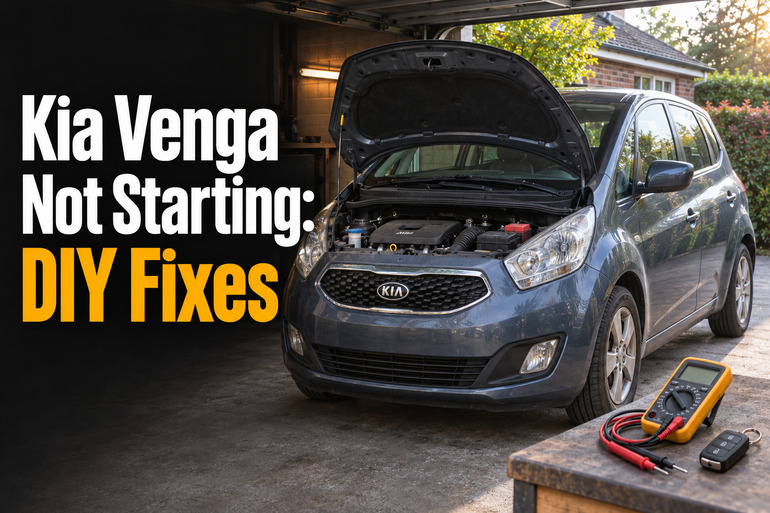
What Happens When Your Kia Venga Won’t Start
When you turn the key or press the start button, the starter motor should spin the engine. That steady, repeating sound before the engine fires is called cranking. Once the engine starts running on its own, the starter’s job is done. If all you hear is a click, the engine hasn’t cranked. If you hear the usual rhythm and it never catches, the engine is cranking without starting.
A dark dashboard or a display that goes blank during the attempt points toward a loss of electrical power. A bright display with no cranking makes it worth checking the gear selector, pedals, and key messages. If the engine starts and cuts out a second or two later, make a note of that too. It gives a technician a different set of clues from a silent starter.
An occasional slow start is worth checking while the car still runs. Note whether it happens first thing in the morning, after several days parked, or when you stop briefly with the engine already warm. If the car cut out while you were driving and now won’t restart, tell roadside assistance what happened before the engine stopped.
Before you try again, make sure the car is parked safely and the parking brake is set. Stop if you see smoke, smell strong fuel or burning, or spot an obvious leak. Move away if there’s smoke or a fire risk and call for help. If you’re stranded where traffic puts you at risk, get to safety and arrange roadside assistance before checking the car.
Kia Venga Not Starting: Common Causes
The battery and starter are natural places to look when the engine turns slowly or stays still. If it cranks at its normal speed, the key warning, fuel level, and conditions just before the fault can help narrow down the cause.
1. A Weak Battery or Poor Battery Connection
Rapid clicking often means the starter is getting too little power to keep working. You might also hear the engine turn more slowly than usual or see the interior light fade sharply during the attempt. The radio and dashboard need much less power than the starter, so they can still work with a weak battery.
A light left on can run the battery down while the car is parked. An aging battery may struggle on cold mornings, and a fault in the charging system can leave even a good battery short of power. If the car needs another jump soon after the first, the battery and charging system both deserve a check.
A loose battery clamp or heavy corrosion around a terminal can produce similar symptoms. A battery may have enough charge, yet too little current reaches the starter through the connection. White or green buildup around a clamp, or a clamp that looks visibly out of place, gives you something specific to report before buying a battery.
2. The Gear Selector or Pedal Position
On a manual Venga, the usual starting procedure calls for Neutral and the clutch pedal pressed fully down. A floor mat bunched behind the clutch can limit its travel. Where a clutch switch is fitted, the car may also stay silent if the switch fails to register that the pedal is down.
On an automatic, start in Park with your foot firmly on the brake. If the lever looks as though it’s in Park but the display shows another position or asks you to select Park, the car may be receiving the wrong signal from the selector. A push button model may also show a prompt to press the brake if the car hasn’t detected the pedal.
3. The Car Can’t Recognize the Key
The immobilizer is a security system that checks whether the key is authorized to start the engine. A key message or an immobilizer light that flashes during an attempted start gives you a reason to check the key. Some lights come on briefly as part of normal operation, so look up the pattern for your model year.
On a Venga with a start button, a weak smart key battery can make the key harder for the car to detect. On a Venga with a traditional ignition, the part of the key the immobilizer reads is separate from the remote locking function. If the unlock buttons have stopped working, the key may still start the engine. A spare that starts the car under the same conditions is a more useful clue.
4. A Fault in the Starter Circuit
A single solid click with no engine movement can come from the starter assembly or its electrical circuit. The part that engages the starter may make a sound even when the motor itself can’t turn. A worn starter, a poor cable connection, or a weak battery can each produce a click, so the sound alone won’t tell you which part has failed.
Notice whether the fault comes and goes. If the Venga starts normally when cold but sometimes gives one click after a short stop, tell the technician when it happens. That pattern can help them reproduce the fault and check the power reaching the starter before deciding whether it needs replacement.
5. A Fuel, Ignition, or Diesel Preheating Fault
An engine that cranks steadily needs fuel to reach the cylinders. An empty tank, a fuel pump that has stopped working, or a restricted filter can interrupt that supply. Think back to the last time you drove the car. A gauge already close to empty, a loss of power before the car stopped, or trouble just after filling up all give you different clues.
On a gasoline Venga, the spark plugs ignite the fuel mixture at the right moment. A fault in the ignition system or an engine speed sensor can leave you with normal cranking and no start. Testing those systems usually takes equipment a repair shop will have.
On a diesel Venga, glow plugs help warm the engine for a cold start. If the engine cranks well but has become much harder to start on cold mornings, the glow plugs or their controls are worth checking. If a glow plug warning flashes or stays on after the engine has warmed up, report that detail to a technician.
Kia Venga Not Starting: DIY Fixes
Start with the checks that match what you heard and saw on the dashboard. If a check changes how the car behaves, note what changed before moving on.
1. Reset the Gear Selector and Pedals
With the parking brake set, switch off the ignition. On a manual, put the lever in Neutral, check that the floor mat is clear of the pedals, and push the clutch all the way down. Hold the brake while you make a normal start attempt. On an automatic, hold the brake and move the lever firmly into Park, then try again.
If an automatic still won’t crank, check whether your owner’s manual allows starting in Neutral. If it does, keep the parking brake set and your foot on the brake, select Neutral, and try once. If it consistently starts in Neutral but fails in Park, tell the repair shop. If you discover the brake lights aren’t working, arrange assistance before driving.
2. Try the Spare Key
Use your spare key on its own and leave the original and any other car keys away from the ignition or start button. Follow the normal starting procedure and see whether the warning goes away. If the spare works and the main key repeatedly fails, take both keys with you when you have the original checked.
If your Venga has a start button, look up the backup starting procedure for a weak smart key battery. The 2017 owner’s manual describes pressing the start button directly with the smart key while following the normal gear and pedal instructions. Use the instructions for your own model year. If that method works, check the manual for the correct replacement battery and its orientation before opening the fob.
3. Look at the Battery and Arrange a Jump if Needed
With the ignition off, look at the battery and its cable clamps. If a clamp looks loose or you see heavy corrosion, have the connection checked before relying on a jump. If the battery looks swollen, cracked, or wet with leaking fluid, or you suspect it’s frozen, leave it alone and call for assistance.
If the battery looks intact and the engine cranks slowly or clicks rapidly, a jump may help. Use a booster or donor battery rated at 12 volts. Follow the jump starting diagram in your Venga’s owner’s manual and the instructions for the booster or donor vehicle. Kia’s Venga procedure uses a solid metal ground point away from the discharged battery for the final negative connection. If you can’t identify the correct points, have roadside assistance do it.
If the engine starts and the battery warning light stays on, arrange assistance before driving. If the warning goes out but the Venga soon struggles to start again, ask for a battery and charging system test.
4. Check the Fuel Level and Use the Normal Start Procedure
If you suspect you filled up with the wrong fuel, leave the ignition off and arrange a fuel drain. Tell the technician if you’ve already tried to start the engine. Otherwise, switch on the ignition and look at the fuel gauge. If it reads empty and you’re safely parked, switch off again and add the correct fuel from an approved container. Check the label inside the fuel flap or consult the manual if you’re unsure which fuel the car takes.
If a diesel has run completely dry, the fuel system may need priming, which means getting fuel back through the system before it can start. Check the owner’s manual or call roadside assistance if adding fuel doesn’t get it going. Leave the fuel lines closed. If there’s fuel in the tank and you have a diesel with a traditional ignition key, switch to ON, wait for the glow plug light to go out, then crank. For a push button version, follow the diesel starting procedure in your manual.
5. Contact a Mechanic or Roadside Assistance
Arrange professional help if the Venga still won’t crank after the basic checks, cranks normally without starting, or starts and then stalls. Stop repeated attempts, especially if the cranking gets slower. Avoid trying to start the car by pushing or towing it.
Tell the technician whether you heard rapid clicks, one click, or steady cranking, and mention any warning message. Include whether the spare key, Neutral, or a jump made a difference. A mechanic can use that information to choose which checks to run first, such as testing the battery under load, checking the starter’s power supply, or testing fuel pressure on an engine that cranks at normal speed.
Wrapping Up
The best clue is often what changed before the Venga stopped starting altogether. If it’s been taking longer to fire each morning or the dashboard has been dimming during starts, write down when you first noticed it. That detail is easy to lose once the car starts again, especially if the problem only happens once in a while.
If your Venga is running again after a simple check, pay attention the next time you start it under similar conditions. If the symptom returns, book a check while you can still describe exactly how it behaved.