
A stiff brake pedal can make it feel as if something is physically stopping your Kia Telluride from starting. But if the pedal felt normal on your last drive and firmed up only after you pressed it a few times with the engine off, you may have used up the reserve brake assist.
What happens when you press Start/Stop can tell you where to look next. Listen for the engine turning and check the dashboard for a message.
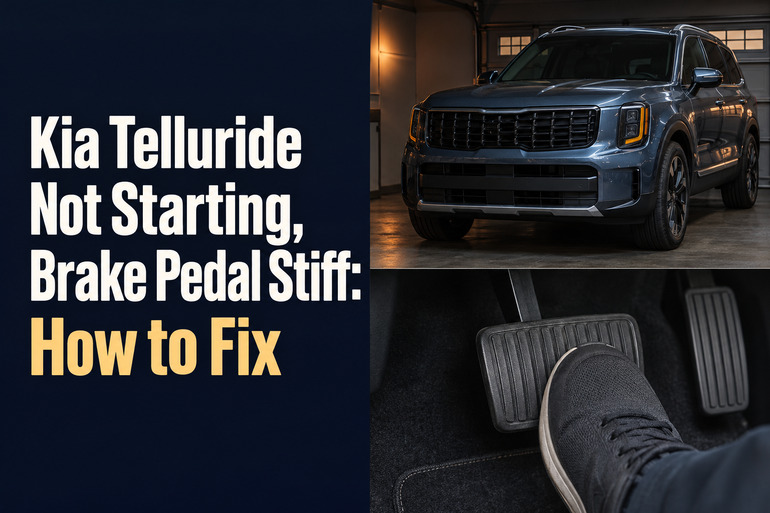
What a Stiff Brake Pedal Means When Your Telluride Won’t Start
Power brake assist reduces the effort needed to press the pedal. On Tellurides with a vacuum brake booster, some assist can remain after you shut off the engine. Each press uses a bit of that reserve. If you pump the pedal while trying to start the SUV, the pedal can get progressively firmer even when the brakes are working normally. Once the engine starts, the pedal should feel easier to press again.
The Start/Stop button relies on the vehicle recognizing that you’re pressing the brake. If the dashboard or radio comes on but the engine stays still, the vehicle may have switched to accessory mode. If the engine turns at its usual speed but never catches, check the fuel gauge. If there’s fuel and it still won’t run, have the engine diagnosed.
If you have a Telluride Hybrid, look for the READY indicator. The hybrid system can be ready to drive while the gas engine stays quiet. If READY stays off after a normal start attempt, note the exact message on the display. Follow your hybrid owner’s manual for any battery recovery procedure, since the equipment and connection points can differ.
If the pedal stays unusually hard after the engine starts or the hybrid shows READY, don’t drive. The same applies if the pedal got hard while you were driving before the starting trouble began. Arrange a tow so a technician can check the brake assist. With less assist, it takes more effort to stop.
Kia Telluride Not Starting, Brake Pedal Stiff: Common Causes
A dash that goes dark during a start attempt points in a different direction from a dash that stays bright and displays a warning. Pay attention to what changes as you press the button, since several faults can leave you with the same firm pedal.
1. A Weak 12 Volt Battery or a Poor Connection
The lights and radio can still work when a battery is too weak to turn the engine. The starter needs much more power than those accessories. Rapid clicking, a slow attempt to turn over, or an interior light that dims sharply as you press Start/Stop all give you a reason to check the battery first.
A loose or corroded connection can produce similar symptoms by restricting the power that gets from the battery to the starter. If your model has an accessible 12 volt battery, you might see a white or green crust around a terminal. Corrosion can also be hidden inside a connection.
If you need a jump every few days, the battery may have lost its ability to hold a charge. The charging system may also be falling short, or something may be drawing power when the SUV is parked. Mention any dash camera or other accessory that stays powered after the vehicle is off.
2. A Missing Brake Pedal Signal
A switch or sensor tells the vehicle when you’ve pressed the brake. If the dash still asks you to press the pedal while you’re holding it down firmly, that signal may be missing. The problem could be the switch, its power supply, or its wiring. On some Tellurides, a blown stop lamp fuse can also block a normal start.
Look at the brake lights before assuming the pedal is the problem. If none of them work and the rest of the vehicle has power, the brake light circuit deserves attention. If one light is out while the others respond, that one light may have a fault of its own. Even when all the brake lights work, a technician may still need to verify that the vehicle’s start system sees the pedal being pressed.
3. A Smart Key the Vehicle Can’t Detect
If the dash says the key isn’t detected, start with the key fob. A weak fob battery can make detection unreliable, and a fob outside the cabin or buried next to other electronics can also cause trouble. You may notice the locks have started responding only when you’re close to the SUV.
A spare fob helps narrow this down. If the spare works in the same spot and the main one repeatedly fails, the main fob or its battery is a good place to focus. If both fail and the dash also flickers or resets, check the vehicle’s 12 volt power supply before assuming both keys have a problem.
4. The Vehicle Doesn’t Recognize Park
Your Telluride checks the selected gear before allowing a start. If the vehicle can’t confirm a permitted gear, it may stay silent when you press Start/Stop. Look for a message telling you to shift to Park or Neutral, or check whether the gear display matches the position you selected.
Sometimes the selector simply hasn’t registered your last shift. If you repeatedly select Park and the display shows another gear, stays blank, or keeps asking for Park, the gear position signal or the shifter system may need diagnosis.
5. A Fault in the Starter or Its Circuit
On a gas Telluride, a solid click with no engine movement can point to the starter or its electrical circuit. A weak battery or a poor cable connection can make much the same sound, so one click by itself gives you too little information to order a starter.
A starter fault can come and go. The engine might start normally in the morning and refuse to turn over after a short stop.
If the battery and cables pass testing, a technician can check whether the starter is receiving power and a signal to run.
Kia Telluride Not Starting, Brake Pedal Stiff: DIY Fixes
Start with one controlled attempt so you can see what the dash and lights do. From there, follow the clue that best matches what you observed.
1. Confirm Park and Hold the Brake Steady
Keep the Telluride stationary with the parking brake set. Confirm that the gear display shows P, bring the smart key into the cabin, and check that the floor mat or a loose object isn’t blocking the pedal. Press the brake firmly and hold it while you press Start/Stop once. Avoid pumping the pedal or trying to force it to the floor.
If the dash asks for Park and your selector operates normally, select Park again while holding the brake, then check the display before trying once more. Some Kia manuals also permit starting in Neutral, with Park recommended. Only try Neutral if your manual allows it and you can keep the vehicle stationary with the parking brake set and your foot firmly on the brake. If the gear display remains unreliable, stop there and arrange service.
2. Check for Weak Battery Power
Turn on an interior light before trying to start. If that light fades sharply, the displays restart, or you hear a burst of clicks, arrange a battery and connection check. With the vehicle off, you can look for visible corrosion or damage where the battery is accessible. Leave loose or damaged cables for roadside assistance or a technician.
For a jump, use the emergency starting procedure in the owner’s manual for your model year and powertrain. It identifies the correct 12 volt power source, connection points, and cable order. If the battery appears frozen, cracked, swollen, or leaking, skip the jump and call for help. If you’re unsure where the clamps go, roadside assistance can handle the attempt.
If a jump gets the vehicle going, have the battery and charging system tested before relying on it for another trip. Tell the technician how long the SUV sat before it failed and whether the trouble has happened more than once. If a correctly performed jump changes nothing, the next step is to test the power supply and start circuit before another attempt.
3. Try the Backup Method for Your Smart Key
If the dash reports a missing key, take the fob out of your bag or pocket and move it away from your phone and other keys. Try a known working spare if you have one. Many Telluride manuals also describe a backup method for a weak fob battery. With the SUV in Park and the brake held down, use the fob itself to press the Start/Stop button as shown in your manual.
If the backup method works, check your manual for the correct fob battery and how to fit it. Test normal starting again with the fob inside the cabin. If both fobs still fail, or the warnings continue after a battery change, have the key detection system and vehicle battery checked.
4. Check the Brake Lights While Parked
With the parking brake set and the transmission in Park, ask someone to stand safely off to one side with a clear view of the rear lights. You can also look for their reflection in a garage door or window. Press the brake once and check whether the rear stop lamps, including the high center light, brighten.
If none respond and the dash has normal power, report that observation along with any message asking you to press the brake or check a fuse.
Don’t drive if the brake lights don’t work, even if you manage to start the vehicle. Drivers behind you need that signal to know when you’re slowing down.
5. Check Whether Normal Pedal Feel Returns
If the Telluride starts, stay parked and notice how the pedal feels with your foot still on it. On a model with vacuum assist, the pedal may ease down a little as the engine starts. If it feels normal again and there are no brake warnings, the earlier stiffness is consistent with using up the reserve while the engine was off.
Pay attention to how early the pedal gets hard if the symptom returns. A pedal that firms up after several presses with the engine off gives the shop a different clue from one that’s already rock hard on the first press after a brief stop.
If that change becomes a pattern, book an inspection. An assist system that loses reserve unusually fast may have a leak or a valve that no longer holds vacuum.
6. Call Roadside Assistance or a Qualified Technician
Arrange a tow right away if the pedal stays hard with the engine running, braking felt weaker on your last drive, or the brake lights don’t work. If the vehicle still won’t start after the basic checks, or it starts and then has the same problem again, a Kia dealer or qualified shop can test the battery under load and check what the vehicle sees from the brake pedal, key, and shifter.
Give the shop the exact warning message, whether you heard one click or several, and whether the engine turned at all. A photo of the display can help with a fault that comes and goes. If you have a 2027 Telluride or Telluride Hybrid that repeatedly loses battery power while parked, ask the dealer to check your vehicle identification number for applicable software service actions. Kia has issued updates for some vehicles with that symptom.
Wrapping Up
The timing of the stiff pedal tells you a lot. If it firms up only after a few presses while the SUV is off, the dash messages and startup sounds are usually better clues to why you’re still parked. If the pedal behaves differently after the vehicle starts, give that change priority and arrange an inspection.
Write down what happened on the first attempt, especially if the Telluride starts normally later. A clear description of what you heard, saw, and felt can help the shop track down a fault it may have trouble reproducing.