
When the washer jets on your Hyundai i20 stop spraying, dirt, road grime, and dust can quickly build up on the windshield and make driving less safe. Sometimes the cause is a simple lack of washer fluid, while other cases involve blocked nozzles, a leaking hose, a faulty pump, or an electrical problem.
Fortunately, several checks can help you identify the fault without expensive tools. You can start with the simplest solutions and work through the system before deciding whether professional repairs are necessary.
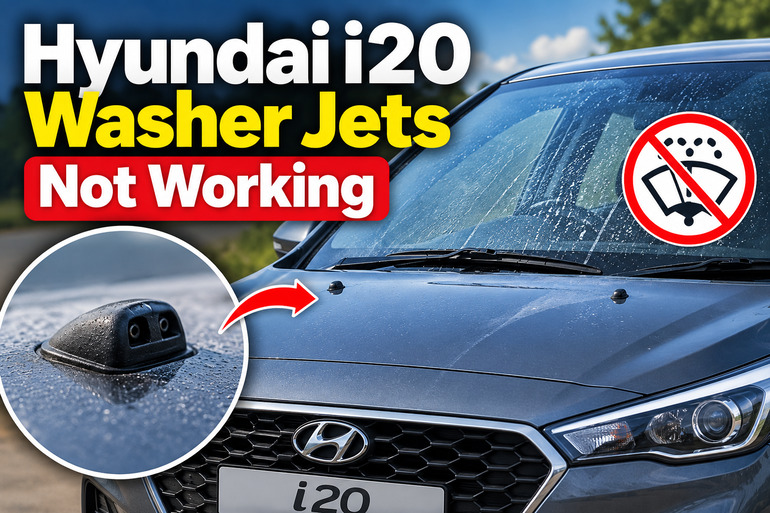
What It Means When Your Hyundai i20 Washer Jets Stop Working
The windshield washer system on your Hyundai i20 uses a reservoir to store washer fluid, an electric pump to move the fluid, hoses to carry it, and nozzles to spray it onto the glass. When you activate the washer control, the pump pressurizes the fluid and sends it through the hoses to the jets. The windshield wipers then help clear the loosened dirt.
A fault anywhere along this route can prevent the fluid from reaching the windshield. For example, the pump may run normally while a blocked nozzle prevents the spray from coming out. Alternatively, a disconnected hose may allow fluid to escape underneath the hood instead of reaching the glass.
The symptoms often provide useful clues. If you hear the pump running but see no spray, the problem may involve an empty reservoir, a blockage, frozen fluid, or a damaged hose. If there’s no pump sound at all, a blown fuse, faulty pump, damaged wiring, or a problem with the washer switch may be responsible.
You should also distinguish a washer fault from a wiper fault. If the wipers move but no fluid appears, concentrate on the washer system first. If neither the washer nor the wipers responds, there may be a broader electrical issue or separate faults that require diagnosis. Driving with a dirty windshield can reduce visibility, so resolve the problem before conditions make the glass difficult to see through.
Hyundai i20 Washer Jets Not Working: Likely Causes
Several faults can produce similar symptoms, so it’s worth checking the basic items before replacing any components. The following are five common possibilities to investigate.
1. Low or Empty Washer Fluid
An empty reservoir is one of the simplest explanations for washer jets that fail to spray. The fluid may have run out through normal use, or a small leak may have caused the level to drop. If you have been using the washers frequently in dusty or rainy conditions, the supply can run low faster than expected.
When the reservoir is empty, the pump may still make its usual buzzing sound, but it cannot deliver liquid to the nozzles. Repeatedly activating the washer in this condition can damage the pump, so stop operating it until you’ve checked the fluid level.
The reservoir is located in the engine compartment, and its filler cap is commonly marked with a windshield and spray symbol. The exact position varies by i20 generation and market. Check the level and look around the reservoir for signs of leakage if the tank needs frequent refilling.
2. Blocked or Dirty Washer Nozzles
The washer jets have small openings that direct fluid onto the windshield. Dirt, mineral deposits, dried washer fluid, and other debris can restrict these openings over time. The blockage may affect one nozzle or both, depending on where the contamination has accumulated.
A partial blockage often produces a weak, uneven, or misdirected spray. One jet may work normally while the other produces a thin stream or nothing at all. If both nozzles stop spraying but the pump is audible, a shared supply problem should also be considered.
The nozzles may be mounted on the hood or integrated into another part of the windshield area, depending on the vehicle version. Their small openings can be damaged by aggressive cleaning, so avoid forcing a thick needle or sharp object into them. Gentle cleaning is usually a better starting point.
3. Leaking, Disconnected, or Damaged Washer Hoses
Flexible hoses carry washer fluid from the pump to the nozzles. Over time, a hose can become loose, split, pinched, or disconnected. Previous repairs, work around the hood, or deterioration of the rubber can also contribute to a fault.
A disconnected hose often allows the pump to run while little or no fluid reaches the windshield. You may notice liquid dripping into the engine compartment, running down the underside of the hood, or pooling underneath the front of the car when the washer is activated. A leak may be less obvious if fluid escapes inside a body panel.
A hose that’s pinched or obstructed can create symptoms similar to blocked jets. If the front washers fail while the pump remains audible, check for visible hose damage before assuming the pump itself is defective. Avoid dismantling body panels unnecessarily, as some sections may require specific clips or trim-removal tools.
4. Frozen or Contaminated Washer Fluid
Fluid inside the reservoir or hoses can freeze in sufficiently cold weather, stopping the washer from spraying. The problem may appear suddenly after an overnight temperature drop, even when the system worked normally the previous day. Water or washer fluid without adequate freeze protection is particularly vulnerable.
Contamination can cause related problems. Dirt entering the reservoir, unsuitable fluid mixtures, or deposits left by old fluid may obstruct small passages and affect spray performance. The pump may make a noise without producing a visible spray because the fluid cannot move freely through the system.
Do not keep operating the pump to force a blockage through. If freezing is suspected, allow the vehicle and system to warm naturally or use the cabin defroster to warm the windshield before trying the washer again. Never pour boiling water onto the windshield or hot engine components. Use washer fluid appropriate for the temperatures in which the vehicle operates.
5. Faulty Washer Pump, Fuse, or Electrical Connection
The electric washer pump is responsible for moving fluid from the reservoir through the hoses. If the pump motor fails, its electrical supply is interrupted, or a connection becomes damaged, the jets may stop working even when the reservoir is full and the nozzles are clear.
Listen carefully when operating the washer control. A brief humming or buzzing sound suggests that the pump is receiving at least some power, although it doesn’t prove that the pump is functioning correctly. Complete silence can indicate a failed pump, a blown fuse, damaged wiring, or a fault in the switch or control circuit.
A blown fuse is another possible cause, but its location and rating depend on the specific model year and equipment. A fuse can fail because of an electrical fault or an overloaded circuit. Replacing it without finding the underlying problem may result in another failure, so repeated fuse failures need professional investigation.
Hyundai i20 Washer Jets Not Working: DIY Fixes
Start with the least complicated checks, since an empty reservoir or dirty nozzle may be responsible for the fault. Work through the following fixes in order, stopping once the system operates normally.
1. Check and Refill the Washer Fluid Reservoir
Begin by parking your Hyundai i20 on level ground, switching off the engine, and allowing hot components in the engine compartment to cool. Open the hood and locate the washer reservoir using the owner’s manual if its position isn’t immediately clear.
Check the fluid level and refill it with suitable windshield washer fluid if necessary. Avoid pouring liquid into the coolant reservoir or another container by mistake. Washer fluid is typically added through a cap marked with the windshield washer symbol.
After refilling, close the cap securely and activate the washer briefly. If the jets begin spraying normally, the low fluid level was probably responsible. If the reservoir becomes empty again after a short period, inspect for leaks rather than continuing to refill it.
Use proper washer fluid instead of relying on plain water as a long-term solution. The correct formulation can help remove road grime and protect the system against freezing in cold conditions. Never use engine coolant in the washer reservoir because it can impair visibility and damage vehicle finishes.
2. Clean the Washer Nozzles
If the reservoir contains sufficient fluid and the pump runs, examine the nozzles for visible dirt or residue. Check whether both jets are affected, whether one produces a weak spray, or whether the fluid lands far below or above its intended area.
Use a soft cloth to clean the exterior of each nozzle. If dirt is lodged around the opening, use a soft brush to remove it carefully. Avoid pushing sharp objects deep into the jet, as this may enlarge the opening or damage the internal passage.
You can test the system with a brief washer activation after cleaning. If the spray improves, the obstruction may have been responsible. If the nozzle remains blocked, the restriction could be deeper in the passage or hose, and the nozzle may need appropriate removal and cleaning.
Some i20 versions use different nozzle designs, so follow the procedure for your model rather than forcing a nozzle out of the hood. Replace a damaged nozzle instead of trying to reshape its opening.
3. Inspect the Washer Hoses for Leaks or Disconnections
When the reservoir is full and the pump makes a sound but no fluid reaches the windshield, inspect the visible washer hoses. Depending on the i20 generation, you may find them running through the engine compartment and along the underside of the hood toward the nozzles.
Look for a loose connection, a split hose, sharp bends, or signs of wetness around joints. If fluid leaks from a visible, easily accessible connection, switch off the washer before attempting any adjustment. Allow the surrounding area to dry enough for you to handle the connection safely.
A hose that has simply slipped off its fitting may be reconnected if the parts are intact and accessible. A cracked hose should be replaced with a compatible part rather than patched with an unreliable temporary repair.
After correcting an accessible fault, test the washer briefly and check whether fluid reaches the windshield without leaking. If the leak is hidden inside the hood or behind body panels, a technician can access the affected section without damaging trim or clips.
4. Check the Washer Fuse
If the washer pump remains silent, the fuse is worth checking. First, consult the owner’s manual for the fuse-box locations and the correct fuse associated with the washer system. Fuse assignments can differ between i20 model years, engine options, and markets, so avoid relying on a diagram from a different version.
Turn the ignition off before examining the fuse box. Follow the manual’s instructions for locating and removing the relevant fuse, using the proper fuse puller where supplied. Check for a broken internal element or other visible signs of failure.
If the fuse has blown, replace it only with another fuse of the specified rating. Never install a fuse with a higher rating or bridge the fuse contacts with wire or metal. Such workarounds can overheat wiring and create a fire risk.
Test the washer after installing the correct replacement. If the new fuse blows again, stop testing and arrange an electrical diagnosis. A recurring failure can indicate a short circuit, a damaged wire, or a problem with the pump itself.
5. Check the Pump’s Operation and Fluid Delivery
If the reservoir is full, the nozzles are clean, the hoses appear intact, and the fuse is good, the pump may need further investigation. Have another person briefly operate the washer control while you listen from a safe position near the front of the vehicle. Keep clear of moving wiper arms and other components.
A humming sound doesn’t guarantee that the pump is delivering fluid. Its motor may be running while an internal component is worn or an inlet is blocked. If the pump is silent, the cause could be the motor, its electrical connection, a control switch, or the wiring supplying power.
You can inspect accessible electrical connectors for obvious looseness or corrosion with the ignition switched off, provided they can be reached safely. Do not probe live wiring or connect the pump directly to a battery unless you have the proper equipment and technical knowledge.
If there is no obvious external fault, the pump may need testing with suitable electrical and fluid-pressure checks. These tests can establish whether the pump is receiving power and whether it can deliver fluid at the required rate. Replacing parts before confirming the diagnosis may add unnecessary expense.
6. Contact a Qualified Automotive Technician
Professional diagnosis is appropriate if the washer still doesn’t work after the basic checks, if a replacement fuse fails again, or if fluid leaks from an inaccessible area. It is also the sensible option when the pump requires removal or the system has an electrical fault.
A technician can test the pump, inspect the wiring and switch circuit, trace hidden hose leaks, and determine whether the nozzles or pump need replacement. Ask for the fault to be identified before approving parts replacement, particularly if the washer and wipers have developed problems at the same time.
Until the system is repaired, avoid driving when dirt, mud, or road spray prevents you from seeing clearly through the windshield. If visibility becomes unsafe, pull over somewhere safe rather than attempting to continue with an impaired view.
Wrap-Up
Hyundai i20 washer jets that fail to spray can be affected by several faults, from an empty reservoir to blocked nozzles, damaged hoses, or an electrical problem. Checking the fluid level, cleaning the nozzles, and inspecting accessible hose connections are sensible first steps for most owners.
Pay attention to whether the pump makes a sound and whether any fluid leaks from underneath the hood. These clues can help narrow down the problem without unnecessary part replacements. If the basic checks don’t restore the spray, a qualified technician can diagnose the system and help you return your Hyundai i20 to safe driving condition.