
When your Hyundai i10 washer jets stop spraying, even a short drive can become uncomfortable as dust, mud, and road grime build up on the windshield. The wipers may still operate normally, leaving you with no convenient way to clear the glass while driving.
The fault could be something as simple as an empty washer reservoir or blocked nozzle, but a damaged hose, failed pump, or electrical problem can produce similar symptoms. Identifying the difference helps you choose the right repair and avoid replacing parts unnecessarily.
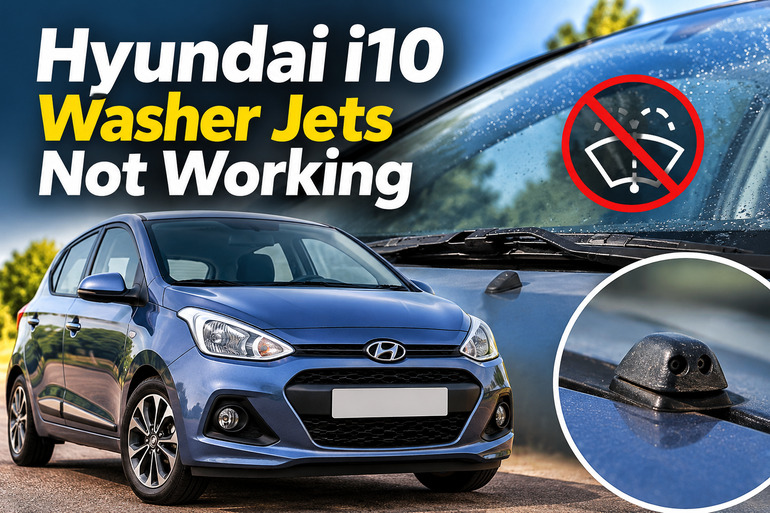
What It Means When Your Hyundai i10 Washer Jets Stop Working
Your Hyundai i10 uses an electric washer pump to move fluid from a reservoir through small hoses to the spray nozzles. When you operate the washer control on the steering column, the pump pushes the fluid through the system and onto the windshield. The wipers then help spread the fluid and remove dirt.
If the washer jets stop working, the problem can occur anywhere along this path. A reservoir without sufficient fluid cannot supply the pump, while a blocked nozzle may prevent fluid from reaching the glass even when the pump is running. Electrical faults can also stop the pump from operating altogether.
Pay attention to what happens when you activate the washer control. A faint humming sound from the pump suggests that it is receiving power and attempting to work, although it does not prove that the pump is healthy. Complete silence points towards a possible electrical fault or failed pump. Fluid dripping beneath the hood or running down the engine compartment may indicate a disconnected or damaged hose.
The windshield wipers and washer jets also perform separate functions. If your i10 wipers move normally but no fluid comes out, the fault is more likely to involve the washer fluid supply, pump, hoses, nozzles, or electrical controls. Because several faults can produce similar symptoms, a few simple checks are worth completing before purchasing replacement parts.
Hyundai i10 Washer Jets Not Working: Common Causes
Several faults can prevent your Hyundai i10 washer jets from spraying correctly. Start by identifying whether the pump runs, whether fluid is leaking, and whether one or both nozzles are affected.
1. An Empty or Contaminated Washer Fluid Reservoir
An empty reservoir is one of the simplest explanations for washer jets that suddenly stop working. The fluid may have been used during previous trips without you noticing the level dropping. A leak can also cause the reservoir to empty faster than expected.
Contaminated fluid creates a different problem. Dirt, sediment, and mineral deposits can accumulate when unsuitable water or dirty fluid is repeatedly added to the reservoir. These particles may obstruct the small passages in the washer system, leading to weak spray or no spray at all.
If your Hyundai i10 produces a brief spray before stopping, low fluid is worth checking first. You may also hear the pump running without seeing anything reach the windshield. Hyundai’s Grand i10 owner manual advises checking the washer fluid level and warns against operating the pump when the reservoir is empty, since doing so can damage it.
A reservoir that repeatedly becomes empty after refilling deserves closer inspection. The issue may involve a leak in the tank, pump seal, or connected hoses rather than ordinary fluid consumption.
2. Blocked or Misaligned Washer Nozzles
The washer nozzles have very small openings that direct fluid onto specific areas of the windshield. Dirt, dried washer fluid, road grime, and residue from vehicle wax can obstruct these openings.
A partially blocked nozzle often produces a weak stream, an uneven spray pattern, or fluid directed away from the intended area. If one jet sprays normally while the other produces a thin stream, the affected nozzle or its connecting hose is a sensible place to begin your investigation.
Complete blockage can prevent all fluid from passing through a nozzle even when the pump and hose are functioning. However, if both front jets stop spraying simultaneously, do not automatically assume that both nozzles became blocked at the same moment. A shared supply problem, disconnected hose, or pump fault may be more likely.
Misalignment is also possible after cleaning, repair work, or accidental contact with the nozzles. In this situation, the washer system may work, but the fluid lands too low, too high, or outside the driver’s main viewing area.
3. A Disconnected, Kinked, or Damaged Washer Hose
Small flexible hoses carry washer fluid from the pump to the nozzles. These hoses can become disconnected, cracked, pinched, or blocked by debris.
A loose connection may develop after work around the hood or engine compartment. A damaged hose can also deteriorate with age, allowing fluid to escape before it reaches the windshield. If the hose is pinched, the flow may become weak even though the pump continues running.
One useful clue is the presence of washer fluid underneath the vehicle or around the rear edge of the hood. You may also notice the reservoir level falling rapidly while very little fluid reaches the windshield.
If you can see fluid pooling near the hood hinges or flowing beneath the hood, a damaged hose or loose fitting deserves attention. On Hyundai i10 versions equipped with a rear washer, the front and rear supply paths may differ. A working rear washer alongside a failed front washer can help narrow the search to the front circuit, although the pump arrangement varies by model and year.
4. A Faulty Washer Pump
The washer pump is a small electric motor that draws fluid from the reservoir and sends it through the hoses. Repeated operation with an empty reservoir, internal wear, contamination, or electrical damage can cause the pump to fail.
A completely failed pump may remain silent when you activate the washer control. However, silence alone cannot confirm that the motor is defective because a blown fuse, damaged wire, poor connection, or faulty steering column switch can produce the same symptom.
A worn pump may still make a humming sound but fail to move enough fluid. You might notice weak spray from both nozzles, intermittent operation, or a pump that becomes unusually noisy. A blocked intake can also prevent a functioning motor from delivering fluid.
Replacing the pump before checking the fluid level, hoses, and electrical supply can waste money. A technician can test whether the pump receives power and whether it produces sufficient fluid flow before deciding if replacement is necessary.
5. A Blown Fuse or Fault in the Washer Controls
The washer pump relies on an electrical circuit to operate. Depending on the i10’s model year and equipment, this circuit may include a fuse, wiring connections, the steering column washer switch, and other electrical components.
A blown fuse can interrupt the pump’s power supply, leaving the washer jets inactive. Electrical problems may also develop because of corrosion, damaged wiring, loose connectors, or a failed switch.
If the pump is completely silent despite a full reservoir, an electrical fault becomes more plausible. A fuse may also blow after a short circuit or a pump begins drawing excessive current. Replacing a blown fuse without investigating why it failed can allow the problem to return.
The exact fuse location and identification depend on your i10’s model year and market. Hyundai provides separate owner manuals for different i10 generations, so use the manual that matches your vehicle rather than relying on a fuse number found in a guide for another version.
Hyundai i10 Washer Jets Not Working: DIY Fixes
The right repair depends on what your checks reveal. Start with the fluid supply and visible components before moving to the electrical system or replacing any parts.
1. Refill the Washer Fluid Reservoir
Open the hood with the vehicle parked safely and the engine switched off. Locate the washer fluid reservoir by checking the owner’s manual. Its cap usually carries a windshield spray symbol, which helps distinguish it from coolant and other fluid containers.
Inspect the fluid level and refill the reservoir with suitable windshield washer fluid if it is low. Follow the product directions and avoid filling beyond the reservoir’s capacity. Hyundai permits plain water in certain circumstances when washer fluid is unavailable, but appropriate washer fluid is generally preferable because it helps remove road grime and can contain cleaning additives.
Never put engine coolant or radiator antifreeze into the washer reservoir. Hyundai specifically warns that coolant sprayed onto the windshield can severely impair visibility and damage vehicle paint or trim.
After filling the tank, operate the washer control briefly and observe the spray. Avoid holding the control continuously if nothing comes out. If the reservoir is full but the jets remain dry, continue with the next checks instead of repeatedly running the pump.
2. Clean the Blocked Washer Nozzles
If one nozzle sprays weakly or produces no fluid while the other works, blockage may be responsible. Begin by wiping the outside of each nozzle with a clean, damp cloth to remove loose dirt and dried residue.
If the opening remains obstructed, use a suitable washer nozzle cleaning tool or a soft, fine nylon strand to clear accessible debris gently. Avoid forcing a thick needle into the opening, as this may enlarge the hole or damage the nozzle’s internal passage. Do not push dirt farther into the nozzle.
Test the washer system briefly after cleaning. A restored, even spray pattern suggests the blockage has been cleared. If fluid still cannot pass through the nozzle, the obstruction may be deeper inside the component or in the connecting hose.
A nozzle that sprays consistently but misses the intended area may require adjustment. Only adjust it if your particular nozzle design permits this, and make small changes without forcing the component. Replace a damaged nozzle if cleaning and appropriate adjustment do not restore its operation.
3. Inspect the Washer Hoses for Leaks or Disconnections
With the engine switched off, inspect any visible washer hoses around the reservoir, under the hood, and near the nozzles. Look for loose connections, cracks, flattened sections, or signs of wetness that may indicate escaping fluid.
Pay attention to the areas where the hoses bend or connect to the nozzles. A hose can become kinked or detach from a fitting, preventing fluid from reaching the windshield. If fluid is leaking, identify the visible source before refilling the reservoir again.
A readily accessible, loose hose may be reconnected if its fitting is undamaged and the work can be completed safely. A cracked hose should be replaced with a suitable washer hose rather than temporarily sealed with an unreliable patch. Avoid pulling on brittle plastic connectors.
If the suspected damage lies beneath trim panels or near components you cannot reach safely, have a mechanic inspect it. After any repair, refill the reservoir if necessary and test the system briefly to confirm that fluid reaches the nozzles without leaking.
4. Check the Washer Pump Fuse
When the washer pump makes no sound, checking the relevant fuse can help identify an electrical supply problem. Switch the ignition off and consult the correct Hyundai i10 owner’s manual for the fuse panel location and identification. Do not assume that the same fuse position applies to every i10.
If the manual identifies an accessible washer-related fuse, inspect it according to the manufacturer’s instructions. Replace a confirmed blown fuse only with one of the same specified amperage. A fuse with a higher rating can allow excessive current to damage wiring or other components.
Test the washer system briefly after replacing the fuse. If it works normally, the fault may have been an isolated fuse failure, but a repeat failure requires further investigation. Do not keep replacing the fuse or install a larger one to make the system work.
If the correct fuse is intact and the pump remains silent, the fault may involve the wiring, switch, connector, or pump itself. These components need further testing before any replacement decision is made.
5. Test the Pump Operation and Fluid Flow
Listen carefully when you briefly activate the washer control. A quiet humming sound near the reservoir suggests that the pump is attempting to operate. Complete silence points towards an electrical supply problem or a pump that has stopped working, although neither possibility is confirmed by sound alone.
If the pump runs but there is no spray, return to the fluid supply, nozzles, and hoses. Look for visible leaks and note whether one nozzle works while the other fails. If both nozzles remain dry, a shared supply fault or a blocked pump intake may be involved.
Where the vehicle has a separate rear washer, test it briefly if conditions permit. If the rear washer works but the front does not, this may help narrow the fault to the front nozzle or hose circuit. It does not automatically prove that the pump is healthy, because some versions use pumps with separate outlets or different internal arrangements.
Pump removal, direct electrical testing, and testing the pump with external power require appropriate tools and knowledge. These tasks are better left to a qualified technician if you are unfamiliar with automotive electrical systems. A proper test can distinguish a failed pump from a wiring fault and prevent unnecessary parts replacement.
6. Contact a Qualified Mechanic
Professional diagnosis is appropriate if the washer jets remain inactive after the basic checks, the fuse repeatedly blows, or the pump runs without delivering fluid despite clear nozzles and intact visible hoses.
A mechanic can test electrical power at the pump, inspect connectors, assess fluid pressure, and trace leaks hidden beneath body panels. If the pump is defective, the technician can fit a compatible replacement. The correct part should be selected for your Hyundai i10’s generation, configuration, and vehicle identification details.
Seek prompt help if an electrical burning smell, melted wiring, or repeated fuse failure accompanies the fault. Avoid touching damaged wiring or bypassing protective electrical components.
A working washer system is essential for maintaining visibility. If rain, mud, or road dirt is obstructing your windshield and you cannot clear it safely, pull over at a safe location rather than continuing to drive with impaired vision.
Wrap-Up
Hyundai i10 washer jets that stop working often have a straightforward cause, such as an empty reservoir, dirty nozzle, or disconnected hose. Checking these items first can help you identify minor faults without spending money on parts that may still be functional.
Pay attention to whether the pump makes a sound, whether fluid leaks underneath the hood, and whether one or both jets have stopped spraying. These clues can narrow the possibilities considerably. Refill the reservoir, clean accessible nozzles, and inspect visible hoses before investigating electrical faults. If the problem persists, a qualified mechanic can test the pump and electrical circuit to identify the repair your i10 actually needs.