
An HEV warning on your Kia Optima can appear with a chime, reduced power, or a car that refuses to start. Although the message points to the hybrid system, it doesn’t identify the failed part. Replacing the hybrid battery without testing can lead to an expensive mistake.
The right response depends on the exact warning, your model year, and the stored fault codes. Some checks are simple, while repairs involving the hybrid electrical system require a qualified technician.
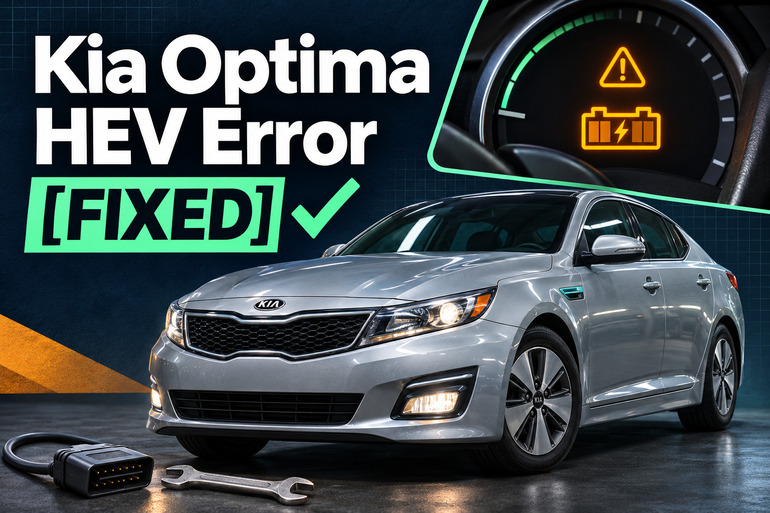
What the Kia Optima HEV Error Means
HEV stands for hybrid electric vehicle. Your Optima combines a gasoline engine with an electric motor and a high voltage battery. Its control units manage how these parts work together. An HEV warning means the vehicle has detected a problem that needs attention, but several different faults can produce similar messages.
Normal hybrid operation can sometimes seem unusual. The gasoline engine may stop while the vehicle remains ready to move, then restart automatically. Therefore, engine silence alone doesn’t confirm a breakdown. The READY indicator helps distinguish a vehicle that’s operating normally from one that hasn’t successfully started.
Warning wording also matters. Kia’s hybrid guidance distinguishes a general system warning from messages directing you to stop safely or avoid starting the engine. Follow the instructions shown on your dashboard and in the manual for your exact model year. Don’t continue driving with an active stop warning or repeatedly attempt to restart the car.
Treat loss of power, abnormal braking, smoke, or a strong burning smell as reasons to stop safely and arrange assistance immediately. Once parked, keep away from orange cables, the hybrid battery enclosure, and the service plug. These components require specific electrical safety procedures.
Kia Optima HEV Error [FIXED]: Common Causes
Several faults can interrupt the Optima’s hybrid operation, so the warning needs to be matched with other evidence. The following are relevant possibilities, rather than diagnoses you can confirm from the dashboard message alone.
1. A Discharged or Failing 12 Volt Battery
Your Optima has a low voltage electrical supply as well as its high voltage hybrid battery. A discharged 12 volt battery can prevent the vehicle from operating, even though the larger hybrid battery still contains energy. Kia’s emergency guidance identifies these as separate situations requiring different responses.
Dim lights, weak electrical accessories, or trouble after the car has been parked can make the auxiliary battery worth testing. However, these clues don’t prove that it’s responsible for an HEV warning. A battery test is more useful than replacing it based on age or assuming a successful jump start has resolved the underlying problem.
2. A Fault in the High Voltage Safety Plug Fuse
Certain Optima Hybrids have a documented fuse issue that deserves attention during diagnosis. Kia’s service campaign SC269 covers specified 2013 through 2016 model year vehicles built from September 27, 2012, through July 22, 2015. It calls for inspection and, where necessary, replacement of the high voltage safety plug fuse or assembly. Eligibility depends on the VIN.
Kia explains that an incorrect fuse can have a shortened service life, producing a hybrid warning or check engine light followed by a failure to start. The campaign also addresses improper replacement fuses, which can create a fire risk.
A separate Kia bulletin links codes P1B25 and P1B77 with a fuse inspection on certain earlier Optima Hybrids. Those codes provide a diagnostic direction, rather than automatic proof that the fuse has failed. Inspection belongs with a qualified hybrid technician because the fuse sits within the high voltage system.
3. Restricted Airflow to the Hybrid Battery
A blanket, bag, seat cover, or other object can block the battery cooling intake. Kia warns that restricted airflow can overheat the hybrid battery and illuminate the hybrid warning. Its 2020 Optima guide places the HEV intake underneath the rear seat, while other versions have different arrangements.
An intake obstruction is worth checking because you can often spot it without removing anything. Still, finding an object near the vent doesn’t establish that overheating caused your warning. Report whether the problem appeared during hot weather or after loading the rear seating area, then let the diagnostic results establish the connection.
4. A Cooling Problem Affecting the Hybrid Electronics
The hybrid electronics also depend on effective cooling. Kia’s technical bulletin PS328 describes how elevated temperatures in the motor control system can reduce electric motor power and affect acceleration in both electric and gasoline operation. Its checks include the electric water pump, hoses, and radiator.
That means hesitation or weak acceleration doesn’t always point to a worn battery. A pump fault, restricted hose, or damaged cooling component can require a different repair. Also, the bulletin describes a condition that may occur without stored fault codes, so an apparently clear scan doesn’t rule out every cooling problem.
5. An Engine Problem That Interrupts Hybrid Operation
An Optima Hybrid still needs a working gasoline engine. Kia’s owner guidance notes that running out of fuel can leave the vehicle unable to operate. Its service information also identifies P0A0F as an engine failure to start code, which directs attention to engine diagnosis rather than an immediate hybrid battery replacement.
Mechanical engine damage is another possibility when other symptoms support it. Recall SC218 concerns premature connecting rod bearing wear in certain 2017 and 2018 Optima Hybrid and plug in hybrid vehicles. The documented consequences include engine damage, stalling, and fire risk. This recall doesn’t establish the cause of every HEV warning.
If the warning arrives with knocking, rough running, an oil pressure warning, or an engine that stalls, stop trying to make the car run. Give those details to the repair shop immediately so the engine receives appropriate attention alongside the hybrid system.
Kia Optima HEV Error [FIXED]: DIY Fixes
Start with safe observations that preserve useful evidence and help identify the right repair. If the dashboard tells you to stop or avoid starting the engine, arrange recovery before attempting further troubleshooting.
1. Record the Warning and Preserve the Fault Codes
Once you’re safely parked, photograph the full dashboard message. Include the warning lights, READY indicator, fuel gauge, and hybrid battery gauge where possible. Write down whether the warning appeared during startup, acceleration, braking, or steady driving.
Avoid disconnecting the battery or clearing codes simply to remove the warning. Instead, request a scan that can access the Kia hybrid control units as well as the engine computer. Ask for the exact code numbers and any saved operating information, rather than accepting a general description such as “battery fault.”
This creates a useful starting point for diagnosis. If the warning disappears before your appointment, your photographs and the stored information can still help the technician investigate an intermittent problem. A clear dashboard after a restart doesn’t, by itself, confirm a completed repair.
2. Have the 12 Volt Battery Tested
If the vehicle has weak electrical power or won’t enter READY mode, arrange an auxiliary battery test through roadside assistance or a repair shop. Ask for the battery condition and its connections to be checked before authorizing a replacement. Battery manufacturers recommend testing when starting or electrical symptoms appear.
If a jump start is appropriate, follow the instructions for your exact Optima Hybrid or let roadside assistance perform it. Kia specifically warns against attempting to jump start the high voltage battery. A fully discharged hybrid battery requires a different response from a discharged auxiliary battery.
After a confirmed auxiliary battery fault is corrected, the vehicle should start and operate normally without returning warnings. If the HEV message remains or comes back, further diagnosis is necessary. Tell the shop whether the car needed repeated jump starts so it can investigate why the low voltage supply keeps failing.
3. Clear Objects Away From the Battery Intake
With the vehicle switched off, locate the hybrid battery intake using your model’s manual. Check whether luggage, clothing, floor coverings, or seat accessories are covering the grille. Move loose objects away so air can reach it freely.
Keep this check limited to the accessible surface. Kia’s Optima guidance warns against allowing water into the battery intake, including during cleaning. Don’t spray cleaner through the grille, push tools inside, or remove panels to reach the battery or fan.
Removing an obstruction restores the airflow path, but it doesn’t confirm that the warning’s cause has been resolved. Mention what you found when arranging service. If the warning remains, avoid using repeated starts or a test drive to decide whether the battery has cooled enough.
4. Make a Safe Visual Coolant Check
If a cooling problem is suspected, let the vehicle cool completely before looking under the hood. Use the manual’s diagram to identify the correct reservoir, since the engine and hybrid electronics can have separate cooling arrangements. Look through the reservoir wall and compare the level with its marked limits.
Don’t remove a hot coolant cap or reach near fans, orange wiring, or electrical housings. Kia’s maintenance guidance addresses engine and inverter coolant separately and calls for professional attention when the system needs repeated additions or air bleeding.
Photograph a low level, visible leak, or residue without touching the affected area. Then share the findings with the technician. A full reservoir doesn’t establish that the pump works or coolant circulates correctly, so avoid buying a pump or adding fluid solely because an online account describes similar symptoms.
5. Check Campaign Eligibility Before Approving Repairs
Give a Kia dealer your VIN and ask it to check outstanding recalls, service campaigns, and relevant repair history. For an applicable older Optima Hybrid, specifically ask whether SC269 has been completed. Kia’s campaign documentation requires a VIN check before the procedure.
For an applicable 2017 or 2018 model, ask about SC218 as well. Keep the two issues distinct when discussing the diagnosis, since one concerns the hybrid safety plug fuse and the other concerns engine bearing damage. Confirm the current coverage and required work with the dealer before approving a paid repair.
A useful estimate should name the failed component, explain the evidence, and state the proposed repair. If you receive a hybrid battery replacement recommendation, ask how other supported possibilities were ruled out. The goal is a repair supported by testing, followed by verification that the original symptoms are gone.
6. Contact a Qualified Hybrid Technician
Arrange professional diagnosis immediately if the car loses drive, won’t enter READY mode, displays a stop warning, or develops abnormal braking. Smoke, burning smells, or loud mechanical noises also require prompt assistance. Tell the recovery operator that the vehicle is an Optima Hybrid so the correct transport procedure can be followed.
Choose a Kia dealer or an independent shop with specific hybrid experience. Supply your warning photographs, code report, recent repair invoices, and a short account of the symptoms. Include any recent battery work or previous safety plug fuse replacement, even if it initially seemed unrelated.
Before collecting the car, ask what failed, what was repaired, and how the shop verified normal operation. Keep that report with your service records. If the fault returns, the previous findings give the next technician a clearer starting point and help prevent the same checks from being repeated without purpose.
Wrapping Up
A Kia Optima HEV error needs a diagnosis that matches the warning and the vehicle’s actual behavior. A fuse fault, restricted battery airflow, cooling trouble, or an engine problem can call for very different repairs. The dashboard message alone cannot tell you which part needs replacement.
Your most useful next step is to preserve the warning details, follow any stop instructions, and arrange the appropriate checks. Safe observations can help, but electrical testing and hybrid repairs belong with a qualified technician who can confirm the cause and verify the result.