
When your Hyundai’s headlights stop working, driving after dark becomes difficult and potentially dangerous. You might notice that one headlight has gone out, both beams have stopped illuminating the road, or the high beams work while the low beams remain dark. Each symptom can point to a different fault, so replacing parts without testing them may cost you money without solving the problem.
The right repair depends on what has failed and whether the problem affects one lamp or the entire lighting system.
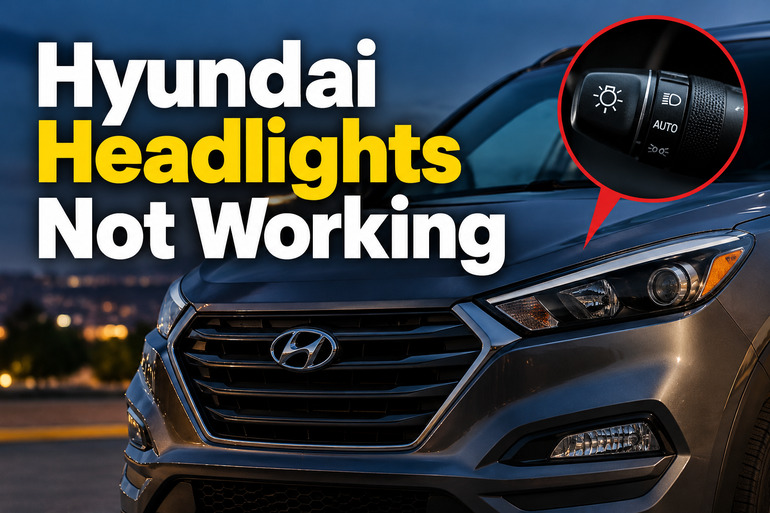
Hyundai Headlights Not Working
Your Hyundai’s headlights rely on several electrical components working together. Depending on the model and year, these include headlight bulbs or LED modules, fuses, relays, switches, wiring, connectors, and electronic control units. A fault in any part of this system can prevent the headlights from operating correctly.
The symptoms provide useful diagnostic clues. If one headlight stops working while the other remains bright, a failed bulb, damaged connector, or local wiring fault is a reasonable starting point. If both headlights stop working simultaneously, check the shared power supply, relevant fuses, relays, and headlight controls before assuming that both bulbs have failed.
You may also find that the headlights flicker, work intermittently, or respond inconsistently when you switch between low and high beams. Such behavior can indicate a loose electrical connection, a faulty switch, or a problem with the control circuitry.
The timing of the failure also matters. Headlights that stop working after a bulb replacement may have an incorrectly fitted bulb or disconnected connector. If the problem begins after rain, washing the car, or front-end repairs, moisture or disturbed wiring may be involved. Avoid driving at night until the headlights are functioning correctly, and arrange professional assistance if you cannot safely restore them.
Hyundai Headlights Not Working: Likely Causes
Several faults can produce similar headlight symptoms, but a few are particularly worth investigating first. The distinction between one failed headlight, two failed headlights, and beams that work intermittently helps narrow down the likely cause.
1. A Burned-Out Headlight Bulb
A burned-out bulb is a common reason one Hyundai headlight stops working. Halogen bulbs gradually deteriorate through use, and their filaments can eventually break. When this happens, the affected bulb no longer produces light, even though the rest of the electrical system may function normally.
Check whether the opposite headlight still works and whether the high beam and low beam operate independently. Some Hyundai models use separate bulbs for different beam functions, while others use a single bulb with a mechanism that changes the beam. A working high beam therefore does not automatically mean the low-beam circuit is healthy.
If the bulb has failed, replacement with the correct specification may restore operation. However, modern Hyundai vehicles may use integrated LED headlamp assemblies instead of replaceable bulbs. An LED failure can require replacement of a module or the entire assembly, depending on the design.
2. A Blown Headlight Fuse
Hyundai vehicles use fuses to protect electrical circuits from excessive current. If too much current flows through a protected circuit, the fuse element melts and interrupts the supply. A blown fuse can therefore leave one or both headlights without power, depending on how the particular vehicle’s lighting circuits are arranged.
A fuse may blow because of a short circuit, damaged wiring, a defective component, or another electrical fault. The location and number of headlight fuses vary by model and year, so you should consult the fuse diagram in your owner’s manual rather than relying on a generic fuse position.
A blown fuse is identifiable by a melted or broken metal element in many blade-type fuses. Replacing it with another fuse of the correct rating may restore the headlights. However, if the replacement blows again, an underlying electrical fault must be located before the vehicle is used normally.
3. A Faulty Headlight Relay
A relay is an electrically operated switch that allows a relatively small control signal to operate a circuit carrying more current. Depending on your Hyundai’s design, relays or electronic switching devices may help control the headlight circuits.
When a relay fails, the headlights may remain off even though the bulbs and associated fuses appear intact. An intermittent relay fault can also cause the lights to operate unpredictably. If the low beams fail but the high beams continue working, the fault could involve the separate control path for the affected beam.
Not every Hyundai uses a conventional, separately replaceable headlight relay. Some models manage exterior lighting through electronic modules, so replacing a relay without verifying the circuit design may accomplish nothing. A technician can confirm whether the relay receives the correct control signal and supplies power to the circuit when activated.
4. A Faulty Headlight Switch or Dimmer Control
The headlight switch tells the vehicle when to activate its lighting system. Depending on the model, this control may be part of a steering column stalk, a dashboard switch, or an electronic control arrangement.
When the switch or dimmer control develops an electrical fault, you may find that the headlights fail to respond, only one beam setting works, or the lights switch off unexpectedly. Other functions controlled through the same stalk may also behave irregularly, although this depends on the vehicle’s design.
A faulty switch is particularly worth investigating when the bulbs and fuses appear serviceable but the lights do not respond consistently to the controls. Electronic systems can also develop faults in the body control module, which manages various electrical functions. Testing the switch inputs and control signals helps distinguish these possibilities from a simple bulb failure.
5. Damaged Wiring, Loose Connectors, or Poor Ground Connections
Headlights need uninterrupted electrical connections to operate. Over time, connectors may loosen, terminals may corrode, insulation may deteriorate, and wires may become damaged by heat, vibration, moisture, or previous repairs.
These problems can produce intermittent illumination, flickering, or complete failure. A connector that has become loose may allow the headlight to work over bumps before cutting out again. Corrosion can restrict the electrical current reaching a bulb, while a poor ground connection can interfere with the circuit’s return path.
Pay particular attention to whether the fault started after collision repairs, headlight replacement, or work beneath the hood. Such events can disturb connectors or damage nearby wiring. Low battery voltage or a charging system problem can also affect vehicle lighting, especially when several electrical functions are misbehaving together. Electrical testing is usually necessary to determine the precise cause.
Hyundai Headlights Not Working: DIY Fixes
Start with simple observations and checks before purchasing replacement parts. The safest approach is to establish which lighting functions have failed, inspect the components that your owner’s manual identifies, and avoid making changes to an electrical circuit you cannot confidently identify.
1. Identify Which Headlights Have Failed
Begin by parking your Hyundai on level ground away from traffic. Switch on the ignition or start the engine according to the instructions in your owner’s manual, then operate the headlights using their normal controls.
Check the low beams, high beams, and parking lights separately. Have another person observe the front of the vehicle while you operate the controls, or use a suitable reflective surface to help check the lights. Do not look directly into illuminated headlamps.
Record the results. If one side is dark, investigate that headlight’s bulb and connections first. If both sides are out, pay closer attention to shared fuses, power supplies, and control components. If the lights flicker or respond intermittently, mention this during diagnosis because it helps identify electrical faults.
Do not rely on daytime running lights as proof that the main headlights work. Daytime running lights serve a different purpose and may operate independently of the low-beam and high-beam circuits.
2. Inspect and Replace a Failed Bulb
If one headlight has failed and your Hyundai uses a replaceable halogen bulb, consult the owner’s manual to confirm the correct bulb specification and replacement procedure. Switch the vehicle off, remove the key or switch off the start button, and allow the lamp to cool before touching any components.
Open the hood and locate the rear of the affected headlight. Some models provide straightforward access to the bulb, while others require the removal of covers or other components. If access is difficult, stop rather than forcing parts out of position.
When replacement is permitted by the manual, install a bulb of the specified type and wattage. Handle halogen bulbs carefully and avoid touching the glass with bare fingers, as oils can create hot spots during operation. Secure the bulb correctly, reconnect the electrical connector, and refit its protective cover.
Test the headlight after installation. If the replacement bulb remains dark, check whether the connector is fully seated and whether the relevant fuse or wiring has a fault. Do not repeatedly replace bulbs without finding out why they fail.
LED and high-intensity discharge (HID) systems may require specialist attention because of their integrated components or hazardous electrical voltages. Do not attempt to dismantle a sealed LED unit or work on an HID high-voltage circuit yourself.
3. Check the Headlight Fuses
A fuse inspection is a useful next step when one or both headlights have stopped working. Locate the fuse panels using your Hyundai owner’s manual. Depending on the model, a panel may be inside the passenger compartment, in the engine compartment, or in both locations.
Turn the vehicle and electrical accessories off before removing a fuse. Use the fuse puller provided with the vehicle, where available, and identify the correct circuit from the panel diagram. Examine the fuse for a broken or melted element. A suitable automotive fuse tester can also help identify a failure that is difficult to see.
If the fuse is blown, replace it with one of exactly the same current rating. A fuse with a higher rating can allow excessive current to damage wiring and create a fire hazard. Never bridge a fuse with wire or foil, and do not use metal tools that could cause a short circuit.
Restore the panel cover securely and test the lights. If the replacement fuse blows again, stop replacing it and arrange electrical diagnosis. A recurring failure indicates that the circuit may have an unresolved fault.
4. Test the Headlight Controls and Relay
Check whether the headlight switch, automatic lighting setting, and high-beam selector operate as expected. If your Hyundai has automatic headlights, select the normal manual lighting setting where the owner’s manual permits it and test the lamps again. This can help distinguish a control-setting issue from a component fault.
Pay attention to whether changing between high and low beams affects the problem. If one beam works consistently while the other does not, the fault may be limited to the affected bulb, circuit, or control component. If neither beam operates, the electrical supply or a shared control component may require investigation.
A conventional relay may be replaceable on certain models, but do not assume that every similarly shaped relay can be exchanged safely. Only consider a relay swap if the owner’s manual or service documentation confirms that the relays are identical and suitable for that purpose. Avoid removing electronic modules or probing exposed terminals.
If these checks do not identify a clear issue, professional circuit testing is more appropriate than replacing switches and relays at random.
5. Inspect Accessible Connectors and Check Battery Symptoms
With the vehicle switched off, you can look for obvious damage around accessible headlight connectors. Check for a connector that appears disconnected, cracked insulation, signs of corrosion, or moisture around the lamp housing. Do not pull hard on wires, touch exposed terminals, or disconnect electrical components while the system is powered.
If the headlights began failing after a repair, inspect only the accessible areas that you can reach safely. A loose connector may be the result of a previous bulb replacement or work near the front of the vehicle. However, damaged terminals and internal wiring faults may require specialized tools to diagnose correctly.
Also pay attention to the rest of the electrical system. Slow engine cranking, dashboard lights that dim substantially, or multiple electrical functions failing together may point to a battery or charging system problem. These symptoms are clues rather than proof. A battery and charging system test can establish whether voltage is contributing to the headlight failure.
Do not attempt repairs involving damaged wiring, high-current connections, or electronic modules without the appropriate training and equipment.
6. Contact a Qualified Automotive Technician
Seek professional assistance if both headlights remain off after basic checks, a replacement fuse blows repeatedly, or the lights work intermittently despite a correctly fitted bulb. A technician can test power supply, ground connections, relay operation, switch signals, and electronic control modules to isolate the fault.
Professional diagnosis is also appropriate when your Hyundai uses integrated LED or HID lighting, when the headlamp assembly must be removed, or when collision damage has affected the front electrical system. LED assemblies may require module or assembly replacement, while HID systems can expose technicians to dangerous voltages if handled incorrectly.
If the lights fail while driving, pull over to a safe location as soon as possible. Do not continue driving in darkness with inadequate headlights. Arrange roadside assistance or transport to a repair facility if the vehicle cannot be operated safely. After any headlight assembly replacement or an accident that may have altered the lamps’ position, have the headlight aim checked as well.
Wrap-Up
Hyundai headlights can stop working because of a failed bulb, blown fuse, faulty relay, defective switch, or damaged electrical connection. The pattern of failure helps narrow down the possibilities. One dark headlight points toward a local fault, while two failed headlights make the shared power supply and controls worth checking.
Start with the simplest safe checks and follow your vehicle’s specific manual for component locations and replacement procedures. Stop if a fuse blows repeatedly or electrical damage is visible. Restoring the headlights properly protects your visibility and helps ensure that other road users can see your vehicle after dark.