
A Hyundai Tucson fuel door that refuses to open can interrupt a refueling stop, especially when the fuel level is low. On many models, the door releases only after the vehicle is unlocked, while older versions use a cabin release lever.
The right fix depends on your Tucson’s model year and the mechanism fitted to it. Start with safe checks before forcing the panel, which can damage its edge or latch and turn a minor fault into a bodywork repair.
Why Your Hyundai Tucson Gas Tank Won’t Open
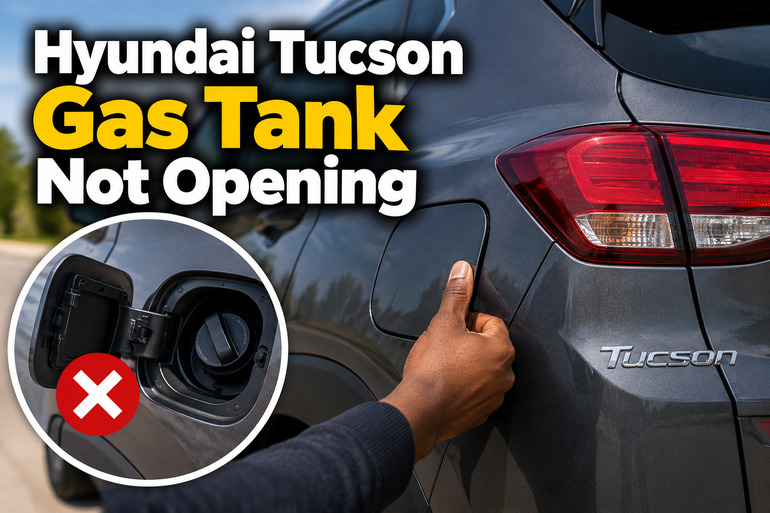
When your Hyundai Tucson gas tank won’t open, the problem usually involves the fuel filler door or its release mechanism. The fuel tank itself is generally not the part preventing access. You may have a door that stays flush against the body even when you press it, or a release lever inside the vehicle that moves without releasing the cover.
Hyundai has used different fuel door designs across Tucson generations and markets. Some versions have a lever near the driver’s seat, while others unlock the fuel door with the central locking system and open when you press the correct edge. For the latter design, the driver’s door must be unlocked on certain models, and pressing the wrong area may produce no result. The exact procedure depends on your model year and market.
The symptoms can offer useful clues. A door that works after several locking and unlocking attempts may have a sticking latch or an intermittent actuator. A release lever that suddenly feels loose may indicate a damaged cable or connection. If the door was working normally until cold weather or a car wash, ice or trapped debris could be preventing movement.
Avoid pulling hard on the door or sliding a screwdriver under its painted edge. The cover, hinge, spring, and latch can be damaged by excessive force, creating a repair that costs more than correcting the original fault. First identify the release system, then check the simplest possible causes.
Hyundai Tucson Gas Tank Not Opening [FIXED]: Likely Causes
Several faults can prevent your Tucson’s fuel filler door from opening. The most useful starting point is to distinguish a problem with the vehicle’s locking system from one involving the mechanical release, hinge, or door itself.
1. The Vehicle Is Still Locked or the Wrong Opening Method Is Being Used
On Tucson models with a push-to-open fuel door, the locking system keeps the cover secured when the vehicle is locked. Pressing the door while it remains locked will not release it, even if the latch and hinge are working correctly.
This can happen when the key fob fails to unlock the driver’s door, the central locking system has not responded, or the driver is pressing the wrong part of the fuel door. Some versions require the entire vehicle to be unlocked, while others respond to the driver’s door unlocking. The exact procedure depends on the model.
If the other doors remain locked or the driver’s door does not respond to the remote, investigate the central locking problem before assuming the fuel door is faulty.
2. A Faulty Fuel Door Lock Actuator or Latch
A Tucson equipped with an electrically controlled fuel door may use a small actuator to move a locking pin or release mechanism. When you unlock the vehicle, the actuator should move out of the way so the fuel door can open.
An actuator can become worn, stick internally, or fail to move the locking pin. Dirt and moisture around the mechanism may also contribute to sticking. The problem sometimes develops gradually, with the door opening on one attempt but remaining shut on the next.
A faint clicking sound near the fuel door during locking or unlocking can suggest that the actuator is attempting to work. However, hearing a click does not prove that the mechanism has released properly. If the other doors unlock normally but the fuel door remains firmly shut, the fuel door actuator or latch deserves closer inspection.
3. A Broken or Disconnected Fuel Door Release Cable
Some older Tucson models use a mechanical lever inside the cabin, often located near the driver’s seat. Pulling the lever tensions a cable that releases the latch at the fuel filler door.
Over time, the cable can stretch, become disconnected, or break. The lever may feel unusually loose, move farther than normal, or fail to create the slight release movement that usually allows the door to open.
A seized or damaged latch can produce similar symptoms even when the cable remains intact. If the lever has normal resistance but the door does not release, the fault may lie at the opposite end of the cable. Inspecting the connection behind trim panels is best left to a technician if access requires dismantling interior components.
4. A Sticking Hinge, Spring, or Misaligned Latch
The fuel door must move freely on its hinge and release from its retaining mechanism. Dirt, road grime, corrosion, or physical damage can interfere with that movement, particularly around the narrow gap between the door and the surrounding body panel.
A weak or broken spring can also prevent a push-to-open door from popping outward after its lock releases. In this situation, the locking mechanism may be functioning, but the door does not move far enough for you to grip it.
A collision, an earlier repair, or repeated forceful attempts to open the cover can leave the door slightly misaligned. Look for uneven gaps, a cover that sits higher on one side, or visible damage around the hinge. These clues suggest a mechanical problem rather than a failure of the vehicle’s central locking system.
5. Ice, Dirt, or Debris Blocking the Door
Moisture can freeze around the fuel door in cold conditions, bonding the cover to the surrounding bodywork. Ice may also obstruct the small gap through which the door needs to move. Hyundai’s owner-manual guidance recommends gentle pressure or light tapping, rather than prying, when ice prevents the cover from opening.
In warmer weather, hardened grime or debris can produce similar resistance. A recent car wash may leave moisture around the latch, while dirt accumulated along the door’s edges may restrict movement.
If the fuel door worked normally before exposure to freezing conditions or heavy dirt, clear the obstruction before considering an actuator replacement. Forcing it open can damage the paint, hinge, or retaining mechanism.
Hyundai Tucson Gas Tank Not Opening [FIXED]: How to Fix
You can resolve some fuel door problems through simple checks without removing body panels or replacing parts. Follow these steps in order, stopping if the door requires excessive force or the symptoms suggest an electrical or mechanical failure.
1. Confirm the Correct Fuel Door Opening Method
Begin by identifying how your particular Tucson opens its fuel door. On older versions equipped with a cabin release lever, switch off the engine and pull the designated lever as described in the owner’s manual. On push-to-open versions, turn off the engine, unlock the vehicle, and press the specified edge of the fuel door.
For many newer Tucsons, the correct procedure is to press the rear center edge of the cover after unlocking the vehicle, then pull it outward once it releases. Other versions use a different arrangement, so follow the instructions for your model year and market.
Apply normal hand pressure at the designated point. Do not repeatedly press random areas of the cover, because that will not correct a locked latch or a damaged actuator. If the door opens after you follow the correct procedure, no replacement part may be necessary.
2. Unlock and Relock the Vehicle
If your Tucson has a push-to-open fuel door, use the remote key to unlock the vehicle. Check that the driver’s door responds, then press the fuel door at the correct point.
If the cover remains shut, press the lock button once and then unlock the vehicle again. You can also try the central unlock button on the driver’s door. This may release a mechanism that did not respond correctly on the first attempt.
Observe whether the other doors lock and unlock normally. If they also fail to respond, the issue may involve the central locking system rather than the fuel door alone. If every other door works and the fuel cover continues to resist opening, the actuator or local latch becomes a more likely suspect.
Avoid repeatedly cycling the locks for an extended period. If a couple of attempts make no difference, move on to the other safe checks instead of continuing to operate a potentially faulty mechanism.
3. Inspect and Clean the Fuel Door Edges
Examine the narrow gap around the fuel door for dirt, dried mud, leaves, or other visible obstructions. Check whether the panel sits evenly against the body and whether one corner appears to be rubbing against the surrounding paint.
Use a soft cloth to clean accessible surfaces around the cover. If necessary, use a small amount of automotive-safe cleaning solution on the exterior, following its product instructions. Keep liquid away from electrical components and avoid flooding the latch area with water.
Once the area is clean, try the proper opening procedure again. If the door releases smoothly, debris may have contributed to the fault. Persistent resistance, a visibly crooked cover, or a latch that fails to release indicates that cleaning alone is unlikely to solve the problem.
Do not insert metal tools into the gap or spray an unapproved lubricant into the locking mechanism. Some products can affect plastic components or contaminate surrounding surfaces.
4. Release Ice Without Damaging the Cover
If freezing weather is the likely cause, move the Tucson into a warmer place, such as a heated garage, and allow the ice to melt. When this is not practical, use an automotive deicer approved for the intended application, following the product directions.
Hyundai advises against prying the cover open. Lightly tapping the surrounding area or applying gentle pressure may help break the ice, but stop if the panel does not begin to release. Never pour boiling water over the fuel door because rapid temperature changes can damage finishes, and the water may freeze again.
After the cover opens, wipe away moisture and check that the door moves normally. If it remains stiff after the ice has melted, inspect for debris or a sticking latch instead of assuming the cold was the only cause.
5. Use the Emergency Release If Your Tucson Has One
Certain Tucson versions may provide an emergency manual release for the fuel door. Its location and design vary by model, so consult the owner’s manual before removing any interior trim or attempting to operate a release cable.
If your manual identifies an emergency release, follow the stated procedure with the engine off and the vehicle safely parked. Operate only the identified handle or cable, using gentle force. Do not pull on nearby wiring or remove unfamiliar panels in an attempt to find a release.
If the emergency release opens the cover, arrange an inspection of the regular release mechanism. A manual release can restore access to the fuel filler, but it does not repair a failed actuator, broken cable, or damaged latch. Do not assume your Tucson has this feature simply because another model or model year does.
6. Contact a Qualified Automotive Technician
Professional diagnosis is appropriate if the fuel door stays shut after the vehicle is unlocked, the correct release method has been confirmed, and visible obstructions have been ruled out. It is also necessary when the interior release lever has lost tension, the door is misaligned, or the actuator appears to operate without releasing the latch.
A technician can check the release cable, actuator movement, electrical supply, locking commands, spring, and latch alignment. Testing these parts individually helps distinguish a failed component from a wiring or mechanical problem. The correct replacement should be selected using your Tucson’s model year, market, and vehicle specifications.
Avoid authorizing an actuator replacement based on the symptom alone. A sticking latch or disconnected cable can create similar behavior, and replacing the wrong part will leave the original fault unresolved. If the door cannot be opened safely, ask the technician to release it without damaging the painted panel.
Wrap-Up
A Hyundai Tucson gas tank that will not open usually needs attention at the fuel filler door, its locking mechanism, or its mechanical release. Confirming the correct opening procedure and checking the vehicle’s lock status are sensible first steps. Dirt, ice, a sticking latch, and a damaged actuator or cable can require different repairs.
Use gentle methods and follow the owner’s manual for your exact Tucson. If the door remains shut after the basic checks, a technician can identify the failed component and restore normal operation without unnecessary damage to the vehicle.
Hyundai Tucson Gas Tank Not Opening [FIXED]
A Hyundai Tucson fuel door that refuses to open can interrupt a refueling stop, especially when the fuel level is low. On many models, the door releases only after the vehicle is unlocked, while older versions use a cabin release lever.
The right fix depends on your Tucson’s model year and the mechanism fitted to it. Start with safe checks before forcing the panel, which can damage its edge or latch and turn a minor fault into a bodywork repair.
Why Your Hyundai Tucson Gas Tank Won’t Open
When your Hyundai Tucson gas tank won’t open, the problem usually involves the fuel filler door or its release mechanism. The fuel tank itself is generally not the part preventing access. You may have a door that stays flush against the body even when you press it, or a release lever inside the vehicle that moves without releasing the cover.
Hyundai has used different fuel door designs across Tucson generations and markets. Some versions have a lever near the driver’s seat, while others unlock the fuel door with the central locking system and open when you press the correct edge. For the latter design, the driver’s door must be unlocked on certain models, and pressing the wrong area may produce no result. The exact procedure depends on your model year and market.
The symptoms can offer useful clues. A door that works after several locking and unlocking attempts may have a sticking latch or an intermittent actuator. A release lever that suddenly feels loose may indicate a damaged cable or connection. If the door was working normally until cold weather or a car wash, ice or trapped debris could be preventing movement.
Avoid pulling hard on the door or sliding a screwdriver under its painted edge. The cover, hinge, spring, and latch can be damaged by excessive force, creating a repair that costs more than correcting the original fault. First identify the release system, then check the simplest possible causes.
Hyundai Tucson Gas Tank Not Opening [FIXED]: Likely Causes
Several faults can prevent your Tucson’s fuel filler door from opening. The most useful starting point is to distinguish a problem with the vehicle’s locking system from one involving the mechanical release, hinge, or door itself.
1. The Vehicle Is Still Locked or the Wrong Opening Method Is Being Used
On Tucson models with a push-to-open fuel door, the locking system keeps the cover secured when the vehicle is locked. Pressing the door while it remains locked will not release it, even if the latch and hinge are working correctly.
This can happen when the key fob fails to unlock the driver’s door, the central locking system has not responded, or the driver is pressing the wrong part of the fuel door. Some versions require the entire vehicle to be unlocked, while others respond to the driver’s door unlocking. The exact procedure depends on the model.
If the other doors remain locked or the driver’s door does not respond to the remote, investigate the central locking problem before assuming the fuel door is faulty.
2. A Faulty Fuel Door Lock Actuator or Latch
A Tucson equipped with an electrically controlled fuel door may use a small actuator to move a locking pin or release mechanism. When you unlock the vehicle, the actuator should move out of the way so the fuel door can open.
An actuator can become worn, stick internally, or fail to move the locking pin. Dirt and moisture around the mechanism may also contribute to sticking. The problem sometimes develops gradually, with the door opening on one attempt but remaining shut on the next.
A faint clicking sound near the fuel door during locking or unlocking can suggest that the actuator is attempting to work. However, hearing a click does not prove that the mechanism has released properly. If the other doors unlock normally but the fuel door remains firmly shut, the fuel door actuator or latch deserves closer inspection.
3. A Broken or Disconnected Fuel Door Release Cable
Some older Tucson models use a mechanical lever inside the cabin, often located near the driver’s seat. Pulling the lever tensions a cable that releases the latch at the fuel filler door.
Over time, the cable can stretch, become disconnected, or break. The lever may feel unusually loose, move farther than normal, or fail to create the slight release movement that usually allows the door to open.
A seized or damaged latch can produce similar symptoms even when the cable remains intact. If the lever has normal resistance but the door does not release, the fault may lie at the opposite end of the cable. Inspecting the connection behind trim panels is best left to a technician if access requires dismantling interior components.
4. A Sticking Hinge, Spring, or Misaligned Latch
The fuel door must move freely on its hinge and release from its retaining mechanism. Dirt, road grime, corrosion, or physical damage can interfere with that movement, particularly around the narrow gap between the door and the surrounding body panel.
A weak or broken spring can also prevent a push-to-open door from popping outward after its lock releases. In this situation, the locking mechanism may be functioning, but the door does not move far enough for you to grip it.
A collision, an earlier repair, or repeated forceful attempts to open the cover can leave the door slightly misaligned. Look for uneven gaps, a cover that sits higher on one side, or visible damage around the hinge. These clues suggest a mechanical problem rather than a failure of the vehicle’s central locking system.
5. Ice, Dirt, or Debris Blocking the Door
Moisture can freeze around the fuel door in cold conditions, bonding the cover to the surrounding bodywork. Ice may also obstruct the small gap through which the door needs to move. Hyundai’s owner-manual guidance recommends gentle pressure or light tapping, rather than prying, when ice prevents the cover from opening.
In warmer weather, hardened grime or debris can produce similar resistance. A recent car wash may leave moisture around the latch, while dirt accumulated along the door’s edges may restrict movement.
If the fuel door worked normally before exposure to freezing conditions or heavy dirt, clear the obstruction before considering an actuator replacement. Forcing it open can damage the paint, hinge, or retaining mechanism.
Hyundai Tucson Gas Tank Not Opening [FIXED]: How to Fix
You can resolve some fuel door problems through simple checks without removing body panels or replacing parts. Follow these steps in order, stopping if the door requires excessive force or the symptoms suggest an electrical or mechanical failure.
1. Confirm the Correct Fuel Door Opening Method
Begin by identifying how your particular Tucson opens its fuel door. On older versions equipped with a cabin release lever, switch off the engine and pull the designated lever as described in the owner’s manual. On push-to-open versions, turn off the engine, unlock the vehicle, and press the specified edge of the fuel door.
For many newer Tucsons, the correct procedure is to press the rear center edge of the cover after unlocking the vehicle, then pull it outward once it releases. Other versions use a different arrangement, so follow the instructions for your model year and market.
Apply normal hand pressure at the designated point. Do not repeatedly press random areas of the cover, because that will not correct a locked latch or a damaged actuator. If the door opens after you follow the correct procedure, no replacement part may be necessary.
2. Unlock and Relock the Vehicle
If your Tucson has a push-to-open fuel door, use the remote key to unlock the vehicle. Check that the driver’s door responds, then press the fuel door at the correct point.
If the cover remains shut, press the lock button once and then unlock the vehicle again. You can also try the central unlock button on the driver’s door. This may release a mechanism that did not respond correctly on the first attempt.
Observe whether the other doors lock and unlock normally. If they also fail to respond, the issue may involve the central locking system rather than the fuel door alone. If every other door works and the fuel cover continues to resist opening, the actuator or local latch becomes a more likely suspect.
Avoid repeatedly cycling the locks for an extended period. If a couple of attempts make no difference, move on to the other safe checks instead of continuing to operate a potentially faulty mechanism.
3. Inspect and Clean the Fuel Door Edges
Examine the narrow gap around the fuel door for dirt, dried mud, leaves, or other visible obstructions. Check whether the panel sits evenly against the body and whether one corner appears to be rubbing against the surrounding paint.
Use a soft cloth to clean accessible surfaces around the cover. If necessary, use a small amount of automotive-safe cleaning solution on the exterior, following its product instructions. Keep liquid away from electrical components and avoid flooding the latch area with water.
Once the area is clean, try the proper opening procedure again. If the door releases smoothly, debris may have contributed to the fault. Persistent resistance, a visibly crooked cover, or a latch that fails to release indicates that cleaning alone is unlikely to solve the problem.
Do not insert metal tools into the gap or spray an unapproved lubricant into the locking mechanism. Some products can affect plastic components or contaminate surrounding surfaces.
4. Release Ice Without Damaging the Cover
If freezing weather is the likely cause, move the Tucson into a warmer place, such as a heated garage, and allow the ice to melt. When this is not practical, use an automotive deicer approved for the intended application, following the product directions.
Hyundai advises against prying the cover open. Lightly tapping the surrounding area or applying gentle pressure may help break the ice, but stop if the panel does not begin to release. Never pour boiling water over the fuel door because rapid temperature changes can damage finishes, and the water may freeze again.
After the cover opens, wipe away moisture and check that the door moves normally. If it remains stiff after the ice has melted, inspect for debris or a sticking latch instead of assuming the cold was the only cause.
5. Use the Emergency Release If Your Tucson Has One
Certain Tucson versions may provide an emergency manual release for the fuel door. Its location and design vary by model, so consult the owner’s manual before removing any interior trim or attempting to operate a release cable.
If your manual identifies an emergency release, follow the stated procedure with the engine off and the vehicle safely parked. Operate only the identified handle or cable, using gentle force. Do not pull on nearby wiring or remove unfamiliar panels in an attempt to find a release.
If the emergency release opens the cover, arrange an inspection of the regular release mechanism. A manual release can restore access to the fuel filler, but it does not repair a failed actuator, broken cable, or damaged latch. Do not assume your Tucson has this feature simply because another model or model year does.
6. Contact a Qualified Automotive Technician
Professional diagnosis is appropriate if the fuel door stays shut after the vehicle is unlocked, the correct release method has been confirmed, and visible obstructions have been ruled out. It is also necessary when the interior release lever has lost tension, the door is misaligned, or the actuator appears to operate without releasing the latch.
A technician can check the release cable, actuator movement, electrical supply, locking commands, spring, and latch alignment. Testing these parts individually helps distinguish a failed component from a wiring or mechanical problem. The correct replacement should be selected using your Tucson’s model year, market, and vehicle specifications.
Avoid authorizing an actuator replacement based on the symptom alone. A sticking latch or disconnected cable can create similar behavior, and replacing the wrong part will leave the original fault unresolved. If the door cannot be opened safely, ask the technician to release it without damaging the painted panel.
Wrap-Up
A Hyundai Tucson gas tank that will not open usually needs attention at the fuel filler door, its locking mechanism, or its mechanical release. Confirming the correct opening procedure and checking the vehicle’s lock status are sensible first steps. Dirt, ice, a sticking latch, and a damaged actuator or cable can require different repairs.
Use gentle methods and follow the owner’s manual for your exact Tucson. If the door remains shut after the basic checks, a technician can identify the failed component and restore normal operation without unnecessary damage to the vehicle.